Quick Answer: Is the VW ID. Buzz the Right Electric Bus for You?
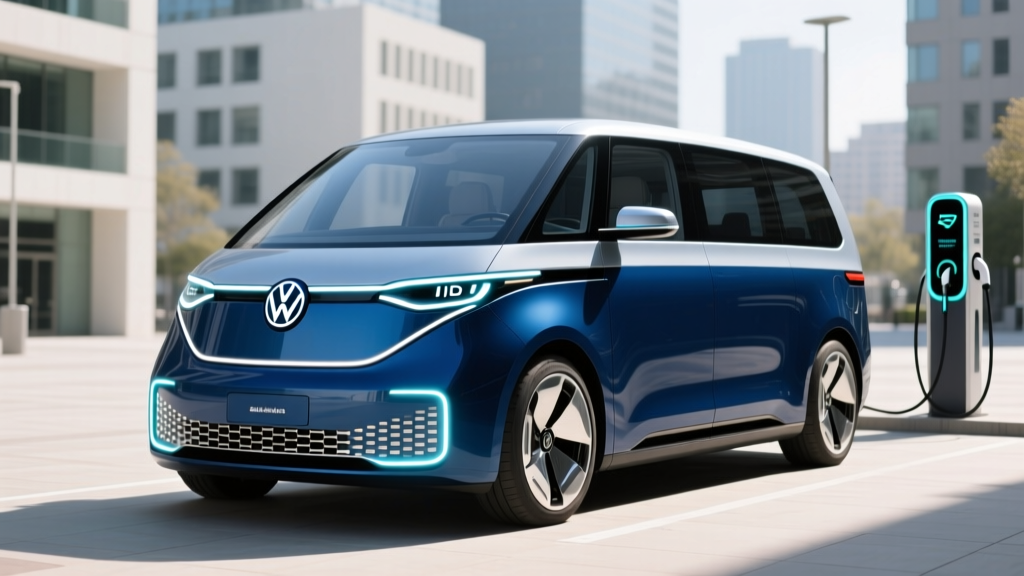
The 2026 Volkswagen ID. Buzz is a three-row electric bus built on VW's MEB platform with a 91 kWh usable battery (NMC chemistry), an EPA-estimated 234 miles of range (RWD), and a peak DC fast-charge rate of 170 kW (10–80% in approximately 26 minutes). Starting at $59,995, it qualifies for up to $7,500 in federal tax credits under IRS §30D if you meet income and battery-sourcing requirements. Expect 190–210 real-world highway miles and 160–180 miles in freezing weather. It's best for families who want a practical, retro-styled EV people-mover with available home Level 2 charging — not a long-distance road-trip hauler.
What the Volkswagen ID. Buzz Electric Bus Actually Offers
Volkswagen revived its iconic Microbus as the ID. Buzz, and the North American long-wheelbase version (which arrived for the 2025 model year and continues into 2026) is a legitimate three-row family hauler. Unlike the short-wheelbase European version, the US-spec ID. Buzz seats up to seven passengers across three rows and carries meaningful cargo behind the third row.
Underneath the retro sheet metal, this is an MEB-platform EV sharing its bones with the ID.4. The rear-wheel-drive model uses a single 282-horsepower electric motor on the rear axle, while the available 4MOTION all-wheel-drive variant adds a front motor for a combined 335 hp. Both use the same 91 kWh usable (approximately 96 kWh gross) NMC lithium-ion battery pack.
| Spec | RWD | AWD (4MOTION) |
|---|---|---|
| EPA Range | 234 miles | 220 miles (est.) |
| Usable Battery | 91 kWh (NMC) | |
| Horsepower | 282 hp | 335 hp |
| 0–60 mph | ~7.9 sec | ~5.9 sec |
| Peak DC Fast Charge | 170 kW | |
| 10–80% DC Charge Time | ~26 minutes | |
| Level 2 Charge Rate | 11 kW (AC) | |
| MPGe (Combined) | ~85 MPGe | ~80 MPGe (est.) |
| Cargo (Behind 3rd Row) | ~18 cu ft | |
| Cargo (Max, Seats Folded) | ~130 cu ft | |
| Base MSRP | $59,995 | $63,995 |
| Battery/Powertrain Warranty | 8 years / 100,000 miles | |
EPA vs. Real-World Range: What to Actually Expect
EPA Sticker: 234 miles (RWD) / ~220 miles (AWD)
Real-World Highway (70–80 mph): Expect 190–210 miles. The ID. Buzz's boxy shape creates substantial aerodynamic drag at highway speeds, and efficiency drops noticeably above 70 mph.
Cold Weather (below 32°F): Plan for 160–185 miles. The heat pump (standard on US models) helps, but NMC batteries lose 15–25% capacity in freezing temperatures, and cabin heating draws significant energy.
Mixed City/Suburban: This is where the ID. Buzz shines — 220–230 miles is achievable with regenerative braking doing heavy lifting in stop-and-go traffic.
Charging the ID. Buzz: Home, Public, and What It Costs
The 170 kW peak DC fast-charge rate is adequate but not class-leading. Competitors like the Hyundai Ioniq 5 (240 kW peak on 800V architecture) charge considerably faster. Here's how the ID. Buzz's charging breaks down across levels:
| Level | Power | Connector | Miles Added per Hour | Typical Use |
|---|---|---|---|---|
| Level 1 | ~1.4 kW (120V) | J1772 / NACS | ~3–4 mi/hr | Emergency / overnight trickle |
| Level 2 | 11 kW (240V, 48A) | J1772 / NACS | ~28–32 mi/hr | Home daily charging (~3 hrs for full) |
| DC Fast | 170 kW peak | CCS1 / NACS | Up to ~400 mi/hr (peak) | Road trips (10–80% in ~26 min) |
Charging curve reality: The 170 kW figure is a peak, not a sustained rate. In real-world DC fast charging, the ID. Buzz will hold roughly 150–170 kW from 10–30% state of charge, then taper to around 100–120 kW through 60%, and drop below 60 kW past 80%. This taper is normal for NMC chemistry — it protects long-term battery health but means charging from 80–100% takes disproportionately long. Plan your road-trip stops around 10–80% sessions.
VW includes the ID. Buzz with a NACS charge port (the Tesla-standard connector now broadly adopted). This gives you native access to Tesla Superchargers (over 20,000 stalls in North America) without an adapter, in addition to Electrify America, EVgo, and other CCS networks via adapter.
Home Charging Setup Costs
To charge an ID. Buzz at the full 11 kW Level 2 rate at home, you'll need a 240V/48-amp hardwired wall connector on a 60-amp circuit. Here's what that typically costs:
| Component | Low Estimate | High Estimate |
|---|---|---|
| Level 2 Charger (e.g., ChargePoint Home Flex, Emporia) | $400 | $700 |
| Electrician Labor | $500 | $1,500 |
| Electrical Panel Upgrade (if needed, 200A) | $0 | $3,500 |
| Permit & Inspection | $100 | $400 |
| Total | $1,000 | $6,100 |
Most homes with a modern 200-amp electrical panel won't need an upgrade. Older homes with 100-amp service almost certainly will. Get a quote from a licensed electrician before purchasing the vehicle — this is the single most overlooked cost by first-time EV buyers.
ID. Buzz vs. Gas Minivan: Real Cost Comparison
The ID. Buzz doesn't have a direct electric rival in the three-row bus segment, so the real comparison is against gasoline minivans like the Toyota Sienna (hybrid, ~36 MPG combined) and the Honda Odyssey (~22 MPG combined). Here's how the economics stack up over five years and 75,000 miles:
| Cost Category | VW ID. Buzz (RWD) | Toyota Sienna (HEV) | Honda Odyssey |
|---|---|---|---|
| Purchase Price (MSRP) | $59,995 | $39,995 | $40,000 |
| Federal Tax Credit (§30D) | Up to –$7,500* | $0 | $0 |
| Effective Purchase | $52,495 | $39,995 | $40,000 |
| Home Charger Install | $1,500 | $0 | $0 |
| Fuel/Energy (75k mi) | $3,750** | $5,550 | $10,230 |
| Maintenance (5 yr) | $1,200 | $3,500 | $4,200 |
| Insurance (5 yr avg) | $11,500 | $9,000 | $9,500 |
| 5-Year Total Cost | $70,445 | $58,045 | $63,930 |
*Tax credit eligibility depends on adjusted gross income (≤$150K single / ≤$300K joint), battery critical-mineral and component sourcing, and MSRP caps ($80K for vans/SUVs). Verify current rules at IRS.gov.
**Based on $0.15/kWh national average home electricity and 85 MPGe (≈3.5 miles/kWh). Public DC fast charging costs significantly more ($0.35–$0.50/kWh).
The ID. Buzz costs roughly $6,500–$12,400 more over five years than a Sienna hybrid, even after the tax credit. The fuel savings are real — about $1,800 less than the Sienna and $6,480 less than the Odyssey — but they don't close the upfront price gap. You're paying a premium for the EV experience, zero tailpipe emissions, and the ID. Buzz's distinctive design. This is an emotional and practical choice, not a pure cost-savings play.
Federal Tax Credit Eligibility: What You Need to Know
The ID. Buzz is assembled in Hannover, Germany, which complicates §30D eligibility. Under current IRS rules, the full $7,500 credit requires the vehicle to meet both critical-mineral and battery-component sourcing thresholds, which shift annually. As of 2026:
- MSRP Cap: Vans/SUVs must be ≤$80,000 — the ID. Buzz qualifies across all trims.
- Buyer Income Cap: Modified AGI ≤$150,000 (single) or ≤$300,000 (married filing jointly).
- Critical Minerals Requirement: A set percentage of battery minerals must be sourced from the US or FTA partners (threshold increases yearly).
- Battery Components Requirement: A set percentage of battery components must be manufactured or assembled in North America (threshold increases yearly; foreign-entity-of-concern rules further restrict Chinese-sourced materials).
- Point-of-Sale Transfer: You can transfer the credit to the dealer at purchase for an immediate price reduction, or claim it on your tax return.
Because the ID. Buzz is built in Germany with a globally sourced supply chain, it may qualify for a partial credit ($3,750) or no credit depending on the model year's sourcing certifications. Always check the fueleconomy.gov tax credit database for the specific model year and trim before purchasing. Consult a tax professional for your personal situation.
First-Time EV Buyer: What to Know Before Purchasing the ID. Buzz
Decision Framework: Is the ID. Buzz Right for Your Situation?
Choose the ID. Buzz if:
- You have access to Level 2 home charging (garage or driveway with 240V circuit).
- Your daily driving is under 150 miles round-trip with occasional longer trips.
- You want a distinctive, fun three-row family vehicle and accept the price premium over minivans.
- You value zero tailpipe emissions and lower maintenance (no oil changes, fewer brake replacements due to regen).
Reconsider or look at alternatives if:
- You live in an apartment without charging access and must rely entirely on public chargers.
- You regularly drive 300+ mile highway trips in cold climates — the 190-mile real-world range and 26-minute charge stops add up.
- Maximum cargo space is a priority — a Sienna or Odyssey offers more usable volume behind the third row.
- Budget is the primary concern — the Sienna hybrid costs $12,000+ less over five years.
Common Misconceptions About the ID. Buzz
| Myth | Fact |
|---|---|
| "It gets 234 miles no matter how you drive." | EPA is a lab estimate. Highway driving at 75 mph yields 190–210 miles; freezing weather drops it to 160–185 miles. |
| "170 kW charging means it always charges at that speed." | 170 kW is a peak rate. Sustained average from 10–80% is closer to 110–120 kW due to charge-curve taper. |
| "EVs are cheaper to own than any gas car." | The ID. Buzz costs more over 5 years than a Sienna hybrid. EVs save on fuel/maintenance but often carry higher purchase prices and insurance premiums. |
| "The battery will need replacing in 5 years." | VW warranties the battery for 8 years/100,000 miles with a minimum 70% capacity retention. NMC batteries typically lose 10–15% capacity over 150,000 miles with proper care (avoid frequent 100% charges and DC fast charging exclusively). |
| "I can charge on any Level 1 outlet and be fine." | Level 1 adds only 3–4 miles per hour. With a 91 kWh battery, a full charge takes over 60 hours. Level 2 is practically mandatory for daily use. |
Ownership Practicalities: The Things Nobody Mentions
Insurance costs run 15–25% higher than comparable gas minivans. EV repair costs are higher (specialized high-voltage training, expensive battery replacement if damaged), and insurers price this in. Get quotes from your insurer before committing — expect $2,100–$2,500/year depending on your profile and location.
Tire wear accelerates on EVs. The ID. Buzz weighs approximately 5,800 pounds (curb weight), and instant electric torque stresses tires more than a gas powertrain. Budget for replacement tires every 30,000–40,000 miles rather than the 50,000+ miles typical on lighter vehicles. VW specifies EV-optimized tires with low rolling resistance — stick with OEM-spec replacements to preserve range.
Cargo space is adequate, not class-leading. With 18 cubic feet behind the third row, the ID. Buzz handles groceries and a couple of suitcases. Fold the third row and you get roughly 75 cubic feet; fold everything and you approach 130 cubic feet. For comparison, the Honda Odyssey offers 144 cubic feet max. The ID. Buzz's floor is also higher due to the battery pack underneath, which reduces vertical clearance for tall items.
Public charging reliability varies wildly. According to J.D. Power's most recent EV charging satisfaction studies, Tesla Superchargers lead with roughly 95%+ uptime, while CCS networks (Electrify America, EVgo) score lower on reliability. The ID. Buzz's NACS port gives you native Supercharger access — a significant advantage for road trips. Still, always have a backup charging plan on long drives using apps like PlugShare or A Better Routeplanner.
Frequently Asked Questions
Does the Volkswagen ID. Buzz qualify for the $7,500 federal tax credit?
Partially or fully, depending on the model year's battery-sourcing certifications and your income. The ID. Buzz's German assembly and global supply chain make full credit eligibility uncertain year-to-year. Check fueleconomy.gov for the specific trim and year, and consult a tax professional. The credit can be transferred to the dealer at point of sale for an immediate price reduction.
How long does it take to charge the ID. Buzz at home?
On a Level 2 home charger (11 kW, 240V/48A), a full 0–100% charge takes approximately 9 hours. A typical daily charge from 20–80% takes about 5 hours — easily done overnight. On a standard 120V outlet (Level 1), a full charge takes over 60 hours, which is impractical for regular use.
What's the real-world highway range at 75 mph?
Expect 190–210 miles for the RWD model and 180–195 miles for the AWD. The boxy aerodynamics hurt efficiency at speed. In winter (below 32°F), plan for 160–185 miles. Preconditioning the battery while plugged in helps recover some cold-weather range.
Can the ID. Buzz tow a trailer?
The ID. Buzz has a maximum tow rating of 2,500 pounds (braked). That's enough for a small utility trailer or a pair of jet skis, but not a camping trailer or boat. Towing also reduces range by 30–50% depending on trailer weight and aerodynamics.
How does the ID. Buzz's ADAS compare to Tesla Autopilot?
The ID. Buzz comes with VW's IQ.DRIVE suite, which includes adaptive cruise control, lane-keeping assist, and Travel Assist (hands-on, SAE Level 2 driver assistance). It's competent highway driving support but requires your hands on the wheel and full attention. It is not "self-driving" — that remains SAE Level 4, which only robotaxi services like Waymo currently operate in limited geofenced areas.
What's the battery replacement cost out of warranty?
Out-of-warranty NMC battery replacement for MEB-platform vehicles is estimated at $15,000–$22,000 including labor. However, battery failure before 150,000+ miles is uncommon with normal use. VW's 8-year/100,000-mile warranty covers replacement if capacity drops below 70%. Most EV batteries outlast the vehicle's economic life.