Quick Verdict: The Volkswagen ID 3 Electric Car at a Glance
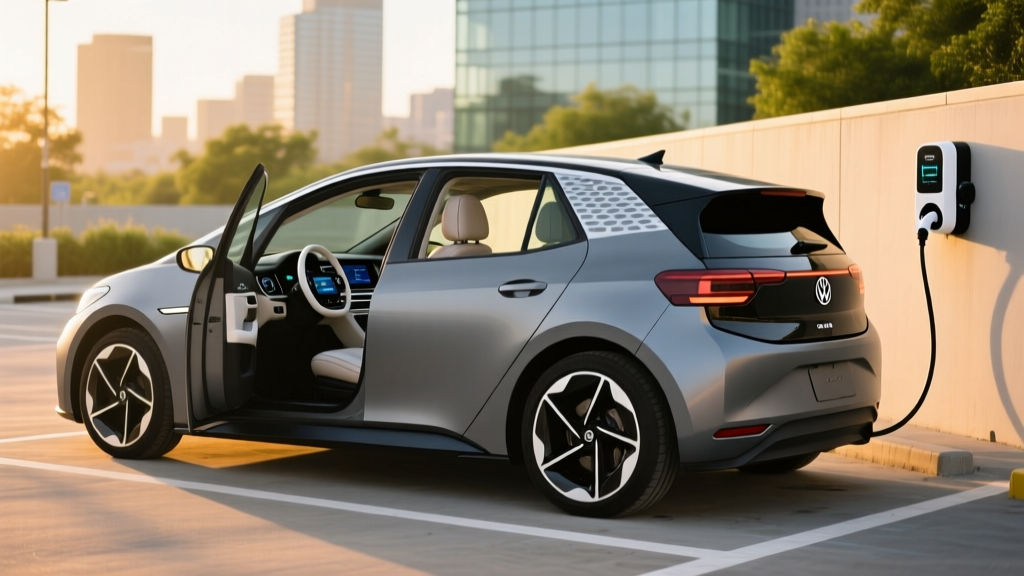
The Volkswagen ID 3 electric car has been one of Europe's best-selling EVs since its 2020 launch, offering a practical hatchback form factor with competitive range and a spacious interior built on VW's dedicated MEB platform. However, as of the 2026 model year, Volkswagen has not officially sold the ID 3 in the United States — American buyers have instead been directed toward the larger ID.4 crossover. That hasn't stopped significant search interest stateside, driven by the ID 3's reputation as an affordable, efficient daily driver.
This review covers the ID 3's specifications as sold in European and select global markets, with honest analysis of what U.S. buyers would need to know — including import feasibility, the lack of EPA certification, and how it stacks up against American-market alternatives like the Chevrolet Bolt EV, Hyundai Kona Electric, and Nissan Leaf.
| Spec | Pro S (77 kWh) | Pro (58 kWh) |
|---|---|---|
| WLTP Range | ~342 mi (550 km) | ~263 mi (423 km) |
| Est. EPA-Equivalent Range | ~290 mi | ~225 mi |
| Battery (Usable / Gross) | 77 kWh / 82 kWh | 58 kWh / 62 kWh |
| Chemistry | NMC (Nickel Manganese Cobalt) | NMC |
| Motor Output | 201 hp / 229 lb-ft | 201 hp / 229 lb-ft |
| Drivetrain | RWD | RWD |
| 0–100 km/h (0–62 mph) | 7.9 sec | 7.3 sec |
| Max DC Fast Charge | 175 kW | 120 kW |
| 10–80% DC Charge Time | ~28 min | ~35 min |
| AC Level 2 Charging | 11 kW (Type 2) | 11 kW (Type 2) |
| WLTP Efficiency | ~3.6 mi/kWh (~28 kWh/100mi) | ~3.8 mi/kWh (~26 kWh/100mi) |
| Cargo Volume | 13.6 cu ft (385 L) | 13.6 cu ft (385 L) |
| Base Price (Europe) | ~€47,000 (~$51,000) | ~€40,000 (~$43,500) |
Range and Efficiency: What to Expect in Real Driving
Pro S (77 kWh): WLTP 342 mi → Estimated EPA-equivalent ~290 mi. Expect ~240–260 mi in mixed highway driving, and as low as ~200 mi in cold weather (below 32°F / 0°C) at sustained 70+ mph speeds.
Pro (58 kWh): WLTP 263 mi → Estimated EPA-equivalent ~225 mi. Expect ~185–205 mi on highway trips, ~160 mi in freezing conditions.
The ID 3's NMC lithium-ion battery delivers competitive efficiency for its class. The 77 kWh Pro S variant, which uses the larger battery pack, achieves roughly 28 kWh per 100 miles under WLTP testing — translating to an estimated 110–115 MPGe on the EPA cycle. The lighter 58 kWh Pro model edges slightly better at around 26 kWh/100mi WLTP, or an estimated 115–120 MPGe.
In European real-world testing by outlets like EV Database, the ID 3 Pro S averages approximately 3.2–3.4 mi/kWh in mixed driving, which aligns with our estimated EPA-equivalent figures. Highway efficiency drops noticeably above 75 mph due to aerodynamic drag — a universal EV trait, but particularly relevant for the ID 3's hatchback silhouette, which lacks the streamlined teardrop profile of sedans like the Hyundai Ioniq 6.
Cold-weather impact is significant. The ID 3 uses a heat pump (standard on most trims since 2023), which helps preserve range compared to resistive cabin heating, but you should still budget 25–35% range loss in sub-freezing conditions. Battery preconditioning for DC fast charging is available, though it activates primarily when a compatible fast-charger is set as your navigation destination.
Charging Speed: DC Fast, Level 2, and the Curve Reality
Charging performance is where the ID 3 shows both strengths and generational limitations. The 77 kWh Pro S model supports up to 175 kW peak DC fast charging on CCS2 connectors (the European standard; U.S. CCS1 or NACS adapters would be needed for American infrastructure). The 58 kWh Pro tops out at a more modest 120 kW.
Here's what the charge curve actually looks like in practice — because peak kW numbers only tell part of the story:
| Charging Method | Pro S (77 kWh) | Pro (58 kWh) |
|---|---|---|
| Max DC Fast Charge (Peak) | 175 kW | 120 kW |
| 10–80% DC Time (Optimal) | ~28 minutes | ~35 minutes |
| Sustained Avg 10–80% | ~95 kW average | ~75 kW average |
| AC Level 2 (Home/Public) | 11 kW (~37 mi/hr) | 11 kW (~37 mi/hr) |
| Full Level 2 Charge (0–100%) | ~8 hours | ~6 hours |
| AC Level 1 (120V, est.) | ~1.4 kW (~5 mi/hr) | ~1.4 kW (~5 mi/hr) |
The key insight: the ID 3 Pro S peaks at 175 kW but sustains that rate only briefly (roughly 10–30% SoC). Above 50%, the curve tapers significantly — by 80%, you're looking at roughly 50–60 kW. This is why the 10–80% average sits around 95 kW rather than anywhere near the peak. Compared to rivals like the Hyundai Ioniq 5 (which sustains 200+ kW for longer on its 800V architecture), the ID 3's 400V system is a generation behind in charging throughput.
At home on a Level 2 charger, the 11 kW onboard charger replenishes the 77 kWh battery in about 8 hours — perfectly adequate for overnight charging. Note that European models use Type 2 AC connectors; U.S. J1772 compatibility would require an adapter for imported vehicles.
Performance and Driving Dynamics
The ID 3 is a rear-wheel-drive hatchback powered by a single permanent-magnet synchronous motor producing 201 horsepower and 229 lb-ft of torque across both battery variants. The difference in acceleration comes down to weight: the 58 kWh Pro, carrying roughly 220 fewer pounds, hits 62 mph in 7.3 seconds, while the heavier Pro S takes 7.9 seconds. Estimated 0–60 mph times are approximately 7.0 and 7.6 seconds respectively.
Driving dynamics are where the ID 3 earns praise. The MEB platform's low center of gravity and rear-biased weight distribution deliver handling that feels more engaging than most compact EVs. The turning circle is remarkably tight at 33.5 feet — a direct benefit of the rear-motor layout freeing the front wheels for sharper steering angles. This makes the ID 3 an excellent urban car despite its hatchback practicality.
Ride quality is compliant but firm, with European-market suspension tuning that prioritizes composure over plushness. Road noise insulation improved significantly with the 2024 facelift (GTX performance variant aside), with thicker acoustic glass and revised door seals. Regenerative braking offers multiple modes via steering-wheel paddles, but the ID 3 does not offer true one-pedal driving to a full stop — a frequent complaint from EV enthusiasts accustomed to the Chevrolet Bolt or Nissan Leaf's aggressive regen.
Interior, Tech, and Cargo Practicality
The ID 3's cabin emphasizes space efficiency over luxury. At 177.4 inches long on a 108.9-inch wheelbase, it's roughly the footprint of a Volkswagen Golf but with noticeably more rear-seat room thanks to the MEB platform's short overhangs. Rear legroom measures approximately 37.6 inches — genuinely comfortable for adults on longer trips. Front headroom is generous at 40.6 inches.
Cargo capacity stands at 13.6 cubic feet behind the rear seats, expanding to roughly 44.7 cubic feet with the 60/40 split rear seats folded. There is no front trunk (frunk) — the space under the hood houses the power electronics and 12V auxiliary battery. This is a notable omission compared to competitors like the Hyundai Kona Electric (which offers a small frunk) and represents a lost opportunity for additional sealed storage.
The infotainment system uses VW's ID. Software 4.x (post-facelift), running on a 12.9-inch touchscreen. This is a significant improvement over the laggy, buggy ID. Software 3.x that plagued early models. Response times are now competitive, wireless Apple CarPlay and Android Auto are standard, and the voice assistant ("Hello ID.") handles basic commands adequately. However, the capacitive touch sliders for volume and temperature remain a frustration — they're unlit at night and lack haptic feedback.
Driver assistance includes Travel Assist (adaptive cruise + lane centering), rated at SAE Level 2. This system handles highway cruising competently but requires hands-on-wheel engagement at all times. It is not a self-driving system — the driver must remain fully attentive. Front Assist with automatic emergency braking, rear cross-traffic alert, and Park Assist Plus (semi-autonomous parking) round out the ADAS suite.
Pricing, Tax Credit Eligibility, and the U.S. Import Question
In Europe, the 2026 Volkswagen ID 3 starts at approximately €40,000 (~$43,500 USD) for the Pro trim with the 58 kWh battery, rising to roughly €47,000 (~$51,000) for the Pro S with 77 kWh. The sporty GTX variant starts around €50,000 (~$54,500).
For U.S. buyers, the pricing picture is complicated:
Importing an ID 3 to the United States is technically possible but extraordinarily difficult. The vehicle would need to be brought into compliance with NHTSA safety standards (FMVSS) and EPA emissions certification — a process that typically costs $10,000–$30,000 through a Registered Importer and may still be denied. VW's U.S. warranty would not apply. For virtually all American buyers, the ID 3 is not a practical purchase.
Warranty and Long-Term Battery Outlook
In European markets, Volkswagen provides the ID 3 with:
- Vehicle warranty: 3 years / 60,000 miles (varies by country)
- Battery warranty: 8 years / 100,000 miles (160,000 km), guaranteeing minimum 70% state of health (SoH)
- Service intervals: Every 2 years (no mileage limit), primarily for cabin filter, brake fluid, and inspections
The NMC battery chemistry offers good energy density but is more susceptible to calendar degradation than LFP (lithium iron phosphate) packs used in some competitors like the Tesla Model 3 RWD. Based on fleet data from European ID 3 and ID 4 vehicles, degradation appears to track around 1.5–2% per year under normal use — meaning a 3-year-old ID 3 might show 94–96% SoH. This is within normal NMC parameters and well above the 70% warranty threshold.
Best practices for longevity: avoid sustained storage above 80% or below 20% SoC, minimize repeated DC fast charging to 100%, and use the vehicle's built-in charge-limit settings (configurable to stop at 80% or 90%). The ID 3's thermal management system uses liquid cooling, which is effective in moderate climates but less robust than Tesla's octovalve system in extreme heat.
How the ID 3 Compares to U.S.-Market Alternatives
Since the ID 3 isn't available in America, the real question is what U.S. buyers should consider instead. Here's how it stacks up against stateside rivals on paper:
| Metric | VW ID 3 Pro S (EU) | Chevrolet Bolt EV | Hyundai Kona Electric | VW ID.4 Pro S (US) |
|---|---|---|---|---|
| EPA / Est. Range | ~290 mi (est.) | 259 mi | 261 mi | 291 mi |
| Battery | 77 kWh NMC | 65 kWh NMC | 65 kWh NMC | 77 kWh NMC |
| Max DC Charge | 175 kW | 55 kW | 100 kW | 175 kW |
| 0–60 mph | ~7.6 sec (est.) | 6.5 sec | 7.2 sec | 7.2 sec |
| Cargo (cu ft) | 13.6 | 16.6 | 25.8 | 30.3 |
| Base Price | ~$51,000 (EU) | ~$28,000 | ~$34,000 | ~$47,000 |
| U.S. Tax Credit | Not eligible | Up to $7,500* | Up to $7,500* | Up to $7,500* |
* Tax credit eligibility subject to IRS §30D rules including income limits, MSRP caps, and battery sourcing requirements. Verify current eligibility at fueleconomy.gov.
The ID 3's closest spiritual successor in VW's U.S. lineup is the ID.4, which shares the MEB platform and powertrain but wraps it in a crossover body with significantly more cargo room (30.3 cu ft) and available AWD. The ID.4 Pro S delivers nearly identical range and charging performance, qualifies for the federal tax credit, and starts at a lower effective price after incentives. For most American shoppers who admire the ID 3's concept, the ID.4 is the pragmatic answer.
If the hatchback form factor is non-negotiable, the Hyundai Kona Electric and Chevrolet Bolt EV (or the upcoming Bolt EUV successor) offer U.S. availability, tax credit eligibility, and competitive range at substantially lower prices — though neither matches the ID 3's DC fast-charge capability or rear-drive refinement.
Pros and Cons
✓ Pros
- Tight turning circle (33.5 ft) — excellent for city driving
- Spacious rear seat for its compact footprint
- Competitive DC fast charging (175 kW on Pro S)
- Heat pump standard on most trims
- Improved ID. Software 4.x infotainment
- Engaging rear-drive handling dynamics
✗ Cons
- Not sold or certified in the United States
- No federal tax credit eligibility for U.S. buyers
- No frunk (front trunk)
- No true one-pedal driving to full stop
- Capacitive touch sliders remain frustrating
- Cargo space (13.6 cu ft) trails key rivals
- 400V architecture limits sustained charge rate vs 800V competitors
Who the Volkswagen ID 3 Suits Best
The ID 3 was designed as a European urban-to-suburban daily driver — the electric successor to the Golf in spirit if not in name. It excels for:
- European commuters who need a compact footprint with enough range for 50–80 mile round trips and the DC fast-charge capability for occasional longer journeys
- Small households (1–2 adults, occasional rear passengers) who value interior space efficiency over cargo volume
- Driving enthusiasts who appreciate rear-drive balance and a tight turning radius in an EV package
It is not ideal for:
- U.S. buyers (import impracticality and no warranty/tax credit support)
- Families needing substantial cargo space (the ID.4 or Ioniq 5 are far more practical)
- Heavy towing (the ID 3 is not rated for towing in most markets)
- Frequent road-trippers who need the fastest possible DC charging (the Hyundai/Kia E-GMP 800V platform charges noticeably faster)
Frequently Asked Questions
Can I buy the Volkswagen ID 3 in the United States?
No. Volkswagen does not sell the ID 3 through U.S. dealerships, and it has not been EPA-certified or NHTSA-homologated for the American market. While grey-market importation is theoretically possible through a Registered Importer, the cost ($10,000–$30,000+), regulatory uncertainty, and lack of warranty support make it impractical for nearly all buyers. VW offers the ID.4 as its U.S. MEB-platform vehicle.
What is the real-world range of the Volkswagen ID 3?
The Pro S (77 kWh) achieves a WLTP rating of 342 miles, which translates to an estimated EPA-equivalent of ~290 miles. In real-world mixed driving, expect 240–260 miles. Highway-only driving at 75+ mph drops this to roughly 220–240 miles, and cold weather (below freezing) can reduce range to 200 miles or less. The 58 kWh Pro model delivers approximately 185–205 miles in real-world conditions.
How fast does the ID 3 charge at home and on the road?
On DC fast charging, the Pro S peaks at 175 kW and charges from 10–80% in approximately 28 minutes under optimal conditions (preconditioned battery, 350 kW-capable station). The 58 kWh Pro peaks at 120 kW with a 10–80% time of ~35 minutes. At home on Level 2 (11 kW), a full charge takes about 8 hours for the Pro S and 6 hours for the Pro. Level 1 (120V) trickle charging adds roughly 5 miles per hour.
Does the Volkswagen ID 3 qualify for the U.S. federal EV tax credit?
No. Because the ID 3 is not sold through U.S. dealerships, it does not appear on the IRS qualifying vehicle list and is ineligible for the §30D new clean vehicle credit. U.S.-market alternatives like the VW ID.4, Chevrolet Bolt EV, and Hyundai Kona Electric may qualify for up to $7,500, subject to income limits ($150K single / $300K joint), MSRP caps ($55K for hatchbacks), and battery sourcing requirements. Always verify current eligibility on irs.gov.
Is the ID 3 better than the VW ID.4?
They share the same MEB platform, motor, and battery options, so performance and range are nearly identical. The ID.4 wins on cargo space (30.3 vs 13.6 cu ft), available AWD, U.S. availability, and tax credit eligibility. The ID 3 wins on driving dynamics (lower center of gravity, tighter turning circle) and European pricing. For U.S. buyers, the ID.4 is the clear choice; for European buyers who don't need crossover cargo space, the ID 3 is the more engaging car.
What battery chemistry does the ID 3 use, and how long will it last?
The ID 3 uses NMC (nickel manganese cobalt) lithium-ion cells. Based on European fleet data, NMC packs in the MEB platform degrade approximately 1.5–2% per year under normal use. VW warranties the battery for 8 years / 100,000 miles with a guaranteed minimum of 70% state of health. With proper care (avoiding sustained high SoC, minimizing 100% DC charges), the battery should retain 85–90% capacity at the 5-year mark.