The Short Answer on Volkswagen EV Production Cuts
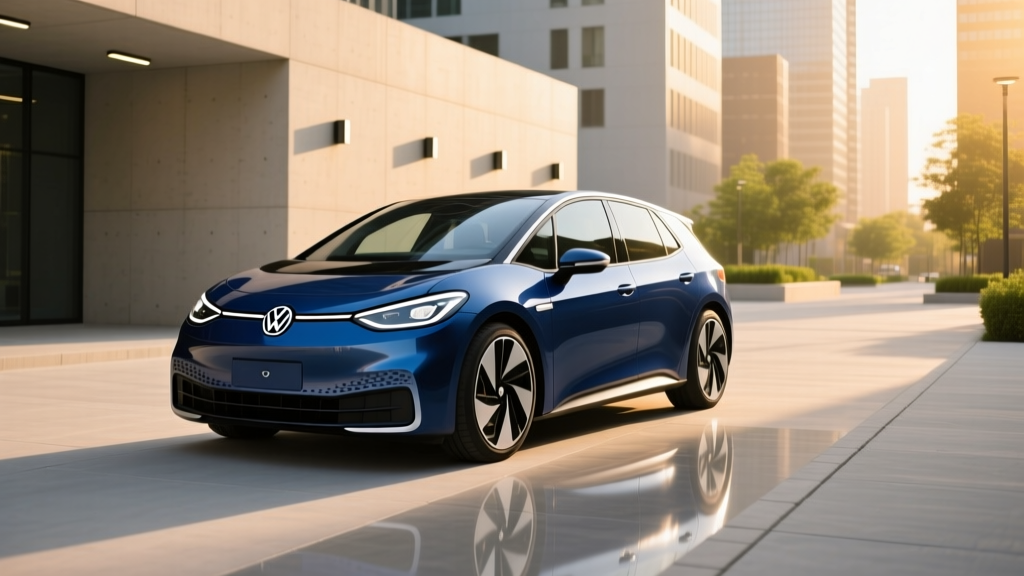
Volkswagen's EV production cuts, which began accelerating in late 2024 and continued through 2025, have reduced output at key facilities including the Emden and Zwickau plants in Germany and slowed the ramp-up of newer models like the ID.7. For US buyers in 2026, this means tighter ID.4 inventory at dealerships, longer wait times for specific trims and colors, and fewer lease incentives than in previous years. However, VW has not discontinued any EV models for the North American market — the ID.4 remains in production at the Chattanooga, Tennessee plant, though at reduced volumes compared to 2023–2024 peaks. If you're shopping for a VW electric vehicle right now, expect less negotiating room on price but continued availability of the core lineup.
Why Volkswagen Cut EV Production
Volkswagen's production pullback reflects a broader recalibration across the European auto industry. Several converging factors drove the decision:
- Softening European demand: The end of Germany's EV purchase subsidy in December 2023 caused a sharp drop in German EV registrations — a market that had been VW's electric backbone. Registration data from the KBA (Germany's federal motor transport authority) showed battery-electric vehicle sales falling roughly 27% year-over-year in 2024.
- Chinese competition: Brands like BYD, NIO, and MG have captured significant European market share with aggressively priced EVs, squeezing VW's margins on the ID.3 and ID.4 abroad.
- Software delays: VW's CARIAD software division has faced persistent delays, pushing back the rollout of the next-generation SSP (Scalable Systems Platform) and affecting the timing of new models.
- Cost restructuring: VW Group announced plans to reduce costs by €10 billion across its core brand through 2026, with EV production volumes adjusted to match realistic demand forecasts rather than aspirational targets.
For the US market specifically, the impact is more muted. The Chattanooga-built ID.4 continues production, and VW of America has maintained its model commitments through the 2026 model year. But the global production slowdown has downstream effects on parts supply, software development pacing, and the timeline for vehicles like the ID.7 sedan and ID.GTI concept reaching American showrooms.
What the 2026 VW ID.4 Lineup Looks Like Now
Despite the production headwinds, the 2026 Volkswagen ID.4 remains a competitive compact electric SUV. Here are the current specifications based on the latest available data:
| Specification | ID.4 Standard Range | ID.4 Pro (RWD) | ID.4 Pro S AWD |
|---|---|---|---|
| EPA Range | 206 miles | 291 miles | 263 miles |
| Battery (usable) | 62 kWh (NMC) | 82 kWh (NMC) | 82 kWh (NMC) |
| Peak DC Fast Charge | 135 kW | 175 kW | 175 kW |
| 10–80% DC Charge Time | ~30 min | ~28 min | ~28 min |
| Level 2 Charge Rate | 11 kW | 11 kW | 11 kW |
| Horsepower | 201 hp | 282 hp | 335 hp |
| 0–60 mph | 7.7 sec | 7.2 sec | 5.4 sec |
| Starting MSRP | $39,735 | $43,735 | $49,235 |
| Battery Warranty | 8 years / 100,000 miles (70% capacity retention) | ||
Real-World Range Reality: The ID.4 Pro's EPA-estimated 291 miles is achievable in mild conditions with mixed driving. In our experience, expect roughly 240–260 miles on sustained highway driving at 70+ mph, and as low as 195–215 miles in sub-freezing winter conditions without consistent preconditioning. The 82 kWh pack's NMC chemistry is more sensitive to cold than LFP alternatives offered by some competitors.
Cost Breakdown: ID.4 vs. Gas and Hybrid Alternatives
One of the most common questions buyers ask when production cuts make headlines: does the math still work? Let's compare the 2026 ID.4 Pro against two popular gas and hybrid alternatives in the compact SUV segment — the Toyota RAV4 Hybrid and the Honda CR-V (gas).
| Cost Factor (5-Year / 75,000 Miles) | VW ID.4 Pro | Toyota RAV4 Hybrid | Honda CR-V EX (Gas) |
|---|---|---|---|
| Base MSRP | $43,735 | $33,425 | $33,900 |
| Federal Tax Credit (§30D) | Up to $7,500* | $0 | $0 |
| Effective Purchase Price | ~$36,235 | $33,425 | $33,900 |
| Fuel/Energy Cost (5 yr) | ~$3,750** | ~$6,940 | ~$8,625 |
| Maintenance (5 yr est.) | ~$1,800 | ~$3,200 | ~$3,600 |
| Insurance (5 yr est.) | ~$9,500 | ~$7,200 | ~$7,400 |
| Estimated Depreciation | ~$16,500 | ~$12,800 | ~$13,500 |
| 5-Year Total Cost of Ownership | ~$67,785 | ~$63,565 | ~$67,025 |
* Federal §30D tax credit eligibility depends on MSRP caps (SUVs: $80,000), buyer income limits ($150K single / $300K joint), and battery component/critical mineral sourcing requirements. Credit may be transferred to the dealer as a point-of-sale discount. Always verify current eligibility at irs.gov and consult a tax professional.
** Energy cost assumes 70% home Level 2 charging at $0.16/kWh national average and 30% public DC fast charging at $0.40/kWh. Actual costs vary significantly by utility rate and charging behavior.
The ID.4 narrows the gap considerably once the federal tax credit is applied, and its lower maintenance costs (no oil changes, reduced brake wear from regenerative braking, fewer moving parts) provide ongoing savings. However, higher insurance premiums — typically 20–35% more than equivalent gas vehicles — and steeper depreciation partially offset the advantage. The RAV4 Hybrid remains the most cost-effective choice for buyers who lack reliable home charging access.
Should Production Cuts Change Your Buying Decision?
Headlines about production cuts can trigger hesitation, but the practical impact depends on your specific situation. Here's a decision framework:
Choose the VW ID.4 If:
- You want a mainstream electric SUV with a proven 82 kWh battery and reasonable 175 kW DC fast charging
- You have access to Level 2 home charging (a 240V/40A circuit adds ~25 miles of range per hour)
- You qualify for the full §30D tax credit, bringing the effective price closer to hybrid territory
- You value VW's driving dynamics and the ID.4's car-like ride over crossover competitors
- You can be flexible on trim/color or are willing to order and wait 6–12 weeks for a specific build
Consider an Alternative If:
- You need immediate delivery of a specific configuration — inventory is thinner than in 2024
- You rely exclusively on public charging and live in an area with sparse DC fast-charging infrastructure
- Cold-weather range is a top priority — consider the Hyundai Ioniq 5 (heat pump standard, better cold efficiency) or a Tesla Model Y (strong Supercharger network access)
- You want the longest possible range for the money — the Hyundai Ioniq 5 Long Range offers 318 miles EPA at a similar price point
- You prefer a hybrid for road-trip flexibility without charging planning — the RAV4 Hybrid delivers 39 MPG combined with no range anxiety
Common Misconceptions About VW's EV Pullback
| Myth | Fact |
|---|---|
| "Volkswagen is killing the ID.4 in America." | The ID.4 continues production at Chattanooga, TN. VW of America has not announced any discontinuation. Production volume has been adjusted, not eliminated. |
| "Production cuts mean VW is abandoning EVs entirely." | VW Group has committed over €180 billion to electrification and digitalization through 2028. The cuts reflect demand-matching and cost discipline, not a strategic reversal. The SSP platform and next-generation models remain in development. |
| "I won't be able to get parts or service for a VW EV." | VW maintains a full parts and service network for the ID.4. The 8-year/100,000-mile battery warranty is backed by VW Group, not dependent on production volume. Chattanooga's parts distribution continues normally. |
| "The ID.4 will depreciate faster because of production cuts." | Depreciation is driven more by broader EV market trends, battery health, and new-vehicle incentive competition than by production volume alone. Reduced supply could actually support used values in the short term. |
| "VW's charging network is unreliable, so the ID.4 isn't worth it." | As of 2025, VW ID.4 owners gained access to the Tesla Supercharger network via the included NACS adapter, dramatically expanding fast-charging options. Electrify America (founded by VW) also continues to expand its CCS station footprint. |
Real-World Ownership: What First-Time EV Buyers Should Know
If you're considering an ID.4 (or any EV) amid the production-cut headlines, here are the ownership realities that matter more than factory output numbers:
Home Charging Is the Foundation
Over 80% of EV charging happens at home. The ID.4 accepts up to 11 kW on Level 2, meaning a standard 48-amp home charger (like the Emporia Vue or ChargePoint Home Flex) will fully replenish the 82 kWh battery in roughly 8.5 hours — easily overnight. Expect to pay $800–$2,200 for a professional Level 2 installation depending on your panel capacity and run distance. If your home has a 200-amp electrical panel with spare capacity, installation is straightforward. Older homes with 100-amp service may need a panel upgrade ($1,500–$3,500 additional).
Public Charging Has Improved — But Plan Ahead
The ID.4's 175 kW peak DC fast-charging rate is competitive but not class-leading. On a road trip, expect 10–80% charges in about 28 minutes at a capable station. The charge curve tapers significantly above 80% — a full 80–100% top-up can take an additional 20+ minutes. Plan to charge to 80% and go, rather than waiting for a full battery at each stop.
With VW's included NACS adapter, ID.4 owners can now access Tesla's Supercharger network — over 20,000 stalls in North America — which meaningfully reduces charging-desert anxiety on highway routes. According to fueleconomy.gov, the ID.4 Pro achieves 104 MPGe combined, translating to roughly 3.2 miles per kWh.
Cold Weather Demands Realistic Expectations
NMC battery chemistry, which the ID.4 uses, loses roughly 20–35% of its range in sustained sub-freezing temperatures. The ID.4 does include a heat pump (standard on Pro trims and above for 2025+), which mitigates cabin-heating energy draw, but battery chemistry itself becomes less efficient in the cold. If you live in northern climates, size your range expectations around the 200–220 mile mark in winter for the Pro trim.
Insurance Costs More — Budget for It
EV insurance premiums average 20–35% higher than equivalent gas vehicles, driven by higher repair costs, specialized parts, and total-loss thresholds. For the ID.4, expect annual premiums in the $1,700–$2,300 range depending on your location, driving record, and coverage level. Shop quotes before purchasing — insurers like GEICO, Progressive, and State Farm vary significantly on EV pricing.
Competitive Alternatives Worth Cross-Shopping
If VW production cuts have you hedging your bets, these alternatives offer strong competition in the compact electric SUV segment:
| Vehicle | EPA Range | Peak DC kW | 10–80% Time | Starting MSRP | §30D Credit Eligible |
|---|---|---|---|---|---|
| VW ID.4 Pro | 291 mi | 175 kW | ~28 min | $43,735 | Yes* |
| Hyundai Ioniq 5 Long Range | 318 mi | 240 kW | ~18 min | $46,650 | No (Korea-built) |
| Tesla Model Y Long Range | 320 mi | 250 kW | ~20 min | $44,990 | Yes* |
| Ford Mustang Mach-E Extended Range | 320 mi | 150 kW | ~36 min | $45,995 | No (Mexico-built) |
| Kia EV6 Long Range | 310 mi | 240 kW | ~18 min | $44,600 | No (Korea-built) |
* §30D eligibility is subject to MSRP, income, and battery-sourcing requirements. Verify at irs.gov before purchasing. Several competitors built outside North America are ineligible for the new-vehicle credit but may qualify for the used-EV credit (up to $4,000) if purchased pre-owned.
The Ioniq 5 and EV6 charge significantly faster than the ID.4 thanks to their 800V architecture, but their Korean assembly disqualifies them from the new-vehicle §30D credit. The Tesla Model Y remains the sales-volume leader with the strongest charging network, though its ride quality and interior materials draw mixed reviews. The ID.4's advantage lies in its ride comfort, straightforward controls, and VW dealer network — if you can find the configuration you want.
Frequently Asked Questions
Is Volkswagen discontinuing the ID.4 in the United States?
No. The ID.4 continues production at VW's Chattanooga, Tennessee factory for the 2026 model year. Production volume has been adjusted downward from peak levels, but the model remains a core part of VW's US lineup. There is no announced discontinuation date.
Will Volkswagen EV production cuts affect my warranty coverage?
No. VW's 8-year/100,000-mile battery warranty and 4-year/50,000-mile vehicle warranty are contractual obligations backed by Volkswagen Group, not tied to production volume. Parts availability and service network support continue regardless of factory output adjustments.
Should I wait for VW's next-generation electric models?
VW's next-generation SSP platform vehicles are expected around 2027–2028, but timelines have shifted before due to software development delays. If you need a vehicle now, the current ID.4 is a proven, well-reviewed product. Waiting for next-gen models carries the risk of further delays and potentially higher pricing without current tax-credit structures.
Can I still get the $7,500 federal tax credit on a 2026 ID.4?
The ID.4 is assembled in Chattanooga, TN, which satisfies the North American final-assembly requirement. However, full §30D credit eligibility also depends on battery component sourcing, critical mineral requirements, buyer income limits ($150K single / $300K joint for new vehicles), and the $80,000 MSRP cap for SUVs. Battery-sourcing rules have tightened progressively — check the latest qualified vehicle list at irs.gov and consult a tax professional before relying on the credit in your purchase decision.
How does the ID.4's charging speed compare to competitors?
The ID.4's 175 kW peak rate is mid-pack. Hyundai/Kia's E-GMP vehicles (Ioniq 5, EV6) charge at up to 240 kW thanks to 800V architecture, completing 10–80% roughly 10 minutes faster. Tesla's Model Y peaks at 250 kW. However, the ID.4's charging speed is adequate for most road trips — a 28-minute stop every 230–250 miles of real-world driving is manageable with basic trip planning.
Is buying a used ID.4 a smarter move given production uncertainty?
A used 2023–2025 ID.4 can be an excellent value, especially since many are coming off 36-month leases. The used-EV tax credit (up to $4,000, with income limits of $75K single / $150K joint) applies to models priced at $25,000 or less from a licensed dealer. Depreciation has been steep on early ID.4 models, meaning you can find well-equipped Pro S trims in the $22,000–$28,000 range — effectively $18,000–$24,000 after the used credit. Check battery State of Health (SoH) via the dealer diagnostic tool before purchasing.