Leasing a Volkswagen electric vehicle in 2026 looks compelling on paper: the ID.4 starts around $40,000, qualifies for federal incentives under the right conditions, and promises low running costs. But leasing an EV involves different math than buying one outright, and the savings story is more nuanced than marketing brochures suggest. This guide breaks down the real total cost of ownership (TCO) for a Volkswagen EV lease, including the 2026 federal tax credit rules, fuel and maintenance savings, insurance premiums, and depreciation trends.
Why Consider a Volkswagen EV Lease in 2026?
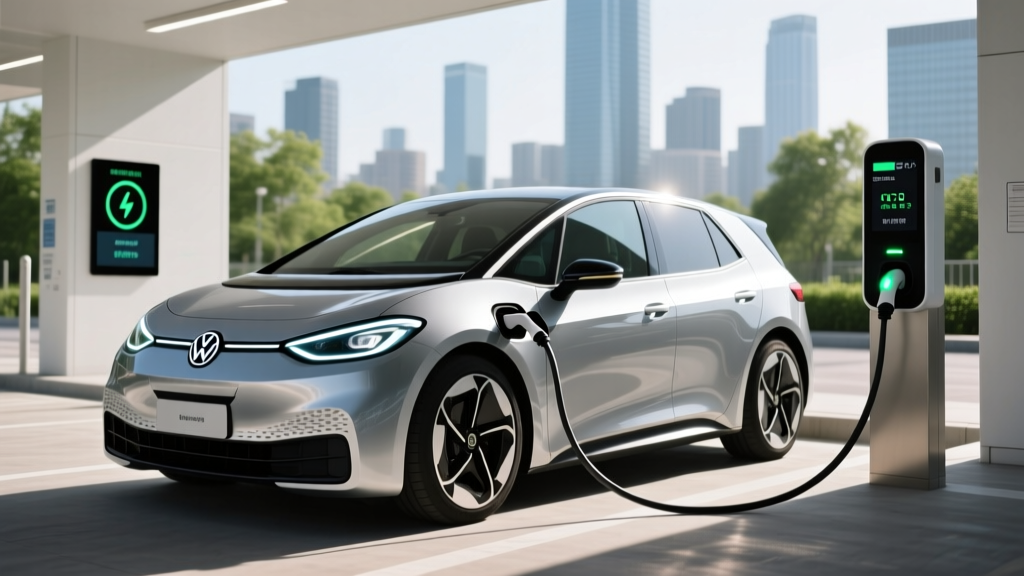
Volkswagen's electric lineup centers on the ID.4 compact SUV and the retro-styled ID. Buzz electric van. The ID.4 remains VW's volume EV play, with a usable battery of approximately 77 kWh (NMC chemistry on AWD trims, LFP available on select RWD configurations), EPA-estimated range up to 291 miles on the Pro S RWD, and DC fast charging that peaks at 175 kW — delivering a 10–80% charge in roughly 28 minutes under ideal conditions.
| Spec | Value |
|---|---|
| EPA Range | 291 mi (expect ~240–260 mi highway/cold weather) |
| Battery (usable) | 77 kWh, NMC |
| Peak DC Fast Charge | 175 kW, 10–80% in ~28 min |
| Level 2 Charge Rate | 11 kW (approx. 7 hrs from 0–100%) |
| Motor Output | 282 hp, 229 lb-ft torque |
| 0–60 mph | 7.7 seconds |
| MPGe (combined) | 107 MPGe |
| Base MSRP | $42,595 (Pro S RWD) |
| Battery Warranty | 8 years / 100,000 miles (70% capacity retention) |
Leasing an ID.4 can sidestep the steepest part of EV depreciation — a real concern given how rapidly EV resale values have shifted — while letting you drive a vehicle with strong daily-driver range and modern ADAS features like VW's Travel Assist (SAE Level 2 driver assistance, meaning you must stay engaged at all times).
5-Year Total Cost of Ownership: VW ID.4 Lease vs. Gas SUV
To understand whether a Volkswagen EV lease makes financial sense, we need to look beyond the monthly payment. Below is a 5-year TCO comparison between a leased 2026 ID.4 Pro S RWD and a comparable gas-powered compact SUV (averaged across popular models like the Toyota RAV2 and Honda CR-V at ~28 MPG combined).
| Cost Category | ID.4 Lease (5 yrs) | Gas SUV Purchase (5 yrs) |
|---|---|---|
| Monthly Payment (60 mo) | $399 × 60 = $23,940 | $480 × 60 = $28,800 |
| Fuel / Charging | $3,600 | $8,250 |
| Insurance | $9,600 | $7,200 |
| Maintenance | $1,500 | $3,800 |
| Depreciation (lease residual risk) | Minimal (fixed residual) | ~$14,000 |
| Federal Tax Credit | Up to –$7,500 (passed via lease) | Up to –$7,500 (if eligible) |
| Net 5-Year Cost | ~$31,140 | ~$40,550 |
Note: Lease payments vary by dealer, region, credit tier, and money factor. The ID.4 lease figure reflects a typical 36-month deal annualized; the gas SUV assumes a 60-month purchase loan at 6.5% APR with $3,000 down. Actual costs depend on your specific deal structure.
Federal Tax Credit: §30D Rules for 2026 Volkswagen EVs
The federal EV tax credit under IRS §30D offers up to $7,500 for qualifying new clean vehicles. For 2026, the rules remain stringent, and eligibility depends on multiple overlapping requirements. Here's the checklist:
- MSRP Cap: SUVs, vans, and pickups must have an MSRP ≤ $80,000; sedans ≤ $55,000. The ID.4 qualifies (MSRP under $55,000 for most trims).
- Buyer Income Limits: Modified adjusted gross income (MAGI) must not exceed $300,000 (joint), $225,000 (head of household), or $150,000 (single) for the year of delivery or prior year — whichever is lower.
- Battery Sourcing: The battery's critical minerals must meet escalating percentage thresholds sourced from the U.S. or FTA partners. For 2026, the critical-mineral requirement is 80% and the battery-component requirement is 100% North American manufactured/assembled. Each prong is worth $3,750.
- Foreign Entity of Concern (FEOC): Vehicles with battery components from a FEOC (primarily Chinese supply chain entities) are disqualified entirely.
- Point-of-Sale Transfer: As of 2024, buyers can transfer the credit to the dealer at purchase, reducing the purchase price directly. For leases, the credit goes to the lessor (the leasing company), who may pass it through as a capitalized-cost reduction — but is not legally required to.
- Final Assembly: Vehicle must undergo final assembly in North America. The ID.4 for the U.S. market is built in Chattanooga, Tennessee, satisfying this requirement.
Lease "loophole" update: Previously, leased EVs could access the commercial clean vehicle credit (§45W) with fewer restrictions. As of 2026, the IRS has tightened guidance on lessor pass-through. Always confirm with the VW dealer whether the $7,500 is reflected in your lease terms as a cap-cost reduction before signing.
Charging Cost vs. Gasoline: The Per-Mile Math
The single largest operating-cost advantage of an EV comes from fuel. Here's how the ID.4 stacks up against a gas SUV at 2026 energy prices:
| Scenario | ID.4 | Gas SUV |
|---|---|---|
| Home charging (Level 2, $0.14/kWh avg) | $0.039/mi | — |
| Public DC fast charging ($0.40/kWh avg) | $0.112/mi | — |
| Gasoline ($3.50/gal, 28 MPG) | — | $0.125/mi |
| Blended EV cost (80% home / 20% DCFC) | $0.054/mi | $0.125/mi |
| Annual cost (12,000 mi/yr) | $648 | $1,500 |
The ID.4 consumes roughly 35 kWh per 100 miles (the inverse of its 107 MPGe rating, per fueleconomy.gov). At the U.S. residential average of ~$0.14/kWh, that translates to under 4 cents per mile on home charging. Even with occasional DC fast charging at higher public rates, the blended cost stays roughly half that of gasoline.
Key caveat: If you cannot charge at home and must rely entirely on public DC fast chargers at $0.40–$0.50/kWh, your cost per mile jumps to $0.11–$0.14/mi — essentially matching or exceeding gasoline. Home Level 2 charging access is the economic linchpin of EV ownership.
Maintenance Savings: What You Actually Skip
EVs eliminate several recurring maintenance items that gas vehicles require. The ID.4's electric powertrain has far fewer moving parts than an internal combustion engine, translating to real dollar savings:
| Service Item | ID.4 | Gas SUV |
|---|---|---|
| Oil changes | None | $450–$600 (10 changes) |
| Transmission fluid | None (single-speed) | $150–$250 |
| Brake pads | $200–$350 (regen extends life 2–3×) | $600–$900 |
| Air filters (engine) | None | $100–$150 |
| Cabin air filter | $80–$120 | $80–$120 |
| Coolant / spark plugs | Coolant check only; no plugs | $200–$400 |
| Tire rotation | $200–$300 | $200–$300 |
| 5-Year Total | ~$1,500 | ~$3,800 |
Regenerative braking is the unsung maintenance hero: by using the electric motor to slow the vehicle and recapture energy, the ID.4's friction brakes see dramatically less wear. Many EV owners report original brake pads lasting 80,000+ miles. However, EV tires tend to wear faster due to the vehicle's higher weight and instant torque — budget for one extra tire set over 5 years compared to a gas equivalent.
Insurance Reality: The Cost EVs Can't Escape
Here's where the EV savings story hits a wall. Insurance premiums for the VW ID.4 typically run 20–35% higher than for a comparable gas-powered compact SUV. Based on national averages, expect to pay roughly $1,900–$2,100/year for the ID.4 versus $1,400–$1,550/year for a gas equivalent.
Why the premium? Three factors drive it:
- Repair costs: EV battery packs and high-voltage components are expensive to replace after collision damage. Even minor accidents that compromise the battery enclosure can trigger total-loss declarations.
- Parts scarcity: EV-specific body panels and structural components have less aftermarket availability, raising claim costs.
- Vehicle MSRP: The ID.4's starting price is higher than a base RAV4 or CR-V, and insurers price comprehensive/collision coverage accordingly.
Over 5 years, this adds approximately $2,400 in extra insurance cost compared to a gas SUV. This is a real expense that partially offsets fuel and maintenance savings — and it's why any honest TCO analysis must include it.
Depreciation and Resale Value: The Leasing Advantage
EV depreciation has been volatile. Between 2023 and 2025, aggressive price cuts by Tesla and others cascaded through the used-EV market, causing some models to lose 45–55% of their value in three years — far worse than the gas-vehicle average of ~35%. The ID.4 was not immune, with 3-year depreciation hovering around 40–48% depending on trim and mileage.
This is precisely where leasing shines. With a lease, the residual value is fixed at signing. If the used-EV market continues to soften, that's the lessor's problem, not yours. You walk away at term end (or buy the vehicle at the predetermined residual if the market has favored EVs).
For a 36-month ID.4 lease, typical residuals sit at 52–58% of MSRP. That means the leasing company absorbs the depreciation risk on a vehicle class where that risk has been substantial. If you plan to keep a vehicle 5+ years, buying may make more sense; if you prefer 3-year cycles, leasing insulates you from EV resale volatility.
State, Local, and Utility Incentives
Beyond the federal §30D credit, many states and utilities offer additional incentives that can meaningfully reduce the cost of a Volkswagen EV lease:
- State rebates: States like California (CVRP, up to $2,000 for income-qualified buyers), Colorado (up to $5,000 state tax credit), and New York (Drive Clean Rebate, up to $2,000) offer substantial additional savings. These vary enormously by jurisdiction and often have income or MSRP restrictions of their own.
- Utility rebates: Many electric utilities offer $250–$1,500 rebates for purchasing or leasing an EV and/or installing a home Level 2 charger. Check your local utility's EV program page.
- HOV lane access: Several states grant single-occupant HOV lane access to EVs — a non-monetary perk with real daily value in congested metro areas.
- Property/sales tax exemptions: Some jurisdictions exempt EVs from personal property tax or offer reduced registration fees.
Always verify current program availability through your state's energy office or AFDC's state incentive database, as these programs frequently change funding levels or sunset entirely.
Decision Framework: Should You Lease a Volkswagen EV?
Lease the ID.4 if:
- You have home Level 2 charging access (the economic case collapses without it)
- You want to avoid EV depreciation risk in a volatile resale market
- You drive 10,000–15,000 miles/year (lease mileage caps typically 10K–15K/yr)
- You qualify for the §30D credit and the dealer passes it through as a cap-cost reduction
- You prefer swapping vehicles every 3 years to stay current on battery/charging tech
Buy (or consider a different vehicle) if:
- You drive 20,000+ miles/year (excess-mile penalties of $0.20–$0.30/mi erase savings)
- You lack reliable home charging and would rely entirely on expensive public DCFC
- You plan to keep the vehicle 6+ years (buying avoids perpetual lease payments)
- The dealer does not pass through the federal credit in the lease terms
Frequently Asked Questions
How much does a Volkswagen ID.4 lease cost per month in 2026?
Typical ID.4 lease deals range from $349 to $499/month depending on trim, term length (usually 36 months), annual mileage allowance (10K–15K), money factor, and whether the dealer passes through the $7,500 federal credit as a cap-cost reduction. Always negotiate the capitalized cost and confirm the money factor before signing.
Can I get the $7,500 federal tax credit on a leased VW ID.4?
Technically, the §30D credit applies to the buyer, and in a lease, the leasing company is the buyer. The lessor may claim the credit and pass the benefit to you as a lower cap cost — but they are not obligated to. Some manufacturers explicitly advertise the credit as a "lease bonus"; confirm in writing with your VW dealer that the $7,500 is reflected in your lease figures.
How much will I save on fuel with the ID.4 vs. a gas SUV?
At 12,000 miles/year with 80% home charging at $0.14/kWh, expect roughly $650/year in electricity versus $1,500/year in gasoline (at $3.50/gal and 28 MPG). That's approximately $850/year or $4,250 over 5 years in fuel savings alone.
Is the VW ID.4 expensive to insure?
Expect insurance premiums of $1,900–$2,100/year for the ID.4, roughly 20–35% more than a comparable gas SUV. Over 5 years, that adds approximately $2,400 in extra cost. Get quotes from multiple insurers before committing — EV insurance rates vary significantly between carriers.
What happens to the ID.4's battery during a lease?
VW covers the ID.4 battery with an 8-year/100,000-mile warranty guaranteeing at least 70% capacity retention. During a typical 3-year lease, real-world degradation is usually 3–5% — you'll barely notice it. Battery replacement during a lease term is extraordinarily rare and would be covered under warranty regardless.
Are there any state incentives for leasing an EV?
Yes, but they vary by state. California, Colorado, New York, Massachusetts, and several others offer rebates or tax credits that can apply to leases. Utility companies in many regions also offer $250–$1,500 EV and home-charger rebates. Check your state's energy office and the AFDC incentive database for current programs in your area.