Quick Answer: Is a Volkswagen EV Right for You?
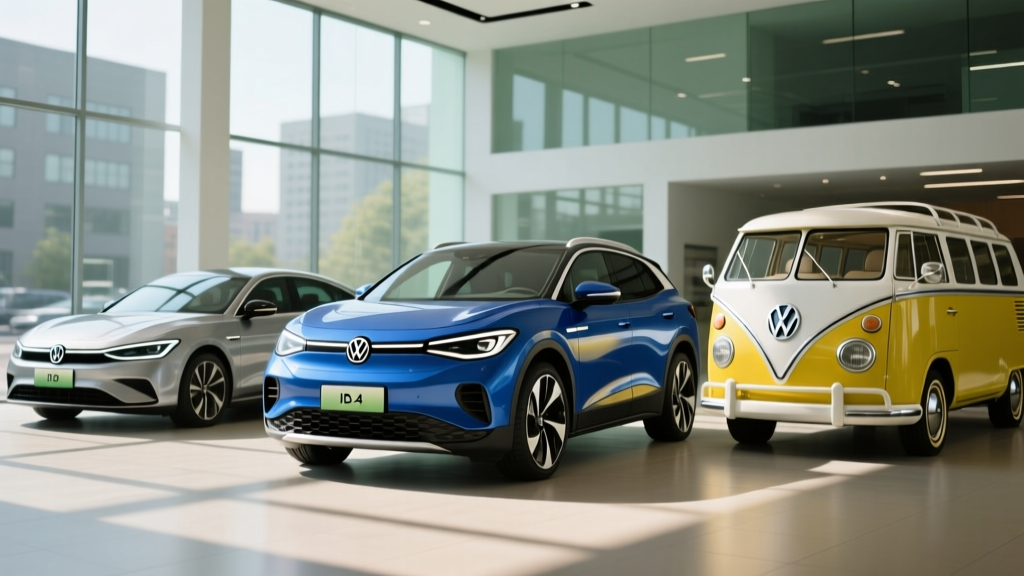
Volkswagen's 2026 EV lineup spans three distinct models: the ID.4 compact SUV (275 mi EPA, from ~$39,990), the ID.7 sedan (up to 340 mi EPA, from ~$49,990), and the ID.Buzz three-row minivan (234 mi EPA, from ~$59,990). All three use NMC battery chemistry with usable capacities from 77–86 kWh, peak DC fast charging from 135–200 kW, and qualify for varying levels of federal tax credit depending on battery sourcing and buyer income. The ID.4 remains the best value entry point for most buyers; the ID.7 targets long-distance commuters; and the ID.Buzz fills a unique three-row electric niche. Choose VW if you want a European-tuned ride, strong build quality, and a growing dealer network — but know that real-world highway range drops 15–20% below EPA, and public charging reliability outside major metros remains inconsistent.
The 2026 Volkswagen EV Lineup at a Glance
Volkswagen currently sells three battery-electric vehicles in the United States, all built on the MEB platform. Here's how they compare on the numbers that matter most:
| Spec | 2026 ID.4 (RWD Pro S) | 2026 ID.7 (Pro S) | 2026 ID.Buzz (Pro S) |
|---|---|---|---|
| EPA Range | 275 mi | 340 mi | 234 mi |
| Real-World Highway Range* | ~220–235 mi | ~275–290 mi | ~185–200 mi |
| Battery (usable) | 77 kWh NMC | 86 kWh NMC | 86 kWh NMC |
| Peak DC Fast Charge | 135 kW | 200 kW | 170 kW |
| 10–80% DC Fast Charge | ~30 min | ~26 min | ~28 min |
| Level 2 Charge Rate | 11 kW | 11 kW | 11 kW |
| Horsepower | 282 hp | 282 hp | 282 hp |
| 0–60 mph | 7.7 sec | 6.5 sec | 7.9 sec |
| MPGe (combined) | 104 MPGe | 114 MPGe | 87 MPGe |
| Base MSRP | $39,990 | $49,990 | $59,990 |
| Battery/Powertrain Warranty | 8 yr / 100,000 mi | 8 yr / 100,000 mi | 8 yr / 100,000 mi |
*Real-world highway range estimated at 70–75 mph in moderate temperatures. Cold weather (below 30°F) can reduce range an additional 20–30%.
Volkswagen EV vs. Gas and Hybrid: The Real Cost Comparison
Shopping a Volkswagen EV means you're likely cross-shopping gas-powered alternatives like the Tiguan, Passat, or Atlas — or hybrids from Toyota and Honda. Here's how the math actually works over five years and 75,000 miles of driving:
| 5-Year Cost Category | VW ID.4 Pro S | VW Tiguan (Gas) | Toyota RAV4 Hybrid |
|---|---|---|---|
| Purchase Price (MSRP) | $39,990 | $30,490 | $33,500 |
| Federal Tax Credit (§30D) | Up to $7,500† | $0 | $0 |
| Effective Purchase Price | ~$32,490 | $30,490 | $33,500 |
| Fuel / Electricity (75k mi) | $2,800‡ | $7,500 | $5,200 |
| Maintenance (5 yr) | $1,200 | $3,500 | $3,000 |
| Insurance (5 yr avg) | $9,500 | $7,800 | $7,500 |
| Estimated 5-Year Total | ~$45,990 | ~$49,290 | ~$49,200 |
† §30D credit eligibility depends on buyer income caps ($150k single / $300k joint), MSRP caps ($55k SUVs, $80k vans), and battery critical-mineral sourcing requirements. Verify at IRS.gov before purchase. Credit can be transferred to the dealer at point of sale as a price reduction.
‡ Electricity cost assumes 70% home charging at $0.16/kWh national average and 30% public DC fast charging at $0.40/kWh. Gas assumes $3.50/gal and 28 MPG combined (Tiguan) or 40 MPG (RAV4 Hybrid).
The ID.4 breaks even with or beats its gas counterpart over five years if you qualify for the full tax credit and charge mostly at home. Without home charging, public DC fast charging costs can push electricity spending up to $4,500+ over 75,000 miles, eroding the advantage. The hybrid RAV4 remains compelling if you lack reliable home charging access — it needs no behavioral change and still delivers strong fuel economy.
Real-World Range and Charging: What the EPA Sticker Doesn't Tell You
Range Reality Check
ID.4: EPA 275 mi → Expect 220–235 mi highway, 190–210 mi in freezing temps
ID.7: EPA 340 mi → Expect 275–290 mi highway, 235–255 mi in freezing temps
ID.Buzz: EPA 234 mi → Expect 185–200 mi highway, 160–175 mi in freezing temps
All VW MEB-platform EVs include a ~5% buffer below the displayed 0% to protect the battery. Cold-weather losses are mitigated by the standard heat pump on Pro S trims.
Understanding the Charge Curve
Volkswagen publishes peak DC fast charge rates — 135 kW for the ID.4, 200 kW for the ID.7 — but peak rate is not sustained rate. The MEB platform's charge curve is relatively flat between 10–50% State of Charge (SoC), then tapers progressively. Here's what a typical DC fast charging session looks like:
- 10–50% SoC: Near-peak kW (e.g., ID.7 sustains ~175–200 kW)
- 50–70% SoC: Moderate taper (~120–150 kW for the ID.7)
- 70–80% SoC: Significant taper (~70–90 kW)
- Above 80%: Slow trickle (~30–40 kW) — not worth waiting for on road trips
On a road trip, plan to charge from 10% to 80% and then move on. The last 20% can take as long as the first 70%. The ID.7's 200 kW peak and larger 86 kWh battery make it the strongest road-trip performer in VW's lineup, adding roughly 190 miles of range in a 26-minute stop. The ID.4 adds about 170 miles in 30 minutes.
Home Charging: The Make-or-Break Factor
All three VW EVs accept 11 kW on Level 2 (240V). That means a full charge from 10% to 100% takes approximately:
- ID.4 (77 kWh): ~7.5 hours
- ID.7 (86 kWh): ~8.5 hours
- ID.Buzz (86 kWh): ~8.5 hours
A Level 2 home charger (48-amp hardwired or 40-amp NEMA 14-50 outlet) is strongly recommended. Installation costs range from $500–$1,500 if your electrical panel has spare capacity, or $2,000–$4,500 if a panel upgrade to 200A is needed. Without home charging, you'll rely on public Level 2 (often $0.25–$0.49/kWh) or DC fast charging ($0.30–$0.60/kWh), which significantly increases operating costs and adds weekly time overhead of 1–3 hours.
Federal Tax Credit Eligibility: What Actually Qualifies in 2026
§30D New Clean Vehicle Credit — 2026 Requirements
- Income caps: Modified AGI ≤ $150,000 (single) / $225,000 (head of household) / $300,000 (joint)
- MSRP caps: ≤ $55,000 for sedans (ID.7) / ≤ $80,000 for SUVs and vans (ID.4, ID.Buzz)
- Battery sourcing: Critical minerals and battery components must meet escalating domestic/free-trade sourcing thresholds — the required percentage increases annually through 2026
- Point-of-sale transfer: You can transfer the credit to the dealer for an upfront price reduction at purchase, rather than waiting to claim it on your tax return
- Assembly: Vehicle must undergo final assembly in North America (all US-spec VW ID models are assembled in Emden or Chattanooga — verify VIN at fueleconomy.gov)
The ID.4 is assembled in Chattanooga, TN, and has historically qualified for the full $7,500 credit for eligible buyers. The ID.7 and ID.Buzz sourcing status may vary — confirm with your dealer and cross-check the IRS eligible vehicle list before signing. Consult a tax professional for your specific situation.
Common Volkswagen EV Misconceptions — Fact-Checked
| Myth | Fact |
|---|---|
| "VW's software is still broken and unusable." | VW's ID.Software 4.0 (standard on 2026 models) significantly improved infotainment responsiveness, over-the-air update reliability, and route planning. It's not class-leading like Tesla or Hyundai's system, but it's functional and stable. Wireless Apple CarPlay and Android Auto are standard. |
| "The battery will need replacing in 5 years." | VW warranties the battery for 8 years / 100,000 miles against degradation below 70% capacity. NMC chemistry typically retains 85–90% capacity after 100,000 miles based on fleet data. Full battery replacement (rare) costs $12,000–$18,000 out of warranty. |
| "EVs don't work in cold climates." | All 2026 VW EVs include a heat pump (Pro S trims) that reduces cold-weather range loss to ~20–30% instead of 40%+. Preconditioning the battery while plugged in further mitigates loss. EVs start reliably in any temperature — no cold-cranking issues. |
| "I can charge from any public station." | 2026 VW EVs use the CCS1 connector standard. VW has also partnered with Tesla to enable Supercharger access via a NACS adapter (included or available). Electrify America remains VW's primary network partner with free charging credits on some trims. |
| "The ID.4 AWD is significantly better." | The ID.4 AWD Pro S adds a front motor for 335 hp and a 6.0-sec 0–60, but drops EPA range to 255 mi and raises MSRP by ~$3,800. For most buyers, the RWD's 275 mi range and adequate 7.7-sec acceleration is the better value. |
First-Time EV Buyer Essentials: What to Know Before You Sign
If this is your first EV purchase, these practical realities aren't always obvious from the brochure:
1. Your Electrical Panel Matters
Before buying, check your home's electrical panel. A 48-amp Level 2 charger requires a 60-amp dedicated circuit. If your panel is 100A or near capacity, an upgrade to 200A costs $1,500–$3,500. Get an electrician's quote before committing to the car — not after.
2. Charging Speed Is Measured in kW, Battery Size in kWh
This is the single most common confusion. kW (kilowatts) measures the rate of energy flow — like water pressure from a hose. kWh (kilowatt-hours) measures total energy stored — like the size of the bucket. The ID.4 has a 77 kWh battery (bucket) and charges at up to 135 kW (flow rate). Higher kW means faster fills; higher kWh means a bigger tank.
3. Plan Road Trips Around Chargers, Not Gas Stations
With 220–235 real-world highway miles in the ID.4, you'll need a DC fast charging stop every 2.5–3 hours on long drives. Use apps like PlugShare, A Better Routeplanner, or the car's built-in route planner. In rural corridors (parts of I-70, I-90, I-10), charger gaps of 100+ miles still exist.
4. Insurance Costs More
EV insurance premiums run 15–25% higher than comparable gas vehicles due to higher repair costs and battery replacement risk. Get quotes before purchasing — some insurers (Geico, Progressive, State Farm) offer EV-specific discounts.
5. Regenerative Braking Changes How You Drive
VW's ID models offer adjustable regen levels (including a B-mode for stronger regen), but they don't offer true one-pedal driving to a full stop like some competitors. Expect a brief adaptation period, then enjoy reduced brake wear — most EV owners report original brake pads lasting 80,000+ miles.
Decision Framework: Which Volkswagen EV (or Alternative) Fits You?
Choose the VW ID.4 if:
- You want an affordable compact EV SUV with 275 mi range and a sub-$33k effective price after tax credit
- You commute under 60 miles daily and can charge at home
- You value a comfortable, quiet ride over sporty handling
- You take 1–2 road trips per year (30-min charging stops are manageable)
Choose the VW ID.7 if:
- You need 300+ real-world miles for long commutes or frequent road trips
- You prefer a sedan with a spacious trunk and premium interior
- You want VW's fastest charging (200 kW peak, ~26 min 10–80%)
- Budget allows ~$50k before credit
Choose the VW ID.Buzz if:
- You need three rows of seating and don't want a minivan from Chrysler or Toyota
- Your daily driving is under 150 miles and road trips are infrequent
- You value unique styling and VW heritage design
- You can absorb a ~$60k price (the §30D credit for vans caps at $80k MSRP, so it qualifies)
Choose a Hybrid Instead (Toyota RAV4 Hybrid, Honda CR-V Hybrid) if:
- You have no access to home or workplace charging
- You frequently drive in extreme cold or remote areas with sparse charging infrastructure
- You want zero behavioral change from your current gas car experience
- Your budget is firmly under $35,000
Frequently Asked Questions
Does the Volkswagen ID.4 qualify for the full $7,500 federal tax credit in 2026?
The US-assembled ID.4 (Chattanooga, TN) has historically qualified for the full $7,500 §30D credit for eligible buyers meeting income caps. However, critical-mineral and battery-component sourcing thresholds increase annually. Always verify current eligibility on the IRS Clean Vehicle Credit page and confirm with your dealer before signing. The credit can be applied as a point-of-sale price reduction.
How long does it take to charge a VW ID.4 at home?
On a Level 2 home charger (11 kW / 48A), the ID.4's 77 kWh battery charges from 10% to 100% in approximately 7.5 hours — easily overnight. On a standard 120V outlet (Level 1, ~1.4 kW), a full charge takes over 50 hours. Level 1 is only practical as emergency trickle charging or for plug-in hybrids with small batteries.
Can I use Tesla Superchargers with a Volkswagen EV?
Yes. Volkswagen has partnered with Tesla to enable Supercharger access for CCS-equipped VW EVs using a NACS adapter. As of 2026, VW includes or offers this adapter, and Tesla's Supercharger network (15,000+ stalls in the US) appears in the VW navigation system. This significantly expands road-trip charging options, particularly in rural areas where Electrify America coverage is thinner.
What happens if my VW EV battery degrades?
VW's battery warranty guarantees at least 70% capacity retention for 8 years or 100,000 miles. In practice, NMC batteries in the MEB platform have shown ~5–8% degradation at 50,000 miles and ~10–15% at 100,000 miles based on owner-reported data. If degradation falls below 70% within warranty, VW will repair or replace the battery at no cost. Out-of-warranty replacement costs $12,000–$18,000 depending on model.
Is the VW ID.4 good for towing?
The ID.4 is rated for 2,700 lbs of towing capacity (braked trailer) — enough for a small utility trailer, a pair of jet skis, or a light pop-up camper. Towing significantly impacts range: expect a 30–45% reduction depending on trailer weight and aerodynamics. The ID.Buzz has a similar 2,700-lb rating. Neither is suitable for large boat or travel-trailer towing.
How does VW's driver assistance compare to Tesla Autopilot?
VW's Travel Assist combines adaptive cruise control and lane centering at SAE Level 2 — meaning you must keep your hands on the wheel and eyes on the road at all times. It's competent for highway cruising but less assertive than Tesla's Autopilot or Ford's BlueCruise in lane-change confidence. VW does not currently offer a hands-free driving system comparable to GM's Super Cruise or Ford's BlueCruise hands-free mode. No consumer vehicle sold today is self-driving — all require active driver supervision.
Sources: EPA fueleconomy.gov for range and MPGe data; IRS.gov for §30D tax credit rules; Volkswagen of America for MSRP and specifications. Pricing and credit eligibility current as of 2026 model year and subject to change.