The Quick Answer on 2027 Mercedes-Benz GLC EV Photos
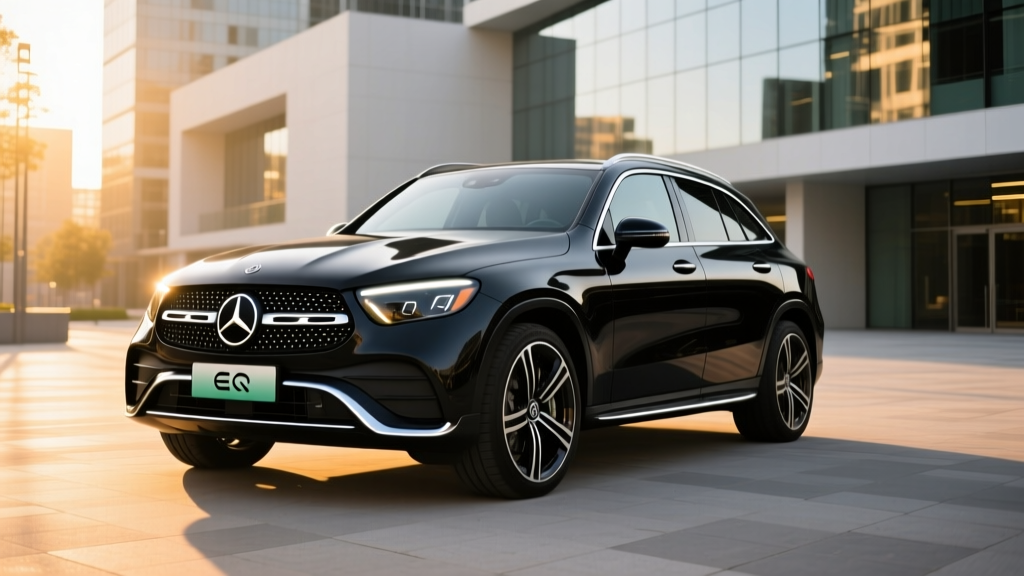
As of mid-2026, official 2027 Mercedes-Benz GLC EV photos have not been released by Mercedes-Benz. The next-generation GLC EV is expected to ride on the new MB.EA (Mercedes-Benz Electric Architecture) platform, with a likely debut in late 2026 or early 2027 as a 2028 model-year vehicle. Leaked spy shots and trademark filings suggest a sleeker, more aerodynamic profile than the current EQC, with an estimated EPA range of 280–320 miles, a usable battery around 85–95 kWh, and DC fast charging up to 220+ kW. Estimated starting MSRP: $58,000–$62,000. Nothing is confirmed — treat all specs below as preliminary until Mercedes publishes official data.
What Spy Photos and Leaks Tell Us About the Next GLC EV
The search for 2027 Mercedes-Benz GLC EV photos reflects strong buyer interest in Mercedes's next mainstream luxury electric SUV — a vehicle positioned to compete directly with the BMW iX3, Audi Q6 e-tron, and Tesla Model Y. While Mercedes has not published official imagery, camouflaged prototypes have been spotted testing in northern Europe, wearing heavy cladding that hints at the production shape beneath.
Here is what the testing mules and industry reporting suggest:
- Platform: MB.EA (Mercedes-Benz Electric Architecture) — a dedicated EV skateboard, not a converted ICE chassis. This means a flat floor, optimized weight distribution, and more interior volume than the outgoing EQC, which shared underpinnings with the gas GLC.
- Body style: A conventional SUV silhouette with a slightly lower roofline and more aggressive rake than the current GLC. The trend toward "coupe-SUV" styling may carry over, but the core GLC EV should prioritize cabin headroom.
- Lighting: Expect Mercedes's latest star-pattern LED daytime running lights and a full-width rear light bar, consistent with the EQE SUV and EQS SUV design language.
- Interior previews: No interior spy shots have surfaced, but the production model will likely feature the MBUX Superscreen or Hyperscreen layout, spanning the dashboard with a passenger-side entertainment display.
If you are searching for 2027 Mercedes-Benz GLC EV photos to evaluate styling, the honest answer is to wait. Camouflaged prototypes reveal proportions but not details. Mercedes typically releases official imagery 6–12 months before production begins.
Estimated Specs: Range, Battery, and Charging
Based on MB.EA platform capabilities, supplier reporting, and Mercedes's stated efficiency targets, here is what the next GLC EV is expected to deliver. All figures are preliminary estimates and subject to change.
| Spec | Estimated Figure | Notes |
|---|---|---|
| EPA Range | 280–320 mi | Depends on trim and wheel size; real-world highway likely 240–280 mi |
| Battery (Usable) | 85–95 kWh | Expected NMC chemistry; LFP unlikely in a luxury Mercedes |
| Peak DC Fast Charge | 220–250 kW | 10–80% in approximately 22–28 minutes (estimated) |
| Level 2 AC Charge | 11 kW (optional 22 kW) | ~9–10 hours for full charge at 11 kW |
| 0–60 mph | 5.5–6.5 sec (RWD); 4.0–4.8 sec (AWD) | Dual-motor AWD variant expected |
| Horsepower | 280–400 hp | Varies by single vs. dual motor |
| Connector | NACS (Tesla standard) | Mercedes committed to NACS for North American models from 2025+ |
| Drivetrain | RWD standard, AWD available | AWD likely branded "4MATIC" |
Real-World Range Reality Check
An EPA estimate of 300 miles sounds comfortable, but real-world results depend heavily on conditions. Expect approximately 15–25% range loss at sustained highway speeds (75+ mph), and 20–35% loss in freezing temperatures (below 30°F) due to cabin heating demand and battery chemistry limitations. If your daily commute is 60 miles round-trip with highway driving in a cold climate, a 300-mile EPA rating provides a practical buffer — but plan for 240–260 usable miles on a winter road trip.
How the GLC EV Compares: Electric vs. Gas GLC vs. Plug-In Hybrid
The current gas-powered GLC 300 starts around $47,000 and achieves roughly 25 MPG combined (per EPA data on fueleconomy.gov). The GLC 350e plug-in hybrid starts near $59,000 and offers about 38 miles of electric-only range. Here is how the upcoming GLC EV stacks up against both:
| Metric | GLC EV (Est.) | GLC 300 (Gas) | GLC 350e (PHEV) |
|---|---|---|---|
| Starting MSRP | $58,000–$62,000 | ~$47,000 | ~$59,000 |
| EPA Range / Fuel Economy | 280–320 mi / ~95 MPGe | ~380 mi / 25 MPG | 38 mi electric + ~350 mi gas / 56 MPGe (charge-sustaining: 25 MPG) |
| Annual Fuel/Energy Cost (15k mi) | ~$600–$900 (home charging) | ~$2,100–$2,400 | ~$1,200–$1,600 (mixed) |
| Maintenance (5-Year Est.) | ~$1,500–$2,500 | ~$3,500–$5,000 | ~$3,000–$4,500 |
| Federal Tax Credit (§30D) | Up to $7,500 (if eligible) | $0 | Up to $7,500 (if eligible) |
| 0–60 mph | 4.0–6.5 sec | 6.2 sec | 6.6 sec |
Key takeaway: The GLC EV will likely carry a $10,000–$15,000 premium over the gas GLC 300 at the base trim. However, if you qualify for the full §30D federal tax credit (up to $7,500, subject to income caps, MSRP caps, and battery-sourcing requirements), the effective price gap narrows to roughly $5,000–$8,000. Over five years, lower fuel and maintenance costs can recover an additional $4,000–$7,000, making the EV competitive with the gas model on total cost of ownership — provided you can charge at home.
Real Ownership Costs: What the Sticker Price Doesn't Show
Buying a luxury EV SUV involves more than MSRP. Here is a realistic 5-year cost projection for the estimated GLC EV, assuming 15,000 miles/year, home Level 2 charging, and a mid-tier trim around $62,000:
| Cost Category | GLC EV (Est.) | GLC 300 (Gas) |
|---|---|---|
| Purchase Price (MSRP) | $62,000 | $50,000 (with options) |
| Federal Tax Credit | –$7,500 (if eligible) | $0 |
| Effective Purchase | $54,500 | $50,000 |
| Home Charger Install (Level 2) | $1,200–$2,500 | $0 |
| Energy/Fuel (5 Years) | $3,000–$4,500 | $10,500–$12,000 |
| Maintenance (5 Years) | $1,500–$2,500 | $3,500–$5,000 |
| Insurance (5 Years, Est.) | $9,000–$12,000 | $7,000–$9,500 |
| Estimated Depreciation | $22,000–$27,000 | $18,000–$22,000 |
| Total 5-Year Cost (Approx.) | $69,000–$76,000 | $71,000–$79,000 |
Several factors deserve attention:
- Insurance is typically 15–30% higher for EVs in the luxury segment, driven by higher repair costs for battery-adjacent components and aluminum body panels. Get quotes before committing.
- Home charging installation ranges from $800 (simple 240V/50A circuit near the panel) to $3,500+ if your electrical panel needs upgrading from 100A to 200A service. Always get a licensed electrician's assessment before purchase.
- Depreciation is the wild card. Luxury EVs have depreciated faster than gas equivalents in recent years, partly due to rapid tech obsolescence and Tesla-initiated price cuts. Mercedes's brand equity helps, but expect 40–50% depreciation over 5 years — better than some EVs, worse than a Toyota RAV4.
- The §30D tax credit is not guaranteed. Current IRS rules cap buyer modified adjusted gross income ($300k joint / $150k single), cap SUV MSRP at $80,000, and require battery critical-mineral and component sourcing thresholds that change annually. Verify eligibility at irs.gov or with a tax professional before relying on the credit in your budget.
Federal Tax Credit Eligibility: What Applies to the GLC EV
If the 2027/2028 GLC EV launches within the MSRP cap (under $80,000 for SUVs), it could qualify for up to $7,500 under §30D — split into two $3,750 halves tied to critical-mineral sourcing and battery-component manufacturing requirements. Here is the eligibility checklist as of 2026 rules:
- MSRP cap: Vehicle MSRP must not exceed $80,000 (SUV classification)
- Buyer income cap: MAGI ≤ $300,000 (married filing jointly) or ≤ $150,000 (single)
- Critical minerals: A specified percentage of battery critical minerals must be sourced from the US or FTA partners (threshold increases annually)
- Battery components: A specified percentage of battery components must be manufactured or assembled in North America (threshold increases annually)
- Point-of-sale transfer: Buyers can elect to transfer the credit to the dealer at purchase, reducing the sale price directly — but this requires dealer participation and IRS registration
- Foreign entity of concern (FEOC): Vehicles with battery components or critical minerals from certain foreign entities are disqualified
Mercedes has not confirmed the GLC EV's battery supply chain. The EQS SUV, built in Alabama with some US-sourced components, has qualified for partial or full credit depending on the model year. The GLC EV's eligibility will depend on where Mercedes sources cells and modules for the MB.EA platform. This is worth monitoring closely as launch approaches.
Decision Framework: Should You Wait for the GLC EV?
Choose the GLC EV (Wait) If:
- You want a dedicated EV platform with optimized range and packaging — not a converted gas chassis
- You have reliable home charging (Level 2) and drive under 300 miles/day
- You value the Mercedes brand, MBUX tech, and luxury build quality over the lowest possible price
- You can wait until late 2027 or 2028 for delivery and want the latest battery and charging tech
- You qualify for the §30D credit and the GLC EV meets sourcing requirements at launch
Choose an Alternative Now If:
- You need a vehicle in the next 6 months — the GLC EV is not available for purchase
- You lack home charging and your area has limited public DC fast-charging infrastructure
- Your budget is under $50,000 — consider the Tesla Model Y ($44,990 base), Hyundai Ioniq 5 ($42,000 base), or a used luxury EV
- You drive frequently in extreme cold (below 0°F) with no garage — the PHEV GLC 350e eliminates range-loss risk
- You prioritize proven reliability data — the GLC EV has none yet as an unproven model
Common Misconceptions About the Upcoming GLC EV
| Myth | Fact |
|---|---|
| "The GLC EV is just a renamed EQC." | The outgoing EQC was a converted ICE platform with limited range (~220 mi EPA). The new GLC EV uses the dedicated MB.EA skateboard — expect significantly better range, interior space, and charging speed. |
| "It will get the full $7,500 tax credit." | Not guaranteed. Credit depends on battery sourcing, your income, and MSRP at launch. Mercedes has not confirmed supply-chain compliance for the GLC EV. |
| "300 miles of range means I can drive 300 miles in any condition." | Highway driving at 75 mph reduces range by ~15–25%. Freezing temperatures can cut range by 20–35%. Plan for 200–250 real-world miles on a winter road trip. |
| "I don't need home charging; public chargers are everywhere." | Public DC fast charging costs 2–3× more per kWh than home charging. Relying solely on public charging erases most of the EV cost advantage and adds significant time to your routine. |
| "The GLC EV will be self-driving." | Mercedes offers Level 2 driver-assistance (similar to Tesla Autopilot). The driver must remain engaged at all times. Mercedes has certified Level 3 (Drive Pilot) only in limited conditions on specific models in Nevada and California — not on the GLC EV at this time. |
What First-Time EV Buyers Should Know Before Committing
If the GLC EV will be your first electric vehicle, prepare for a fundamentally different ownership experience — better in many ways, but with real adjustments:
- Home charging is non-negotiable for most owners. A Level 2 home charger (240V, 32–48A) adds roughly 25–35 miles of range per hour of charging. An overnight charge fully replenishes the battery. Budget $1,200–$2,500 for professional installation, more if your panel needs upgrading.
- Understand kW vs. kWh. Kilowatt-hours (kWh) measure battery capacity — like gallons in a gas tank. Kilowatts (kW) measure charging power — like the flow rate of a gas pump. A 90 kWh battery charged at 11 kW (Level 2) takes ~8–9 hours; at 220 kW (DC fast), the same battery charges from 10–80% in roughly 25 minutes.
- Charging curves are not linear. DC fast chargers peak at a specific kW only when the battery is at a low state of charge (typically 10–30%). Above 80%, charging slows dramatically to protect battery health. A "220 kW peak" does not mean 220 kW sustained — the average rate over a 10–80% session is typically 60–70% of peak.
- Preconditioning matters. Mercedes's navigation system will precondition the battery (warm it to optimal temperature) when you navigate to a DC fast charger. This significantly improves charging speed, especially in cold weather. Always use the built-in nav for charging stops.
- Plan road trips around chargers, not just distance. Use tools like A Better Routeplanner or the Mercedes me app to map charging stops. On a 400-mile trip, expect one 25–30-minute DC fast-charge stop.
Frequently Asked Questions
When will official 2027 Mercedes-Benz GLC EV photos be released?
Mercedes typically releases official photos 6–12 months before production begins. If the GLC EV debuts as a 2028 model-year vehicle, expect official imagery in late 2026 or early 2027. Until then, only camouflaged spy shots exist.
Will the GLC EV replace the EQC?
Yes, effectively. The EQC was discontinued in most markets, and the MB.EA-based GLC EV is its spiritual and strategic successor. Mercedes is consolidating its EV naming under the core model names (GLC, GLE) rather than the separate "EQ" sub-brand.
What platform will the new GLC EV use?
The MB.EA (Mercedes-Benz Electric Architecture) platform — a dedicated EV skateboard with a flat battery pack, rear-biased weight distribution, and support for both single-motor RWD and dual-motor AWD configurations.
How much will the 2027/2028 GLC EV cost?
Estimated starting MSRP is $58,000–$62,000 for a base RWD trim, with AWD and higher trims reaching $68,000–$75,000. The §30D tax credit could reduce the effective price by up to $7,500 if the vehicle and buyer meet all eligibility requirements.
Will it have NACS or CCS charging?
Mercedes has committed to the NACS (North American Charging Standard) connector for all new EVs sold in North America starting with 2025 model-year vehicles. The GLC EV should ship with NACS natively, granting access to Tesla Superchargers without an adapter.
Is the GLC EV a good choice for cold climates?
Mercedes is expected to include a heat pump for efficient cabin heating, which reduces cold-weather range loss compared to resistive heaters. However, expect 20–35% range reduction in sustained sub-freezing temperatures. If you live in Minnesota or Montana and lack a garage, a PHEV like the GLC 350e may be a safer choice until solid-state batteries mature.
Can I reserve one now?
No. Mercedes has not opened reservations for the next-generation GLC EV. Reservations typically open 3–6 months before production. Monitor the Mercedes-Benz USA website for announcements.