Quick Answer: What Do the Volkswagen Electric GTI Spy Shots Tell Us?
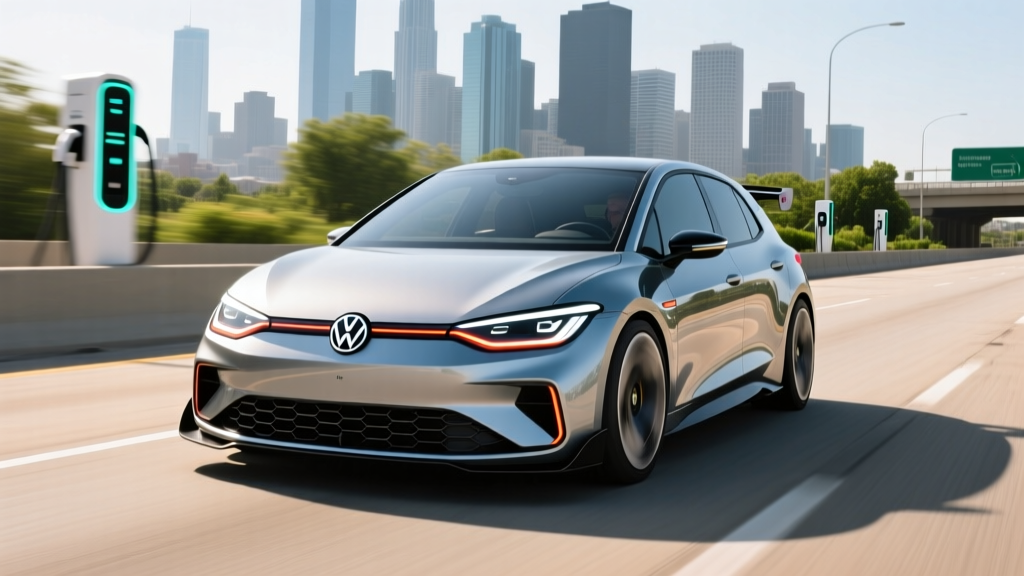
The latest Volkswagen electric GTI spy shots and official teasers point to a production version of the ID. GTI, an all-electric hot hatch built on VW's MEB platform. Based on the ID.2all concept revealed in 2023 and subsequent prototype sightings through 2025–2026, the production ID. GTI is expected to deliver roughly 220–260 horsepower, a ~260–280 mile EPA range (estimated), and a base price near $35,000–$40,000. Production is anticipated to begin in Europe around 2027, with a U.S. launch still unconfirmed. If you're a hot-hatch enthusiast considering going electric, this is VW's first serious attempt at an EV that prioritizes driving engagement over mere efficiency — but availability, pricing, and U.S. market plans remain the biggest unknowns.
The ID. GTI: From Spy Shots to Showroom
Volkswagen's GTI badge has defined the affordable hot hatch segment for nearly five decades. The ID. GTI concept, first shown at IAA Mobility 2023 in Munich, signaled that VW intends to carry that legacy into the battery-electric era. Since then, prototype mules and camouflaged test vehicles — the subject of numerous spy shots circulating through EV and enthusiast media — have been spotted testing on European roads, suggesting a production program is well underway.
Here's what we can reasonably piece together from official concept data, spy-shot analysis, and VW's current MEB platform capabilities:
| Attribute | Estimated / Concept Figure |
|---|---|
| Platform | MEB (modified for ID.2x family, front-wheel-drive architecture) |
| Battery (usable) | ~58–65 kWh (likely NMC chemistry) |
| EPA Range (est.) | ~260–280 mi (real-world highway: ~220–240 mi) |
| Power Output | ~220–260 hp (single front motor, GTI-tuned) |
| 0–60 mph (est.) | ~6.0–6.5 seconds |
| Peak DC Fast Charge | ~125–150 kW (10–80% in ~25–30 min est.) |
| Level 2 AC Charging | 11 kW onboard charger (~6.5 hrs for full charge) |
| Estimated Base MSRP | $35,000–$40,000 (U.S., if offered) |
| Production Start (Europe) | ~2027 |
| U.S. Availability | Unconfirmed |
Important caveat: These are preliminary estimates based on the concept and VW's current MEB84 platform iteration. Final production specs, especially for a U.S. variant, may differ significantly. VW has not confirmed a North American launch for the ID. GTI as of early 2026.
How Would an Electric GTI Compare to Gas and Hybrid Hot Hatches?
The GTI has always been about accessible performance — a car you can drive to work Monday and hit a canyon road Saturday. Let's see how the projected ID. GTI stacks up against the current gas-powered VW Golf GTI and a popular hybrid alternative, the Toyota GR Corolla (which is gas-only but serves as a performance benchmark), as well as the Hyundai Ioniq 5 N as the closest existing electric hot-hatch rival.
| Metric | VW ID. GTI (Est.) | 2026 VW Golf GTI (Gas) | Hyundai Ioniq 5 N (EV) | 2026 Toyota GR Corolla (Gas) |
|---|---|---|---|---|
| Power | ~240 hp | 241 hp | 641 hp (N Grin Boost) | 300 hp |
| 0–60 mph | ~6.2s | 5.9s | 3.4s | 4.9s |
| EPA Range / Tank | ~270 mi | ~380 mi (14.5 gal) | 221 mi | ~340 mi (13.2 gal) |
| Fuel / Energy Cost per Mile | ~$0.04–0.06 (home) | ~$0.14 (28 mpg, $3.90/gal) | ~$0.04–0.06 | ~$0.16 (24 mpg) |
| Curb Weight (est.) | ~3,600 lbs | ~3,150 lbs | ~4,860 lbs | ~3,330 lbs |
| Est. Starting Price | $35,000–$40,000 | $32,435 | $66,000 | $38,000 |
Key takeaway: The electric GTI won't be the fastest hot hatch in the segment — the Ioniq 5 N occupies that extreme-performance tier at nearly double the price. Instead, VW appears to be targeting the traditional GTI formula: moderate power, manageable weight (by EV standards), and a price that undercuts performance-EV rivals. The instant torque of an electric motor should make it feel quicker than its 0–60 time suggests in city driving, but the ~450-lb weight penalty over the gas GTI will be noticeable in corners unless VW's chassis engineers work their usual magic.
Real Costs: Purchase, Charging, and Ownership
If VW does bring the ID. GTI to the U.S., buyers will want to understand the full financial picture. Here's a projected five-year cost breakdown compared to the gas Golf GTI, assuming 15,000 miles/year and national average energy prices.
| Cost Category | ID. GTI (Est.) | Gas Golf GTI |
|---|---|---|
| Purchase Price (base MSRP) | $37,500 | $32,435 |
| Federal Tax Credit (§30D) | Up to $7,500 (eligibility dependent) | $0 |
| Effective Purchase Price | ~$30,000 | $32,435 |
| 5-Year Fuel/Energy (75,000 mi) | ~$3,375 (home charging at $0.15/kWh) | ~$10,125 (28 mpg, $3.90/gal avg) |
| 5-Year Maintenance (est.) | ~$1,200 | ~$3,500 |
| 5-Year Insurance (est.) | ~$9,500 | ~$8,200 |
| 5-Year Total (est.) | ~$44,075 | ~$54,260 |
Notes on these estimates:
- Tax credit: The IRS §30D credit has strict requirements — buyer income caps ($150K single / $300K joint), vehicle MSRP caps ($55K for cars), and battery critical-mineral/critical-sourcing rules that change yearly. Never assume you qualify without checking current-year IRS guidance or consulting a tax professional.
- Charging costs assume 80% home Level 2 charging at $0.15/kWh and 20% public DC fast charging at $0.40/kWh. Rates vary dramatically by utility and region.
- Insurance for EVs tends to run 10–20% higher than equivalent gas vehicles due to repair costs and battery replacement risk. Get quotes before purchasing.
- Maintenance savings for EVs are real — no oil changes, fewer brake replacements (thanks to regenerative braking), no spark plugs or timing belts — but tire wear is often higher due to instant torque and vehicle weight.
Real-World Ownership: What First-Time EV Buyers Should Know
Spy shots and concept specs are exciting, but owning an EV daily requires practical preparation. Whether the ID. GTI or any other electric hot hatch ends up in your garage, these factors will define your experience:
Home Charging Is Non-Negotiable for Most Owners
Over 80% of EV charging happens at home. If you can install a Level 2 (240V) home charger — typically a 32–48 amp wallbox on a dedicated circuit — you'll wake up every morning with a full battery. Installation costs range from $500–$2,500 depending on your electrical panel's capacity and the distance from panel to garage. Homes with older 100-amp panels may need a $2,000–$4,000 panel upgrade to support a 48-amp charger.
If you live in an apartment or lack off-street parking, public charging becomes your primary fueling source. That means relying on DC fast-charging networks (Electrify America, EVgo, Tesla Supercharger with NACS adapter) at $0.30–$0.50/kWh — roughly tripling your per-mile energy cost versus home charging and adding 25–35 minutes of stop time every few days.
Range in the Real World vs. the EPA Sticker
The EPA range estimate assumes a mix of city and highway driving at moderate temperatures. In practice:
- Highway driving at 75+ mph: Expect 15–20% less than the EPA figure. Aerodynamic drag increases exponentially with speed, and EVs are less efficient at sustained highway speeds than in stop-and-go city traffic (where regenerative braking recovers energy).
- Cold weather (below 30°F): Battery chemistry slows down, and cabin heating draws significant power. Expect 20–35% range loss in freezing conditions, depending on whether the vehicle has a heat pump (more efficient) or resistive heating. VW's ID.4 includes a heat pump in most trims — we'd expect the same for the ID. GTI.
- Charging curve taper: Peak DC fast-charge rates (e.g., 150 kW) are sustained only between roughly 10–50% state of charge. Above 80%, charging slows dramatically to protect battery health. A "10–80% in 25 minutes" claim doesn't mean 0–100% in 30 minutes — that final 20% can take another 20+ minutes.
Battery Longevity and Warranty
VW currently provides an 8-year/100,000-mile battery warranty on its ID. models, covering capacity loss below 70% of original. Real-world degradation data from existing MEB-platform vehicles (ID.4, ID. Buzz) suggests roughly 5–8% capacity loss over the first 100,000 miles under normal use — meaning a 270-mile-range ID. GTI might deliver ~250 miles after a decade of typical driving. That's acceptable, but it's a far cry from the "battery will need replacing in 5 years" myth that still circulates.
Common Misconceptions About Electric Hot Hatches
| Myth | Fact |
|---|---|
| "EVs are all heavy and can't handle corners." | While EVs are heavier than gas equivalents, a low center of gravity (battery pack under the floor) reduces body roll. The ID. GTI's ~3,600-lb target weight is manageable — similar to a 2010s-era WRX. Chassis tuning matters more than raw weight. |
| "The battery will need a $20,000 replacement soon." | Modern NMC and LFP batteries are designed to outlast 150,000+ miles with gradual degradation. Replacement is rarely needed under warranty, and costs are declining. Full pack replacement on current MEB vehicles is ~$12,000–$16,000 — not $20K+, and typically unnecessary. |
| "I'll qualify for the full $7,500 tax credit." | The §30D credit has MSRP caps ($55K for cars), buyer income limits, and battery-sourcing requirements that disqualify many vehicles. As of 2026, many EVs qualify for only a partial credit or none at all. Always verify at IRS.gov before counting on it. |
| "Electric hot hatches can't be fun without engine noise and gears." | Sound and shift simulation (like Hyundai's N e-shift) are divisive, but instant torque delivery, one-pedal driving precision, and a low polar moment of inertia create a different but legitimate type of driving engagement. Whether it replaces the GTI's character is subjective. |
| "Charging takes too long for road trips." | A 25–30 minute DC fast charge every 200–240 miles aligns with natural rest-stop breaks. The constraint is charger availability and reliability, not charge time itself. Plan routes around proven networks (Tesla Supercharger, Electrify America). |
Decision Framework: Should You Wait for the ID. GTI or Buy Now?
Choose Your Path
Wait for the VW ID. GTI if:
- You're a GTI loyalist who wants an electric hot hatch with VW's specific chassis character and design language.
- Your current vehicle is adequate for 1–2 more years, and you don't need to buy immediately.
- You want a sub-$40,000 electric performance car and are willing to accept that U.S. availability is unconfirmed.
- You have reliable home Level 2 charging and a daily commute under 80 miles round-trip.
Buy the Hyundai Ioniq 5 N now if:
- You want a proven, available electric performance car today and budget allows ~$66,000.
- Track capability and extreme performance (641 hp, 3.4s 0–60) are priorities.
- You accept 221 miles of EPA range and ~4,860-lb curb weight as trade-offs.
Stick with the gas Golf GTI (or GR Corolla) if:
- You lack home charging access and your area has sparse public DC fast-charging infrastructure.
- You regularly drive 400+ mile road trips and don't want to plan around charging stops.
- You live in an extremely cold climate where 25–35% winter range loss would make a ~270-mile EV impractical (dropping to ~175–200 miles).
- Manual transmission engagement is a non-negotiable part of the hot-hatch experience for you.
Consider a PHEV compromise (like the upcoming Golf GTE or similar) if:
- You want electric commuting (30–40 miles EV-only) with gas-engine road-trip flexibility.
- You're not ready to commit to a full BEV but want to reduce daily fuel consumption.
What VW Needs to Get Right
The spy shots and concept previews generate excitement, but VW's track record with the ID. family has been mixed. The ID.4 is a competent crossover but drew criticism for sluggish infotainment software and unremarkable driving dynamics. The ID. GTI must address these specific areas to succeed:
- Software responsiveness: VW's ID. software (now at version 4.0+) has improved, but the touchscreen-centric climate controls and occasional lag remain pain points. A GTI buyer expects crisp, immediate feedback from every control.
- Steering feel and chassis tuning: The MEB platform's rear-drum-brake, front-strut architecture can feel numb. VW's GTI engineers need to extract the communicative steering and planted cornering that defined the Mk7 and Mk8 GTI.
- U.S. market commitment: VW discontinued the Golf hatchback (gas) in the U.S. after 2021, keeping only the GTI and Golf R. If the ID. GTI remains a Europe-only product, it will be irrelevant to American hot-hatch buyers. VW needs to confirm North American plans early to retain enthusiast interest.
- Pricing discipline: At $35,000–$40,000, the ID. GTI would undercut the Ioniq 5 N dramatically and compete directly with the gas GTI on total cost of ownership. If VW prices it above $45,000, the value proposition collapses.
Frequently Asked Questions
When will the Volkswagen ID. GTI be available in the U.S.?
VW has not confirmed a U.S. launch for the ID. GTI as of early 2026. European production is expected around 2027. If a U.S. version is greenlit, it would likely arrive as a 2028 or 2029 model. Monitor VW's U.S. press site for announcements.
Will the ID. GTI qualify for the $7,500 federal EV tax credit?
It's too early to confirm. The §30D credit requires the vehicle's battery to meet critical-mineral and battery-component sourcing thresholds, which change annually. VW's current MEB vehicles have had inconsistent credit eligibility. If the ID. GTI is priced under $55,000 (MSRP cap for cars) and meets sourcing rules, it could qualify — but buyers should verify in the purchase year.
Is an electric GTI actually fun to drive compared to the gas version?
Fun is subjective, but the electric GTI will offer instant torque (no turbo lag), a lower center of gravity, and the ability to pre-condition the cabin while plugged in. It will likely feel quicker in city driving and smoother in traffic. Where it may fall short is in raw steering feedback, lightweight agility, and the emotional connection of a revving turbocharged engine with a manual or DSG transmission. VW will need to tune the chassis carefully to close that gap.
What happens to range if I drive the ID. GTI aggressively?
Hard acceleration and sustained high speeds consume significantly more energy. In aggressive driving, expect range to drop 25–40% below the EPA estimate. A 270-mile EPA rating could shrink to 160–200 miles during a spirited canyon run or sustained 85+ mph highway driving. This is true for all EVs — the faster you go, the more energy you burn, and there's no fuel tank to oversize as a buffer.
How does the ID. GTI compare to the Tesla Model 3 Performance?
Different vehicles for different buyers. The Model 3 Performance offers 510 hp, a 3.0-second 0–60, and 315 miles of EPA range for ~$52,990. It's a sedan, not a hatchback, and it's heavier and more powerful than the GTI formula calls for. The ID. GTI targets a lower price point, a more compact hatchback form factor, and a driving character focused on balance rather than brute acceleration. If you want a practical, affordable electric hot hatch, the ID. GTI (if it arrives) fills a gap the Model 3 doesn't address.
Should I be concerned about VW's EV reliability record?
VW's ID. vehicles have received average to slightly below-average reliability scores from sources like Consumer Reports, primarily due to software glitches and electrical-system quirks rather than powertrain failures. The battery and drive motors themselves have proven robust. VW's 8-year/100,000-mile battery and powertrain warranty provides meaningful coverage. If software reliability improves with the next-generation ID.2x platform, this concern should diminish.