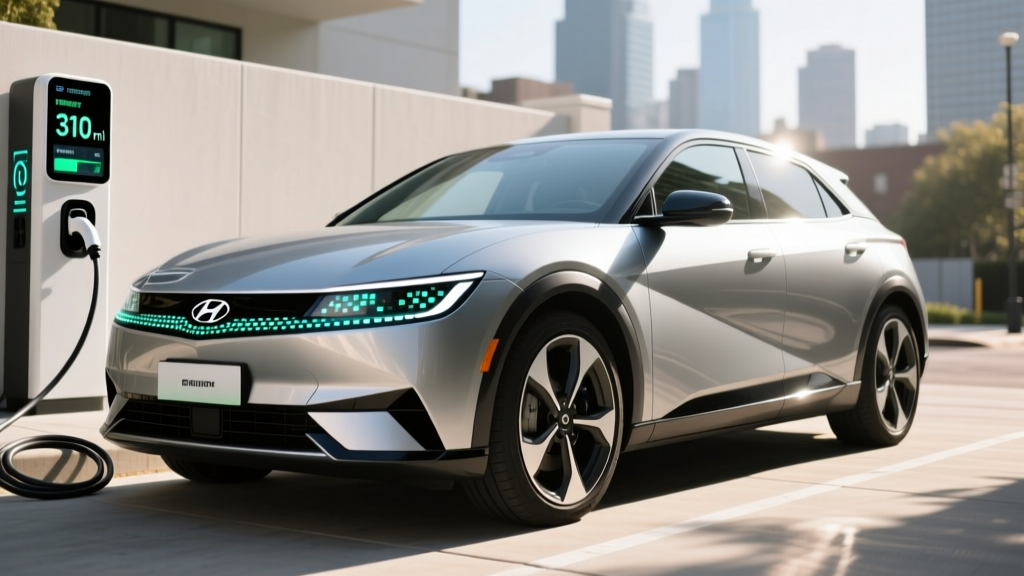
Quick Verdict: Is the 2024 Hyundai Ioniq 5 Worth Leasing?
The 2024 Hyundai Ioniq 5 remains one of the most well-rounded electric crossovers on the market, combining an 800-volt architecture for class-leading DC fast charging, a spacious cabin, and competitive EPA range. For lease shoppers, it presents a compelling value proposition — particularly because Hyundai's lease deals often include the benefit of a $7,500 lease cash incentive that effectively lowers monthly payments, even when the vehicle might not qualify for the full federal purchase credit due to battery-sourcing rules.
Whether you're considering a 2024 Hyundai Ioniq 5 lease to avoid long-term battery degradation risk, or you want to drive an EV with some of the fastest charging speeds in its class, this retro-styled crossover deserves serious consideration. Below, we break down every number that matters — from real-world range to total cost of ownership.
2024 Hyundai Ioniq 5: Full Specifications
| Spec | SE/SEL RWD | SE/SEL/Limited AWD |
|---|---|---|
| EPA Range | 303 miles | 260 miles |
| Battery (usable) | 77.4 kWh (NMC) | 77.4 kWh (NMC) |
| Horsepower | 168 hp | 320 hp |
| Torque | 258 lb-ft | 446 lb-ft |
| 0-60 mph | 7.0 sec | 4.5 sec |
| Drivetrain | Rear-wheel drive | Dual-motor AWD |
| Max DC Fast Charge | 240 kW | 240 kW |
| 10-80% DCFC Time | ~18 min | ~18 min |
| Level 2 Charge Rate | 10.9 kW (~44 mi/hr) | 10.9 kW (~44 mi/hr) |
| MPGe (combined) | 132 MPGe | 113 MPGe |
| Efficiency | 25 kWh/100 mi | 30 kWh/100 mi |
| Cargo (rear seats up) | 27.2 cu ft | 27.2 cu ft |
| Cargo (rear seats folded) | 59.3 cu ft | 59.3 cu ft |
| Frunk | 0.85 cu ft (RWD) | 0.85 cu ft (AWD) |
| Rear Legroom | 39.4 in | 39.4 in |
| Base MSRP | $41,800 | $45,850 |
| Battery Warranty | 10 years / 100,000 miles | |
| Vehicle Warranty | 5 years / 60,000 miles | |
Source: EPA / fueleconomy.gov, Hyundai USA
Real-World Range: What to Actually Expect
RWD (303 mi EPA): Expect 250–275 miles on the highway at 70 mph; 220–240 miles in cold weather (below 32°F) with cabin heating.
AWD (260 mi EPA): Expect 215–235 miles highway; 185–205 miles in cold weather.
These estimates are based on independent testing and owner reports. Highway speeds, elevation changes, and HVAC use all reduce range.
The Ioniq 5's 77.4 kWh NMC (nickel-manganese-cobalt) battery pack delivers strong EPA numbers, but real-world efficiency tells a more nuanced story. The RWD model achieves an impressive 25 kWh per 100 miles in mixed driving — that's among the best in the midsize EV crossover segment. In city driving with frequent regenerative braking opportunities, you'll easily approach or exceed the 303-mile EPA estimate.
However, sustained highway driving at 75+ mph pushes consumption closer to 30–33 kWh/100 mi, cutting effective range to roughly 235–255 miles for the RWD. Cold weather is the bigger penalty: lithium-ion batteries lose efficiency below freezing, and cabin heating in the Ioniq 5 (which uses a standard resistance heater on most trims, not a heat pump) can reduce range by 25–35%. If you live in Minnesota or Maine, budget for 200–220 miles of usable range in January.
The AWD model trades about 43 miles of EPA range for 152 additional horsepower and all-weather traction. For most buyers in snow-belt states, that trade-off is worth it — but understand you're working with a ~260-mile baseline that drops further on the highway and in cold.
Charging Speed: The Ioniq 5's Biggest Advantage
This is where the Ioniq 5 separates itself from nearly every competitor in its price range. Thanks to its 800-volt electrical architecture (shared with the Kia EV6 and Genesis GV60), the Ioniq 5 can accept DC fast charging at up to 240 kW — a rate that translates to a 10–80% charge in approximately 18 minutes at a compatible 350 kW charger.
| Charging Level | Power (kW) | Time | Miles Added |
|---|---|---|---|
| Level 1 (120V outlet) | 1.4 kW | ~55 hours (0–100%) | ~3–4 mi/hr |
| Level 2 (240V, 48A) | 10.9 kW | ~7.5 hours (0–100%) | ~44 mi/hr |
| DC Fast (350 kW station) | 240 kW peak | ~18 min (10–80%) | ~170 mi in 18 min |
| DC Fast (150 kW station) | ~130 kW avg | ~28 min (10–80%) | ~120 mi in 28 min |
A critical detail for new EV owners: kW (kilowatts) measures charging power — the speed at which energy flows — while kWh (kilowatt-hours) measures battery capacity — the total energy stored. The Ioniq 5's 77.4 kWh battery is the "tank size," and the 240 kW peak charge rate is how fast you can "fill" it.
The charge curve matters too. The Ioniq 5 sustains its peak rate from roughly 10% to 55% SoC, then gradually tapers. You'll see 240 kW briefly at the low end, averaging closer to 185–200 kW through the 10–80% window. Above 80%, charging slows significantly to protect battery health — a 80–100% top-off can take an additional 15–20 minutes. For road trips, the 10–80% strategy keeps you moving efficiently.
At home on a Level 2 charger (a 240V, 48-amp wallbox on a 60-amp circuit), the Ioniq 5 replenishes roughly 44 miles of range per hour, fully charging overnight in about 7.5 hours. Home Level 2 installation typically costs $800–$2,000 depending on your electrical panel's proximity to the garage and whether a panel upgrade is needed.
The Ioniq 5 uses the CCS1 connector standard for DC fast charging and the J1772 connector for Level 2 AC. It does not have a native NACS (Tesla) port, but Hyundai provides access to Tesla Superchargers via an adapter for CCS-equipped vehicles as of late 2024.
Performance and Driving Dynamics
The RWD Ioniq 5 with 168 hp is adequate for commuting but not thrilling — 0–60 mph in 7.0 seconds is competent, not quick. Where this model shines is efficiency: it's the range and MPGe champion of the lineup.
The dual-motor AWD model is a different animal entirely. With 320 hp and 446 lb-ft of instant electric torque, it hits 60 mph in 4.5 seconds. The acceleration is seamless and addictive, with none of the turbo lag or gear-hunting of a comparable gas crossover. The AWD system can send power to either axle as needed, providing confident traction in rain and snow.
Ride quality is composed and comfortable, though the Ioniq 5 leans slightly more toward comfort than sportiness. Steering is light and precise. One-pedal driving (via adjustable regenerative braking paddles) works well in stop-and-go traffic, though it doesn't quite bring the car to a complete hold without touching the brake — Hyundai calls this "i-Pedal" mode and it's among the better regen implementations in the segment.
Pricing, Lease Deals, and Tax Credit Eligibility
The 2024 Ioniq 5 lineup starts at $41,800 for the SE Standard Range (smaller 58 kWh battery, 220-mi range) and $45,500 for the SE Long Range RWD. The popular SEL AWD sits at $49,600, while the fully loaded Limited AWD tops out around $56,500 with destination.
| Trim | Drivetrain | MSRP (incl. destination) |
|---|---|---|
| SE Standard Range | RWD | $41,800 |
| SE | RWD | $45,500 |
| SE | AWD | $49,350 |
| SEL | RWD | $47,400 |
| SEL | AWD | $49,600 |
| Limited | AWD | $56,500 |
Federal Tax Credit: The Lease Loophole
Under IRS §30D rules, the federal EV tax credit of up to $7,500 is subject to several requirements for purchased vehicles:
- MSRP cap: SUVs/crossovers must be under $80,000 (Ioniq 5 qualifies)
- Buyer income cap: AGI must not exceed $150,000 (single) / $300,000 (joint)
- Battery sourcing: Critical minerals and battery components must meet escalating domestic-content thresholds — as of 2024, this disqualified many Hyundai/Kia EVs from the full $7,500 on purchases because battery cells are manufactured overseas
- Point-of-sale transfer: Eligible buyers can transfer the credit to the dealer for an immediate price reduction
Here's the lease advantage: Under the commercial clean vehicle credit (§45W), vehicles leased through a qualified lessor can receive a $7,500 credit that the leasing company can pass on to the lessee as a capitalized cost reduction — regardless of the battery-sourcing, MSRP, or income restrictions that apply to purchases. This is why a 2024 Hyundai Ioniq 5 lease often carries aggressive incentives — Hyundai typically passes through the full $7,500 as "lease cash," effectively reducing your monthly payment by roughly $100–$130/month over a 36-month term.
Always confirm current lease offers directly with Hyundai or your local dealer, as incentive amounts change monthly. Consult a tax professional regarding your specific eligibility. See IRS.gov for current §30D rules.
Interior, Tech, and Daily Livability
The Ioniq 5's cabin is one of its strongest selling points. The flat floor (a benefit of the dedicated E-GMP EV platform) creates an airy, open feeling. Rear legroom measures a generous 39.4 inches — more than a Toyota RAV4 — and the rear seats slide fore/aft to balance legroom against cargo space.
Cargo volume is 27.2 cubic feet behind the rear seats and 59.3 cubic feet with them folded. The frunk (front trunk) is small at 0.85 cubic feet — enough for a charging cable bag, not much more. Hyundai's "Vehicle-to-Load" (V2L) feature on SEL and Limited trims provides a standard 120V outlet that can power devices up to 3.6 kW — useful for camping, tailgating, or running a laptop during a power outage.
The dual 12.3-inch displays (instrument cluster and infotainment) run Hyundai's latest software with wireless Apple CarPlay and Android Auto. Physical buttons for climate control are a welcome ergonomic choice. Available features include a head-up display with augmented-reality navigation, a panoramic fixed glass roof, Hyundai's Digital Key (phone-as-key), and remote smart parking assist.
On the driver-assistance front, the Ioniq 5 includes Hyundai SmartSense as standard: forward collision avoidance, blind-spot monitoring, rear cross-traffic alert, lane-keeping assist, and adaptive cruise control with stop-and-go. The available Highway Driving Assist II (HDA II) adds lane-centering and semi-automatic lane changes — this is an SAE Level 2 system requiring full driver attention at all times, not a self-driving feature.
Pros, Cons, and the Competition
- Class-leading 240 kW DC fast charging (10–80% in ~18 min)
- Spacious, flat-floor cabin with excellent rear legroom
- Strong lease incentives via commercial credit pass-through
- 10-year/100,000-mile battery warranty
- V2L (vehicle-to-load) power capability
- Comfortable ride, refined NVH
- IIHS Top Safety Pick+ rating
- No heat pump on most trims (cold-weather range penalty)
- RWD model is underwhelming in acceleration (168 hp)
- Small frunk (0.85 cu ft)
- Rear wiper absent on early builds
- CCS connector requires adapter for Tesla Superchargers
- Infotainment can lag with wireless CarPlay
- Purchase may not qualify for full $7,500 federal credit
How It Compares
Versus the Tesla Model Y: The Ioniq 5 offers a more comfortable ride, better build quality, and faster peak charging (240 kW vs ~250 kW, but the Ioniq 5 sustains its rate better). The Model Y wins on cargo space, Supercharger network convenience (no adapter needed), and available FSD Supervised. Range is similar (303 vs 310 mi EPA for RWD/Long Range).
Versus the Ford Mustang Mach-E: The Mach-E offers sportier handling and a larger frunk, but its peak DC charge rate (150 kW) is significantly slower. The Ioniq 5 charges roughly 40% faster on the road.
Versus the Kia EV6: The EV6 shares the same E-GMP platform, battery, and 800V architecture. The Ioniq 5 offers more rear headroom and a more upright seating position; the EV6 has a sportier stance and slightly larger frunk. Charging and range are nearly identical.
Who Should Lease the 2024 Hyundai Ioniq 5?
- You want the fastest DC charging in the segment for road-trip confidence
- You value cabin space and comfort over sporty handling
- You want to leverage the lease credit loophole for maximum savings
- You prefer a long battery warranty (10 years / 100,000 miles)
- You need V2L capability for outdoor activities or backup power
- You need 350+ miles of range (consider the Lucid Air or Tesla Model 3 Long Range)
- You want the most advanced autonomous driving features (Tesla FSD, GM Super Cruise)
- You need three rows of seating (consider the Kia EV9 or Hyundai Ioniq 7 when available)
- You tow frequently (the Ioniq 5 is not rated for heavy towing — 1,650 lbs max with AWD)
Frequently Asked Questions
What is the real-world range of the 2024 Hyundai Ioniq 5?
The RWD model is EPA-rated at 303 miles, but expect 250–275 miles on the highway and 220–240 miles in freezing temperatures. The AWD model (260 mi EPA) delivers roughly 215–235 highway miles and 185–205 in cold weather. City driving with regenerative braking can match or exceed EPA estimates.
How fast does the Ioniq 5 charge at home and on the road?
On a 350 kW DC fast charger, the Ioniq 5 peaks at 240 kW and charges from 10–80% in approximately 18 minutes. At home on a Level 2 wallbox (10.9 kW), it adds about 44 miles of range per hour, fully charging in roughly 7.5 hours. A standard 120V outlet (Level 1) adds only 3–4 miles per hour — adequate for plug-in hybrid owners, but too slow for daily BEV use unless your commute is under 30 miles.
Does the 2024 Ioniq 5 qualify for the $7,500 federal EV tax credit?
For outright purchases, the Ioniq 5's eligibility under §30D depends on battery-sourcing requirements that have historically limited the credit amount for Hyundai/Kia vehicles. However, when leased, the commercial vehicle credit (§45W) allows the lessor to claim $7,500 and pass it through as a lease incentive — bypassing the sourcing, income, and MSRP restrictions. Confirm current incentive amounts with your dealer and consult IRS guidelines.
Is it worth buying vs. key competitors?
The Ioniq 5 is the best choice in its class if charging speed and cabin comfort are your top priorities. It trades the Tesla Model Y's Supercharger convenience and the Mach-E's sportier driving dynamics for superior DC charging sustainability and a more refined interior. The Kia EV6 is mechanically identical — choose based on styling preference and dealer experience.
What are the biggest drawbacks of the Ioniq 5?
The lack of a heat pump on most trims hurts cold-weather efficiency. The RWD model's 168 hp feels modest for the price. The frunk is tiny. And if you're purchasing rather than leasing, the federal tax credit situation is less favorable than for some domestically assembled competitors. Road noise at highway speeds is also slightly more noticeable than in the Genesis GV60, which shares the same platform.
How long will the Ioniq 5 battery last?
Hyundai covers the battery with a 10-year/100,000-mile warranty guaranteeing at least 70% capacity retention. NMC chemistry in the Ioniq 5 typically degrades 8–12% over the first 100,000 miles based on fleet data from similar E-GMP vehicles. Avoid frequent 100% charges and prolonged storage at very low SoC to maximize longevity. Real-world degradation has been modest — most owners report 90%+ State of Health after 2 years and 30,000 miles.
For the latest lease offers and trim availability, visit Hyundai USA. Safety ratings available at IIHS.org.