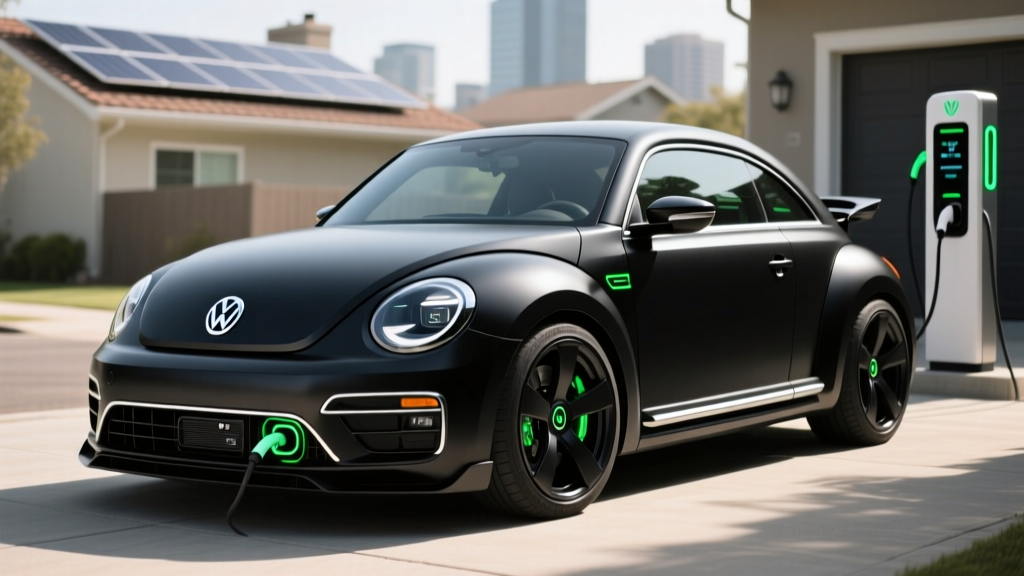
Converting a classic Volkswagen Beetle to electric power has become one of the most popular vintage-car EV swaps — and for good reason. The Bug's simple air-cooled architecture, lightweight chassis (roughly 1,800-2,000 lbs curb weight), and massive aftermarket support make it an ideal candidate. But before you pull the trigger on a Volkswagen Bug electric conversion kit, you need to understand what these kits actually deliver, what they cost, and whether the math works compared to buying a modern EV or keeping your Beetle gas-powered.
The Quick Answer
A complete Volkswagen Bug electric conversion kit typically costs $15,000 to $35,000 for parts alone, with professional installation adding another $5,000 to $15,000. Most kits deliver 60 to 120 miles of real-world range using 20-40 kWh of usable battery capacity (usually LFP or repurposed NMC modules). Charging is predominantly Level 2 (3.3-7.2 kW), meaning a full charge takes 5-12 hours at home. DC fast charging is rarely included due to weight, space, and cost constraints. Total project cost for a turnkey conversion lands between $25,000 and $50,000+ depending on battery size, motor choice, and fabrication complexity.
What's Actually in a Volkswagen Bug Electric Conversion Kit
Most reputable conversion kits for the classic VW Beetle (model years 1950-1979 are the most common targets) include several core components. The specific parts vary by manufacturer — companies like EV West, Electric Classic Cars, and various independent fabricators offer packages — but the architecture is broadly similar:
- Electric motor: Typically a NetGain Hyper9 or WarP 9 series motor producing 80-150 horsepower. Some high-end kits use salvaged Tesla or Nissan Leaf drive units.
- Motor controller: Matches the motor — usually a Sevcon, Curtis, or proprietary unit managing power delivery and regenerative braking.
- Battery pack: The single biggest cost variable. Options range from 20 kWh (basic LFP modules, ~60-70 mi range) to 40+ kWh (NMC or Tesla-salvaged modules, ~100-130 mi range). Battery chemistry matters: LFP cells are heavier but tolerate daily 100% charges and last longer; NMC offers better energy density for the Bug's limited space.
- Battery management system (BMS): Monitors cell voltage, temperature, and state of charge. Non-negotiable for safety.
- Onboard charger: Usually 3.3 kW or 6.6 kW for Level 2 AC charging. Most kits do not include DC fast charging hardware — adding CCS or NACS compatibility can add $3,000-$6,000 and significant weight.
- Adapter plate and coupler: Connects the electric motor to the Beetle's original transaxle. Many conversions retain the stock 4-speed manual, using only 2nd or 3rd gear for driving.
- DC-DC converter: Steps down high-voltage pack to 12V for lights, wipers, and accessories.
- Throttle controller, wiring harness, instrumentation: EV-specific gauges (state of charge, power draw) replace or supplement the original dash.
What's usually not included: HVAC/heat (the Beetle's original heat relied on the gas engine), power steering upgrades, brake boosters, and significant suspension reinforcement to handle the battery weight (typically 400-800 lbs of batteries added to the car).
Real-World Range and Efficiency: The Honest Numbers
Unlike production EVs rated by the EPA, conversion vehicles don't have standardized range figures. Your actual range depends heavily on battery capacity, driving style, terrain, and climate. Here's what the data from the conversion community shows:
| Battery Size (usable kWh) | Chemistry | Estimated Range (miles) | Efficiency (kWh/mi) | Added Weight (lbs) |
|---|---|---|---|---|
| 20 kWh | LFP | 55-70 | 0.28-0.36 | ~500 |
| 30 kWh | LFP or NMC | 80-100 | 0.30-0.38 | ~650 |
| 40 kWh | NMC (salvaged) | 100-130 | 0.31-0.40 | ~800 |
For context, a modern 2025 Nissan Leaf with a 60 kWh battery achieves an EPA-rated 212 miles of range at roughly 0.28 kWh/mi. The Beetle conversion is less efficient per mile due to its aerodynamics (a brick compared to modern EVs), lack of thermal management, and heavier rolling resistance from vintage tires and suspension geometry.
Real-World Range Reality Check
If your kit advertises "100 miles of range," expect 70-85 miles on the highway at 65 mph, and 50-65 miles in cold weather (below 40°F) without battery preconditioning or a heat pump — neither of which most conversion kits include. Plan your daily driving around 70% of the advertised figure to preserve battery longevity and avoid range surprises.
Cost Breakdown: Kit, Installation, and Total Project
This is where most first-time converters get sticker shock. The kit itself is only part of the equation. Here's a realistic 2026 cost breakdown based on current market pricing from major conversion suppliers and fabricators:
| Cost Category | Budget Build | Mid-Range | Premium/Full-Service |
|---|---|---|---|
| Motor + controller | $3,000-$4,500 | $4,500-$7,000 | $7,000-$10,000 |
| Battery pack (cells + BMS + enclosure) | $6,000-$10,000 | $10,000-$16,000 | $16,000-$22,000 |
| Charger + DC-DC + wiring | $2,000-$3,000 | $3,000-$4,500 | $4,500-$6,500 |
| Adapter plate / fabrication | $1,500-$3,000 | $3,000-$5,000 | $5,000-$8,000 |
| Labor (if not DIY) | $0 (DIY) | $5,000-$10,000 | $10,000-$15,000 |
| Suspension / brake upgrades | $500-$1,500 | $1,500-$3,000 | $3,000-$5,000 |
| Registration / inspection / title | $200-$500 | $300-$800 | $500-$1,500 |
| Total | $13,200-$22,500 | $27,300-$46,300 | $46,000-$68,000 |
Important: these costs assume you already own a running or restorable Beetle. If you need to purchase a donor car, add $5,000-$20,000 depending on condition and model year.
EV Conversion vs. Gas Beetle vs. Modern EV: The Data
How does a converted electric Beetle stack up against keeping your gas-powered classic or buying a production EV? Here's a direct comparison using real numbers:
| Metric | Gas VW Beetle (1970s) | Electric Beetle Conversion (30 kWh) | 2025 Nissan Leaf SV Plus |
|---|---|---|---|
| Upfront cost (total) | $8,000-$15,000 (purchase) | $27,000-$46,000 | ~$37,000 MSRP |
| Range | ~250 mi (11.9 gal tank) | 80-100 mi | 212 mi (EPA) |
| Fuel/energy cost per mile | ~$0.14 (at $3.50/gal, 25 MPG) | ~$0.04 (at $0.13/kWh, 0.33 kWh/mi) | ~$0.04 (at $0.13/kWh, 0.28 kWh/mi) |
| Annual fuel/energy (12,000 mi) | ~$1,680 | ~$480 | ~$420 |
| Maintenance per year | $800-$1,500 | $200-$400 | $300-$500 |
| 0-60 mph | ~18-22 seconds | ~8-12 seconds | 6.5 seconds |
| Safety features | None (no airbags, crumple zones) | None (original chassis) | Full suite (AEB, airbags, ADAS) |
| Federal EV tax credit | N/A | Not eligible* | Up to $7,500 (if eligible)** |
*IRS §30D tax credits apply only to new qualifying vehicles from certified manufacturers. Conversion kits and converted vehicles do not qualify for the federal credit, regardless of battery sourcing. See IRS guidelines on clean vehicle credits.
**The $7,500 credit for new EVs like the Leaf is subject to MSRP caps ($55,000 for cars), buyer income limits ($150K single / $300K joint), and battery component/critical mineral sourcing requirements. Always verify current-year eligibility with a tax professional.
Charging at Home: What You Need to Know
Home charging is where an electric Beetle conversion makes the most sense — and where most owners do 95%+ of their charging. Here's the practical breakdown:
Level 1 (120V standard outlet): Most conversion kits can charge at 1.4-1.9 kW from a standard household outlet. At that rate, replenishing a 30 kWh battery from empty takes 16-21 hours. This works if you drive less than 30 miles per day and can plug in overnight, but it's painfully slow for anything more.
Level 2 (240V): This is what you want. A dedicated Level 2 home charger at 6.6 kW (the most common onboard charger size in conversion kits) will fully recharge a 30 kWh pack in roughly 5 hours. Installing a Level 2 circuit typically costs $800-$2,500 for a 240V/40A circuit run by a licensed electrician, plus $400-$700 for a quality EVSE (charger unit). If your home's electrical panel needs an upgrade to 200A service, add $1,500-$3,500.
Public DC fast charging: Most Beetle conversions lack DC fast charging capability entirely. If your kit includes a CCS or NACS inlet (rare, adds $3,000-$6,000), expect peak rates of 25-50 kW — meaning a 10-80% charge in roughly 30-45 minutes. But many public chargers require app activation and membership, and reliability on networks like Electrify America and EVgo remains inconsistent in many regions.
Common Misconceptions About Beetle EV Conversions
| Myth | Fact |
|---|---|
| "I'll save money compared to buying a new EV" | At $27,000-$46,000 total, a conversion costs as much or more than a new Nissan Leaf or Chevy Equinox EV. You're paying for the classic-car experience, not economics. |
| "Electric conversions are maintenance-free" | While you eliminate oil changes and tune-ups, you still have suspension wear, brake service, 12V battery replacement, and potential BMS or controller issues. Budget $200-$400/year. |
| "It'll be as fast as a Tesla" | Most Beetle conversions produce 80-150 HP and weigh 2,400-2,800 lbs after conversion. Expect 0-60 in 8-12 seconds — quick for a Beetle, but not sports-car territory. The chassis and brakes weren't designed for sustained high-speed driving. |
| "I can charge at any public station" | Without DC fast charging hardware (which most kits omit), you're limited to Level 2 public chargers at 3.3-6.6 kW. A "quick charge" at a public Level 2 adds only 15-25 miles per hour of plugging in. |
| "The battery will last forever" | LFP cells typically retain 80% capacity after 2,000-3,000 full cycles (~150,000-200,000 miles). NMC cells from salvaged packs may degrade faster. Budget for a battery refresh ($8,000-$15,000) in 10-15 years. |
| "It qualifies for the $7,500 EV tax credit" | It does not. §30D credits apply only to new vehicles from qualified manufacturers meeting battery sourcing rules. Conversions are ineligible. |
Real-World Ownership Considerations
Before committing, honestly assess these practical factors:
Climate matters enormously. Lithium batteries lose 20-40% of usable capacity in sub-freezing temperatures, and most conversion kits lack active thermal management (liquid heating/cooling). If you live in Minnesota, Montreal, or anywhere with harsh winters, your 100-mile summer range could drop to 55-65 miles in January. Cabin heat is another challenge — without a gas engine, you'll need an electric heater (PTC or heat pump), which draws 2-4 kW and further reduces range.
Insurance can be tricky. Converted vehicles often require specialty insurers (Hagerty, Grundy, or similar classic-car carriers). Standard insurers may not cover the conversion components or may undervalue the vehicle. Expect premiums of $800-$1,800/year depending on agreed value and your driving record.
Resale value is uncertain. Unlike production EVs with established depreciation curves, conversion values depend heavily on build quality, documentation, and buyer taste. A well-documented, professional conversion may hold value; a DIY build with questionable wiring may not. There's no Kelley Blue Book category for "1972 Beetle with EV West kit."
Registration varies by state. Some states (California, Oregon, Washington) have clear processes for registering converted EVs with updated titles. Others require special inspections, emissions exemptions, or may flag the vehicle for its missing engine. Research your state's DMV requirements before starting the build.
Decision Framework: Should You Convert Your Beetle?
Choose a Volkswagen Bug Electric Conversion Kit If:
- You already own a Beetle you love and want to drive it more frequently without the maintenance, smell, and reliability headaches of a 50-year-old gas engine
- Your daily driving is under 60 miles round-trip and you have reliable Level 2 home charging
- You value the classic aesthetic and driving experience over practicality, safety, and range
- You have $25,000-$50,000 to spend on a passion project and understand it won't qualify for federal EV tax credits
- You enjoy the building process (if DIY) or have a trusted EV conversion shop nearby
Buy a Modern Production EV Instead If:
- You need 200+ miles of reliable range, DC fast charging for road trips, and modern safety features (airbags, AEB, stability control)
- You want to take advantage of the up-to-$7,500 federal tax credit under IRS §30D (subject to income, MSRP, and sourcing rules)
- You live in a region with harsh winters and need battery thermal management for consistent range
- You need a primary daily driver, not a weekend/hobby car
- Your budget is under $25,000 and you need dependable transportation
Keep Your Beetle Gas-Powered If:
- You drive it less than 2,000 miles per year as a show/weekend car (fuel savings from EV conversion won't justify the cost)
- Originality and matching-numbers authenticity matter for collector value
- You lack home charging access and public charging infrastructure in your area is limited
Frequently Asked Questions
How long does a Volkswagen Bug electric conversion take?
A professional shop typically completes a conversion in 3-6 months, depending on parts availability and fabrication complexity. A skilled DIY builder working weekends might take 6-12 months. Donor car restoration (rust repair, suspension refresh, brake upgrades) can add significant time if the Beetle isn't already in good mechanical condition.
Can I use Tesla batteries or motors in a Beetle conversion?
Yes, but it's complex. Salvaged Tesla drive units (from Model S or Model 3) are popular in the conversion community for their power and efficiency, but they require custom mounting, proprietary communication protocol reverse-engineering, and often a separate controller interface. Companies like EV West offer adapter kits for Tesla drive unit swaps, but expect to add $3,000-$6,000 in complexity cost over a simpler DC motor setup.
What's the top speed of a converted electric Beetle?
Most conversions are electronically limited to 75-90 mph for safety reasons — the Beetle's drum brakes (or even front-disc conversions), narrow tires, and swing-axle rear suspension (on pre-1967 models) were not designed for sustained high-speed driving. Some builders push to 100+ mph, but this is not recommended without significant chassis, brake, and suspension upgrades.
Do I need to upgrade the Beetle's suspension for the battery weight?
Almost certainly, yes. Adding 400-800 lbs of batteries (typically split between the front trunk area and rear engine bay) overloads the stock torsion-bar front suspension and rear trailing arms. Most quality conversions include stiffer front beams, upgraded rear spring plates, heavier-duty shocks, and sometimes a front disc brake conversion to handle the increased mass. Budget $1,500-$4,000 for suspension and brake upgrades.
Is regenerative braking effective in a Beetle conversion?
Moderately. Most controllers offer adjustable regen that can recover 10-20% of energy during deceleration. However, the Beetle's light weight (even with batteries) and relatively small motor mean regen forces are modest compared to a heavy modern EV. Don't expect true one-pedal driving — you'll still use the friction brakes regularly.
What happens to the Beetle's original transmission?
Most conversions retain the stock 4-speed manual transaxle, locking it in 2nd or 3rd gear and using the electric motor's wide torque band to eliminate shifting. Some builders install a single-speed reduction gear or a custom adapter that bypasses the transmission entirely, but retaining the transaxle is simpler and preserves the car's original drivetrain layout.
Sources consulted: fueleconomy.gov for production EV efficiency data; IRS.gov for §30D tax credit eligibility rules; manufacturer and converter specifications from EV West, Electric Classic Cars, and community build documentation.