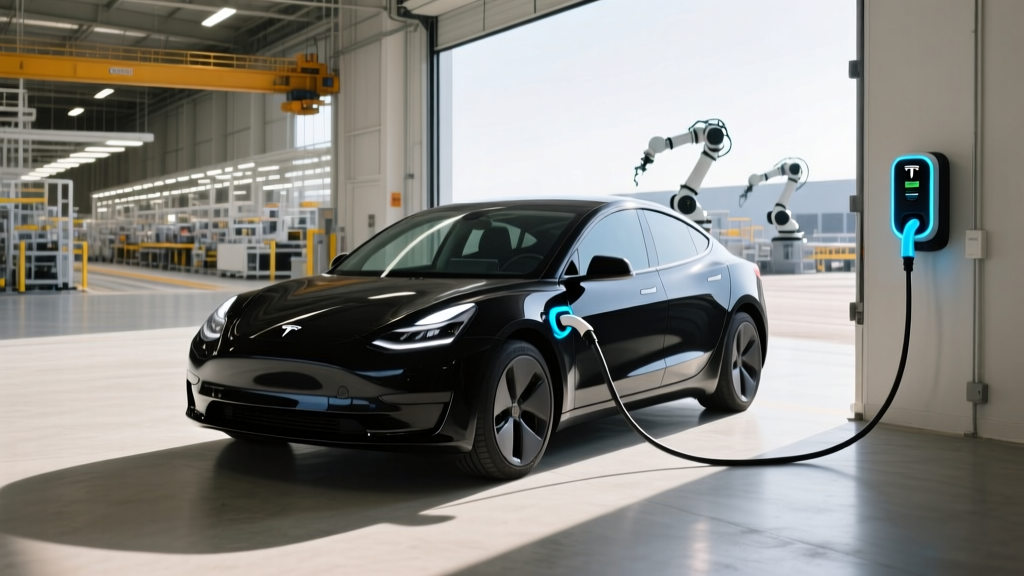
If you're planning to visit Tesla Fremont — the company's original California manufacturing hub and still one of its highest-volume factories — chances are you're evaluating the vehicle that put the facility on the map: the Tesla Model 3. Now in its second-generation "Highland" refresh and carrying into the 2026 model year, the Model 3 remains the benchmark for entry-level premium electric sedans. But how does it actually stack up when you strip away the marketing and look at real numbers?
This guide is built for the research-driven buyer heading to the Fremont delivery center or showroom. We'll walk through EPA range, charging speed, battery chemistry, pricing after federal tax credits, and whether the Model 3 still earns its reputation against a growing field of rivals.
2026 Tesla Model 3: Quick Verdict
The 2026 Model 3 is available in three core trims: the base Rear-Wheel Drive, the Long Range AWD, and the Performance AWD. It's the most affordable new Tesla you can buy, and it's the model most likely to roll off the Fremont production line with your name on the delivery paperwork. The Highland redesign brought a quieter cabin, ventilated seats, ambient lighting, and a rear touchscreen for passengers — fixes to nearly every complaint lodged against the pre-2024 model.
For buyers who want a proven, efficient EV sedan with access to the Supercharger network and competitive real-world range, the Model 3 still sets the bar. Its limitations — no instrument cluster, no physical stalks, and panel-gap variability — are trade-offs you accept rather than flaws you overlook.
Range, Battery, and Real-World Efficiency
| Trim | EPA Range (mi) | Battery Capacity (kWh, usable) | Chemistry | MPGe (combined) | kWh/100 mi |
|---|---|---|---|---|---|
| Rear-Wheel Drive | 272 | ~57.5 | LFP (CATL) | 132 | 25 |
| Long Range AWD | 363 | ~75 | NMC (LG/Panasonic) | 134 | 25 |
| Performance AWD | 315 | ~75 | NMC | 121 | 28 |
The EPA numbers above assume mixed driving at moderate temperatures. Here's what to actually expect:
- Highway (70-80 mph, summer): Long Range delivers ~310-330 mi; RWD drops to ~230-245 mi. Aerodynamic drag scales with the square of speed — efficiency suffers noticeably above 70 mph.
- Cold weather (below 32°F): Expect 20-30% range reduction across all trims. The Model 3's heat pump helps, but LFP batteries in the RWD trim are particularly sensitive to cold, losing both range and charge acceptance rate.
- City/regenerative driving: You can match or slightly exceed EPA figures in stop-and-go traffic thanks to regen efficiency.
Source: EPA Fuel Economy
The chemistry split matters. The RWD trim uses a lithium iron phosphate (LFP) battery — heavier and less energy-dense than NMC, but more durable over thousands of cycles and tolerant of daily 100% charging. Tesla actually recommends charging the LFP pack to 100% at least weekly for accurate state-of-charge calibration. The Long Range and Performance trims use NMC (nickel manganese cobalt) chemistry, which benefits from being charged to 80% daily and 100% only for trips.
Charging Speed: DC Fast, Level 2, and the Supercharger Advantage
| Charge Level | Connector | Max Power (kW) | Rate / Time |
|---|---|---|---|
| DC Fast Charge (V3/V4 Supercharger) | NACS (native) | 250 (RWD/LR), 250 (Perf) | 10-80% in ~25 min (LR); ~22 min (RWD) |
| Home Level 2 (Wall Connector, 48A) | NACS | 11.5 kW | ~44 mi/hr added (LR); ~35 mi/hr (RWD) |
| Level 1 (120V household) | NACS (w/ adapter) | ~1.4 kW | ~3-5 mi/hr |
A few things to understand before your first Fremont delivery-day charge:
- Peak kW ≠ sustained kW. The Model 3 Long Range peaks at 250 kW but only holds that rate briefly between roughly 10-20% SoC. The charge curve tapers significantly above 50%, and drops sharply past 80%. That's why 10-80% time is the metric that matters — not peak kW.
- Preconditioning is essential. Navigate to a Supercharger in the car's nav system 15-30 minutes before arrival, and the battery thermal management system will warm or cool the pack to accept maximum charge rate. Skipping this in cold weather can double your charging time.
- NACS is now the industry standard. As of 2025, Ford, GM, Rivian, Volvo, and others have adopted Tesla's North American Charging Standard. When you visit Tesla Fremont and drive off in a Model 3, you have native access to 6,000+ Supercharger stalls in California alone — no adapter required.
Performance and Drivetrain
| Trim | 0-60 mph | Horsepower | Drivetrain | Top Speed |
|---|---|---|---|---|
| Rear-Wheel Drive | 5.8 sec | 271 hp | RWD (single motor) | 125 mph |
| Long Range AWD | 4.2 sec | 346 hp | Dual-motor AWD | 125 mph |
| Performance AWD | 2.9 sec | 510 hp | Dual-motor AWD | 163 mph |
The base RWD model is genuinely quick for a commuter sedan — 5.8 seconds to 60 puts it ahead of most turbocharged four-cylinder gas sedans. The Long Range adds a front induction motor for all-wheel drive and a meaningful bump in both power and traction. The Performance trim, with its adaptive dampers, track mode, and sticky Michelin Pilot Sport 4S tires, is a legitimate sports sedan that happens to be electric.
One note for Fremont-area buyers: if your commute involves the I-880 or I-680 corridors, the Long Range AWD's extra traction pays dividends during the occasional Bay Area rainstorm. RWD with all-season tires is manageable but not ideal in wet conditions with instant electric torque.
Pricing, Tax Credits, and What You'll Actually Pay
| Trim | Base MSRP | §30D Credit Eligible? | Effective Price (est.) |
|---|---|---|---|
| Rear-Wheel Drive | $38,990 | Yes (up to $7,500, subject to sourcing rules) | ~$31,490 (if fully eligible) |
| Long Range AWD | $45,740 | Yes (up to $7,500) | ~$38,240 |
| Performance AWD | $52,990 | Yes (up to $7,500) | ~$45,490 |
Critical §30D tax credit caveats: The IRS §30D clean vehicle credit for 2026 has multiple gates you must pass:
- MSRP cap: Sedans must be under $55,000. The RWD and Long Range clear this easily; the Performance trim at $52,990 qualifies but leaves no room for options upgrades that push it over.
- Buyer income cap: AGI must not exceed $150,000 (single), $225,000 (head of household), or $300,000 (joint filing).
- Battery sourcing requirements: The $7,500 credit is split into two $3,750 halves — one for critical minerals sourcing and one for battery component manufacturing. Tesla's LFP cells in the RWD model are CATL-sourced (China), which may disqualify one or both halves depending on current-year FEOC (Foreign Entity of Concern) rules. The NMC packs in Long Range and Performance, assembled at Tesla's Nevada Gigafactory, have a stronger sourcing profile.
- Point-of-sale transfer: As of 2024+, you can transfer the credit to the dealer at purchase, reducing your out-of-pocket cost immediately rather than waiting for tax season.
Before visiting Tesla Fremont, confirm your specific credit eligibility with a tax professional and check the latest fueleconomy.gov credit database for the exact VIN-level qualification of your chosen configuration.
Interior, Cargo, and Daily Livability
The Highland refresh transformed the Model 3 interior from spartan to genuinely pleasant. Key dimensions:
- Cargo volume: 23 cu ft (trunk + frunk combined). The trunk opening is a conventional sedan lid, not a hatchback — a limitation vs. the Model Y or Hyundai Ioniq 6.
- Rear legroom: 35.3 inches — adequate for adults under 6'2", but the sloping roofline cuts headroom for taller passengers.
- Front headroom: 40.3 inches, generous thanks to the glass roof (which has no shade — tint only).
- Rear touchscreen: An 8-inch display for rear passengers controls climate, media, and seat heating. A genuine improvement for family use.
Notable drawbacks: The removal of turn-signal stalks (replaced by steering-wheel buttons) and the gear selector (now a touchscreen swipe) remain polarizing. Most owners adapt within a week, but test-drive this specifically before committing. Panel gaps at Fremont have improved since 2023 but still vary car-to-car — inspect your specific delivery vehicle carefully.
Driver Assistance and Technology
Tesla's Autopilot and Full Self-Driving (Supervised) are Level 2 driver-assistance systems. They require continuous driver supervision — hands on the wheel (or torque detection), eyes on the road. They are not self-driving. Tesla's FSD Supervised can navigate intersections, make turns, and handle highway interchanges, but the driver is legally and operationally responsible at all times. Only Level 4 services like Waymo operate without a human driver in defined zones.
Standard equipment includes Autopilot (adaptive cruise + lane centering). The $8,000 FSD (Supervised) upgrade adds city-street navigation, traffic light/stop sign response, and autosteer on surface streets. As of 2026, FSD has logged billions of supervised miles, but NHTSA continues to monitor Tesla's system through its Standing General Order for crash reporting.
Other standout tech:
- 15.4-inch center touchscreen with Ryzen-based processor (fluid, responsive)
- Ventilated front seats (new for Highland generation)
- Ambient lighting across dash and doors
- Acoustic glass all around — cabin noise dropped significantly vs. pre-2024 models
- Sentry Mode, Dog Mode, and over-the-air updates that add features post-purchase
Warranty and Long-Term Ownership
- Basic vehicle warranty: 4 years / 50,000 miles
- Battery & drive unit (RWD): 8 years / 100,000 miles (70% minimum capacity retention)
- Battery & drive unit (Long Range/Performance): 8 years / 120,000 miles (70% minimum capacity retention)
The 70% retention threshold is industry-standard but worth noting — if your 75 kWh Long Range pack degrades to 52.5 kWh within the warranty period, Tesla will repair or replace it. Real-world data from high-mileage Model 3 owners suggests NMC packs typically retain 85-90% capacity at 100,000 miles with normal charging habits. LFP packs in the RWD show even slower degradation thanks to the chemistry's inherent cycle-life advantage.
Who Should Buy the 2026 Model 3?
- You charge at home and commute under 50 miles round-trip
- You want the lowest entry price and don't need AWD
- You plan to keep the car 8+ years (LFP longevity advantage)
- You road-trip regularly and want 300+ real-world highway miles
- You live in a climate with snow or heavy rain
- You want the strongest §30D credit eligibility (NMC domestic sourcing)
- You need a hatchback or more cargo space (consider Hyundai Ioniq 6 or Model Y)
- You want a physical instrument cluster or traditional controls (BMW i4, Polestar 2)
- You prefer dealer-based service rather than mobile ranger appointments
Pros and Cons at a Glance
Pros
- Class-leading efficiency (25 kWh/100 mi on Long Range)
- Native NACS access to Supercharger network — most reliable DC fast-charging in the US
- Strong resale value relative to EV competitors
- Highland interior is a genuine upgrade: quiet, ventilated, refined
- Over-the-air updates continuously add features
- LFP option for buyers who want maximum cycle life
Cons
- No turn-signal stalks or physical gear selector — adaptation required
- Sedan trunk opening limits cargo vs. hatchback competitors
- Rear headroom tight for passengers over 6'2"
- No Apple CarPlay or Android Auto
- FSD (Supervised) remains a Level 2 system despite the name
- Fremont panel-gap variability — inspect before accepting delivery
Before You Visit Tesla Fremont: FAQ
What is the real-world range of the 2026 Model 3?
The Long Range AWD delivers approximately 310-330 miles on the highway in summer conditions, and around 250-280 miles in freezing temperatures. The RWD model realistically achieves 230-245 highway miles in warm weather. City driving with regenerative braking can match or slightly exceed EPA estimates.
How fast does the Model 3 charge at home and on the road?
On a Tesla Wall Connector (Level 2, 48A), the Long Range adds about 44 miles of range per hour — a full overnight charge from 20-80% takes roughly 5-6 hours. On a V3/V4 Supercharger, expect a 10-80% charge in about 25 minutes for the Long Range and 22 minutes for the RWD, assuming proper battery preconditioning.
How much does the Model 3 cost after the federal tax credit?
If you qualify for the full $7,500 §30D credit, the RWD model drops to approximately $31,490 and the Long Range to roughly $38,240. Eligibility depends on your AGI, the vehicle's MSRP, and battery-component sourcing rules that vary by trim. The LFP-powered RWD model may only qualify for a partial credit due to CATL battery sourcing. Confirm with a tax professional before purchasing.
Is the Model 3 worth buying vs. the competition in 2026?
Against the Hyundai Ioniq 6, BMW i4, and Polestar 2, the Model 3's advantages are Supercharger network access, efficiency, and software. Its disadvantages are the minimalist control scheme, sedan trunk shape, and no smartphone integration. If you value charging infrastructure and low running costs above all, the Model 3 still leads. If you prefer traditional controls and a hatchback, shop the Ioniq 6.
Does the 2026 Model 3 qualify for the federal EV tax credit?
Yes — all three trims fall under the $55,000 sedan MSRP cap. However, the actual credit amount ($3,750 or $7,500) depends on battery sourcing compliance with FEOC rules, and your personal eligibility depends on income caps ($150K single / $300K joint). The Long Range and Performance trims with domestically assembled NMC packs are more likely to qualify for the full amount. Check the latest eligibility data at fueleconomy.gov.
Should I order online or visit Tesla Fremont in person?
Tesla's purchase flow is primarily online, but the Fremont factory showroom and delivery center lets you inspect vehicles, take a test drive, and accept delivery in person. If you're particular about paint quality, panel gaps, or interior fitment — all of which vary car-to-car — visiting Fremont to inspect your assigned VIN before signing is a smart move.