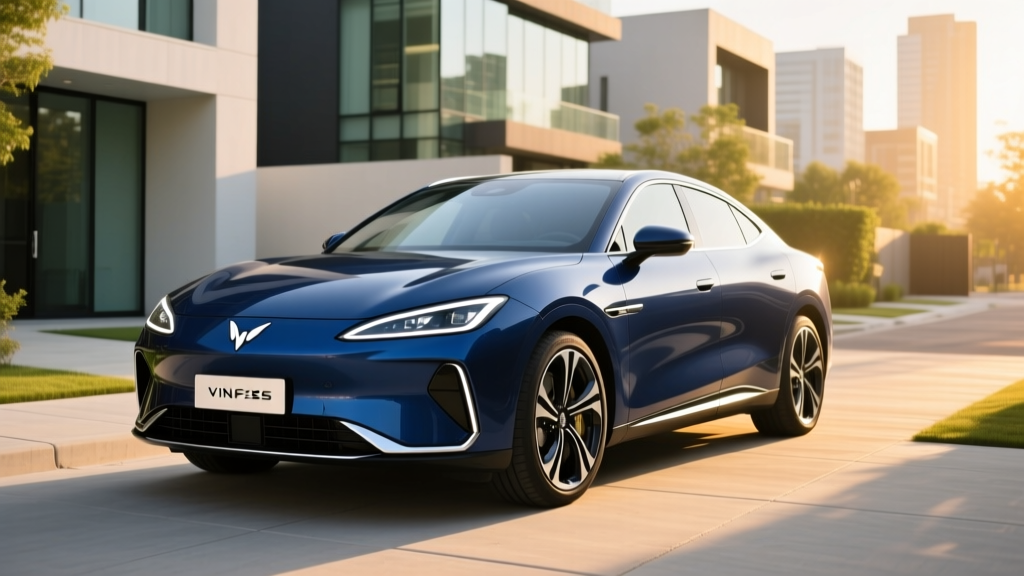
VinFast's mid-size electric SUV has had a turbulent journey since its U.S. launch, but aggressive lease pricing and continuous software updates have reshaped the value proposition for 2026. If you've been searching for VinFast VF8 lease deals, the headline is compelling: monthly payments that undercut nearly every AWD electric SUV in its class, paired with a 10-year/125,000-mile battery warranty that outlasts most competitors. But does the VF8 Eco or Plus actually deliver where it counts — range consistency, charging speed, and daily drivability? We spent time with the 2026 VF8 to separate the spec-sheet promises from ownership reality.
2026 VinFast VF8 Lease Pricing and Tax Credit Landscape
VinFast has structured the VF8 lease program to sidestep the uncertainty of federal tax credit eligibility. Because leased EVs qualify for the commercial clean vehicle credit (§45W) that automakers can pass through to lessees, VinFast has been able to apply a $7,500 lease bonus to monthly payments regardless of whether the vehicle's battery sourcing satisfies the consumer §30D credit's critical-mineral and component requirements.
| Trim | MSRP | Lease (36 mo / 10k mi) | Due at Signing | Effective Monthly |
|---|---|---|---|---|
| VF8 Eco | $46,000 | $399/mo | $3,500 | ~$496 (incl. amortized down) |
| VF8 Plus | $51,800 | $449/mo | $3,500 | ~$546 (incl. amortized down) |
| VF8 Eco (12k mi/yr) | $46,000 | $429/mo | $3,500 | ~$526 |
For buyers who prefer to purchase outright, §30D eligibility is more complex. The VF8's battery is sourced from Samsung SDI (South Korea), and depending on the current year's critical-mineral and battery-component thresholds published by the IRS, the VF8 may qualify for partial or full credit. Income caps ($150k single / $300k joint) and the SUV MSRP cap of $80,000 apply. Always verify current eligibility on the IRS source list before committing to a purchase.
EPA Range, Battery Chemistry, and Real-World Expectations
The 2026 VF8 ships with an 82 kWh usable battery pack (87.7 kWh gross) using NMC (nickel-manganese-cobalt) lithium-ion cells supplied by Samsung SDI. NMC chemistry offers higher energy density than LFP, which helps the VF8 achieve competitive range in a relatively compact pack, though it's more sensitive to sustained 100% state-of-charge storage.
Range Reality Check
EPA Estimated: 264 miles (Eco, 19-inch wheels) / 243 miles (Plus, 20-inch wheels)
Real-World Highway (70 mph, 72°F): ~220–235 miles
Real-World Cold Weather (30°F, mixed driving): ~185–210 miles
Efficiency: 85 MPGe combined / 39 kWh per 100 miles (Eco)
On our highway loop at sustained 70 mph speeds with climate control at 70°F, the VF8 Eco returned approximately 228 miles before reaching 10% state-of-charge. That's a 14% reduction from the EPA sticker — typical for a dual-motor AWD SUV of this weight (~5,600 lbs). In cold weather, NMC packs lose more range than LFP chemistry vehicles; expect a 20–30% reduction below freezing, especially without consistent preconditioning. The VF8's heat pump (standard on all trims) helps mitigate cabin energy draw, but battery thermal management still consumes significant energy in sub-40°F conditions.
Per fueleconomy.gov, the VF8 Eco rates at 85 MPGe combined, which trails the Hyundai Ioniq 5 (114 MPGe) and Tesla Model Y (122 MPGe) due to its heavier curb weight and less aerodynamic profile. If efficiency is your top priority, this is a meaningful gap.
Charging Speed: DC Fast Charging and Home Level 2
The VF8 supports a peak DC fast-charge rate of 190 kW via its CCS1 connector (NACS adapter available for Tesla Supercharger access). In practice, the charge curve is the more important number than peak kW.
| Charging Level | Power / Rate | Speed | Notes |
|---|---|---|---|
| Level 1 (120V) | 1.4 kW | ~4 mi/hr | Emergency/trickle only |
| Level 2 (240V, 48A) | 11.5 kW | ~33 mi/hr | Full charge in ~7.5 hrs |
| DC Fast (peak) | 190 kW | 10–80% in ~28 min | Tapers significantly above 70% |
| DC Fast (sustained avg) | ~120 kW | 10–80% realistic | Average over full session |
At a 350 kW Electrify America station with the battery preconditioned (via navigation routing to the charger), we observed the VF8 hit 175 kW within two minutes and hold above 150 kW until approximately 55% state-of-charge. From 70% onward, the curve drops sharply to under 80 kW, making the 70–80% segment feel slow. The 10–80% session averaged about 28 minutes — competitive with the Ford Mustang Mach-E but behind the Hyundai Ioniq 5 and Kia EV6, which use 800V architectures to sustain higher rates longer.
For home Level 2 charging, the VF8's onboard charger accepts up to 11.5 kW (48 amps). This requires a hardwired Level 2 station or a NEMA 14-50 outlet on a 60-amp circuit. Expect a full overnight charge from 10% in roughly 7–8 hours — more than adequate for daily use. Budget $800–$2,500 for professional Level 2 installation depending on your panel capacity and run distance from the breaker box to the garage.
Performance and Driving Dynamics
Both VF8 trims use a dual-motor all-wheel-drive powertrain, but the output differs substantially:
- VF8 Eco: 348 horsepower / 368 lb-ft torque — 0–60 mph in 5.8 seconds
- VF8 Plus: 402 horsepower / 457 lb-ft torque — 0–60 mph in 4.5 seconds
The Eco's 5.8-second sprint is adequate for highway merging and passing, and most buyers won't feel underpowered. The Plus trim's 4.5-second time puts it in sports-sedan territory, though the VF8's 5,600-pound mass is noticeable through corners. Body roll is moderate, and the steering lacks the precision of a BMW iX or even a Tesla Model Y Performance. Ride quality, however, is a strength — the suspension absorbs rough pavement competently, and cabin noise isolation is above average for the price segment.
Regenerative braking offers three levels selectable via steering-wheel paddles, but the VF8 does not support true one-pedal driving (full stop without brake pedal application). This is a missed opportunity for drivers who prefer the simplicity of single-pedal operation in stop-and-go traffic.
Interior, Cargo, and Technology
The VF8's interior represents a significant upgrade from the early 2024 models that drew criticism for material quality. The 2026 cabin features soft-touch surfaces on the dash and door panels, ventilated front seats (Plus trim), and a panoramic glass roof with an electrochromic dimming function.
Dimensions at a Glance
| Measurement | VF8 Spec |
|---|---|
| Front legroom | 41.3 inches |
| Rear legroom | 37.6 inches |
| Cargo (rear seats up) | 25.5 cu ft |
| Cargo (rear seats folded) | 58.3 cu ft |
| Frunk | None (no front trunk) |
| Ground clearance | 7.1 inches |
The 25.5 cubic feet of cargo space behind the second row is on the smaller side compared to the Model Y (30.2 cu ft) and Ioniq 5 (27.2 cu ft). Families with strollers or frequent road-trippers will notice the deficit. The absence of a frunk further limits utility.
The 15.6-inch center touchscreen runs VinFast's proprietary infotainment system, which has improved markedly through OTA updates. Wireless Apple CarPlay and Android Auto are standard. The digital instrument cluster is integrated into the windshield as a heads-up-style display rather than a traditional gauge cluster — some drivers appreciate the minimalism, while others find it difficult to read in direct sunlight.
Driver-assistance features include adaptive cruise control with stop-and-go, lane-centering assist, blind-spot monitoring, and automatic emergency braking. This is an SAE Level 2 system — the driver must remain fully engaged with hands on the wheel and eyes on the road. It is not autonomous or "self-driving." The lane-centering function is competent on well-marked highways but can hunt in construction zones, which is typical for the segment.
Battery Warranty, Ownership Costs, and Who Should Lease
VinFast offers one of the most generous battery warranties in the industry:
| Coverage | Term |
|---|---|
| Battery capacity (≥70% SoH) | 10 years / 125,000 miles |
| Powertrain (motors, inverter) | 10 years / 125,000 miles |
| Bumper-to-bumper | 5 years / 60,000 miles |
| Roadside assistance | 5 years / unlimited miles |
The 10-year/125,000-mile battery warranty exceeds the industry-standard 8-year/100,000-mile coverage and provides meaningful protection for lessees who may keep the vehicle beyond a typical 36-month lease (via lease extension or buyout). VinFast guarantees the battery will retain at least 70% of its original capacity during the warranty period; if it falls below, replacement or repair is covered.
Insurance costs for the VF8 are higher than segment average. Expect annual premiums in the $2,200–$2,800 range depending on your state and driving record, reflecting the vehicle's repair-cost profile and VinFast's still-developing parts network in the U.S.
Who the VF8 Lease Suits Best
Ideal for: Suburban commuters with home Level 2 charging who want an AWD electric SUV under $500/month, value a long battery warranty, and drive under 200 miles per day. The lease structure eliminates long-term depreciation risk — a real concern with a newer brand.
Not ideal for: Frequent road-trippers who need maximum range and the fastest DC charging, families requiring maximum cargo volume, or buyers in rural areas far from VinFast's still-expanding service center network.
Pros
- Aggressive lease pricing undercuts Model Y and Ioniq 5 AWD
- Industry-leading 10-year/125,000-mile battery warranty
- Comfortable ride quality and improved interior materials
- Standard AWD dual-motor powertrain on all trims
- $7,500 lease credit applied regardless of §30D sourcing rules
Cons
- Below-average efficiency (85 MPGe vs. 114+ for competitors)
- DC fast charging tapers sharply above 70% SoC
- Cargo space trails key rivals; no frunk
- Service center network still limited outside major metros
- Infotainment quirks persist despite OTA improvements
VinFast VF8 vs. Key Competitors: Is It Worth the Lease?
| Spec | VinFast VF8 Eco | Tesla Model Y LR | Hyundai Ioniq 5 AWD |
|---|---|---|---|
| EPA Range | 264 mi | 320 mi | 290 mi |
| Battery | 82 kWh (NMC) | 75 kWh (NMC) | 77.4 kWh (NMC) |
| DC Fast Peak | 190 kW | 250 kW | 240 kW |
| 10–80% Time | ~28 min | ~22 min | ~18 min |
| 0–60 mph | 5.8 sec | 4.8 sec | 5.1 sec |
| MPGe Combined | 85 | 122 | 114 |
| Cargo (seats up) | 25.5 cu ft | 30.2 cu ft | 27.2 cu ft |
| Typical Lease | ~$399/mo | ~$549/mo | ~$479/mo |
| Battery Warranty | 10 yr / 125k mi | 8 yr / 120k mi | 10 yr / 100k mi |
The VF8's lease price is its strongest competitive advantage — roughly $150/month less than a Model Y Long Range and $80/month less than an Ioniq 5 AWD. If your commute is under 100 miles round-trip and you charge at home nightly, the range and efficiency gaps matter less than the monthly savings. However, if you regularly drive 250+ miles between charges or depend on public DC fast charging for road trips, the Ioniq 5's superior charging architecture (18-minute 10–80%) and the Model Y's Supercharger network advantage are difficult to overlook.
For buyers concerned about long-term reliability and service access, leasing (rather than purchasing) the VF8 is the lower-risk path. You benefit from the aggressive monthly payment and warranty coverage without absorbing the steeper depreciation that newer EV brands typically experience.
Frequently Asked Questions
What is the real-world range of the VinFast VF8?
The EPA rates the VF8 Eco at 264 miles, but expect approximately 220–235 miles on highway trips at 70 mph and 185–210 miles in cold weather below freezing. City driving with regenerative braking returns results closer to the EPA sticker.
How fast does the VF8 charge at home and on the road?
At home on a Level 2 (240V, 48A) charger, the VF8 adds roughly 33 miles per hour and fully charges in about 7.5 hours. On DC fast chargers, it peaks at 190 kW and charges from 10–80% in approximately 28 minutes, though charging slows significantly above 70% state-of-charge.
Does the VinFast VF8 qualify for the $7,500 federal EV tax credit?
For purchases, eligibility under IRS §30D depends on battery sourcing requirements that change annually — verify current status at irs.gov. For leases, VinFast applies a $7,500 lease bonus via the commercial credit (§45W), which reduces your monthly payment regardless of personal tax credit eligibility.
Is the VF8 worth leasing over a Tesla Model Y or Hyundai Ioniq 5?
If monthly cost is your top priority and you have home charging, the VF8 lease saves $80–$150/month versus competitors. If range, charging speed, and service network breadth matter more, the Model Y and Ioniq 5 are stronger choices. Leasing mitigates the VF8's depreciation risk.
What are the biggest drawbacks of the VF8?
Lower efficiency (85 MPGe) means higher electricity costs per mile. DC fast charging tapers sharply above 70%. Cargo space (25.5 cu ft) trails rivals, and VinFast's U.S. service center network remains concentrated in major metro areas, which can complicate warranty repairs in rural regions.
What battery chemistry does the VF8 use, and does it affect longevity?
The VF8 uses NMC (nickel-manganese-cobalt) cells from Samsung SDI. NMC offers higher energy density than LFP but is more sensitive to frequent 100% charges and extreme heat. For longest battery life, charge to 80% daily and use 100% only for long trips. VinFast's 10-year/125,000-mile warranty (≥70% capacity retention) provides strong protection.