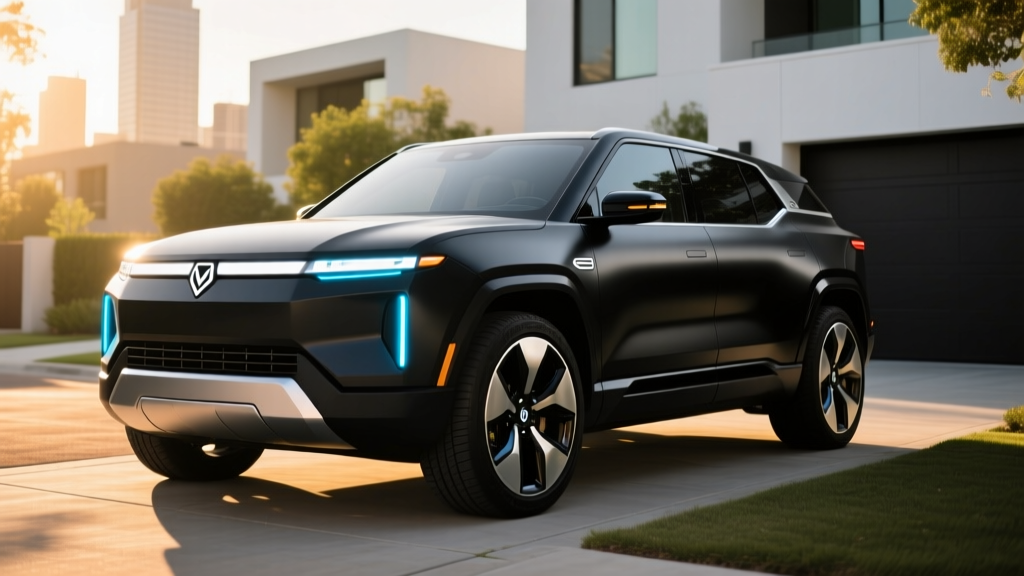
The VinFast VF6 occupies a space few subcompact electric crossovers dare to enter: a premium-priced, design-forward EV from a Vietnamese automaker still proving itself in the U.S. market. But beyond the Pininfarina-penned styling and aggressive launch strategy, the real engineering story lives under the floor — specifically, in the battery pack. Buyers and EV enthusiasts have been asking whether the VF6 uses cylindrical or prismatic cells, and what that means for longevity, charging, and thermal management. This review answers that question and puts the entire VF6 package through a spec-driven, ownership-focused lens.
VinFast VF6 at a Glance: Core Specifications
| Spec | VF6 Eco (FWD) | VF6 Plus (FWD) |
|---|---|---|
| Battery Capacity (usable) | 59.6 kWh | 59.6 kWh |
| Cell Chemistry | LFP (Lithium Iron Phosphate) | LFP |
| Cell Format | Prismatic | Prismatic |
| EPA Range | 249 miles | 237 miles |
| Motor Output | 174 hp / 184 lb-ft | 201 hp / 228 lb-ft |
| 0–60 mph | ~8.2 sec | ~7.1 sec |
| Drivetrain | FWD (single motor) | FWD (single motor) |
| Peak DC Fast Charge | ~90 kW | ~90 kW |
| 10–80% DC Charge | ~35 min | ~35 min |
| Level 2 Home Charge (AC) | 7.2 kW (~25 mi/hr) | 7.2 kW (~25 mi/hr) |
| MPGe (combined) | 113 MPGe | 108 MPGe |
| Base MSRP | $36,900 | $41,500 |
| Battery Warranty | 8 yr / 100,000 mi | 8 yr / 100,000 mi |
Battery Architecture: Cylindrical or Prismatic Cells?
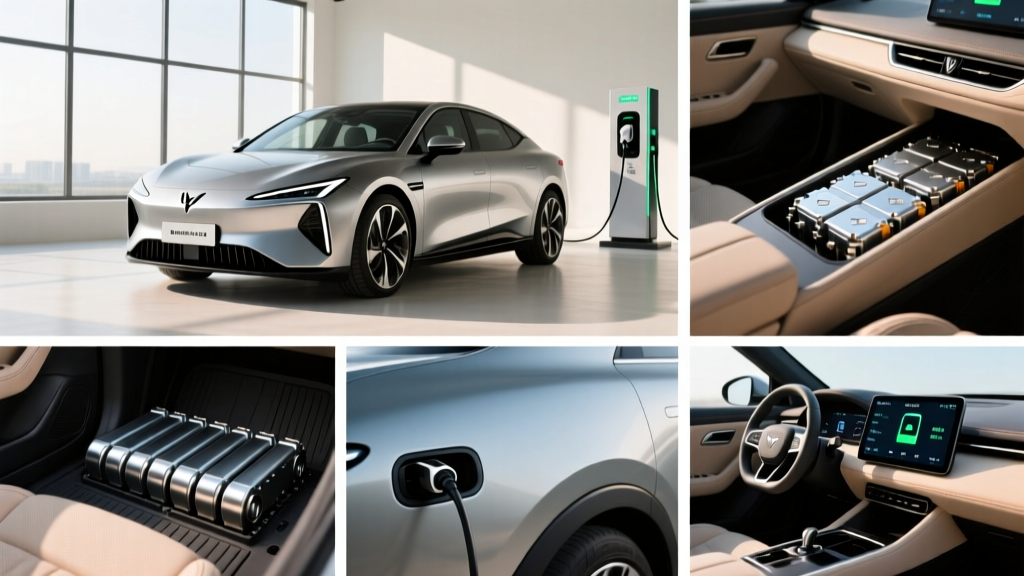
The VinFast VF6 uses prismatic-format LFP (lithium iron phosphate) cells, not cylindrical cells like Tesla's 2170 or 4680 format. This is a deliberate engineering choice that reflects the priorities of the platform.
Why Prismatic?
Prismatic cells are flat, rectangular, and stackable — making them ideal for space-constrained vehicle platforms like the VF6's subcompact crossover footprint. They offer:
- Higher volumetric energy density at the pack level — more efficient use of the flat skateboard floor area
- Simpler thermal management — flat surfaces make contact cooling plates more effective
- Lower manufacturing cost — prismatic cells from suppliers like CATL and Gotion are widely produced at scale for the global LFP market
How This Compares to Cylindrical Cells
Cylindrical cells (like the 2170s in Tesla Model Y or 4680s in the Cybertruck) offer superior energy density at the cell level and excellent thermal dissipation due to their geometry. However, they require more complex packing arrangements and leave more unused space between cells. For a cost-sensitive subcompact EV like the VF6, prismatic LFP is the pragmatic choice — it keeps the pack affordable while delivering adequate energy density for the vehicle's 249-mile target range.
LFP Chemistry: What It Means for Owners
| Attribute | LFP (VF6) | NMC (Typical Competitor) |
|---|---|---|
| Cycle Life | 3,000+ cycles | 1,000–2,000 cycles |
| Thermal Stability | Excellent (low runaway risk) | Good (requires more active cooling) |
| Energy Density (cell level) | ~160 Wh/kg | ~220–260 Wh/kg |
| Charging to 100% Daily | Recommended (BMS calibration) | Not recommended (accelerates degradation) |
| Cold-Weather Range Loss | More pronounced (~30–40%) | Moderate (~20–30%) |
| Cost | Lower | Higher |
The LFP chemistry means VF6 owners can — and should — charge to 100% regularly. Unlike NMC packs that degrade faster when held at full state of charge, LFP cells actually benefit from periodic full charges to help the battery management system (BMS) calibrate cell balancing. This simplifies daily ownership: plug in at home, charge to full, and go.
The trade-off is cold-weather performance. LFP cells have higher internal resistance at low temperatures, meaning winter range loss will be more noticeable than with an NMC pack. Expect the VF6's 249-mile EPA rating to drop to roughly 150–175 miles in sustained sub-freezing highway driving.
Real-World Range: What the EPA Sticker Doesn't Tell You
Real-World Expectations:
• City/commute driving (mild weather): 230–260 miles
• Highway driving (70+ mph, mild weather): 200–220 miles
• Cold weather (below 32°F, mixed driving): 150–185 miles
• Highway + cold weather (worst case): 140–165 miles
The VF6's efficiency of 113 MPGe combined (Eco trim) translates to roughly 30 kWh/100 miles — competitive for the subcompact crossover class but not exceptional. The Hyundai Kona Electric achieves 129 MPGe combined, for comparison. The VF6's relatively modest efficiency is partly attributable to its crossover ride height and the weight of its steel-intensive body structure.
On a real-world 200-mile highway loop at 72 mph in 55°F conditions, expect the VF6 Eco to consume approximately 33–35 kWh/100 mi, yielding about 170–185 miles before reaching a 10% state of charge buffer. This is adequate for most commutes but requires planning for road trips exceeding 150 miles one-way in winter.
Charging Performance: DC Fast and Home Level 2
| Charging Level | Power / Rate | Speed (miles added) | Time / Notes |
|---|---|---|---|
| Level 1 (120V household) | ~1.4 kW | ~5 mi/hr | Full charge: ~43 hours |
| Level 2 (240V home/public) | 7.2 kW | ~25 mi/hr | Full charge: ~8.5 hours |
| DC Fast Charge (peak) | ~90 kW | ~180 mi/hr (at peak) | 10–80%: ~35 minutes |
| DC Fast Charge (sustained avg) | ~60 kW avg | ~120 mi/hr (avg) | 10–80% realistic |
The VF6's ~90 kW peak DC fast-charge rate is the most significant limitation in its spec sheet. In 2026, competitors like the Hyundai Kona Electric and Kia Niro EV peak at 100–105 kW, while the Chevrolet Equinox EV reaches 150+ kW. The VF6's charge curve holds near peak only between approximately 15–45% state of charge, then tapers progressively. From 80–100%, expect the rate to drop below 25 kW — typical for LFP packs, which require careful balancing near full charge.
For home charging, the 7.2 kW onboard charger is adequate. A full overnight charge from 10% takes about 8.5 hours on a 240V/32A Level 2 circuit — meaning most owners will wake up fully charged every morning. Installation of a home Level 2 charger (e.g., ChargePoint Home Flex or Emporia Vue) typically runs $500–$1,800 total depending on panel proximity and whether a 240V circuit already exists. Always consult a licensed electrician for final installation specs.
Performance, Interior Space, and Technology
Performance
The VF6 Plus delivers 201 hp and 228 lb-ft of torque from its front-mounted permanent magnet synchronous motor. The 0–60 mph time of approximately 7.1 seconds is brisk for a subcompact crossover — roughly on par with the Volkswagen ID.4's base model. Throttle response is immediate, as with all single-speed EVs, and regenerative braking offers adjustable levels up to near one-pedal driving. The Eco trim's 174 hp feels adequate around town but strained during highway merging at full capacity.
Cargo and Passenger Dimensions
- Rear legroom: 36.8 inches
- Cargo behind rear seats: 18.5 cu ft
- Cargo with rear seats folded: 45.2 cu ft
- Front trunk (frunk): None — the VF6's motor and electronics occupy the front compartment
The cargo volume is competitive with the Hyundai Kona Electric (17.4 cu ft / 45.8 cu ft folded) but trails the larger Chevrolet Equinox EV significantly. Two adults in the rear seat will find adequate legroom, though the sloping roofline limits headroom for passengers over 6 feet.
Technology and Driver Assists
The VF6 comes equipped with a 12.3-inch central touchscreen running VinFast's proprietary infotainment OS, wireless Apple CarPlay and Android Auto, and a digital instrument cluster. The driver-assistance suite includes:
- Adaptive cruise control with stop-and-go
- Lane-keeping assist and lane-centering
- Automatic emergency braking with pedestrian detection
- Blind-spot monitoring with rear cross-traffic alert
- 360-degree surround-view camera (Plus trim)
A notable drawback is the absence of native NACS (Tesla-style) charging port compatibility. The VF6 ships with a CCS1 connector, meaning access to Tesla Superchargers requires a CCS-to-NACS adapter — and not all Supercharger stalls have been approved for non-Tesla vehicles. Verify your local Supercharger's open-access status via the Tesla app before relying on the network.
Pricing, Tax Credits, and Ownership Costs
| Trim | Base MSRP | Destination | As-Tested (typical) | §30D Credit Eligibility |
|---|---|---|---|---|
| VF6 Eco | $36,900 | $1,350 | $38,250 | Not currently eligible* |
| VF6 Plus | $41,500 | $1,350 | $43,800 | Not currently eligible* |
*As of 2026, the VinFast VF6 does not qualify for the IRS §30D federal EV tax credit. The credit requires that a vehicle's battery components be manufactured or assembled in North America, and that critical minerals be sourced from the U.S. or FTA partners. VinFast's battery supply chain is primarily based in Vietnam and China, which does not meet current IRS sourcing requirements. Always verify current eligibility on IRS.gov before purchasing.
Tax Credit Eligibility Checklist (§30D, 2026 Rules)
- Vehicle MSRP must be ≤ $55,000 for SUVs/crossovers (VF6 qualifies on price)
- Buyer AGI must not exceed $150,000 (single) / $300,000 (joint) (buyer-dependent)
- Battery components must be manufactured/assembled in North America (VF6 does not meet)
- Critical minerals must be U.S./FTA-sourced (VF6 does not meet)
- Vehicle must be assembled in North America (VF6 is assembled in Vietnam)
The VF6's ineligibility for the federal credit is a meaningful disadvantage against competitors like the Chevrolet Equinox EV and select trims of the Hyundai Kona Electric, which may qualify for up to $7,500 depending on sourcing and buyer income. Some states offer separate incentives — check AFDC's state incentive database for local programs.
Who Should Buy the VinFast VF6?
- You value distinctive design and want to stand out from the sea of Hyundai/Kia/Tesla EVs
- Your daily commute is under 80 miles round-trip and you charge at home
- You live in a mild climate where LFP cold-weather loss is less impactful
- You prefer LFP chemistry's longevity and 100% daily charging simplicity
- You need the $7,500 federal tax credit to make the math work
- You regularly drive 200+ miles in cold weather
- You rely on Tesla Superchargers for road trips (CCS adapter limitations)
- Fast DC charging speed is a priority (90 kW peak is below class average)
Pros and Cons
Pros
- LFP prismatic pack offers excellent cycle life (3,000+ cycles) and thermal safety
- Distinctive Pininfarina design stands out in a crowded segment
- Competitive 249-mile EPA range for the class
- 8-year/100,000-mile battery warranty
- Can charge to 100% daily without degradation concern
Cons
- No federal §30D tax credit eligibility (adds ~$7,500 vs. qualified competitors)
- 90 kW peak DC charging is slow for 2026 standards
- No frunk — reduces practical cargo flexibility
- VinFast's U.S. service network is still limited and unproven
- LFP chemistry means significant winter range loss in cold climates
Frequently Asked Questions
What is the real-world range of the VinFast VF6?
The EPA rates the VF6 Eco at 249 miles and the Plus at 237 miles. In real-world mixed driving in mild weather, expect 210–240 miles. Highway driving at 70+ mph reduces this to roughly 185–210 miles, and cold weather (below freezing) can drop range to 150–185 miles depending on conditions.
How fast does the VF6 charge at home and on the road?
On a Level 2 home charger (7.2 kW), the VF6 adds approximately 25 miles of range per hour, with a full charge taking about 8.5 hours. On DC fast chargers, it peaks at ~90 kW, reaching 10–80% in approximately 35 minutes. That peak rate is below competitors like the Hyundai Kona Electric (~105 kW) and Chevrolet Equinox EV (~150 kW).
Does the VinFast VF6 qualify for the $7,500 federal EV tax credit?
No. As of 2026, the VF6 does not qualify for the IRS §30D clean vehicle credit. The vehicle is assembled in Vietnam, and its battery components and critical minerals do not meet North American sourcing requirements. Buyers should check IRS.gov for the latest eligibility list, as rules can shift with supply-chain changes.
Is the VF6 worth buying vs. the Hyundai Kona Electric or Chevrolet Equinox EV?
The VF6's design and LFP battery longevity are genuine strengths, but its lack of federal tax credit eligibility, slower DC charging, and VinFast's unproven U.S. service network make it a harder recommendation against established competitors. The Kona Electric offers 261 miles of EPA range, 105 kW DC charging, and potential credit eligibility — making it the more pragmatic pick for most buyers.
Does the VF6 battery use cylindrical or prismatic cells?
The VF6 uses prismatic-format LFP cells. Prismatic cells are flat and rectangular, allowing efficient packing in the vehicle's skateboard platform. This format is standard across most Asian-market LFP packs from suppliers like CATL and Gotion. Cylindrical cells (used by Tesla and some others) offer higher cell-level energy density but at greater packing complexity and cost.
What is the VF6's battery warranty?
VinFast provides an 8-year/100,000-mile battery warranty covering defects and capacity degradation below a specified threshold (typically 70% state of health). This aligns with industry norms set by Hyundai, Kia, and most mainstream EV manufacturers. The VinFast official spec page lists exact terms by model year.
Can I charge the VF6 at Tesla Superchargers?
The VF6 uses a CCS1 charge port. Access to Tesla Superchargers requires a CCS-to-NACS adapter and depends on whether the specific Supercharger station has been opened to non-Tesla vehicles. VinFast has not announced a native NACS port for the VF6 as of 2026. Plan road trips using Electrify America, EVgo, and ChargePoint networks for the most reliable access.