The Short Answer: No Fully Electric Highlander Exists Yet
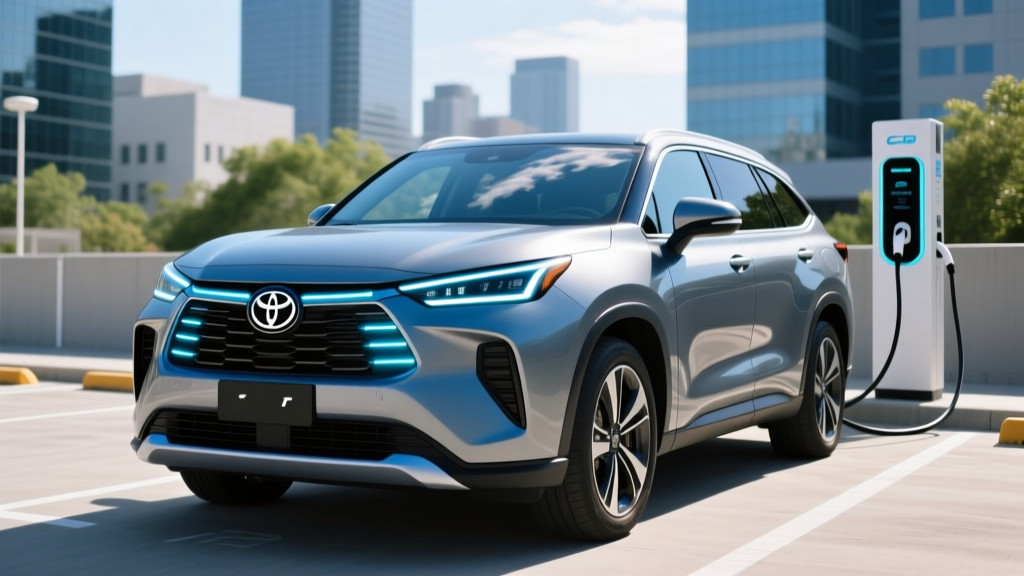
As of 2026, Toyota does not sell a fully electric Highlander SUV in the United States. The Highlander remains available exclusively as a conventional hybrid (HEV). Toyota's three-row electric offering is the bZ Large SUV (announced for late 2025/2026 production), which targets the Highlander's buyer demographic but carries a different nameplate. If you need a three-row Toyota with electrified powertrains today, the Highlander Hybrid (up to 35 MPG combined) and the Grand Highlander Hybrid (up to 36 MPG combined) are your options. The plug-in hybrid Grand Highlander (Prime) has also been announced but availability remains limited.
Why Toyota Hasn't Electrified the Highlander Nameplate
Toyota's strategy diverges sharply from competitors who simply bolted batteries onto existing nameplates. Instead of converting the Highlander to battery-electric, Toyota has pursued a multi-pathway approach: maintaining the Highlander Hybrid for buyers who want proven efficiency without charging infrastructure dependence, while developing dedicated EV platforms under the bZ ("beyond Zero") branding for customers ready to go fully electric.
This creates a genuine decision point for families shopping the midsize three-row SUV segment. The Highlander Hybrid delivers real fuel savings without any lifestyle change — no home charger installation, no route planning around DC fast chargers, no cold-weather range loss. Meanwhile, the bZ Large SUV (when it reaches dealers) will offer the zero-tailpipe-emission experience with 250+ miles of projected range, but demands the charging considerations every EV buyer must weigh.
Understanding this split is essential before you visit a Toyota dealer expecting an electric Highlander badge.
Highlander Hybrid vs. Competitor EVs: The Numbers
Since no electric Highlander exists, the practical comparison is the 2026 Highlander Hybrid against the three-row electric SUVs it would compete with: the Kia EV9, Hyundai Ioniq 9 (announced), and Toyota's own upcoming bZ Large SUV.
| Spec | 2026 Toyota Highlander Hybrid | 2026 Kia EV9 (Long Range AWD) | Toyota bZ Large SUV (Projected) |
|---|---|---|---|
| Powertrain | 2.5L 4-cyl + 2 electric motors (HEV) | Dual motor AWD (BEV) | Dual motor AWD (BEV, estimated) |
| EPA Range / MPG | 35 MPG combined (~595 mi per tank) | 280 mi (EPA est.) | ~280–300 mi (announced target) |
| Usable Battery | 1.6 kWh (NiMH, hybrid assist only) | 99.8 kWh (NMC lithium-ion) | ~95–105 kWh (est.) |
| DC Fast Charge (10–80%) | N/A — gasoline refuel ~5 min | ~24 min at 210 kW peak | ~25 min (est., 200+ kW target) |
| Horsepower | 243 hp combined | 379 hp | ~350+ hp (est.) |
| 0–60 mph | 7.9 sec | 5.0 sec | ~5.5 sec (est.) |
| Starting MSRP | $40,970 (LE) | $54,900 (Light RWD); $59,900 (Land AWD) | TBA (est. $50,000–$55,000) |
| Federal Tax Credit (§30D) | Not eligible (HEV, not plug-in) | Up to $7,500 (verify sourcing) | Likely eligible (TBD on sourcing) |
| Seating | 7 or 8 passengers | 6 or 7 passengers | 7 passengers (est.) |
| Cargo (behind 3rd row) | 16.1 cu ft | 20.2 cu ft | ~18–20 cu ft (est.) |
Sources: fueleconomy.gov, Toyota Motor North America, Kia America press materials. bZ Large SUV figures are preliminary estimates based on Toyota announcements and may change at launch.
Real Cost of Ownership: Hybrid vs. Electric Three-Row
The purchase price is only the opening move. A five-year ownership comparison reveals where each powertrain wins and loses financially. Below, we model 15,000 miles/year, $3.50/gallon regular unleaded, and $0.14/kWh average home electricity (national residential rate), with 20% public DC fast charging at $0.40/kWh for the EV.
| Cost Category (5 Years / 75,000 mi) | Highlander Hybrid (LE AWD) | Kia EV9 (Land AWD) |
|---|---|---|
| Purchase Price (MSRP) | $40,970 | $59,900 |
| Federal Tax Credit | $0 | –$7,500 (if eligible) |
| Effective Purchase Price | $40,970 | $52,400 |
| Fuel / Energy Cost | $9,375 (gas at 35 MPG) | $5,250 (electricity blended) |
| Maintenance (est.) | $2,800 (oil changes, filters, brakes) | $1,200 (no oil, regen saves brakes) |
| Insurance (est. avg) | $8,500 | $10,200 (EVs typically 15–20% higher) |
| Home Charger Install (Level 2) | $0 | $800–$2,000 (240V circuit + equipment) |
| 5-Year Total | $61,645 | $71,050 |
Key takeaway: The EV9 saves roughly $5,725 in fuel and maintenance over five years, but the higher purchase price, insurance premiums, and home charging installation still leave it approximately $9,400 more expensive than the Highlander Hybrid over the same period — even with the full $7,500 federal tax credit applied. The breakeven point extends well past 75,000 miles for most buyers.
This math shifts dramatically depending on your electricity rate, annual mileage, and whether you qualify for the maximum §30D credit. High-mileage drivers (20,000+ mi/yr) in states with cheap electricity (under $0.10/kWh) will close the gap faster. Always run your own numbers using your utility rate and commute distance.
What Toyota's EV Roadmap Means for Highlander Shoppers
Toyota has committed to launching 30 battery-electric models globally by 2030, with several targeting the North American market. The bZ Large SUV, expected to begin production at Toyota's Kentucky plant, is the closest thing to an "electric Highlander" in the pipeline. It will ride on an evolved version of Toyota's dedicated EV platform and is expected to feature:
- Three-row seating for seven passengers
- A usable battery capacity in the 95–105 kWh range
- NACS (Tesla-style) charge port compatibility for Supercharger network access
- DC fast charging targeting 10–80% in approximately 25 minutes
- Standard all-wheel drive with dual motors producing 350+ horsepower
However, Toyota has not confirmed pricing, final range figures, or exact on-sale timing beyond a general 2025–2026 window. Buyers who need a three-row vehicle now cannot wait for the bZ Large SUV to arrive and stabilize in dealer inventory.
Toyota's Grand Highlander Hybrid (starting ~$44,405) fills the gap with more third-row and cargo space than the standard Highlander Hybrid, and the Grand Highlander Hybrid Max variant adds a turbocharged powertrain with 362 hp for buyers who want more performance. A Grand Highlander Prime (plug-in hybrid) variant has been announced with approximately 30+ miles of electric-only range, which would bridge the gap between pure hybrid and full EV for families with short commutes and home charging access.
First-Time EV Buyer Checklist: Before You Commit
If you're considering abandoning the Highlander Hybrid for a competitor's electric three-row SUV (Kia EV9, Rivian R1S, or the upcoming bZ Large SUV), work through these practical realities first:
1. Home Charging Access Is Non-Negotiable for Most Owners
Over 80% of EV charging happens at home. If you live in an apartment without charging access, rely on street parking, or your home's electrical panel is maxed out at 100 amps, the installation cost for a Level 2 (240V) home charger can range from $800 to $3,500+ — including a possible panel upgrade to 200 amps. Without reliable home charging, EV ownership becomes significantly less convenient and more expensive (relying on public DC fast charging at $0.30–$0.50/kWh versus $0.12–$0.16/kWh at home).
2. Cold Weather Reduces Range 20–30%
If you live in the upper Midwest, Northeast, or Mountain states, expect an EV rated at 280 miles EPA to deliver roughly 195–225 miles of real range in sustained sub-freezing temperatures. The Highlander Hybrid's fuel economy also drops in cold weather, but you can refill a gas tank in five minutes anywhere — an EV needs preconditioning and longer charging stops in winter conditions.
3. Road Trips Require Planning
The Kia EV9's 280-mile range means stopping every 2.5–3 hours on a highway road trip (at 75 mph with climate control, real-world range drops to roughly 240–250 miles). Each DC fast-charging stop takes 20–30 minutes (10–80%), plus potential wait times at busy chargers during holiday travel. The Highlander Hybrid covers 595 miles per tank and refuels in five minutes at any of the 150,000+ gas stations nationwide.
4. Federal Tax Credit Eligibility Is Complex
The §30D clean vehicle credit offers up to $7,500, but eligibility depends on:
- MSRP cap: SUVs must be under $80,000
- Buyer income cap: AGI must not exceed $150,000 (single) / $300,000 (joint)
- Battery sourcing: Critical minerals and battery components must meet escalating domestic-content thresholds (check IRS.gov for current-year rules)
- Point-of-sale transfer: Eligible buyers can apply the credit at purchase to reduce the down payment, rather than waiting for tax filing
Always verify eligibility with your tax professional before counting on the credit in your budget.
Common Misconceptions About an Electric Highlander
| Myth | Fact |
|---|---|
| "The Toyota Highlander comes in a fully electric version." | No. The 2026 Highlander is offered only as a conventional hybrid (HEV). Toyota's electric three-row SUV is the separate bZ Large SUV (announced/upcoming). |
| "Hybrids don't save enough fuel to matter." | The Highlander Hybrid achieves 35 MPG combined vs. 24 MPG for the (now-discontinued) gas-only V6 Highlander — a 46% improvement that saves roughly $500–$700/year in fuel for a 15,000-mile driver. |
| "EVs are always cheaper to own than hybrids." | Not in the first 5 years for most buyers. Higher purchase price, insurance, and home-charger install often outweigh fuel savings unless you drive 20,000+ miles/year with cheap electricity. |
| "I can get the $7,500 tax credit on any EV." | Eligibility requires meeting MSRP caps, buyer income limits, and battery-sourcing requirements. Many EVs only qualify for $3,750 or $0 depending on component sourcing. Always verify on IRS.gov. |
| "EV batteries need replacing every few years." | Modern lithium-ion EV batteries are warranted for 8 years/100,000 miles (minimum federal requirement) and typically retain 85–90%+ capacity at that point. Degradation is gradual, not sudden. |
Decision Framework: Which Three-Row Toyota Is Right for You?
Choose the Highlander Hybrid if:
- You don't have reliable home charging access (apartment, street parking, older electrical panel)
- You regularly drive 400+ miles in a single day (road trips, rural routes)
- You live in an area with sparse public charging infrastructure
- Your budget tops out around $45,000–$50,000
- You want a proven powertrain with minimal ownership surprises
- Cold-weather reliability without range loss is a priority
Choose the Grand Highlander Hybrid if:
- You need genuine adult-sized third-row seating and 20+ cu ft of cargo behind the third row
- You want hybrid efficiency (36 MPG combined) with more interior volume
- You prefer a traditional ownership experience with no charging requirements
Wait for the bZ Large SUV (or buy a Kia EV9) if:
- You have confirmed Level 2 home charging access (or can install it)
- Your daily driving is under 200 miles round-trip with predictable routines
- You want zero tailpipe emissions and lower per-mile energy costs
- You qualify for the full $7,500 federal tax credit and your state offers additional EV incentives
- You're willing to plan road-trip charging stops and accept winter range reduction
- Your budget accommodates $55,000–$65,000 after incentives
Frequently Asked Questions
Will Toyota ever make an electric Highlander?
Toyota has not announced plans to put an EV badge on the Highlander nameplate specifically. Instead, the company is launching the bZ Large SUV as its dedicated electric three-row offering. The Highlander nameplate is strongly associated with the hybrid powertrain in consumer perception, and Toyota appears to be keeping it focused on that segment while using the bZ brand for full electrics.
Is the Highlander Hybrid a plug-in?
No. The Highlander Hybrid is a conventional hybrid (HEV), meaning its small 1.6 kWh battery recharges through regenerative braking and the gasoline engine. You cannot plug it in. It does not qualify for any federal EV tax credits. The Grand Highlander Prime (PHEV), when available, will offer plug-in capability with approximately 30+ miles of electric-only range.
How much does it cost to fill up a Highlander Hybrid vs. charge an EV9?
The Highlander Hybrid's 17.1-gallon tank costs roughly $60 to fill at $3.50/gallon and delivers about 595 miles of range — approximately $0.10 per mile in fuel. The Kia EV9's 99.8 kWh battery costs about $14 to charge fully at home ($0.14/kWh) for roughly 250 real-world miles — approximately $0.056 per mile. Public DC fast charging at $0.40/kWh raises the EV9's cost to about $0.16 per mile, making it more expensive than the hybrid on road trips.
What's the best three-row SUV if I want to go electric now?
As of 2026, the Kia EV9 is the most widely available mainstream electric three-row SUV, starting at $54,900 with up to 304 miles of EPA range (Light RWD). The Rivian R1S offers more range and off-road capability but starts above $75,000. The Tesla Model X remains available but starts above $80,000, exceeding the §30D MSRP cap. Toyota's bZ Large SUV is expected to join the segment but has not reached dealers yet.
Does the Highlander Hybrid qualify for any tax incentives?
No federal tax credits apply to conventional hybrids under current §30D rules — only plug-in hybrids (PHEVs) and battery-electric vehicles (BEVs) qualify. Some states may offer minor incentives for hybrids, but these are increasingly rare as incentive programs shift toward plug-in vehicles. Check your state's energy office or fueleconomy.gov for current incentive listings.
How does the Highlander Hybrid perform in cold weather?
The Highlander Hybrid's fuel economy drops roughly 10–15% in sustained sub-freezing temperatures (from 35 MPG to approximately 30–31 MPG combined) due to increased engine idling for cabin heat and reduced battery efficiency. However, this is far less impactful than the 20–30% range loss experienced by battery-electric vehicles in the same conditions, and refueling remains equally fast regardless of temperature.