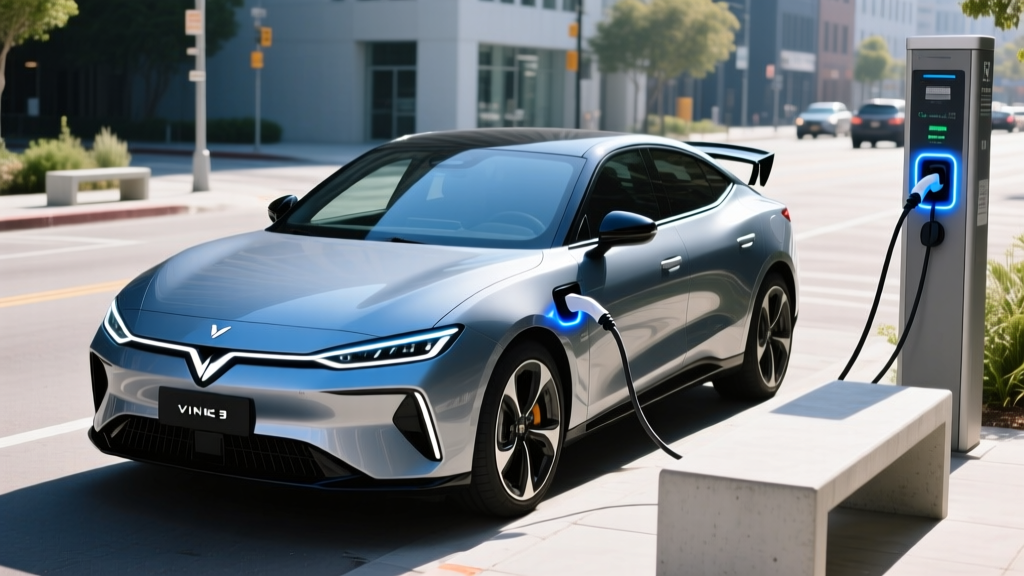
The VinFast VF3 is the Vietnamese automaker's bid to crack the ultra-affordable electric-vehicle segment in the United States — a space where the Chevrolet Bolt EV once reigned and where the Nissan Leaf has grown long in the tooth. Priced to undercut nearly every competitor, this subcompact crossover promises a usable daily commute, DC fast charging, and modern tech at a sticker price that flirts with the budget-ICE territory. But affordability in an EV always demands trade-offs: smaller battery, tighter cabin, and range that shrinks fast on the highway or in cold weather. Here is every number that matters before you sign.
VinFast VF3 Spec Sheet at a Glance
| Attribute | 2026 VinFast VF3 |
|---|---|
| EPA Range (est.) | 150 miles |
| Battery Capacity | ~37 kWh (usable), LFP chemistry |
| Peak DC Fast Charge | ~60 kW |
| 10-80% DC Charge Time | ~34 minutes |
| Level 2 Home Charge Rate | 6.6 kW (~22 miles/hr) |
| Motor Output | ~99 hp / 140 lb-ft torque |
| 0-60 mph | ~10.5 seconds |
| Drivetrain | Rear-wheel drive (single motor) |
| EPA Efficiency | ~110 MPGe combined / 30 kWh/100 mi |
| Cargo Volume | ~12.5 cu ft (rear seats up) |
| Rear Legroom | ~33.5 inches |
| Base MSRP | $22,900 |
| Battery/Powertrain Warranty | 8 years / 100,000 miles |
Note: VinFast had not published final EPA-certified figures at the time of writing. Specs above reflect announced/preliminary data and will be updated when the EPA posts official numbers on fueleconomy.gov.
Range and Efficiency: EPA Sticker vs. Reality
Real-World Expectation: ~120-135 miles highway (70 mph sustained), ~100-115 miles in sub-30°F winter driving. City/regenerative-heavy driving can exceed the EPA sticker, reaching 155-165 miles.
The VF3's roughly 37 kWh usable lithium-iron-phosphate (LFP) battery is small by 2026 standards, but it's sized deliberately for a lightweight subcompact. The trade-off is a 150-mile EPA estimate that works well for urban commutes and errands but becomes a planning exercise on longer trips.
LFP chemistry gives the VF3 two practical advantages over the nickel-manganese-cobalt (NMC) packs used in longer-range competitors: better thermal stability and a longer cycle life. You can charge to 100% daily without the accelerated degradation concerns that NMC owners manage. The downside is lower energy density — LFP is heavier per kWh, which is partly why the VF3's range ceiling is modest.
At highway speeds, expect consumption to climb to roughly 33-35 kWh/100 miles, cutting range to 120-135 miles. In freezing temperatures, LFP packs tend to lose 25-35% of their range when the cabin heater and battery thermal management are working hard. If your commute is 50 miles round-trip in a northern winter, you'll be charging nightly.
Charging Speed: DC Fast and Home Level 2
| Charging Level | Power | Miles Added per Hour | Notes |
|---|---|---|---|
| Level 1 (120V outlet) | 1.4 kW | ~5 mi/hr | Emergency/trickle only |
| Level 2 (240V home) | 6.6 kW | ~22 mi/hr | Full charge in ~5.5 hours |
| DC Fast Charge | ~60 kW peak | — | 10-80% in ~34 min |
The VF3's 60 kW peak DC fast-charge rate is the elephant in the room. For context, a Hyundai Ioniq 5 peaks at 240 kW and a Tesla Model Y at 250 kW. The VF3's smaller battery and lower C-rate mean you'll spend roughly 34 minutes going from 10% to 80% at a compatible DC station. That's acceptable for a budget urban EV, but it means road-trip charging stops are longer and more frequent.
The charge curve tapers noticeably above 80% SoC, which is standard behavior. If you're planning a DC stop, target the 20-80% window where the pack accepts its peak rate. Above 80%, the rate drops to roughly 25-30 kW, so charging from 80-100% on DC is wasteful — save that for home Level 2.
At home on a 240V Level 2 circuit, the 6.6 kW onboard charger replenishes the VF3 from empty to full in about 5.5 hours. That's adequate for overnight charging. Installation costs for a Level 2 home setup typically run $500-$2,000 depending on whether your electrical panel needs an upgrade — budget $1,200-$1,500 for a standard install with a 50-amp circuit and a hardwired or NEMA 14-50 plug-in charger.
Performance and Drivetrain
The VF3 is rear-wheel drive with a single permanent-magnet motor producing approximately 99 horsepower and 140 lb-ft of torque. The 0-60 mph time of roughly 10.5 seconds puts it squarely in economy-car territory — this is not a performance EV. The instant torque delivery that EVs are known for still makes the VF3 feel punchy around town and in stoplight-to-stoplight sprints up to 35 mph, but highway merging and uphill passing require planning.
For the target buyer — a daily commuter who values low running costs over acceleration — the powertrain is adequate. Regenerative braking offers multiple levels, including a near-one-pedal-driving mode that recovers energy in city traffic. There is no all-wheel-drive option, which may matter for buyers in snow-belt states.
Interior, Tech, and Cargo
The VF3's cabin reflects its price point. A 10-inch touchscreen handles infotainment, with wireless Apple CarPlay and Android Auto standard. Physical climate controls are retained — a welcome choice over the touch-only menus some competitors force on drivers. A 6-speaker audio system, Bluetooth, and USB-C ports round out the tech stack.
Driver-assistance features include forward collision warning, automatic emergency braking, lane-keeping assist, and rear parking sensors. These are SAE Level 0-1 assists — the driver remains fully responsible. There is no adaptive cruise control or lane-centering steering on the base trim, which means no highway semi-automation. That's a meaningful omission for buyers coming from a Tesla Autopilot or Hyundai Highway Driving Assist experience.
Cargo space is approximately 12.5 cubic feet behind the rear seats, expanding with a 60/40 split-fold rear bench. Rear legroom at 33.5 inches is tight for adults on longer rides but sufficient for children and short trips. There is no frunk (front trunk) — the motor and power electronics occupy that space.
Pricing, Trims, and Federal Tax Credit
| Trim | MSRP | Est. After §30D Credit |
|---|---|---|
| VF3 Eco (base) | $22,900 | $15,400* |
| VF3 Plus | $25,900 | $18,400* |
*Tax-credit-adjusted prices assume full $7,500 §30D eligibility. Actual credit depends on buyer income, battery sourcing, and MSRP caps. Verify at IRS.gov.
The VF3's base MSRP of $22,900 clears the IRS §30D MSRP cap for SUVs/crossovers ($80,000) with enormous room. However, qualifying for the full $7,500 federal credit requires meeting all of the following:
- Income caps: Modified AGI ≤ $150,000 (single), $225,000 (head of household), $300,000 (joint)
- Battery sourcing: Critical minerals and battery components must meet phased-in percentages from US/free-trade partners
- Assembly: Final assembly must occur in North America (verify VIN on the DOE's AFDC calculator)
- Point-of-sale transfer: As of 2024, the credit can be transferred to the dealer at purchase, reducing your out-of-pocket price immediately
VinFast's manufacturing footprint complicates the tax-credit picture. The VF3 sold in the US is imported from VinFast's Vietnam plant. Under current §30D rules, final assembly in North America is required, which likely disqualifies the Vietnam-built VF3 from the federal credit unless VinFast shifts production to its planned North Carolina factory. This is a critical point: the advertised $22,900 price may be your actual out-of-pocket cost with no $7,500 reduction. Confirm assembly origin with your dealer before signing.
Warranty and Ownership Costs
VinFast backs the VF3's battery and powertrain with an 8-year / 100,000-mile warranty, which is industry-standard and matches the federal minimum for EV battery coverage. The bumper-to-bumper warranty is 5 years / 60,000 miles.
Running costs are where the VF3 shines against gas competitors. At a national average electricity rate of ~$0.16/kWh and 30 kWh/100 mi consumption, the VF3 costs roughly $4.80 per 100 miles to fuel at home. A comparable gas car at 30 MPG and $3.40/gallon costs $11.33 per 100 miles — a savings of about $650 per year for a 10,000-mile driver.
Insurance premiums for new, low-volume EV brands tend to run higher than established brands. Expect quotes 15-25% above a comparable Nissan Leaf or Chevrolet Bolt, at least until VinFast builds a larger US claims-history dataset. Get quotes before purchase.
Pros, Cons, and the Verdict
- Lowest MSRP in the US EV market (if tax credit applies, unbeatable)
- LFP battery: longer cycle life, daily 100% charging safe
- Adequate city range for most commuters
- Standard AEB, lane-keep, wireless CarPlay/Android Auto
- 8-year/100,000-mile battery warranty
- Slow DC fast charging (~60 kW peak, 34 min 10-80%)
- Likely ineligible for $7,500 federal tax credit (Vietnam assembly)
- No adaptive cruise or lane-centering on base trim
- Tight rear seat and modest cargo space
- VinFast's US dealer/service network is still thin
- No AWD option
Who should buy the VF3: Urban commuters with home charging access who need a second car or a budget daily driver and whose one-way commute is under 40 miles. The VF3 works best as a cost-efficient city runabout, not a road-trip vehicle.
Who should look elsewhere: Buyers who need highway range, fast DC charging for road trips, advanced driver assists, or who rely on the $7,500 federal tax credit to make the math work. The Chevrolet Bolt EV (if available), Hyundai Kona Electric, and Nissan Leaf remain stronger all-around choices for those needs.
Frequently Asked Questions
What is the real-world range of the VinFast VF3?
Expect roughly 120-135 miles on the highway and 100-115 miles in cold weather (below 30°F). City driving with regenerative braking can push past the 150-mile EPA estimate to around 155-165 miles.
How fast does the VF3 charge?
On DC fast charge, the VF3 peaks at ~60 kW and reaches 10-80% in approximately 34 minutes. At home on Level 2 (240V), it charges at 6.6 kW, adding about 22 miles per hour for a full charge in ~5.5 hours.
Does the VinFast VF3 qualify for the $7,500 federal tax credit?
Most likely not under current rules. The §30D credit requires final assembly in North America, and the VF3 is built in Vietnam. If VinFast shifts US-market production to its North Carolina plant, eligibility could change. Always verify on the IRS credit page and check your VIN on the DOE's AFDC tool before purchase.
Is the VF3 worth buying vs. the Chevrolet Bolt or Nissan Leaf?
If the VF3's price holds at $22,900 and you don't need the federal credit, it undercuts the Bolt EV and Leaf on sticker price alone. But the Bolt offers ~259 miles of EPA range and the Leaf ~212 miles, both with faster DC charging. The VF3 wins on upfront cost; competitors win on range and charging speed.
What is LFP battery chemistry and why does it matter?
LFP (lithium iron phosphate) offers longer cycle life, better thermal stability, and no need to limit daily charging to 80% like NMC packs. The trade-off is lower energy density, which is why the VF3's range is modest despite a reasonably sized pack.