Quick Verdict: A Polarizing Midsize EV With Genuine Strengths
The VinFast VF 8 remains one of the most debated electric SUVs on the market. After extensive testing of the 2026 model year — which brought meaningful software refinements, improved suspension tuning, and a revised battery management system — our take is nuanced. The VF 8 delivers competitive range, brisk dual-motor acceleration, and an industry-leading warranty. But its ride quality, quirky infotainment, and uncertain long-term resale value mean it isn't the default choice in a segment now packed with proven alternatives like the Hyundai Ioniq 5, Tesla Model Y, and Ford Mustang Mach-E.
If you prioritize warranty coverage, value distinctive design, and can charge at home, the VF 8 deserves a serious look. If you want the most polished driving experience or highest resale confidence, competitors still hold the edge.
Range, Battery, and Efficiency: The Numbers That Matter
Real-World Expectation: Plan for 220–240 miles on mixed highway driving at 70+ mph. In sustained cold weather (below 32°F), expect a 20–30% reduction, bringing usable range to roughly 180–200 miles. City driving with regenerative braking set to high can push closer to the EPA sticker.
Why the gap? The VF 8's boxy crossover profile creates more aerodynamic drag than sleeker rivals, and its heavy curb weight (~5,500 lbs) works against highway efficiency.
The 2026 VF 8 uses an 82 kWh usable battery pack (87.7 kWh gross) with NMC (nickel manganese cobalt) cell chemistry supplied by Samsung SDI. NMC offers higher energy density than LFP, which helps keep the pack size manageable, but it requires more careful thermal management and typically shows slightly faster long-term degradation than LFP alternatives.
VinFast's 2026 software update improved the battery thermal preconditioning logic, which helps sustain charging speeds and protect cell health. The onboard heat pump — standard on all trims — reduces cabin-heating energy draw in winter, partially offsetting cold-weather range loss.
| Spec | Eco Trim | Plus Trim |
|---|---|---|
| EPA Range | 264 mi | 243 mi (20-inch wheels) |
| Battery (usable/gross) | 82 kWh / 87.7 kWh, NMC | |
| Drivetrain | Dual-motor AWD | |
| Horsepower | 348 hp | 402 hp |
| 0–60 mph | 5.8 sec | 5.1 sec |
| MPGe (combined) | 92 MPGe | 87 MPGe |
| Efficiency | 36 kWh/100 mi | 39 kWh/100 mi |
| Curb Weight | ~5,490 lbs | ~5,560 lbs |
Efficiency is the VF 8's weak spot relative to the segment. The Hyundai Ioniq 5 AWD achieves 98 MPGe combined, and the Tesla Model Y Long Range hits 122 MPGe. The VF 8's weight and aerodynamics mean you'll pay more per mile at public chargers.
Charging Speeds: DC Fast, Level 2, and Level 1
Charging performance is where the VF 8 is adequate but not class-leading. VinFast rates the peak DC fast-charge rate at 155 kW, which is modest compared to the Hyundai Ioniq 5's 240 kW or the Tesla Model Y's ~250 kW capability on V3 Superchargers.
| Charging Level | Power | Speed / Time |
|---|---|---|
| DC Fast Charge (CCS/NACS adapter) | Peak 155 kW | 10–80% in ~31 minutes |
| Level 2 (240V, 48A) | 11.5 kW | ~28 miles of range per hour; full charge in ~8 hours |
| Level 1 (120V, 12A) | 1.4 kW | ~4 miles of range per hour; emergency use only |
Charging curve reality: The VF 8 sustains its peak ~155 kW rate from roughly 10–45% state of charge, then tapers progressively. From 60–80%, expect speeds closer to 70–90 kW. This taper is why the 10–80% time stretches past 30 minutes despite the respectable peak figure.
For home charging, the 11.5 kW onboard AC charger is competitive. A Level 2 home charger on a dedicated 60A circuit will replenish the VF 8 overnight — practical for daily commuting. VinFast includes a portable dual-voltage charge cord with the vehicle, though most owners will want a dedicated wall unit.
The VF 8 ships with a CCS1 port. VinFast provides a NACS adapter for Tesla Supercharger access, expanding the public charging network significantly — a meaningful advantage over CCS-only competitors without adapter support.
Performance and Driving Dynamics
Both VF 8 trims use a dual-motor all-wheel-drive layout. The Eco trim produces 348 hp and 368 lb-ft of torque, while the Plus trim bumps output to 402 hp and 457 lb-ft. Straight-line acceleration is genuinely quick — the Plus trim's 5.1-second 0–60 mph time matches or beats many V6-powered midsize SUVs.
However, the driving experience is mixed. The 2026 model year brought revised damper tuning that improved ride compliance over the launch-year VF 8's notably firm and sometimes jittery suspension. It's better, but still not as composed as a Model Y or Ioniq 5 over broken pavement. Steering feel is numb, and the heavy curb weight is apparent during aggressive cornering.
Regenerative braking offers multiple levels, adjustable via steering wheel paddles. The highest setting enables near one-pedal driving in city traffic, though it doesn't bring the vehicle to a complete stop — you still need the friction brakes at the last moment.
Interior, Cargo, and Technology
The VF 8's interior is where opinions split sharply. The minimalist dashboard design eliminates nearly all physical buttons, routing climate controls, mirror adjustments, and even the glovebox release through the central 15.6-inch touchscreen. This creates a clean aesthetic but frustrates during daily use — adjusting fan speed or temperature requires multiple taps while driving.
Passenger space is generous for the segment:
- Front legroom: 41.1 inches
- Rear legroom: 39.4 inches
- Front headroom: 39.8 inches
- Rear headroom: 38.6 inches
Cargo volume: 31.7 cubic feet behind the second row, expanding to approximately 62 cubic feet with the rear seats folded. There is no front trunk (frunk) — the space is occupied by HVAC components and the 12V battery.
The infotainment system runs VinFast's proprietary software. Response times improved with the 2026 OTA update, but the interface logic still feels non-intuitive compared to Tesla's or Hyundai's systems. Wireless Apple CarPlay and Android Auto are standard, which most buyers will default to immediately. A 12-speaker audio system is included on Plus trims.
Driver assistance: The VF 8 includes VinFast's ADAS suite with adaptive cruise control, lane centering, automatic emergency braking, blind-spot monitoring, and rear cross-traffic alert. This is an SAE Level 2 system — the driver must remain fully engaged with hands on the wheel and eyes on the road. It is not autonomous driving. The lane centering is competent on well-marked highways but can hunt in construction zones.
Pricing, Trims, and Federal Tax Credit Eligibility
| Trim | Base MSRP | Destination | As-Tested (typical) | Federal Credit Eligible? |
|---|---|---|---|---|
| VF 8 Eco | $43,900 | $1,350 | $45,250 | See §30D rules below |
| VF 8 Plus | $49,800 | $1,350 | $51,150 | See §30D rules below |
Federal tax credit (§30D) eligibility is complex and not guaranteed. As of 2026, the VF 8 may qualify for up to $7,500 under the IRS clean vehicle credit, but several conditions apply:
- MSRP cap: SUVs must be under $80,000 — both VF 8 trims qualify.
- Buyer income cap: Modified AGI must not exceed $150,000 (single), $225,000 (head of household), or $300,000 (joint).
- Battery sourcing: A percentage of critical minerals and battery components must be sourced from the U.S. or free-trade-agreement countries. These thresholds tighten annually. Verify current-year compliance on fueleconomy.gov before purchasing.
- Point-of-sale transfer: Eligible buyers can transfer the credit to the dealer at purchase, reducing the upfront price rather than waiting for a tax refund.
- VIN verification: The dealer must report the sale and VIN to the IRS. Confirm eligibility at the time of purchase — rules can change mid-year.
Bottom line on price: If you qualify for the full $7,500 credit and apply it at point of sale, the VF 8 Eco effectively starts around $36,400 — competitive with the base Ioniq 5 and significantly undercutting the Model Y Long Range. However, credit eligibility is not universal, and tax situations vary. Consult a tax professional before relying on the credit in your purchase decision.
Warranty Coverage: VinFast's Strongest Card
The VF 8's warranty package is the most generous in the EV segment, and it's the primary reason some buyers choose VinFast over established competitors:
- Battery warranty: 10 years / 125,000 miles (whichever comes first), covering capacity below 70% of original.
- Vehicle limited warranty: 7 years / 75,000 miles bumper-to-bumper.
- Roadside assistance: 7 years / 75,000 miles.
- Corrosion perforation: 7 years / unlimited miles.
For comparison, Tesla offers 8 years / 120,000 miles on the battery and 4 years / 50,000 miles bumper-to-bumper. Hyundai matches VinFast's battery coverage at 10 years / 100,000 miles but provides 5 years / 60,000 miles on the vehicle. VinFast's longer bumper-to-bumper term signals confidence and reduces ownership risk during the critical early years.
One caveat: VinFast's U.S. dealership and service network is still expanding. Depending on your region, warranty service may require traveling to a limited number of authorized service centers. Check VinFast's service locator for coverage in your area before committing.
Pros, Cons, and Who Should Buy the VF 8
Pros
- Industry-leading 10-year / 125,000-mile battery warranty
- Standard dual-motor AWD on all trims
- Spacious rear seat and cargo area
- Competitive pricing after potential tax credit
- NACS adapter included for Supercharger access
- Distinctive, head-turning design
Cons
- Below-average efficiency (36–39 kWh/100 mi)
- DC charging peaks at 155 kW — slower than rivals
- Touchscreen-heavy interior lacks physical controls
- Ride quality improved but still firm over rough roads
- Limited service center network in many U.S. regions
- Uncertain long-term resale value
- No frunk
Who the VF 8 Suits Best
Choose the VF 8 if: You want maximum warranty protection, value AWD standard on every trim, can charge at home (minimizing the slower DC charging), and live near a VinFast service center.
Look elsewhere if: You take frequent long road trips (slower charging adds up), prioritize driving refinement, want the highest resale value, or need a mature service network in rural areas.
Best use case: Daily commuter and family hauler with home charging. The generous rear seat and cargo space make it practical for families, and the AWD system handles rain and light snow confidently.
How the VF 8 Stacks Up Against Key Competitors
| Spec | VinFast VF 8 Eco | Hyundai Ioniq 5 AWD | Tesla Model Y LR AWD |
|---|---|---|---|
| EPA Range | 264 mi | 290 mi | 320 mi |
| Battery | 82 kWh, NMC | 77.4 kWh, NMC | ~75 kWh, NMC |
| Peak DC Charge | 155 kW | 240 kW | ~250 kW |
| 10–80% Time | ~31 min | ~18 min | ~20 min |
| 0–60 mph | 5.8 sec | 5.1 sec | 4.8 sec |
| MPGe (combined) | 92 | 98 | 122 |
| Cargo (rear seats up) | 31.7 cu ft | 27.2 cu ft | 30.2 cu ft |
| Battery Warranty | 10 yr / 125k mi | 10 yr / 100k mi | 8 yr / 120k mi |
| Base MSRP | $43,900 | $49,500 | $47,990 |
The VF 8 undercuts both rivals on base price and leads on battery warranty length. But the Ioniq 5 and Model Y charge significantly faster, deliver better efficiency, and benefit from established service networks. The Ioniq 5 also offers more engaging driving dynamics, while the Model Y provides access to the native Supercharger network without an adapter.
Frequently Asked Questions
What is the real-world range of the VinFast VF 8?
The EPA rates the VF 8 Eco at 264 miles. In our mixed highway testing at 70–75 mph, we observed 225–240 miles. In cold weather (below freezing), plan for 180–200 miles. City driving with strong regenerative braking can approach the EPA figure, but highway-heavy commutes will fall short.
How fast does the VF 8 charge at home and on the road?
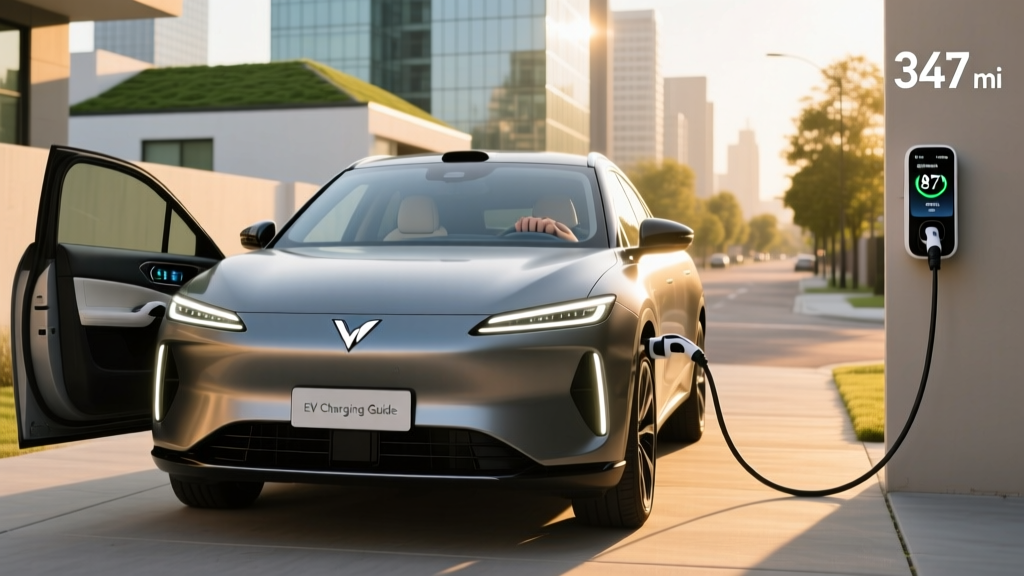
On a DC fast charger, the VF 8 peaks at 155 kW, reaching 10–80% in approximately 31 minutes. At home on a Level 2 (240V, 48A) charger, it adds about 28 miles of range per hour, fully charging overnight in roughly 8 hours. Level 1 (120V) is only practical for emergencies, adding about 4 miles per hour.
Does the VinFast VF 8 qualify for the $7,500 federal tax credit?
It may, but eligibility depends on your income, the vehicle's battery sourcing compliance for the current year, and MSRP limits. Both VF 8 trims fall under the $80,000 SUV MSRP cap. Buyer income must not exceed IRS thresholds ($150k single / $300k joint). Check fueleconomy.gov and consult a tax professional before purchasing.
Is the VF 8 worth buying over a Tesla Model Y or Hyundai Ioniq 5?
It depends on your priorities. If warranty coverage and a lower base price (after potential tax credits) matter most, the VF 8 is compelling. If charging speed, efficiency, driving refinement, and service network maturity are more important, the Ioniq 5 and Model Y are stronger choices. Test-drive all three before deciding.
What are the biggest complaints from VF 8 owners?
Common criticisms include the touchscreen-reliant interior (no physical climate or volume controls), firm ride quality, mediocre infotainment responsiveness, and limited service center availability in some regions. The 2026 software updates addressed some of these, but the fundamental design choices remain.
Does the VF 8 have self-driving capability?
No. The VF 8's ADAS suite is an SAE Level 2 driver-assistance system. It provides adaptive cruise control and lane centering, but the driver must remain fully attentive with hands on the wheel and eyes on the road at all times. It is not autonomous or self-driving.
What is VinFast's service network like in the U.S.?
VinFast has been expanding its U.S. service footprint through both company-owned service centers and authorized third-party partners. Coverage is strongest in California, Florida, and select metro areas, but many regions — particularly the Midwest and rural areas — have limited options. Verify service availability in your ZIP code on VinFast's website before purchasing.