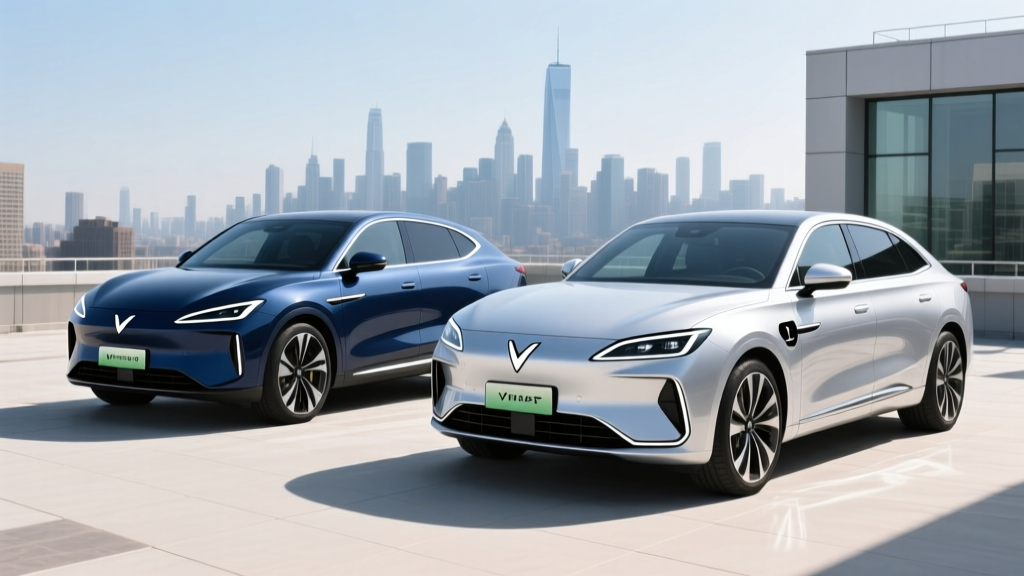
VinFast has been aggressively pursuing US market share since delivering its first vehicles in 2023, and by 2026 the Vietnamese automaker is leaning heavily into incentive-driven pricing. If you've been searching for VinFast deals, you've likely seen headlines about steep discounts, lease cash, and loyalty bonuses stacked on top of federal tax credits. But do these deals make the VF 8 midsize SUV or the VF 9 three-row cruiser a genuine value — or are they compensating for fundamental shortcomings?
We've driven both models, studied their charge curves, and crunched the ownership numbers. Here's what every prospective buyer needs to know before signing on a VinFast deal in 2026.
Current VinFast Deals: What's Actually on the Table
VinFast's US pricing strategy has shifted dramatically since launch. The brand now routinely offers a combination of manufacturer incentives, dealer discounts, and lease subsidies that can shave thousands off the sticker price. Here's where pricing stands for the 2026 model year before any incentives are applied:
| Model / Trim | Base MSRP | Drivetrain | EPA Range |
|---|---|---|---|
| VF 8 Eco (AWD) | $46,000 | Dual-motor AWD | 264 mi |
| VF 8 Plus (AWD) | $52,000 | Dual-motor AWD | 243 mi |
| VF 9 Eco (AWD) | $69,800 | Dual-motor AWD | 330 mi |
| VF 9 Plus (AWD) | $73,800 | Dual-motor AWD | 291 mi |
Common VinFast deals in early 2026 include lease cash of $5,000–$7,500 on the VF 8, dealer discounts negotiated between $3,000–$5,000 on both models, and referral/loyalty bonuses worth an additional $1,000–$2,000. These incentives stack, meaning a well-timed VF 8 Eco lease can land at an effective price in the mid-$30,000s — territory that competes directly with the Hyundai Ioniq 5 and Tesla Model Y.
However, incentive availability fluctuates monthly. Always confirm current programs with your local VinFast dealer and verify the final out-the-door price in writing before committing.
Range, Battery, and Efficiency: The Real-World Picture
VinFast equips both the VF 8 and VF 9 with NMC (nickel-manganese-cobalt) lithium-ion battery packs supplied primarily by Gotion and CATL. NMC chemistry offers strong energy density, which helps these relatively heavy SUVs achieve competitive range figures — but it comes with trade-offs versus LFP in long-term degradation and thermal sensitivity.
VF 8 Eco: EPA-estimated 264 miles. Expect approximately 220–235 miles in mixed highway driving at 70+ mph, and as low as 185–200 miles in sub-freezing winter conditions. The larger 20-inch wheels on the Plus trim reduce range to an EPA 243 miles, with real-world highway figures closer to 200–215 miles.
VF 9 Eco: EPA-estimated 330 miles. Highway cruising yields roughly 270–290 miles in moderate temperatures. Cold weather (below 32°F) can drop effective range to 230–250 miles. The Plus trim's 21-inch wheels and added weight cut the EPA figure to 291 miles, with real-world highway use landing around 245–260 miles.
| Spec | VF 8 Eco | VF 8 Plus | VF 9 Eco | VF 9 Plus |
|---|---|---|---|---|
| Battery (usable) | ~82 kWh | ~82 kWh | ~123 kWh | ~123 kWh |
| Chemistry | NMC | NMC | NMC | NMC |
| MPGe (combined) | 87 MPGe | 80 MPGe | 82 MPGe | 75 MPGe |
| kWh/100 mi | 39 | 42 | 41 | 45 |
| EPA Range | 264 mi | 243 mi | 330 mi | 291 mi |
Efficiency is where VinFast trails key competitors. The VF 8's 39–42 kWh/100mi is noticeably thirstier than the Ioniq 5's ~30 kWh/100mi or the Model Y's ~28 kWh/100mi. This means higher electricity costs per mile and more frequent charging stops on road trips — a factor that partially offsets the appeal of VinFast deals.
Source: EPA Fuel Economy
Charging Speed: DC Fast Charging and Home Level 2
Charging performance is a critical ownership variable, and VinFast's numbers are adequate but not class-leading. Both models use the CCS1 connector standard in the US, though VinFast has indicated future models will adopt NACS for Tesla Supercharger compatibility.
| Metric | VF 8 | VF 9 |
|---|---|---|
| Max DC Fast Charge | ~155 kW (peak) | ~190 kW (peak) |
| 10–80% DC Time | ~31 minutes | ~35 minutes |
| Sustained DC Rate (10-60%) | ~120–140 kW | ~150–175 kW |
| Level 2 (240V / 48A) | 11.5 kW (~33 mi/hr) | 11.5 kW (~33 mi/hr) |
| Level 1 (120V / 12A) | ~1.4 kW (~4 mi/hr) | ~1.4 kW (~4 mi/hr) |
| Connector | CCS1 | CCS1 |
The VF 8's 155 kW peak charge rate is below the 240 kW peaks seen on Hyundai/Kia's E-GMP platform and Tesla's V3/V4 Superchargers. In practice, the VF 8's charge curve tapers noticeably above 60% state of charge — expect the final 60–80% portion to add 8–10 minutes beyond what the peak rate suggests. On a road trip, plan for 35–40 minute stops at 150+ kW Electrify America or EVgo stations rather than the sub-20-minute stops some competitors manage.
At home on a Level 2 charger (a 48-amp hardwired unit on a 60-amp circuit), both vehicles add roughly 33 miles of range per hour. An overnight charge from 20% to full takes about 6–7 hours for the VF 8 and 9–10 hours for the VF 9's larger pack. Home charging installation typically costs $800–$2,000 depending on your electrical panel's capacity — factor this into your total budget.
Performance and Driving Dynamics
Both VinFast SUVs use a dual-motor all-wheel-drive layout that delivers confident acceleration, though neither model targets the performance-EV segment.
| Spec | VF 8 | VF 9 |
|---|---|---|
| Horsepower | 402 hp | 402 hp |
| Torque | 457 lb-ft | 457 lb-ft |
| 0–60 mph | ~5.5 seconds | ~6.5 seconds |
| Drivetrain | Dual-motor AWD | Dual-motor AWD |
| Towing Capacity | Not rated | Not rated |
The VF 8's 5.5-second 0–60 time is respectable for a midsize crossover and makes highway merging effortless. The VF 9, burdened by its 6,000+ pound curb weight and massive battery, feels more deliberate — adequate for family hauling but not thrilling. Ride quality is firm, and early-build models drew criticism for suspension tuning; VinFast has issued software updates to improve damping behavior, but the ride still falls short of the refinement in a Genesis GV60 or BMW iX.
Regenerative braking offers multiple levels adjustable via steering-wheel paddles, but one-pedal driving implementation is inconsistent — the transition from regen to friction braking can feel abrupt, especially at low speeds.
Interior Space, Tech, and Driver Assistance
The VF 8 provides seating for five with 38.6 inches of rear legroom and approximately 36 cubic feet of cargo space behind the second row (expanding to roughly 70 cu ft with seats folded). The VF 9 adds a third row, though the rearmost seats are best suited for children — adults will find the 28-inch third-row legroom cramped. Behind the third row, cargo space shrinks to about 14 cu ft; fold both rear rows and you get roughly 82 cu ft.
Both models feature a 15.6-inch central touchscreen running VinFast's proprietary infotainment system. The interface has improved through over-the-air updates since launch, but response times still lag behind Apple-native systems in competitors. Apple CarPlay and Android Auto are supported via wireless connection. A digital instrument cluster is notably absent — all driving information routes through the central screen or a compact head-up display, a choice that divides opinion among drivers.
Standard driver-assistance features include adaptive cruise control, lane-keeping assist, automatic emergency braking, and blind-spot monitoring. These systems function at SAE Level 2, meaning the driver must remain fully engaged with hands on the wheel and eyes on the road. VinFast's ADAS suite is competent for highway cruising but lacks the sophistication of GM's Super Cruise or Ford's BlueCruise for hands-free operation on mapped highways.
VinFast's driver-assistance systems are SAE Level 2. They do not constitute self-driving capability. The driver must maintain full attention, keep hands on the steering wheel, and be prepared to take over at any moment. These systems may disengage unexpectedly in construction zones, poor weather, or faded lane markings.
Federal Tax Credit and Total Cost Breakdown
Federal tax credit eligibility for VinFast vehicles is a complex and shifting landscape under IRS §30D rules. As of 2026, the $7,500 New Clean Vehicle Credit requires the vehicle to meet battery-component and critical-minerals sourcing thresholds, MSRP caps, and buyer income limits.
- MSRP Cap: SUVs (VF 8, VF 9) must have an MSRP at or below $80,000. Both models qualify on MSRP alone.
- Buyer Income Cap: Modified AGI must not exceed $150,000 (single), $225,000 (head of household), or $300,000 (joint filers).
- Battery Sourcing: Increasingly strict percentages of battery components must be manufactured or assembled in North America, and critical minerals must be sourced from the US or FTA partners. VinFast's battery supply chain (primarily Asian-sourced cells) has historically struggled to meet these thresholds.
- Point-of-Sale Transfer: If eligible, the credit can be transferred to the dealer at purchase, reducing the upfront price immediately.
Critical note: As of early 2026, VinFast vehicles have not consistently qualified for the full $7,500 federal tax credit due to battery-sourcing requirements. The IRS eligible vehicle list is updated periodically — always verify the specific model year and trim on the IRS website before relying on the credit in your purchase math.
| Line Item | Amount |
|---|---|
| Base MSRP | $46,000 |
| VinFast Lease/Purchase Incentive | -$5,000 to -$7,500 |
| Dealer Discount (negotiated) | -$3,000 to -$5,000 |
| Federal Tax Credit §30D (if eligible) | -$0 to -$7,500 |
| Estimated Effective Price | $26,000–$38,000 |
The wide range reflects the uncertainty around tax credit eligibility. If the VF 8 does not qualify for §30D, VinFast's own incentives become the primary price-reduction tool — and even without the federal credit, a $33,000–$38,000 effective price for a 402-hp dual-motor AWD EV is compelling. Source: IRS Clean Vehicle Credits
Warranty Coverage and Ownership Considerations
VinFast backs both models with one of the longest warranties in the EV segment:
- Battery & Powertrain: 10 years / 125,000 miles (whichever comes first)
- Bumper-to-Bumper: 7 years / 75,000 miles
- Roadside Assistance: 7 years / 75,000 miles
The 10-year battery warranty is a standout, exceeding the industry-standard 8 years / 100,000 miles. VinFast guarantees the battery will retain at least 70% of its original capacity during the warranty period. This generous coverage appears designed to offset buyer concerns about the brand's newness and long-term reliability.
However, the service network remains thin. As of 2026, VinFast operates roughly 30 showroom/service locations in the US, concentrated in California, Texas, Florida, and a handful of other states. If you live outside these regions, warranty service may require a significant drive or mobile technician coordination — a real practical concern that no amount of discount fully resolves.
Pros and Cons: The Honest Assessment
- Aggressive VinFast deals bring effective pricing well below MSRP
- 10-year/125,000-mile battery warranty exceeds industry norms
- Dual-motor AWD standard across all trims — no base-model FWD penalty
- VF 9 offers genuine three-row EV seating (a rare segment option)
- Competitive 0–60 times for the class
- Efficiency trails competitors (39–45 kWh/100mi vs ~28–30 for Ioniq 5/Model Y)
- DC fast charging peaks at 155–190 kW — slower than Hyundai E-GMP or Tesla
- Federal tax credit eligibility uncertain due to battery sourcing
- Limited US service network (~30 locations nationwide)
- Infotainment system responsiveness lags segment leaders
- No NACS connector — Supercharger access requires adapter (when available)
- Resale value uncertain given brand newness
Who Should Buy — and Who Should Look Elsewhere
Choose the VF 8 if: You want a dual-motor AWD electric crossover at a price that undercuts the Ioniq 5 and Model Y after incentives, you live near a VinFast service center, and your daily commute is under 100 miles round-trip (where the below-average efficiency matters less).
Choose the VF 9 if: You need three rows of seats in an EV, you're willing to accept longer charge times and lower efficiency in exchange for 330 miles of EPA range (Eco trim), and the aggressive pricing makes it thousands cheaper than the Rivian R1S or Kia EV9.
Look elsewhere if: You take frequent road trips (charge speed and efficiency matter more), you live far from a VinFast dealer, you need guaranteed federal tax credit eligibility, or you prioritize proven long-term reliability and strong resale value.
Frequently Asked Questions
What is the real-world range of VinFast vehicles?
The VF 8 Eco delivers approximately 220–235 miles on the highway in moderate temperatures, dropping to 185–200 miles in freezing weather. The VF 9 Eco manages roughly 270–290 highway miles in mild conditions, falling to 230–250 in winter. These figures are 10–15% below the EPA stickers — typical for EVs driven at sustained highway speeds.
How fast do the VF 8 and VF 9 charge?
The VF 8 peaks at approximately 155 kW on DC fast chargers, reaching 10–80% in about 31 minutes. The VF 9 peaks at roughly 190 kW with a 10–80% time of approximately 35 minutes. Both are slower than the Hyundai Ioniq 5 (240 kW peak, ~18 minutes 10–80%) and Tesla Model Y (~250 kW peak on V3 Superchargers, ~20 minutes).
How much do VinFast vehicles cost after incentives?
With current VinFast deals stacking manufacturer incentives and dealer discounts, the VF 8 Eco can land between $26,000–$38,000 depending on whether the federal tax credit applies. The VF 9 Eco typically ranges from $55,000–$67,000 after incentives. Exact pricing varies by dealer and current program availability.
Do VinFast vehicles qualify for the $7,500 federal EV tax credit?
As of early 2026, VinFast models have not consistently appeared on the IRS eligible vehicle list due to battery-sourcing requirements. The MSRP and buyer income thresholds are met, but critical-mineral and battery-component sourcing rules remain the barrier. Always check the IRS eligible vehicle list before purchasing.
Are VinFast deals worth it versus competitors?
If you prioritize upfront value and can accept trade-offs in charging speed, efficiency, and service network coverage, VinFast deals offer compelling pricing — especially on the VF 8 Eco. However, if road-trip charging speed, long-term resale value, or a robust dealer network are priorities, the Hyundai Ioniq 5, Tesla Model Y, or Kia EV9 may be stronger choices even at higher sticker prices.
What is VinFast's warranty coverage?
VinFast provides a 10-year/125,000-mile battery and powertrain warranty with a 70% capacity retention guarantee, plus a 7-year/75,000-mile bumper-to-bumper warranty. This exceeds the typical 8-year/100,000-mile EV battery warranty offered by most competitors.