Quick Answer: Vietnam's Electric Car Landscape in 2026
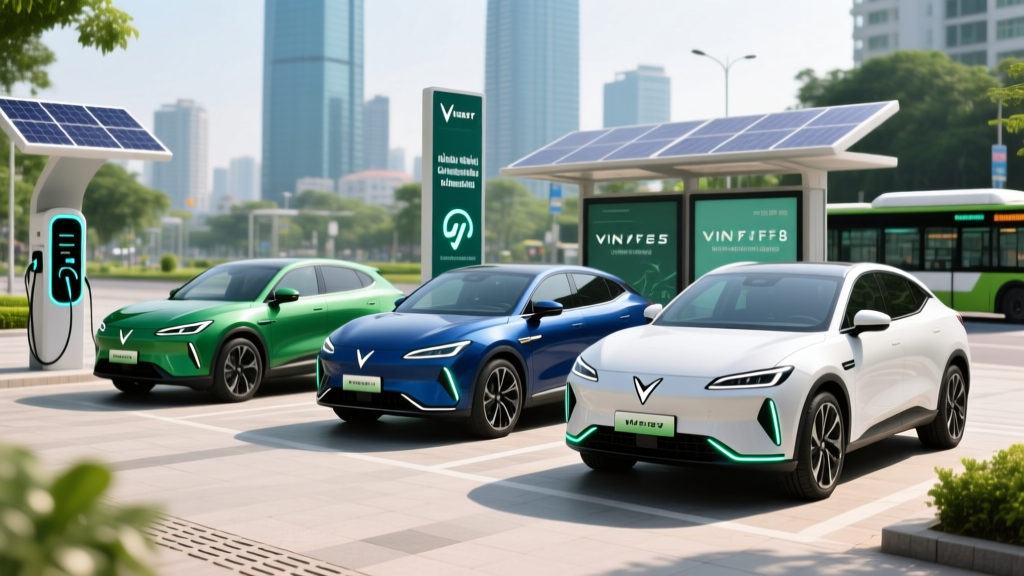
Vietnam's electric car market is dominated by domestic automaker VinFast, which offers a lineup spanning from the compact VF 5 (starting around ₫389 million, roughly $15,500 USD) to the mid-size VF 8 SUV (starting ~₫1.16 billion, roughly $46,000 USD). Charging infrastructure is expanding rapidly through VinFast's own network of DC fast-charging stations across major cities and highways. For Vietnamese buyers, the primary EV advantage is dramatically lower per-kilometer fueling cost — electricity at roughly ₫3,800/kWh versus gasoline at ~₫24,000/liter yields a 70-80% fuel cost reduction. However, apartment-dwelling urban buyers face real home-charging challenges, and real-world range in Vietnam's hot, humid climate with heavy A/C use typically runs 15-20% below stated NEDC/WLTP figures.
Why Vietnam's EV Market Looks Different From the West
Vietnam's electric vehicle adoption follows a fundamentally different trajectory than the US or Europe. Rather than a fragmented market with dozens of competing brands, Vietnam's EV ecosystem revolves heavily around VinFast, the Hanoi-based automaker under Vingroup. While Hyundai, Mercedes-Benz, and a handful of Chinese imports (notably BYD and Wuling) have entered the Vietnamese market, VinFast controls the vast majority of domestic EV sales and operates the country's largest charging network.
This vertical integration creates both advantages and limitations. On the plus side, VinFast owners benefit from a unified ecosystem: one app for charging, one service network, and battery-subscription options that lower upfront purchase prices. On the downside, buyers have fewer brand choices and are somewhat locked into the VinFast ecosystem — a consideration that doesn't exist in markets with robust third-party charging networks like Electrify America, ChargePoint, or Tesla Superchargers.
Vietnam's government has also pushed EV adoption through registration fee exemptions (reduced from 10-12% to 0% for EVs through 2025, with gradual phase-in of a reduced rate afterward) and special consumption tax reductions. These incentives make EVs more price-competitive against gasoline-powered rivals like the Toyota Vios, Hyundai Accent, and Mazda CX-5 that dominate Vietnamese roads.
VinFast Lineup: Range, Battery, and Pricing Breakdown
Here is the current VinFast passenger EV lineup available in Vietnam with key specifications. Note that ranges listed are based on NEDC testing cycles, which tend to overstate real-world range by roughly 20-25% compared to the more stringent US EPA standard.
| Model | Segment | Battery (kWh) | NEDC Range | Real-World Est. | Peak DC Charge | 10-80% Time | Motor Output | Base Price (₫) |
|---|---|---|---|---|---|---|---|---|
| VF 5 Plus | A-SUV | 37.23 kWh (LFP) | 300 km | ~230-250 km | ~45 kW | ~45 min | 100 kW / 134 hp | ₫389M (~$15,500) |
| VF 6 Plus | B-SUV | 59.6 kWh (LFP) | 399 km | ~300-320 km | ~65 kW | ~40 min | 130 kW / 174 hp | ₫630M (~$25,100) |
| VF 7 Plus | C-SUV | 75.3 kWh (NMC) | 450 km | ~340-370 km | ~120 kW | ~30 min | 150 kW / 201 hp | ₫899M (~$35,800) |
| VF 8 Eco | D-SUV | 82 kWh (NMC) | 471 km | ~350-380 km | ~140 kW | ~28 min | 260 kW / 349 hp | ₫1.16B (~$46,200) |
| VF 9 Eco | E-SUV | 123 kWh (NMC) | 626 km | ~470-510 km | ~180 kW | ~35 min | 300 kW / 402 hp | ₫1.53B (~$61,000) |
Chemistry note: The VF 5 and VF 6 use lithium iron phosphate (LFP) batteries, which are heavier and less energy-dense but offer longer cycle life (typically 3,000+ cycles before significant degradation) and better thermal stability in Vietnam's hot climate. The VF 7, VF 8, and VF 9 use nickel-manganese-cobalt (NMC) chemistry for higher energy density and longer range, though NMC batteries degrade somewhat faster under sustained high-temperature exposure.
Real Cost of Ownership: EV vs Gasoline in Vietnam
The strongest argument for going electric in Vietnam is operational cost. Here is a realistic 5-year ownership comparison between the VinFast VF 6 Plus and a comparably priced gasoline SUV like the Hyundai Creta (1.5L, automatic).
| Cost Category | VinFast VF 6 Plus (EV) | Hyundai Creta 1.5L (Gas) |
|---|---|---|
| Purchase Price (battery included) | ₫630,000,000 | ₫730,000,000 |
| Registration Fee (2026 EV rate ~1%) | ₫6,300,000 | ₫73,000,000 (10%) |
| Fuel/Energy Cost (5 yrs, 80,000 km) | ₫30,400,000 (₫3,800/kWh × 8,000 kWh) | ₫134,400,000 (7.0 L/100km × ₫24,000/L) |
| Maintenance (5 yrs) | ₫12,000,000 (no oil changes, fewer moving parts) | ₫35,000,000 (oil, filters, belts, plugs) |
| Insurance (5 yrs est.) | ₫45,000,000 | ₫38,000,000 |
| Total 5-Year Cost | ₫723,700,000 | ₫1,010,400,000 |
| Cost per km | ₫9,046 | ₫12,630 |
Over five years and 80,000 km, the VF 6 Plus saves approximately ₫287 million (~$11,400 USD) despite higher insurance premiums. The per-kilometer energy cost is roughly ₫380 ($0.015) for the EV versus ₫1,680 ($0.067) for the gasoline Creta — a 77% reduction in fueling costs.
Battery subscription option: VinFast offers a battery-rental model in Vietnam that reduces the VF 6's upfront price by approximately ₫160 million. The monthly battery subscription fee is roughly ₫1.2-1.6 million depending on mileage tier. For drivers covering under 1,500 km/month, the subscription often costs less than the equivalent gasoline expenditure. However, buyers who plan to keep the car 7+ years and drive heavily may come out ahead purchasing the battery outright.
Charging Infrastructure: What Vietnamese EV Owners Actually Face
VinFast has deployed over 150,000 charging ports across Vietnam as of early 2026, spanning all 63 provinces. The network includes a mix of Level 2 AC chargers (7.4-22 kW) at shopping centers, parking garages, and residential complexes, plus DC fast chargers (60-180 kW) at highway rest stops and dedicated charging stations.
Myth vs Fact: Charging in Vietnam
| Myth | Fact |
|---|---|
| "You can't drive long distance in an EV in Vietnam" | The VF 7's real-world ~350 km range covers Hanoi–Hai Phong or HCMC–Vung Tau on a single charge. DC fast chargers along QL1A and the North-South Expressway enable longer trips with 25-35 min stops. |
| "Charging takes too long" | At a 120 kW VinFast DC charger, the VF 7 adds ~200 km of range in 20 minutes. Most Vietnamese drivers charge overnight at home or at Level 2 destination chargers during work/shopping. |
| "You need a house to own an EV" | VinFast has installed Level 2 chargers in many apartment building basements (Vinhomes, Masterise). However, availability varies by building — confirm before purchasing if you live in an apartment. |
| "Electricity is expensive in Vietnam" | Residential EV charging at EVN's Tier 4 rate (~₫3,800/kWh) costs roughly ₫57,000 for a full VF 6 charge — the equivalent of 2.4 liters of gasoline. |
Home charging reality: Vietnamese townhouse owners with ground-floor garages can install a VinFast home wallbox (7.4 kW AC) relatively easily, adding roughly 40-50 km of range per hour of charging. A full overnight charge (8 hours) restores 320-400 km — more than enough for daily driving. However, apartment dwellers must rely on building-installed chargers or public stations, and availability remains inconsistent outside Vinhomes and premium developments.
Charging cost structure: VinFast public DC fast charging costs approximately ₫3,800-4,200/kWh depending on time of day (peak vs off-peak). This is comparable to residential electricity rates, making public charging in Vietnam far more affordable than in the US where networks like Electrify America charge $0.48-0.56/kWh (₫12,000-14,000).
Common Misconceptions About Vietnamese EVs
"EV batteries won't last in Vietnam's heat." This concern has some merit but is overstated. LFP batteries in the VF 5 and VF 6 handle high temperatures significantly better than NMC, with degradation rates of roughly 1-2% per year in tropical climates versus 2-3% for NMC. VinFast's battery warranty covers capacity below 70% for 7 years/160,000 km (VF 5/6) or 8 years/200,000 km (VF 7/8/9). Real-world data from early VF 8 owners (2022-2023 models) shows approximately 5-8% degradation after 60,000 km — within expected parameters.
"VinFast's resale value is terrible." Early depreciation was steep — 2022 VF 8 models lost 35-45% of value in the first two years, partly due to software issues and initial quality concerns. However, 2024-2025 models with improved software and build quality have shown more stable residuals, with 1-year depreciation closer to 15-20%. The battery-subscription model also complicates resale valuation since the battery cost is separated.
"EVs are unsafe compared to gasoline cars." The VF 8 received a 4-star ASEAN NCAP rating, and the VF 9 achieved 5 stars. While not yet tested by US NHTSA or IIHS, VinFast's newer models incorporate ADAS features including adaptive cruise control, lane-keeping assist, and automatic emergency braking — comparable to Toyota Safety Sense or Honda Sensing systems.
Decision Framework: Should You Buy an EV in Vietnam?
Choose a VinFast EV If:
- You own a house or townhouse with garage access — home charging makes EV ownership dramatically cheaper and more convenient than gasoline.
- Your daily commute is under 100 km — every VinFast model handles this easily on a single charge, and you'll charge overnight at off-peak electricity rates.
- You drive 15,000+ km/year — higher mileage amplifies the fuel cost savings, making the EV payback period 3-4 years versus a comparable gasoline vehicle.
- You primarily drive in urban areas — regenerative braking recovers energy in stop-and-go traffic, and you avoid idling fuel waste in HCMC or Hanoi congestion.
- You want lower maintenance — no oil changes, no spark plugs, no timing belts, and regenerative braking extends brake pad life to 80,000-120,000 km.
Stick With Gasoline or Hybrid If:
- You live in an apartment without charging access — relying entirely on public chargers is feasible but adds time cost and reduces the convenience advantage.
- You regularly drive 400+ km trips — while possible with DC fast-charging stops, a gasoline car or hybrid (like the Toyota Corolla Cross Hybrid) is less stressful for frequent Hanoi–Da Nang or HCMC–Nha Trang runs.
- You plan to sell within 2 years — EV depreciation remains steeper than popular gasoline models like the Toyota Vios or Mazda CX-5 in the Vietnamese used-car market.
- Your budget is under ₫350 million — the VF 5 at ₫389 million is the cheapest new EV option. Below that, gasoline A-segment cars (Kia Morning, Hyundai i10) remain the practical choice.
Frequently Asked Questions
Can I charge a VinFast EV at non-VinFast stations in Vietnam?
Currently, the vast majority of public charging infrastructure in Vietnam is VinFast-operated and restricted to VinFast vehicles via RFID card or app authentication. Third-party charging networks are extremely limited. This is a significant ecosystem lock-in that buyers should consider. Some hotels and resorts have installed universal Type 2 AC chargers that work with any EV, but DC fast charging remains almost exclusively VinFast.
How does VinFast's battery subscription actually work?
Under the subscription model, you purchase the vehicle without the battery (reducing the price by ₫120-200 million depending on model) and pay a monthly fee based on your mileage tier. As of 2026, the VF 6 battery subscription costs approximately ₫1,200,000/month for up to 1,500 km or ₫1,600,000/month for unlimited mileage. VinFast retains ownership of the battery and covers replacement if capacity drops below 70%. You can switch to battery ownership later by paying the remaining battery cost.
What happens during flooding — are EVs safe in water?
VinFast EVs carry IP67-rated battery enclosures, meaning they can withstand submersion in 1 meter of water for 30 minutes. This is relevant for Hanoi and HCMC drivers who encounter flash flooding during monsoon season. However, no EV or gasoline car should be deliberately driven through deep floodwater. EVs do have an advantage in that they lack an air intake that can hydrolock an engine — but water ingress into electronics remains a risk for any vehicle.
How does the VinFast VF 8 compare to imported EVs like the BYD Atto 3?
The BYD Atto 3 (priced around ₫700-750 million in Vietnam) offers a 60.5 kWh LFP battery, ~340 km WLTP range, and competitive interior quality. However, BYD has virtually no charging network or service infrastructure in Vietnam as of 2026, making ownership significantly less practical than a VinFast. The VF 7 at ₫899 million offers more range, faster charging, and full access to VinFast's ecosystem. Imported EVs may become more viable as third-party charging expands, but for now VinFast's infrastructure advantage is decisive.
What is the real-world range loss in Vietnam's hot climate?
Expect 15-20% range reduction from NEDC figures in typical Vietnamese driving conditions. The primary factors are aggressive A/C usage in 35°C+ heat (A/C compressor draw can consume 2-4 kW continuously), stop-and-go urban traffic, and battery thermal management energy. Highway driving at 80-100 km/h is actually more efficient than city driving in an EV, but Vietnam's highways often have congested sections that negate this advantage. Plan for ~230 km real-world range from the VF 5 and ~350 km from the VF 7.