The Quick Answer: What “Electric Cars for 10 Year Olds” Actually Means
Short answer: A 10-year-old cannot legally drive a full-size street-legal EV (Tesla Model 3, Hyundai Ioniq 5, etc.). When parents search for electric cars for 10 year olds, they usually mean one of three things:
- 12V/24V battery-powered ride-on cars — toy EVs sized for kids, $200–$900, 2–6 mph top speed, 45–90 minutes of runtime.
- Street-legal Neighborhood Electric Vehicles (NEVs / LSVs) — low-speed EVs limited to 20–25 mph, legal on roads ≤35 mph in most states, $8,000–$16,000, but require a licensed adult driver in nearly every state.
- A family EV the parent drives with the 10-year-old as a passenger — focusing on rear-seat safety, IIHS ratings, and kid-friendly features.
This guide breaks down all three with real numbers on cost, range, safety, and what a first-time buyer should expect.
12V vs 24V Ride-On Electric Cars: Specs, Range & Cost
Ride-on EVs are the most common match for the search. They use sealed lead-acid or lithium batteries (yes, the same chemistries as full-size EVs, just scaled down). Here's how the two main voltage classes compare:
| Spec | 12V Ride-On | 24V Ride-On | Gas-Powered Kids' ATV (baseline) |
|---|---|---|---|
| Top Speed | 2–4 mph | 5–8 mph | 10–15 mph |
| Battery Capacity | 12Ah (144 Wh) | 7–10Ah (168–240 Wh) | 0.5–1 gal gas tank |
| Runtime | 45–60 min | 60–90 min | 2–4 hours |
| Charge Time (full) | 8–12 hours | 6–10 hours | Refuel: 2 min |
| Weight Capacity | 65–88 lbs | 110–145 lbs | 120–180 lbs |
| Typical MSRP | $200–$450 | $400–$900 | $800–$1,800 |
| Age Sweet Spot | 3–6 years | 6–10 years | 10+ (with supervision) |
For a 10-year-old, a 24V model is the right fit — 12V units are usually outgrown by age 7 in both speed and weight capacity. Expect to pay around $500–$700 for a reputable brand (Power Wheels, Peg Perego, Aosom, Bentley Kids).
Battery Chemistry Matters Even in Toys
Most ride-ons still ship with sealed lead-acid (SLA) batteries — heavy, slow to charge, and prone to sulfation if left uncharged. A growing number of premium models use lithium iron phosphate (LFP), the same chemistry in the base Tesla Model 3 and many Chinese-market EVs. LFP ride-ons charge in 3–4 hours, last 3–5x more cycles, and weigh ~40% less, but add $100–$200 to the price. If your kid will use it 3+ times a week, LFP pays off within a year.
Neighborhood Electric Vehicles (NEVs): Can a 10-Year-Old Drive One?
NEVs — also federally classified as Low-Speed Vehicles (LSVs) — are street-legal on roads with speed limits up to 35 mph (some states allow 45 mph). They top out at 20–25 mph and must have seat belts, headlamps, turn signals, and a VIN. Popular models include the Polaris GEM, Club Car Onward, and newer entrants like the Wink Motors Wink Go.
Myth vs. Fact: NEVs and Kids
| Myth | Fact |
|---|---|
| "My 10-year-old can legally drive an NEV on neighborhood streets." | In 49 states, the driver must hold a valid driver's license — minimum age 15–16. Only a few states have limited exceptions for farm use or private property. |
| "NEVs are as safe as a real car." | NEVs lack airbags, crumple zones, and ESC. NHTSA does not crash-test them to the same standards as passenger vehicles. |
| "They're cheap to own." | Purchase: $8,000–$16,000. No gas, but insurance is still $40–$80/month in most states. |
Bottom line: A 10-year-old can ride as a passenger in an NEV driven by a licensed adult, but cannot legally operate one on public roads. If you're considering an NEV for family errands in a low-speed community, here are real numbers:
- Battery: Typically 6–8 × 6V lead-acid cells (48V system), ~8–12 kWh usable. Lithium upgrades add $2,000–$4,000.
- Range: 30–50 miles per charge (lead-acid); 50–80 miles (lithium).
- Charging: Standard 120V outlet, 6–8 hours for a full charge. No Level 2 or DC fast charging.
- Federal tax credit: NEVs/LSVs do not qualify for the IRS §30D Clean Vehicle Credit — they don't meet the 4-wheel, ≥14,000 lb GVWR, or battery-capacity thresholds.
Real EV as a Family Car: What Matters for a 10-Year-Old Passenger
If you're actually shopping for a full-size EV and your 10-year-old is the key rear-seat occupant, here's what to prioritize — with current 2026 model data:
| Model | EPA Range | IIHS Rating | Rear Seat Room (in.) | Base MSRP | §30D Credit Eligible? |
|---|---|---|---|---|---|
| Tesla Model Y (Long Range) | 330 mi | Top Safety Pick+ | 37.3 legroom | $44,990 | Yes (subject to income/MSRP caps) |
| Hyundai Ioniq 5 (SEL) | 303 mi | Top Safety Pick+ | 39.4 legroom | $42,600 | Yes — built in GA, meets sourcing rules |
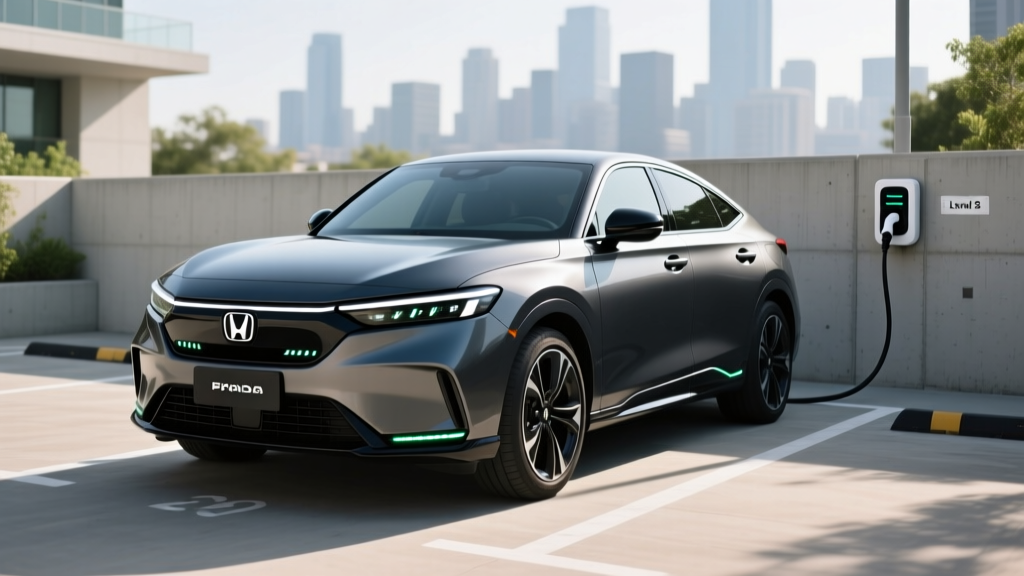
| Honda Prologue (EX) | 296 mi | Top Safety Pick | 38.6 legroom | $47,400 | Yes (US-assembled) |
| Toyota RAV4 Plug-in Hybrid | 42 mi EV + 500 mi gas | Top Safety Pick+ | 37.8 legroom | $44,500 | Yes — up to $7,500 if income/MSRP caps met |
Source: fueleconomy.gov, IIHS, manufacturer spec sheets. §30D eligibility per IRS.gov — subject to buyer income caps ($150K single / $300K joint), MSRP caps ($55K cars / $80K SUVs), and battery sourcing requirements. Always verify current-year rules.
Real-World Range vs. EPA Sticker
EPA says 303 mi (Ioniq 5). Real world? Expect ~250–270 mi on a highway trip at 70 mph; ~210–230 mi in sub-30°F weather without a heat pump engaged. The Ioniq 5's heat pump (standard on SEL+) mitigates cold loss to ~15–18%, better than most competitors at 25–30% loss.
Charging Speed: What Parents Actually Need
Kid schedules are rigid — soccer practice doesn't wait for a charge curve. Here's what matters:
- Level 2 home charging (240V, 48A): Adds ~25–30 miles per hour of charging. A 10–80% top-up takes ~4 hours — perfect overnight.
- DC fast charging: The Ioniq 5 peaks at 235 kW (800V architecture), hitting 10–80% in ~18 minutes. The Model Y peaks at ~250 kW, 10–80% in ~22 minutes. Both taper significantly above 80% — charging from 80–100% can add another 20+ minutes.
- Home install cost: Expect $800–$2,500 for a licensed electrician to install a 240V/50A outlet (NEMA 14-50) near your panel. A full panel upgrade (100A → 200A) adds $1,500–$3,500.
Cost Breakdown: EV vs. Gas Family Car (5-Year Ownership)
Let's compare a realistic family scenario: 12,000 miles/year, 5 years, using a Hyundai Ioniq 5 SEL ($42,600 MSRP, ~$35,100 after §30D credit) vs. a Toyota RAV4 Gas LE ($30,000 MSRP, no credit).
| Cost Category | Ioniq 5 (EV) | RAV4 Gas LE |
|---|---|---|
| Purchase Price (after credits) | $35,100 | $30,000 |
| Fuel/Energy (5 yrs, 60K mi) | $3,600 (home L2 @ $0.14/kWh) | $9,000 (@ $3.50/gal, 30 MPG) |
| Maintenance (5 yrs) | $1,200 (cabin filter, wipers, tire rotation) | $3,500 (oil, filters, brakes, belts) |
| Insurance (avg. 5 yrs) | $9,500 (EVs cost ~15–20% more to insure) | $7,800 |
| Depreciation (est.) | ~$14,000 | ~$12,500 |
| Total 5-Year Cost | $63,400 | $62,800 |
| Cost Per Mile | $1.06 | $1.05 |
The EV breaks even around year 4–5. The gap narrows further if you have free workplace charging, solar panels, or if gas prices rise above $4/gal. The EV's advantage: zero tailpipe emissions, smoother ride for kids (no engine vibration), and one-pedal driving reducing brake wear.
Common Misconceptions — Addressed With Facts
| Misconception | Fact |
|---|---|
| "EV batteries need replacing every few years." | Modern NMC and LFP packs are warrantied 8 years / 100,000 miles for ≥70% capacity retention. Real-world data from Recurrent Auto shows average degradation of 8–12% at 100K miles. |
| "You can't road-trip with kids in an EV." | The US now has 20,000+ DC fast chargers. Tesla's Supercharger network (now open to NACS-equipped Ford, GM, Rivian, Hyundai models) covers 98% of interstate routes. Plan 15–20 min stops every 200 miles — about the right cadence for a 10-year-old's bladder. |
| "EVs are unsafe in crashes." | Every 2025–2026 EV listed above earned IIHS Top Safety Pick or Top Safety Pick+. The low center of gravity (battery under floor) reduces rollover risk. The NHTSA has given 5-star ratings to the Model Y, Ioniq 5, and Prologue. |
| "Home charging requires a panel upgrade." | Most homes with a 100A+ panel and space for a 50A breaker can support Level 2 charging without an upgrade. A licensed electrician can confirm in a $150–$300 inspection. |
| "My kid can drive an NEV legally." | Nearly every state requires a driver's license (min. age 15–16) to operate an LSV/NEV on public roads. Check your state DMV for exact rules. |
Decision Framework: Which "Electric Car for Your 10-Year-Old" Is Right?
Choose a 24V ride-on ($400–$900) if:
- Your child wants to "drive" in the driveway, yard, or park
- Budget is under $1,000
- You want zero legal/licensing requirements
- Top speed of 5–8 mph is appropriate for your environment
Choose a family EV (Model Y, Ioniq 5, Prologue) if:
- You're replacing or adding a family vehicle
- You have home charging access (garage, driveway, or landlord permission)
- You want IIHS Top Safety Pick+ protection for rear-seat passengers
- You drive 8,000–15,000 miles/year (maximizes fuel savings)
- You qualify for the §30D credit (income <$150K single / <$300K joint, vehicle under MSRP cap)
Choose an NEV/LSV ($8,000–$16,000) if:
- You live in a low-speed community (retirement, resort, campus)
- A licensed adult will always be the driver
- Trips are under 30 miles round-trip on roads ≤35 mph
- You don't need highway capability or crash-test-level safety
Choose a PHEV (RAV4 Plug-in, Hyundai Tucson PHEV) if:
- You lack reliable home Level 2 charging
- You regularly take 400+ mile road trips
- You want 40+ miles of electric-only range for school/activity commutes
- You want to hedge against charging-desert risk
Frequently Asked Questions
Can a 10-year-old legally drive any electric vehicle on public roads?
No. Full-size EVs require a driver's license (minimum age 15–16 depending on state). Neighborhood Electric Vehicles (NEVs/LSVs) also require a licensed driver in nearly every state. The only electric vehicles a 10-year-old can operate independently are off-road ride-on toys on private property.
What's the best electric ride-on car for a 10-year-old in 2026?
Look for a 24V model with a weight capacity of at least 110 lbs and a top speed of 5–8 mph. Brands like Power Wheels (Jeep Wrangler 24V), Peg Perego (Polaris RZR 24V), and Aosom (licensed Mercedes/Lamborghini replicas) are popular. Expect to pay $500–$700. Lithium battery upgrades are worth it for frequent use.
How much does it cost to charge an EV at home vs. gas?
At the US average electricity rate of ~$0.16/kWh and average EV efficiency of 3.5 mi/kWh, home charging costs ~$0.045/mile. A gas car at 28 MPG and $3.50/gal costs ~$0.125/mile. Over 12,000 miles/year, that's $540 (EV) vs. $1,500 (gas) — saving ~$960 annually.
Are EVs safe for kids in the back seat?
Yes. The 2025–2026 EVs profiled above all earned IIHS Top Safety Pick or Top Safety Pick+ ratings. EVs have a low center of gravity (reducing rollover risk), large crumple zones (no engine block in front), and standard automatic emergency braking. Always use an age-appropriate booster seat for a 10-year-old (typically 4'9"+ tall before transitioning to a seat belt alone, per NHTSA guidelines).
Do EVs qualify for tax credits in 2026?
The federal §30D Clean Vehicle Credit offers up to $7,500 for new EVs meeting battery-sourcing and critical-mineral requirements. Buyer income must be under $150K (single) or $300K (joint). Vehicle MSRP must be under $55K (cars) or $80K (SUVs/trucks). The credit can now be transferred to the dealer at point of sale as an instant discount. Rules change — always verify at IRS.gov before purchasing.
What if I don't have home charging — is an EV still practical?
It's harder but possible if you have reliable access to a workplace charger or a public Level 2 station within 0.5 miles. However, relying solely on DC fast charging is more expensive ($0.30–$0.50/kWh at Electrify America, EVgo, or Tesla Superchargers) and adds wear to the battery over time. If home charging isn't an option, a PHEV (42-mile electric range + gas backup) is a more practical choice.
Final Takeaway
The phrase "electric cars for 10 year olds" covers a wide spectrum — from $500 ride-on toys to $45,000 family EVs. The right choice depends entirely on whether you need a toy, a neighborhood shuttle, or a full-size family vehicle with top safety ratings. Whatever you choose, lead with safety data (IIHS, NHTSA), verify real-world range (not just EPA stickers), and run the 5-year cost math before deciding. The numbers almost always point to the right answer.