Quick Answer: What Are USPS EVs?
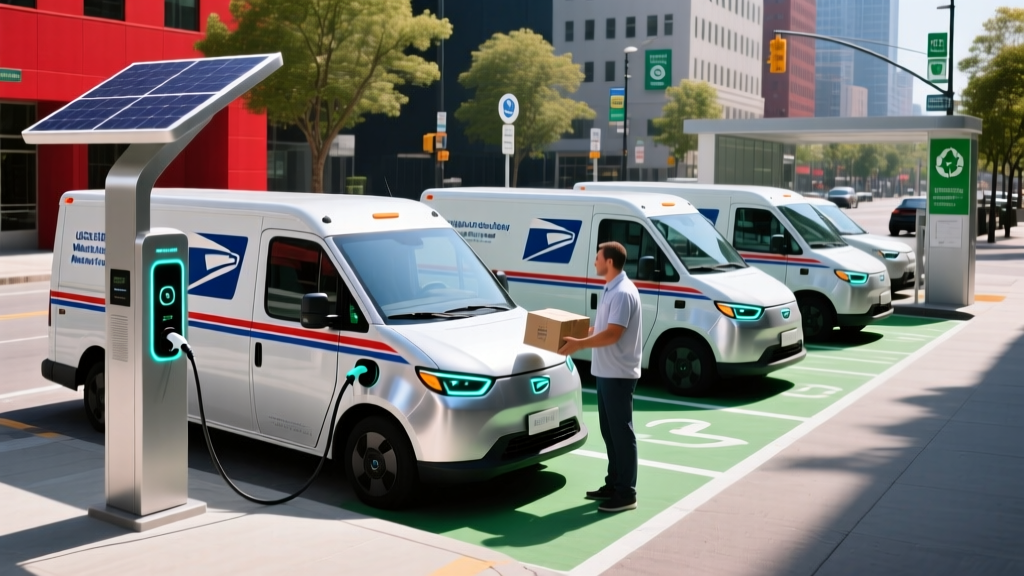
The USPS is deploying the Oshkosh NGDV (Next Generation Delivery Vehicle), a purpose-built electric and low-emission mail truck replacing the 30-year-old Grumman LLV. The electric variant carries a ~70 kWh usable battery, targets an EPA-estimated 70–90 mile range, and charges via Level 2 (AC, ~19.2 kW) overnight at postal depots. The $3 billion USPS fleet modernization contract covers up to 165,000 vehicles, with a mandated minimum of 45,000 battery-electric units under current procurement terms. For consumers, USPS EVs prove that daily-route electrification works — but only when the route is predictable, short, and depot-charged.
Why USPS EVs Matter to Regular Buyers
You might wonder why a government mail truck belongs on an EV buyer's guide. The answer is data at scale. The USPS operates one of the largest civilian vehicle fleets in the world — roughly 230,000 vehicles covering over 4 billion miles annually. When the Postal Service commits to electrifying a significant portion of that fleet, it validates several things that matter to consumer EV shoppers:
- Route-predictable EVs work today. Mail routes are 20–40 miles per day, return-to-depot every night. This is the ideal EV use case — short, repeatable, and chargeable on Level 2 overnight.
- Fleet charging infrastructure is scaling. USPS depot charging installations are driving investment in commercial AC and DC infrastructure, which benefits public networks in surrounding areas.
- Total cost of ownership (TCO) math holds up. The USPS chose to electrify partly because lifecycle fuel and maintenance savings offset higher upfront vehicle costs — the same equation consumer buyers face.
If the math works for 165,000 stop-and-go mail trucks in Minnesota winters and Arizona summers, it can work for your 30-mile round-trip commute.
USPS NGDV EV: The Real Specs
The Oshkosh NGDV comes in two variants: a battery-electric version (BEV) and a low-emission internal combustion engine (ICE) version. Here is what we know about the electric model based on Oshkosh Defense contract disclosures and USPS procurement documentation:
| Specification | NGDV BEV (Electric) |
|---|---|
| Battery Capacity (usable) | ~70 kWh (estimated, LFP chemistry targeted) |
| EPA-Estimated Range | 70–90 miles (route-dependent) |
| Real-World Range Expectation | 55–75 mi (cold weather, HVAC, stop-and-go load) |
| Level 2 AC Charging | Up to 19.2 kW (~4–5 hours 0–100%) |
| DC Fast Charging | Not standard (depot AC charging model) |
| 0–30 mph | ~5.0 seconds (unladen, estimated) |
| Payload Capacity | ~2,000 lbs cargo |
| Cargo Volume | ~120 cu ft |
| Drivetrain | Rear-wheel drive, single-speed reduction |
| Vehicle Weight (curb) | ~7,000 lbs (estimated) |
| Climate Control | Heat pump equipped (cab + cargo area) |
Real-World Range Reality Check
The NGDV's 70–90 mile EPA estimate assumes moderate temperatures and standard cargo loads. In real postal operations — frequent door openings, HVAC running at full capacity, heavy parcel loads, and sub-freezing winter routes — expect effective range closer to 55–75 miles. This is still sufficient for the average 25-mile urban mail route, but it illustrates why the USPS retained an ICE variant for longer rural routes exceeding 80+ miles per day.
USPS EV vs. Gas: Cost Comparison
The core argument for USPS fleet electrification is lifecycle cost. Let's break down the numbers using fleet-average data and consumer-equivalent figures:
| Cost Factor | NGDV BEV (Electric) | NGDV ICE (Gas) | Legacy Grumman LLV (Gas) |
|---|---|---|---|
| Estimated Vehicle Cost | ~$55,000–$65,000 | ~$40,000–$48,000 | N/A (fully depreciated) |
| Fuel/Energy Cost per Mile | ~$0.08–$0.12 (commercial electricity) | ~$0.22–$0.30 (gasoline at $3.50/gal) | ~$0.30–$0.40 (8.2 MPG avg) |
| Maintenance per Mile | ~$0.04–$0.06 | ~$0.10–$0.14 | ~$0.18–$0.25 (aging fleet) |
| Estimated 10-Year Fuel Savings vs. LLV | ~$18,000–$24,000 | ~$6,000–$10,000 | Baseline |
| Lifetime (target) | 20 years / 250,000 mi | 20 years / 250,000 mi | 30+ years (well past design life) |
The LLV's notorious 8–10 MPG combined rating makes it one of the least efficient vehicles on American roads. Even the ICE NGDV represents a massive efficiency improvement. But the BEV variant's fuel and maintenance savings — roughly $0.20–$0.30 per mile lower operating cost — are what justify the higher purchase price over a 20-year service life. At 12,500 miles per year (a typical urban route), that's $2,500–$3,750 in annual savings per vehicle.
Charging Infrastructure: The Depot Model
USPS EVs don't use public charging networks. They charge at postal depots using Level 2 AC infrastructure, typically overnight during 8–12 hour layovers. This depot-charging model is relevant to consumer buyers because it mirrors the home Level 2 charging setup that most EV owners rely on:
| Charging Level | Power (kW) | Miles Added per Hour | USPS NGDV Use Case | Consumer Equivalent |
|---|---|---|---|---|
| Level 1 (120V) | 1.4–1.9 kW | 4–6 mi/hr | Not practical for fleet | Emergency/trickle home charging |
| Level 2 (240V) | 7.2–19.2 kW | 20–55 mi/hr | Primary depot charging | Home wall connector (most common) |
| DC Fast | 50–350 kW | 150–1,000+ mi/hr | Not standard on NGDV | Public road-trip charging |
The USPS depot model confirms what EV analysts have long argued: most daily driving doesn't require DC fast charging. If you can charge at home overnight on Level 2, a 70–90 mile effective range covers the vast majority of daily commutes — just as it covers daily mail routes. The USPS invested approximately $1.2 billion in charging infrastructure across its facilities, installing thousands of Level 2 ports. This buildout has secondary benefits: electrical grid upgrades at postal facilities can improve local grid capacity for surrounding residential EV adoption.
What USPS EVs Teach First-Time EV Buyers
The USPS electrification experience surfaces practical lessons that apply directly to consumer EV purchasing:
1. Know Your Daily Route Before You Buy
The USPS chose BEV for routes under ~70 miles and ICE for longer rural routes. Apply the same logic: if your daily round-trip is under 60 miles and you have home charging, a smaller-battery EV (or even a PHEV) may be more cost-effective than paying for 300+ miles of range you'll never use.
2. Cold Weather Cuts Range — Plan for It
Mail routes in Minneapolis and Chicago don't get suspended in January. The USPS specified heat pumps for the NGDV specifically because resistive heating would consume too much battery in cold climates. For consumer buyers: if you live where winters drop below 20°F, budget for 20–30% range loss and prioritize a vehicle with a heat pump (standard on many 2025–2026 models from Hyundai, Tesla, BMW, and others).
3. Stop-and-Go Driving Favors EVs
Mail delivery is the ultimate stop-and-go use case — hundreds of stops per day. Regenerative braking recaptures energy that gas vehicles waste as brake heat. This is why EVs achieve their best efficiency in city driving, the opposite of gas cars. If your commute is urban or suburban with frequent stops, an EV's efficiency advantage is maximized.
4. Total Cost of Ownership Beats Sticker Price
The NGDV BEV costs $15,000–$20,000 more upfront than its ICE sibling but saves that difference within 5–7 years through fuel and maintenance reduction. Consumer EVs follow the same pattern. A federal §30D tax credit of up to $7,500 (subject to MSRP caps, buyer income limits, and battery-sourcing requirements) narrows the gap further at purchase.
Decision Framework: Is an EV Right for Your Route?
Choose a BEV if: Your daily driving is under 80 miles, you have access to Level 2 home or workplace charging, and your climate is moderate or you can accept winter range reduction.
Choose a PHEV if: You drive 40–80 miles daily but occasionally take 200+ mile road trips, or you lack reliable home charging and need gas backup.
Choose an ICE/HEV if: You regularly exceed 150 miles daily, lack any charging access, or operate primarily in extreme cold with no garage parking.
Common USPS EV Misconceptions — Corrected
| Myth | Fact |
|---|---|
| "The USPS scrapped the electric mail truck program." | False. While the initial 2022 contract favored ICE variants, subsequent congressional funding and updated procurement mandates require at least 45,000 BEVs out of 165,000 total NGDVs. Deliveries began in 2024 and continue through 2028. |
| "Electric mail trucks can't handle cold weather." | The NGDV BEV includes a heat pump system and battery thermal management. Range drops in cold weather (typically 20–30%), but routes are short enough that even reduced range covers most daily needs. |
| "USPS EVs will strain the electrical grid." | Depot charging is predominantly overnight (off-peak hours), when grid demand is lowest. Most postal facilities upgraded to commercial-grade electrical service that can handle simultaneous Level 2 charging without peak-load stress. |
| "Taxpayers are overpaying for electric mail trucks." | The BEV variant's higher purchase price is offset by an estimated $18,000–$24,000 in 10-year fuel savings per vehicle. Over a 20-year service life, BEVs are projected to be net cost-negative compared to ICE alternatives at current fuel prices. |
| "The NGDV is just a rebadged commercial van." | The NGDV is a purpose-built, right-hand-drive vehicle designed to USPS specifications for cargo access, carrier safety, and route-specific ergonomics. No direct consumer equivalent exists. |
The Bigger Picture: Fleet Electrification and Consumer Impact
The USPS NGDV program is part of a broader federal fleet electrification push under Executive Order 14057, which targets 100% zero-emission federal vehicle acquisitions by 2035. Other agencies — including the General Services Administration, DHS, and various state DOTs — are following similar procurement paths. The downstream effects for consumer EV buyers include:
- Battery supply chain scaling: Fleet contracts for tens of thousands of vehicles provide volume certainty that encourages domestic battery manufacturing investment, ultimately lowering consumer battery costs.
- Charging infrastructure spillover: Depot charging buildouts in underserved postal areas sometimes catalyze public charging investment in the same corridors.
- Used fleet vehicle market: After 10–15 years of service, decommissioned NGDVs may enter secondary markets (though USPS vehicles are typically scrapped or recycled rather than resold).
- Normalized EV visibility: When your mail carrier drives an EV every day, it normalizes electric propulsion for skeptics in ways that no advertising campaign can match.
Frequently Asked Questions
How many USPS EVs are on the road in 2026?
As of early 2026, the USPS has taken delivery of several thousand NGDV units across both BEV and ICE variants, with deliveries ramping toward the 165,000-vehicle target. The exact count of battery-electric units in active service fluctuates as new depot charging infrastructure comes online. The 45,000 BEV minimum is a contractual floor, not a ceiling.
Can I buy a USPS NGDV electric mail truck?
No. The NGDV is manufactured by Oshkosh Defense under a federal procurement contract and is not available for consumer purchase. However, the electrification principles it validates — short-route BEV suitability, depot Level 2 charging, heat pump necessity in cold climates — apply directly to consumer EV selection.
What battery chemistry does the NGDV use?
Oshkosh has indicated the NGDV BEV targets LFP (lithium iron phosphate) chemistry, chosen for its longer cycle life, thermal stability, and lower cost compared to NMC (nickel manganese cobalt). LFP batteries typically tolerate daily 100% charging better than NMC, which suits the depot-charging model where vehicles charge fully every night. For consumer buyers, LFP-equipped vehicles (available in Tesla Model 3 Standard Range, Ford Mustang Mach-E Select, and others) offer similar advantages.
Do USPS EVs qualify for the federal tax credit?
No. The §30D clean vehicle credit applies to consumer purchases of new EVs meeting MSRP, income, and battery-sourcing requirements under current IRS rules. Federal fleet vehicles purchased through government procurement contracts do not use the consumer tax credit mechanism. However, the same domestic battery-sourcing requirements that affect §30D eligibility have influenced USPS procurement specifications.
Will USPS EVs charge at public charging stations?
The NGDV BEV is designed for depot-only charging and does not typically use public DC fast charging networks. It charges via Level 2 AC connectors at postal facilities. This is analogous to most consumer EV owners who do 90%+ of their charging at home and only use public chargers for road trips.
How does the NGDV's efficiency compare to a consumer EV?
The NGDV's efficiency is lower than most consumer EVs due to its heavy weight (~7,000 lbs), boxy aerodynamics, and constant stop-and-go operation. Expect roughly 1.5–2.5 kWh/mile in postal use, compared to 0.25–0.35 kWh/mile for a typical consumer crossover like the Hyundai Ioniq 5 or Tesla Model Y. But the NGDV's efficiency is still far better than the LLV's 8–10 MPG gasoline equivalent.