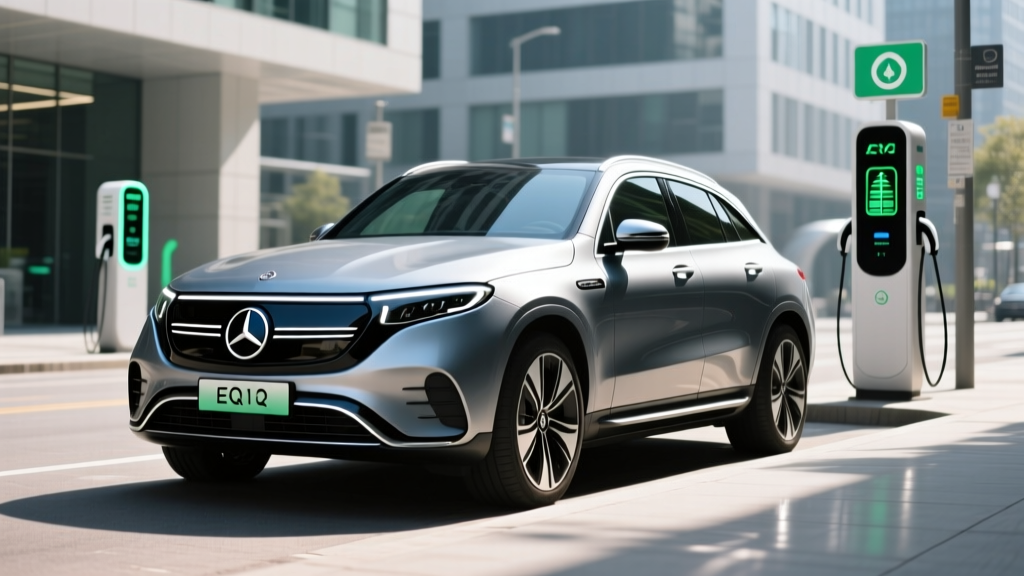
The Mercedes-Benz EQC was the automaker's first serious foray into the mass-market electric vehicle space — a luxury compact crossover that debuted for the 2020 model year in the United States and promised the refinement Mercedes buyers expected with battery-electric propulsion. By 2024, it was gone from the U.S. market entirely. If you've been searching for the Mercedes EQC discontinued reason, the answer is a convergence of factors: middling range, an adapted platform that compromised efficiency, fierce competition, and Mercedes-Benz's strategic pivot to dedicated EV architectures.
This article breaks down exactly why the EQC was axed, reviews its specifications for context, and outlines what current and prospective buyers should consider instead from the 2026 Mercedes EQ lineup and key competitors.
The Mercedes EQC Discontinued Reason: A Platform Problem
The core issue behind the EQC's discontinuation was its underpinnings. Unlike vehicles built on a dedicated electric skateboard platform, the EQC was adapted from the Mercedes GLC's internal combustion architecture. Mercedes engineers shoehorned a battery pack and dual electric motors into a chassis originally designed for a gasoline engine, transmission tunnel, and fuel tank.
This compromise had measurable consequences:
- Weight penalty: At approximately 5,350 lbs, the EQC was significantly heavier than purpose-built rivals, reducing efficiency
- Battery packaging limits: The floor-mounted 80 kWh battery (usable capacity) was constrained by the existing chassis geometry, limiting total energy storage compared to competitors
- Interior compromises: The transmission tunnel hump remained, reducing rear-seat footroom and cargo flexibility compared to flat-floor EV platforms
- Efficiency deficit: The EQC achieved just 76 MPGe combined (44 kWh/100 mi) per EPA data on fueleconomy.gov — well behind the Tesla Model Y (122 MPGe) and BMW iX (86 MPGe combined)
When Mercedes introduced its dedicated EVA (Electric Vehicle Architecture) platform — which underpins the EQS sedan and EQE sedan — the EQC's adapted architecture looked increasingly uncompetitive. Mercedes-Benz confirmed it would not offer a successor on the old platform, effectively ending the EQC's production run after the 2023 model year globally.
Mercedes EQC Specifications: What Buyers Got
For context on what the EQC offered before its exit, here are its key specifications from its final U.S. model year (2023):
| Specification | Mercedes EQC 400 4MATIC |
|---|---|
| EPA Range | 220 miles |
| Battery Capacity (Usable) | 80 kWh (NMC chemistry) |
| Drivetrain | Dual-motor AWD (4MATIC) |
| Horsepower | 402 hp |
| Torque | 564 lb-ft |
| 0-60 mph | 4.8 seconds |
| MPGe (Combined) | 76 MPGe (44 kWh/100 mi) |
| Max DC Fast Charge | 110 kW (CCS1) |
| 10-80% DC Charge Time | ~40 minutes |
| Level 2 Home Charging | 7.4 kW (~22 miles/hr) |
| Cargo Volume (rear seats up) | 17.4 cu ft |
| Cargo Volume (rear seats folded) | 51.4 cu ft |
| Rear Legroom | 37.4 inches |
| Base MSRP (2023) | $67,900 |
| Battery Warranty | 8 years / 100,000 miles |
Real-World Range Reality
EPA Sticker: 220 miles
Real-World Highway (70 mph): Expect approximately 180-195 miles. The EQC's heavy weight and poor aerodynamic efficiency relative to dedicated EV platforms hit hard at sustained highway speeds.
Cold Weather (below 32°F): Plan for 150-170 miles. NMC chemistry loses roughly 25-30% capacity in freezing temperatures, and the EQC's heat pump was not standard on all trims, relying in some configurations on resistive cabin heating that further drains the battery.
Charging Performance: Adequate but Not Competitive
The EQC's charging profile reflects its adapted-platform limitations. While 110 kW peak DC fast charging was acceptable at its 2020 launch, by 2023 competitors were charging at 200-350 kW.
| Charging Method | Power / Rate | Time / Miles Added |
|---|---|---|
| Level 1 (120V household) | ~1.4 kW | ~4 miles per hour |
| Level 2 (240V home charger) | 7.4 kW | ~22 miles per hour; full charge in ~11 hours |
| DC Fast Charge (peak) | 110 kW | 10-80% in ~40 minutes |
| DC Fast Charge (sustained avg.) | ~75 kW | Average over 10-80% session |
The charge curve tapers significantly above 60% state of charge. While the EQC can briefly hit 110 kW at low SoC, sustained rates drop to around 75 kW for the bulk of the session. On a road trip, this means 30-40 minute stops every 150-170 highway miles — a notably worse experience than a Hyundai Ioniq 5 (10-80% in ~18 minutes at 240 kW) or a Tesla Model Y on Superchargers.
Five Factors Behind the EQC Discontinuation
Beyond the platform issue, several market forces sealed the EQC's fate:
1. Range Couldn't Compete
At 220 miles EPA, the EQC fell short of the 300+ mile benchmark that U.S. luxury EV buyers increasingly expected. The Tesla Model Y Long Range offered 330 miles, the BMW iX xDrive50 delivered 324 miles, and even the Genesis GV60 reached 248 miles — all on more efficient dedicated platforms.
2. Pricing vs. Value Mismatch
Starting at $67,900, the EQC was priced against vehicles that offered more range, faster charging, and more interior space. Buyers cross-shopping luxury EVs quickly noticed the value gap.
3. No Federal Tax Credit
The EQC did not qualify for the IRS §30D federal EV tax credit in its final years due to battery component and critical mineral sourcing requirements that the EQC's supply chain did not meet. Competitors like the Tesla Model Y (which regained partial credit eligibility) had a pricing advantage of up to $7,500. Current §30D rules, as detailed on irs.gov, maintain strict sourcing requirements that continue to reshape eligibility.
4. Mercedes Shifted to EVA and MMA Platforms
Mercedes-Benz invested heavily in its dedicated EVA platform (EQS, EQE) and the newer MMA (Mercedes-Benz Modular Architecture) platform debuting with the next-generation CLA EV. These platforms deliver better range, faster charging, flat floors, and more interior volume — everything the EQC couldn't offer.
5. The EQB Absorbed Its Role
The Mercedes EQB — a compact electric SUV based on the GLB — offered optional third-row seating and a more practical package at a similar price point. With the EQB covering the compact luxury EV SUV segment, Mercedes had little reason to maintain the EQC alongside it.
What to Buy Instead: 2026 Mercedes EV Alternatives
If you were considering the EQC or are shopping for a luxury electric SUV in 2026, here is how the current Mercedes lineup and key competitors stack up:
| Model | EPA Range | Battery | Max DC kW | 10-80% Min | Base MSRP |
|---|---|---|---|---|---|
| Mercedes EQB 300 4MATIC | 243 mi | 66.5 kWh (NMC) | 100 kW | ~32 min | $54,350 |
| Mercedes EQE SUV 350 4MATIC | 279 mi | 90.6 kWh (NMC) | 170 kW | ~32 min | $77,900 |
| Tesla Model Y Long Range | 320 mi | 75 kWh (NMC) | 250 kW | ~18 min | $48,990 |
| BMW iX xDrive50 | 324 mi | 105.2 kWh (NMC) | 200 kW | ~31 min | $87,250 |
| Genesis GV60 Advanced AWD | 248 mi | 77.4 kWh (NMC) | 240 kW | ~18 min | $53,350 |
| Audi Q8 e-tron Premium | 285 mi | 106 kWh (NMC) | 170 kW | ~31 min | $75,600 |
The Mercedes EQE SUV is the spiritual successor to the EQC in the lineup — it rides on the dedicated EVA platform, offers substantially more range, charges faster, and provides a flat-floor interior with significantly more rear-seat and cargo space. However, it starts nearly $10,000 higher than the EQC did.
For buyers seeking the compact luxury EV SUV experience the EQC was meant to deliver, the EQB is the most direct in-brand replacement, though its range is only marginally better. Outside the Mercedes ecosystem, the Tesla Model Y and Genesis GV60 deliver far superior efficiency and charging speeds at lower prices.
Buying a Used EQC in 2026: What to Know
The EQC still appears on the used market, and its discontinuation has pushed resale values down. If you're considering a pre-owned EQC, here are the key ownership factors:
Pros
- Quiet, refined ride quality typical of Mercedes luxury tuning
- Strong acceleration (4.8s 0-60) with smooth dual-motor power delivery
- High-quality interior materials and MBUX infotainment
- Depressed used pricing — well below original MSRP
- Mercedes 8-year/100,000-mile battery warranty still applies to 2020-2023 models
Cons
- 220-mile EPA range is limiting for road trips; real-world highway range closer to 180-195 miles
- 110 kW peak DC charging is slow by 2026 standards
- No NACS connector — CCS1 only, limiting Tesla Supercharger access without an adapter (and Mercedes has not officially approved Supercharger use for the EQC)
- No federal tax credit eligibility, even on the used market (the §30D used-EV credit has strict battery sourcing and price caps that exclude the EQC)
- Discontinued model — potential long-term parts and software support concerns
- Heavy weight accelerates tire wear and reduces efficiency
On battery health: NMC chemistry in the EQC has shown typical degradation of roughly 5-8% over the first 100,000 miles based on owner reports. The 8-year/100,000-mile battery warranty covers capacity below 70% of original — a threshold most EQC batteries are unlikely to breach under normal use. However, always request a pre-purchase battery health report showing current State of Health (SoH) from a Mercedes dealer.
Federal Tax Credit and Cost of Ownership
The EQC does not qualify for the federal §30D new clean vehicle credit, and it generally does not qualify for the used EV credit (up to $4,000) either, due to battery sourcing requirements and the $25,000 used-vehicle sale price cap that many EQC listings exceed. Always verify current eligibility through the fueleconomy.gov tax credit lookup tool before purchasing.
For a used EQC priced around $35,000-$42,000 in 2026 (depending on mileage and condition), here's a realistic 5-year ownership snapshot:
| Cost Factor | Estimated 5-Year Cost |
|---|---|
| Purchase Price (used, avg.) | $38,000 |
| Home Charging (Level 2 install) | $1,200-$2,500 (equipment + electrician) |
| Electricity (12,000 mi/yr, $0.16/kWh avg.) | $3,960 |
| Insurance (luxury EV avg.) | $12,000-$15,000 |
| Maintenance (tires, cabin filter, fluid top-offs) | $2,500-$3,500 |
| Estimated Depreciation (5 yr) | $12,000-$15,000 |
| Total 5-Year Ownership | ~$70,000-$78,000 |
Compared to a used Tesla Model Y or new Genesis GV60, the EQC's higher insurance costs (Mercedes luxury premiums) and steeper depreciation (discontinued model effect) widen the total-cost gap.
The Verdict: A Bridge Vehicle That Burned Too Bright
The Mercedes EQC was a bridge vehicle — built to get Mercedes into the EV market quickly while dedicated platforms were developed. It succeeded in that mission, offering genuine Mercedes luxury and build quality in an electric package. But bridges are meant to be crossed, not lived on.
The Mercedes EQC discontinued reason ultimately comes down to physics and economics: an adapted ICE platform couldn't deliver the range, efficiency, or charging speed that the market demanded, at a price that made sense. Mercedes made the right call in retiring it and investing in purpose-built architectures.
If you find a well-maintained used EQC at the right price and your driving is primarily local commuting under 150 miles per day, it remains a comfortable, quiet, and well-built electric SUV. But for road-trip-capable range, fast charging, and long-term support, the 2026 alternatives — both within Mercedes and from competitors — are substantially better vehicles.
Frequently Asked Questions
Why was the Mercedes EQC discontinued?
The EQC was discontinued because it was built on an adapted gasoline-car platform that limited its battery capacity, range (220 mi EPA), and efficiency. Mercedes-Benz shifted investment to dedicated EV architectures (EVA and MMA platforms) that deliver superior range, charging speed, and interior packaging. The EQB also absorbed the compact luxury EV SUV role in the Mercedes lineup.
What is the real-world range of the Mercedes EQC?
The EQC's EPA-estimated range is 220 miles. In real-world highway driving at 70 mph, expect approximately 180-195 miles. In cold weather (below 32°F), range drops to roughly 150-170 miles due to NMC battery chemistry losses and cabin heating demands.
How fast does the EQC charge?
The EQC peaks at 110 kW on a DC fast charger, achieving a 10-80% charge in approximately 40 minutes. Sustained average charging speed is around 75 kW. On a Level 2 home charger (7.4 kW), it adds roughly 22 miles per hour, requiring about 11 hours for a full charge.
Does the Mercedes EQC qualify for the federal EV tax credit?
No. The EQC does not qualify for the §30D federal new clean vehicle credit due to battery component and critical mineral sourcing requirements it does not meet. It also generally does not qualify for the used EV credit due to the $25,000 sale price cap. Always check current eligibility on fueleconomy.gov and consult a tax professional.
Is the EQC worth buying used in 2026?
A used EQC can be a solid buy if you prioritize Mercedes luxury, your daily driving stays under 150 miles, and you find one at a significant discount to original MSRP. However, its slow charging, limited range, and discontinued status make alternatives like a used Tesla Model Y, BMW iX, or Genesis GV60 more practical for most buyers.
What Mercedes EV replaces the EQC?
There is no direct one-to-one replacement. The EQB covers the compact luxury EV SUV segment at a lower price, while the EQE SUV offers the dedicated-platform EV experience at a higher price point. Mercedes's upcoming MMA-platform compact SUV (expected late 2026 or 2027) may eventually serve as the true EQC successor.
What is the EQC's battery warranty?
The Mercedes EQC carries an 8-year/100,000-mile high-voltage battery warranty that covers capacity degradation below 70% of original capacity. For a 2022 or 2023 model, this warranty remains active through approximately 2030-2031.