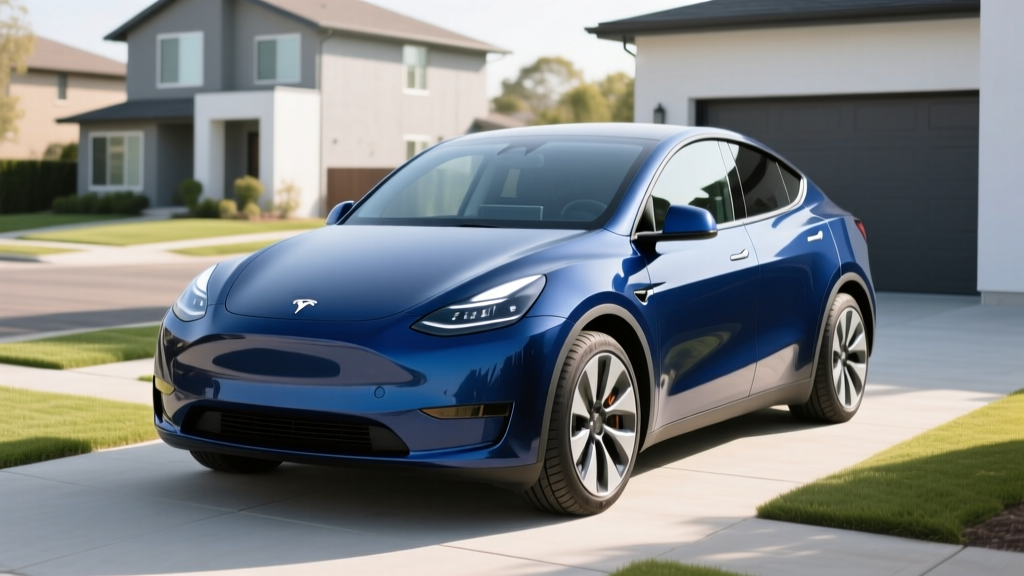
Why the Used Tesla Model Y Dominates the Pre-Owned EV Market
If you've typed "used Model Y near me" into your search bar lately, you're not alone. The Tesla Model Y remains the best-selling electric vehicle in the United States, and as lease returns and fleet turnovers accelerate through 2025 and 2026, the secondary market is finally stocked with well-priced examples. But buying a used EV requires a different checklist than a used gas car: battery health, charging hardware revisions, software feature transfers, and shifting federal tax-credit rules all come into play.
This guide breaks down every model year of the Model Y you'll encounter on dealer lots and private-party listings — from the 2020 launch-year cars to the refreshed 2025 "Juniper" update — so you can evaluate real-world range, charging speed, ownership costs, and whether a specific used Model Y qualifies for the federal used-EV tax credit (up to $4,000 under IRC §25E).
Model Y Generations at a Glance: What You'll Find on the Used Market
Tesla has produced the Model Y in two distinct generations. Knowing which one you're looking at matters for range, interior quality, and charging hardware.
| Generation | Model Years | Battery Chemistry | EPA Range (Long Range) | Key Differentiators |
|---|---|---|---|---|
| Pre-refresh (original) | 2020–2024 | NMC (Long Range/Perf); LFP (Std Range rear-2022+) | 303–330 mi | Older interior, CCS1 adapter required for non-Tesla DCFC on early builds |
| Juniper refresh | 2025–2026 | NMC (Long Range); LFP (RWD) | 320–337 mi (est.) | Quieter cabin, ventilated seats, ambient lighting, native NACS port, rear touchscreen |
Most used listings in 2026 will be 2021–2024 pre-refresh models. The Juniper refresh only began US deliveries in early 2025, so those examples are just starting to appear as lease turn-ins or low-mileage resale.
Real-World Range vs. EPA Estimates: What to Actually Expect
EPA sticker: 330 miles (75 kWh usable, NMC battery)
Real-world highway (70 mph, 75°F): ~275–295 miles
Real-world highway (70 mph, 30°F, winter): ~220–250 miles
City/mixed driving (moderate climate): ~300–320 miles
The Model Y's EPA numbers are among the most accurate in the industry, but physics still applies. At sustained highway speeds above 70 mph, aerodynamic drag pushes consumption to roughly 30–33 kWh/100mi, cutting range by 10–15%. In freezing temperatures, the heat pump (standard on all Model Y variants) mitigates cabin-heating losses, but battery-resistance increase and regen limitations still shave 20–30% off range in sub-30°F conditions.
For the Standard Range RWD models (2022+, LFP battery), EPA range is 260 miles. Real-world highway figures land closer to 220–235 miles in moderate weather and 175–200 miles in deep cold. LFP chemistry also means these cars charge more slowly at DC fast chargers — more on that below.
According to fueleconomy.gov, the 2024 Model Y Long Rate AWD achieves 122 MPGe combined (28 kWh/100mi), placing it among the most efficient electric SUVs sold.
Charging Speed: DC Fast Charging and Home Level 2 Breakdown
Charging speed is the single biggest variable in EV road-trip comfort. Here's what each Model Y variant supports:
| Variant | Max DC Fast Charge | 10–80% Time | Level 2 (240V) Rate | Connector |
|---|---|---|---|---|
| Long Range AWD (NMC, 2020–2024) | 250 kW (peak) | ~27–30 min | 11.5 kW (~44 mi/hr) | NACS (native); CCS1 via adapter |
| Standard Range RWD (LFP, 2022–2024) | 170 kW (peak) | ~35–38 min | 11.5 kW (~44 mi/hr) | NACS (native); CCS1 via adapter |
| Long Range AWD (Juniper, 2025–2026) | 250 kW (peak) | ~25–28 min | 11.5 kW (~44 mi/hr) | NACS (native) |
Charging-curve reality check: No Model Y sustains its peak kW rate for the full session. The Long Range NMC pack ramps from ~150 kW at 10% SoC to a 250 kW peak around 20–25% SoC, then tapers progressively — dropping to ~100 kW by 60% and ~40 kW by 80%. The 10–80% time is the practical metric, and 27–30 minutes at a V3 Supercharger (250 kW capable) is competitive with the Hyundai Ioniq 5's 18-minute 10–80% time only because Tesla's Supercharger network reliability offsets the slower curve.
For home charging, a 48-amp Level 2 wall connector on a 60-amp circuit delivers the full 11.5 kW, adding roughly 44 miles of range per hour. An overnight 8-hour session replenishes ~350 miles — more than enough for any daily commute. If your home has only a 14-50 outlet (common for dryers), a 32-amp mobile connector delivers about 7.7 kW (~30 mi/hr).
Performance, Efficiency, and Cargo: The Practical Numbers
| Spec | Long Range AWD | Performance AWD | RWD (Standard Range) |
|---|---|---|---|
| 0–60 mph | 4.8 sec | 3.5 sec | 6.6 sec |
| Horsepower | 384 hp | 456 hp | 295 hp |
| Drivetrain | Dual-motor AWD | Dual-motor AWD | Single-motor RWD |
| EPA Range | 330 mi | 285 mi | 260 mi |
| Efficiency (combined) | 122 MPGe / 28 kWh/100mi | 111 MPGe / 30 kWh/100mi | 129 MPGe / 26 kWh/100mi |
| Towing Capacity | 3,500 lbs | 3,500 lbs | 3,500 lbs |
Cargo and passenger space: The Model Y offers 30.2 cubic feet behind the second row and 72.1 cubic feet with the rear seats folded (per Tesla's official specs). Legroom is 41.8 inches front and 40.5 inches rear — genuinely comfortable for adults on long trips. The rear trunk floor is low and wide, and the front trunk (frunk) adds roughly 4.1 cubic feet for charging cables or a small bag.
Optional third-row seats (available on pre-refresh Long Range models) add two small seats suitable for children only, bringing total capacity to 7 — but third-row legroom is under 28 inches and best reserved for short trips.
Pricing and Tax Credits: What a Used Model Y Actually Costs in 2026
Used Model Y pricing has settled considerably from the 2022–2023 peak when new-vehicle waitlists inflated resale values. Here's the current market as of early 2026:
| Model Year | Trim | Typical Price Range | Mileage Range | Federal Used-EV Credit (§25E) |
|---|---|---|---|---|
| 2020–2021 | Long Range AWD | $22,000–$27,000 | 40,000–70,000 mi | Up to $4,000 (if eligible) |
| 2022–2023 | Long Range AWD | $27,000–$33,000 | 20,000–45,000 mi | Up to $4,000 (if eligible) |
| 2024 | Long Range AWD | $33,000–$38,000 | 8,000–25,000 mi | Up to $4,000 (if eligible) |
| 2025 | Long Range AWD (Juniper) | $40,000–$46,000 | 2,000–15,000 mi | Up to $4,000 (if eligible) |
Federal used-EV tax credit (§25E): Unlike the new-vehicle §30D credit, the used-EV credit offers up to $4,000 (or 30% of the sale price, whichever is lower) for qualifying pre-owned EVs. Key eligibility rules per the IRS:
- Sale price cap: The vehicle must sell for $25,000 or less to qualify. This eliminates most 2023–2025 Model Y listings.
- Buyer income limits: AGI must not exceed $75,000 (single), $112,500 (head of household), or $150,000 (joint).
- Vehicle age: Must be at least 2 model years old (so in 2026, model year 2024 or older).
- Dealer requirement: Must be purchased from a licensed dealer (private-party sales don't qualify).
- First transfer: The credit can only be claimed once per vehicle since August 16, 2022.
Bottom line: A 2021 or 2022 Model Y Long Range priced at or under $25,000 from a dealer could net you a $4,000 credit, bringing effective cost to $21,000–$25,000 — exceptional value for a 330-mile AWD electric SUV. However, most 2023+ examples exceed the $25,000 price cap, so the credit won't apply. Always verify eligibility with a tax professional before counting on the credit.
Battery Health, Warranty, and Longevity: What to Check Before You Buy
The Model Y's battery and drive unit warranty is among the strongest in the industry:
- Battery warranty: 8 years / 120,000 miles (Long Range/Performance NMC); 8 years / 100,000 miles (Standard Range LFP) — whichever comes first, with a minimum 70% capacity retention threshold.
- Drive unit warranty: 8 years / 120,000 miles (same terms).
- Basic vehicle warranty: 4 years / 50,000 miles (likely expired on most used examples).
Real-world degradation data from fleet analyses shows NMC Model Y packs losing roughly 8–12% capacity over the first 100,000 miles, with the curve flattening significantly afterward. LFP packs in Standard Range models show slightly more initial degradation (10–14% at 100,000 miles) but are designed for daily 100% charging without the same calendar-aging concerns as NMC.
Pre-purchase checklist for a used Model Y:
- Check battery State of Health (SoH) via the Tesla service menu or a third-party tool like TeslaFi or Tessie — look for less than 10% degradation at under 60,000 miles.
- Verify whether the car has the CCS adapter (included with 2022+ builds; earlier cars may need a retrofit).
- Confirm whether Full Self-Driving (FSD) capability transfers — it does on private-party sales but is often removed on Tesla trade-in resales unless explicitly listed.
- Inspect for the 12V lithium auxiliary battery (introduced in late 2021 builds) vs. the older lead-acid 12V, which requires replacement every 3–4 years.
- Check for open recalls on the NHTSA recalls database using the VIN.
Autopilot, FSD, and Driver-Assist Technology
Tesla Autopilot and Full Self-Driving (Supervised) are SAE Level 2 driver-assistance systems. The driver must remain fully engaged, hands on or near the wheel, and eyes on the road at all times. These systems do NOT make the Model Y self-driving. Only Level 4 robotaxi services like Waymo operate without a human driver.
Every used Model Y comes with basic Autopilot (Traffic-Aware Cruise Control + Autosteer). Enhanced Autopilot ($6,000 original option) adds Auto Lane Change, Autopark, Summon, and Navigate on Autopilot. Full Self-Driving (Supervised) ($8,000–$12,000 depending on purchase year) adds traffic-light and stop-sign recognition, and city-street autosteer.
Critical note for used buyers: FSD does not always transfer. If you buy from Tesla's official used inventory, FSD is frequently removed. Private-party sales generally retain FSD. Always verify FSD status in the Tesla app before finalizing a purchase — the vehicle's software screen will show the exact package under Controls → Software.
Pros and Cons: Honest Assessment for Used Buyers
Pros
- Access to Tesla Supercharger network — the most reliable DC fast-charging network in the US (17,000+ stalls)
- Class-leading efficiency: 26–28 kWh/100mi means lower charging costs than most competitors
- Over-the-air updates continue to add features years after purchase
- Strong cargo capacity (72.1 cu ft folded) with practical hatchback design
- 3,500-lb towing capacity (rare among electric crossovers in this price range)
- Minimal maintenance: no oil changes, brake pad life extended by regen (often 100,000+ mi)
Cons
- Pre-2025 interior feels dated compared to Hyundai Ioniq 5, BMW iX, or refreshed rivals
- Ride quality on 2020–2023 models is firm; road noise is noticeable above 65 mph
- No Apple CarPlay or Android Auto — Tesla's native infotainment only
- FSD transfer uncertainty on used purchases adds risk to a $8,000–$12,000 option
- Insurance premiums run 15–30% higher than comparable gas crossovers in most states
- Early 2020–2021 builds may have panel-gap issues and require CCS adapter for non-Tesla chargers
Model Y vs. Key Used-EV Competitors
| Vehicle | EPA Range | Max DC Charge | 10–80% Time | Used Price (2026) | Charging Network |
|---|---|---|---|---|---|
| Tesla Model Y LR AWD | 330 mi | 250 kW | ~28 min | $27,000–$38,000 | Supercharger (native NACS) |
| Hyundai Ioniq 5 (AWD) | 266 mi | 235 kW | ~18 min | $25,000–$34,000 | NACS adapter (2025+); CCS1 (2022–2024) |
| Ford Mustang Mach-E (ER AWD) | 312 mi | 150 kW | ~42 min | $24,000–$33,000 | NACS adapter available; CCS1 native |
| Volkswagen ID.4 (AWD Pro S) | 275 mi | 175 kW | ~34 min | $22,000–$30,000 | CCS1; NACS adapter (aftermarket) |
The Model Y wins on: range, Supercharger access, cargo space, and efficiency. It loses to the Ioniq 5 on: DC charging speed and interior design. The Mach-E competes on: driving dynamics and traditional dealer service. The ID.4 wins on: lowest entry price and ride comfort.
- You road-trip frequently and want the most reliable DC charging network
- You need maximum range per charge (330 mi EPA) for commutes over 80 miles round-trip
- You value cargo versatility and optional towing
- You're comfortable with a touchscreen-dominant interface and no CarPlay
- Fastest possible DC charging matters more than network breadth → Hyundai Ioniq 5
- You prefer a traditional dealer service experience → Ford Mach-E
- Budget is the top priority and 275 miles is enough → Volkswagen ID.4
Frequently Asked Questions
What is the real-world range of a used Tesla Model Y?
The Long Range AWD (2022–2024) is EPA-rated at 330 miles. In real-world highway driving at 70 mph in moderate temperatures, expect 275–295 miles. In winter conditions below 30°F, plan for 220–250 miles. The Standard Range RWD (LFP) is EPA-rated at 260 miles; expect 220–235 real-world highway miles.
How fast does a used Model Y charge at home and on the road?
At a Tesla V3 Supercharger (250 kW), the Long Range charges from 10–80% in about 27–30 minutes. The LFP Standard Range peaks at 170 kW and takes 35–38 minutes. At home on a 48-amp Level 2 charger (11.5 kW), all variants add roughly 44 miles of range per hour — a full overnight charge covers any daily need.
Does a used Model Y qualify for a federal tax credit?
It can, under the used-EV credit (§25E), which provides up to $4,000. However, the vehicle must sell for $25,000 or less, be at least 2 model years old, and the buyer must meet income caps ($75K single / $150K joint). Most 2023+ Model Y listings exceed the $25,000 price cap, so the credit primarily applies to 2020–2022 examples priced at or below that threshold. Verify with a tax professional and confirm dealer participation.
Is it worth buying a used Model Y vs. a new one or a competitor?
A 2022–2023 Model Y Long Range at $27,000–$33,000 offers 330 miles of range, Supercharger access, and strong cargo space at a fraction of a new Juniper's $48,000+ starting price. If road-trip charging reliability is your priority, the used Model Y is hard to beat. If you want the quietest cabin and newest interior, the Juniper or the Hyundai Ioniq 5 are stronger choices — but at higher cost.
What should I check before buying a used Model Y?
Verify battery State of Health (under 10% degradation is ideal at under 60K miles), confirm whether FSD transfers with the sale, check for the CCS adapter (standard on 2022+ builds), inspect the 12V battery type (lithium on late-2021+ builds lasts longer), and run the VIN through the NHTSA recall database. A pre-purchase inspection at a Tesla Service Center ($200–$300) is worthwhile for private-party purchases.
How long will a used Model Y battery last?
Tesla warranties the battery for 8 years / 120,000 miles (Long Range) with a 70% minimum retention guarantee. Fleet data shows NMC packs retaining 88–92% capacity at 100,000 miles under normal use. Many Model Y packs are projected to reach 200,000+ miles before dropping below the 70% warranty threshold. LFP packs in Standard Range models degrade slightly faster initially but tolerate daily 100% charging better than NMC.