The Used Tesla Question in 2026: Smart Buy or Money Pit?
With new EV competition from Hyundai, Kia, Ford, and BMW intensifying, Tesla's used-car prices have dropped significantly from their 2022 peaks. A 2021 Model 3 Long Range that once commanded $55,000 new now trades between $22,000 and $28,000 depending on mileage and condition. That raises the central question for budget-conscious EV shoppers: is it worth buying a used Tesla, or have newer rivals made the brand's older models a risky proposition?
The answer depends heavily on which model you're considering, its battery chemistry, remaining warranty, and whether you can charge at home. This guide breaks down the real numbers — range, charging, degradation, insurance, and repair costs — to help you decide.
Which Used Tesla Models Are Actually Worth Considering?
Not all used Teslas are created equal. The brand has produced four main consumer vehicles, each with distinct characteristics that affect long-term ownership value.
| Attribute | 2020-2022 Model 3 LR | 2020-2022 Model Y LR | 2020-2022 Model S LR | 2020-2022 Model X LR |
|---|---|---|---|---|
| EPA Range (when new) | 353 mi | 330 mi | 405 mi | 348 mi |
| Battery (usable) | ~75 kWh NMC | ~75 kWh NMC | ~95 kWh NMC | ~95 kWh NMC |
| Drivetrain | Dual Motor AWD | Dual Motor AWD | Dual Motor AWD | Dual Motor AWD |
| 0-60 mph | 4.2 sec | 4.8 sec | 3.1 sec | 3.8 sec |
| Peak DC Charge | 250 kW | 250 kW | 250 kW | 250 kW |
| 10-80% DC Time | ~27 min | ~27 min | ~32 min | ~32 min |
| Level 2 Home Rate | 11.5 kW (44 mi/hr) | 11.5 kW (44 mi/hr) | 11.5 kW (35 mi/hr) | 11.5 kW (35 mi/hr) |
| Efficiency (MPGe) | 134 MPGe combined | 122 MPGe combined | 120 MPGe combined | 102 MPGe combined |
| Cargo Volume | 23 cu ft (trunk+frunk) | 76 cu ft (rear folded) | 28 cu ft (trunk+frunk) | 88 cu ft (rear folded) |
| Used Price Range (2026) | $22,000-$28,000 | $26,000-$34,000 | $35,000-$48,000 | $38,000-$52,000 |
Best value pick: The 2021-2022 Model 3 Long Range offers the strongest efficiency, lowest running costs, and most remaining battery warranty of the group. The Model Y is the practical family choice with SUV cargo space.
While a 2021 Model 3 Long Range carries a 353-mile EPA sticker, expect ~270-300 miles in mixed real-world driving. Highway-only trips at 75 mph typically yield 250-270 miles. In freezing temperatures (below 32°F), range drops 20-30%, meaning a winter road trip might net only 190-220 miles before you need a charger. Tesla's trip planner and battery preconditioning help, but physics is physics — plan conservatively.
Battery Degradation: The #1 Used Tesla Risk Factor
The single most important factor when evaluating a used Tesla is battery State of Health (SoH). Tesla's battery management system (BMS) is among the industry's best, but all lithium-ion batteries degrade over time and charge cycles.
What the Data Shows
According to Tesla's 2024 Impact Report and independent tracking from Teslanomics, Tesla batteries retain approximately:
- 90-93% capacity at 50,000 miles (typical 3-4 year old vehicle)
- 85-90% capacity at 100,000 miles (typical 6-8 year old vehicle)
- 80-85% capacity at 150,000 miles (high-mileage examples)
This means a 2020 Model 3 Long Range with 60,000 miles that originally delivered 353 EPA miles might now show 310-320 miles at 100% charge. That's still very usable, but you need to know the number before buying.
How to Check Battery Health Before Purchase
- Check the car's range display: Set the display to show percentage, then charge to 100%. Multiply the displayed miles by the inverse of the SoC percentage to estimate total capacity.
- Use third-party diagnostics: Services like Recurrent (now part of Cox Automotive) and Teslanomics offer battery health reports.
- Request a Tesla Service Center inspection: For ~$150-$250, Tesla can pull the full battery log and provide an SoH percentage.
- Review Supercharger usage: Heavy DC fast-charging accelerates degradation slightly. A car charged primarily at home on Level 2 will typically have better SoH.
LFP vs NMC: Does Chemistry Matter on a Used Tesla?
Starting in late 2021, Tesla began equipping Standard Range (RWD) Model 3 and Model Y vehicles with LFP (lithium iron phosphate) batteries from CATL, while Long Range and Performance trims retained NMC (nickel manganese cobalt) chemistry. Here's why this matters for used buyers:
| Factor | LFP (Standard Range, 2022+) | NMC (Long Range/Performance) |
|---|---|---|
| Cycle Life | 3,000+ cycles (superior) | 1,500-2,000 cycles |
| Energy Density | Lower (shorter range) | Higher (longer range) |
| Cold-Weather Performance | Worse (more range loss) | Better |
| Recommended Charge | 100% daily OK | 80% daily recommended |
| Degradation Rate | Slower long-term | Slightly faster |
| EPA Range (Model 3) | ~272 mi | ~353 mi |
Bottom line: A used 2022+ Model 3 RWD with an LFP battery is arguably the most durable used Tesla you can buy — lower range, but exceptional longevity. For road-trippers, the NMC Long Range still wins on usable miles per charge.
Charging Infrastructure: Tesla's Enduring Advantage
The strongest argument for buying a used Tesla in 2026 remains the Supercharger network. Even as competitors gain access to Tesla's chargers via NACS adapters, native Tesla vehicles still enjoy the most seamless plug-and-charge experience in the industry.
| Charging Method | Power (kW) | Miles Added per Hour | Typical Use Case |
|---|---|---|---|
| Level 1 (120V household) | 1.4 kW | 3-5 mi/hr | Emergency / overnight trickle |
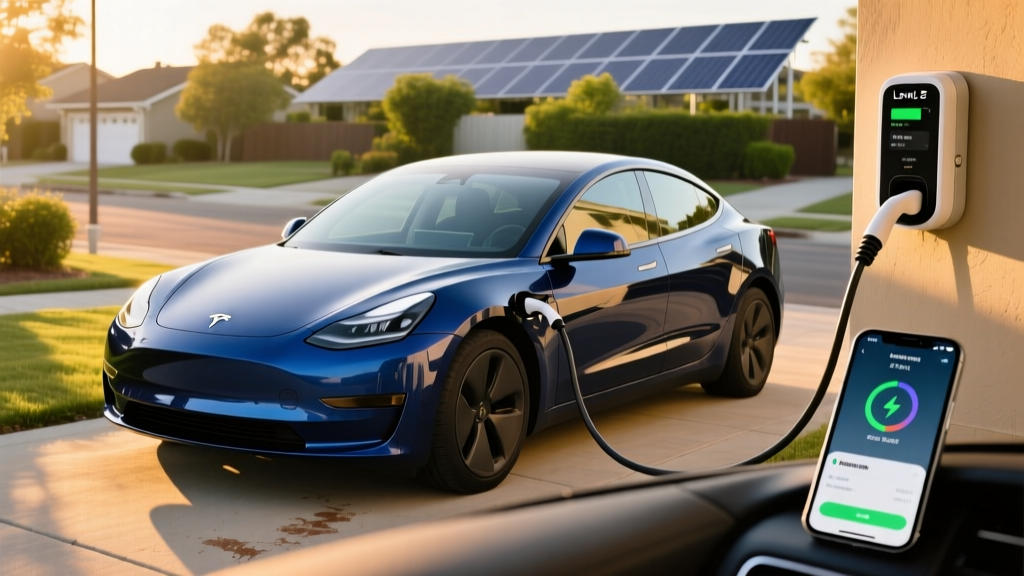
| Level 2 (240V home, 48A) | 11.5 kW | 35-44 mi/hr | Daily home charging (8-hr full charge) |
| Tesla Supercharger V3 | Up to 250 kW | ~1,000 mi/hr (peak) | Road trips, 10-80% in ~27 min |
| CCS Adapter + Non-Tesla DC | Up to 150-350 kW* | Varies | Electrify America, EVgo, etc. |
*Actual CCS adapter speeds depend on the station and adapter quality. Tesla's Magic Dock and third-party NACS-to-CCS adapters have improved compatibility, but native Supercharger stalls remain the most reliable.
The Charge Curve Reality
Tesla's 250 kW peak DC rate is impressive, but it's a peak, not a sustained rate. On a Model 3 Long Range with a preconditioned battery:
- 10-30% SoC: ~200-250 kW (fastest segment)
- 30-60% SoC: ~150-180 kW
- 60-80% SoC: ~80-120 kW (noticeable taper)
- 80-100% SoC: ~30-50 kW (slow trickle)
This means a 10-80% session takes roughly 27 minutes, but 10-100% takes over 50 minutes. For road trips, plan to charge to 80% and go — the time penalty above 80% isn't worth it.
What Does a Used Tesla Actually Cost to Own?
The purchase price is only the beginning. Here's a realistic 5-year ownership cost breakdown for a 2021 Model 3 Long Range bought at $25,000 with 45,000 miles.
| Cost Category | Annual | 5-Year Total | Notes |
|---|---|---|---|
| Purchase Price | — | $25,000 | Average market price (2026) |
| Home Electricity (charging) | $540 | $2,700 | 12,000 mi/yr at $0.15/kWh, 3.5 mi/kWh |
| Insurance | $1,800 | $9,000 | Tesla insurance premiums run 15-25% above average |
| Maintenance | $300 | $1,500 | Tires, cabin filter, wipers, brake fluid — no oil changes |
| Depreciation | — | $10,000 | Estimated resale value ~$15,000 after 5 more years |
| Home Charger Install | — | $1,200 | One-time Level 2 install (averaged) |
| Total 5-Year Cost | ~$49,400 | ~$9,880/year all-in |
Compared to a Gas Equivalent
A comparable 2021 BMW 330i (used ~$28,000) would cost approximately $63,000 over 5 years — driven by fuel ($7,500 at 30 MPG combined and $3.50/gal), higher maintenance ($3,500), and similar insurance. The used Model 3 saves roughly $13,600 over five years, assuming home charging access.
However, this calculation assumes you can charge at home. If you're relying entirely on public DC fast charging at $0.35-$0.50/kWh, your annual fuel cost jumps to $1,200-$1,700, eroding much of the savings.
Warranty Coverage on a Used Tesla: What's Left?
This is where many used Tesla buyers get burned. Tesla's warranty is generous when new, but it's time- and mileage-limited, and a used car may have very little left.
| Component | Coverage | What It Means for a 2021 Model |
|---|---|---|
| Basic Vehicle | 4 years / 50,000 miles | Expired on most 2021 models by 2026 |
| Battery & Drive Unit (Model 3/Y LR) | 8 years / 120,000 miles | ~3 years remaining (until 2029) or until 120K mi |
| Battery & Drive Unit (Model S/X) | 8 years / 150,000 miles | ~3 years remaining or until 150K mi |
| Battery Capacity Guarantee | 70% minimum retention | Tesla replaces if SoH drops below 70% within warranty |
Critical caveat: The battery warranty covers defects and excessive degradation (below 70% capacity), not normal wear. If your 2021 Model 3 shows 85% SoH at 90,000 miles, that's considered normal and won't trigger a replacement. According to Tesla's official warranty documentation, the threshold is strict.
Out-of-warranty battery replacement cost: $12,000-$16,000 for a Model 3/Y, $18,000-$25,000 for Model S/X. This is the worst-case scenario you're underwriting when buying used.
The Federal Tax Credit Situation for Used Teslas
One of the biggest financial considerations: used Teslas do NOT qualify for the new-vehicle §30D federal tax credit (up to $7,500). That credit applies only to new vehicles meeting MSRP caps ($55,000 for cars, $80,000 for SUVs/trucks), buyer income limits ($150K single / $300K joint), and battery-sourcing requirements.
However, the Used Clean Vehicle Credit (§25E) offers up to $4,000 (30% of sale price, capped) for qualifying pre-owned EVs. Here's the checklist:
- Sale price must be $25,000 or less
- Buyer income: ≤$75,000 single / $150,000 joint (AGI)
- Vehicle must be at least 2 model years old
- Must be purchased from a licensed dealer (private-party sales excluded)
- Battery capacity must be ≥7 kWh (all Teslas qualify)
- Credit is 30% of sale price, max $4,000
- Can only be claimed once per VIN (check if prior owner claimed it)
- Point-of-sale transfer available at participating dealers
What this means practically: A 2021 Model 3 RWD purchased from a dealer for $22,000 could qualify for a $4,000 credit (30% of $22,000 = $6,600, capped at $4,000), bringing the effective price to $18,000. A Long Range at $26,000 would not qualify because it exceeds the $25,000 price cap. Always verify current rules at IRS.gov §25E and consult a tax professional.
Tech, Safety, and the Autopilot Reality
Used Teslas still offer some of the best technology in any car at their price point — but with important caveats.
What Still Holds Up
- Over-the-air updates: Tesla continues pushing software updates to older vehicles. A 2020 Model 3 in 2026 still receives UI improvements, efficiency tweaks, and new features.
- 15-inch touchscreen: Still faster and more responsive than most 2026 infotainment systems.
- Sentry Mode & Dashcam: Built-in security and recording features that competitors still charge extra for.
- Supercharger network: 60,000+ stalls globally with native integration — no apps, no adapters needed.
What Shows Its Age
- No Apple CarPlay / Android Auto: Tesla's closed ecosystem remains a dealbreaker for some buyers accustomed to phone mirroring.
- Build quality variability: 2020-2021 Fremont-built vehicles have well-documented panel gap, paint, and interior rattle issues. Shanghai-built Model 3s (VIN starting with "5YJ3" for US-market are Fremont; check door jamb sticker) tend to be better assembled.
- Phantom braking: Tesla's vision-only Autopilot system (post-2022, radar removed) has drawn NHTSA scrutiny for unexpected deceleration events.
Every Tesla on the road with Autopilot or Full Self-Driving (Supervised) is an SAE Level 2 driver-assistance system. This means you must remain fully engaged — hands on or near the wheel, eyes on the road, ready to take over instantly. Tesla's FSD Supervised can handle city streets and intersections, but it makes errors, misses construction zones, and requires constant supervision. Only Waymo-style robotaxis operating in geofenced areas qualify as Level 4 (driverless). Do not buy a used Tesla expecting autonomous driving — you are the driver, always.
Safety Ratings
The Model 3 and Model Y earned IIHS Top Safety Pick+ ratings in their respective test years, with top marks in crashworthiness. The Model S and X also performed well but have older test data. All Teslas come standard with automatic emergency braking, lane departure warning, and side collision warning.
Used Tesla vs. The Competition: Is It Still the Best Buy?
The used EV market in 2026 offers alternatives that didn't exist a few years ago. Here's how a used Tesla stacks up against key rivals in the $22,000-$35,000 range:
- You want the most seamless DC fast-charging experience (native Supercharger access)
- You prioritize software quality, OTA updates, and the app ecosystem
- You value efficiency — the Model 3 LR remains one of the most efficient EVs ever made at 134 MPGe combined
- You want a large, reliable public charging network for road trips
- 2022 Hyundai Ioniq 5 (~$27,000 used): 800V architecture charges faster (10-80% in 18 min), has CarPlay, and more distinctive styling. Smaller Supercharger-equivalent network, though.
- 2022 Kia EV6 (~$26,000 used): Same excellent 800V platform as Ioniq 5, sportier driving dynamics, V2L capability to power devices.
- 2022 Ford Mustang Mach-E (~$25,000 used): More traditional SUV feel, CarPlay support, BlueCruise hands-free highway driving. Lower efficiency (2.8-3.0 mi/kWh vs Tesla's 3.5-4.0).
- 2022 Chevrolet Bolt EUV (~$16,000 used): The budget king — 247-mile range, incredibly cheap, but slow DC charging (55 kW max) makes road trips painful.
The Biggest Pros and Cons of Buying a Used Tesla
- Lowest cost-per-mile of any used EV when charging at home (~$0.04-$0.05/mile)
- Best-in-class Supercharger network with native plug-and-charge
- OTA updates keep older vehicles current with new features
- Strong efficiency (Model 3: 25-28 kWh/100mi) minimizes electricity costs
- Minimal maintenance — no oil, no spark plugs, minimal brake wear (regen)
- Excellent safety ratings across all models
- Strong resale liquidity — Teslas sell faster than most used EVs
- Out-of-warranty battery replacement costs $12,000-$25,000 (worst case)
- Insurance premiums 15-25% higher than comparable gas cars
- No Apple CarPlay or Android Auto — ever
- Build quality on 2020-2021 Fremont cars is inconsistent
- Basic vehicle warranty likely expired on 2020-2021 models
- Phantom braking incidents reported with vision-only Autopilot
- Used EV tax credit (§25E) has strict $25K price cap, excluding Long Range models
- Suspension, screen, and HVAC repairs are expensive out of warranty
Pre-Purchase Checklist: Protecting Your Used Tesla Investment
Before signing any paperwork, complete these steps:
- Check battery SoH: Get a Tesla Service Center diagnostic or third-party report. Walk away if below 85% on a sub-60K-mile car.
- Verify warranty status: Enter the VIN at Tesla's website to confirm remaining battery/drive unit warranty.
- Pull a vehicle history report: Check for accidents, title issues, and service records via Carfax or AutoCheck.
- Inspect build quality: Check panel gaps, paint consistency, and interior fitment. Bring a flashlight.
- Test all cameras and sensors: Verify Autopilot engages properly, cameras are clear, and no error messages appear.
- Check for open recalls: Enter the VIN at NHTSA.gov/recalls to confirm all recalls are addressed.
- Verify Supercharger history: Ask the seller what percentage of charging was DC fast vs. home Level 2. Heavy Supercharger use isn't disqualifying, but it's a data point.
- Confirm software version: Ensure the car is running a recent software build — very old versions may indicate a disconnected or problematic vehicle.
Frequently Asked Questions
Is it worth buying a used Tesla with high mileage?
A Tesla with 80,000-100,000 miles can still be a good buy if the battery SoH is above 85% and the price reflects the mileage. The electric drivetrain has far fewer moving parts than a gas engine, and Tesla motors are known to last 300,000+ miles. The risk is out-of-warranty repairs to the suspension, touchscreen, and HVAC system — budget $1,000-$2,000/year for unexpected fixes on high-mileage examples.
How much does it cost to charge a used Tesla at home vs. Superchargers?
Home charging at the US average of $0.15/kWh costs roughly $0.04-$0.05 per mile for a Model 3 (using ~28 kWh/100mi). Supercharging at $0.28-$0.36/kWh costs $0.08-$0.10 per mile. For a driver covering 12,000 miles/year, that's $540/year at home vs. $1,080/year on Superchargers. Most owners do 80%+ of charging at home.
Can I get Tesla service in my area on a used vehicle?
Tesla operates 1,300+ service locations and mobile service vans in the US, but coverage varies significantly by region. Rural owners in Montana, the Dakotas, and parts of the South may face 200+ mile drives to the nearest service center. Check Tesla's service locator before buying. Third-party EV shops are increasingly capable of handling tire rotations, brake work, and 12V battery replacements.
Does a used Tesla qualify for any tax credits in 2026?
The §25E Used Clean Vehicle Credit offers up to $4,000 for used EVs priced at $25,000 or less, purchased from a licensed dealer, subject to buyer income caps ($75K single / $150K joint). A used Model 3 RWD at $22,000-$24,000 could qualify. Long Range models typically exceed the $25,000 cap and do not qualify. Verify rules at IRS.gov and consult a tax professional — rules may change.
What are the most expensive repairs on a used Tesla?
Out-of-warranty, the costliest repairs are: battery replacement ($12,000-$25,000), drive unit replacement ($5,000-$8,000), touchscreen/MCU replacement ($1,500-$2,500), and HVAC compressor ($1,200-$2,000). The 12V battery (a traditional lead-acid in older models, lithium in 2022+) needs replacement every 3-5 years at $200-$500.
Should I buy a used Tesla from a private party or a dealer?
Dealer purchases qualify for the §25E used EV tax credit (up to $4,000) and often include limited warranties. Private-party sales are cheaper but forfeit the tax credit and offer no consumer protections. If buying privately, invest in a pre-purchase inspection at a Tesla Service Center ($150-$250) — it's the best insurance you can buy.