The Used EV Market Just Shifted in Your Favor
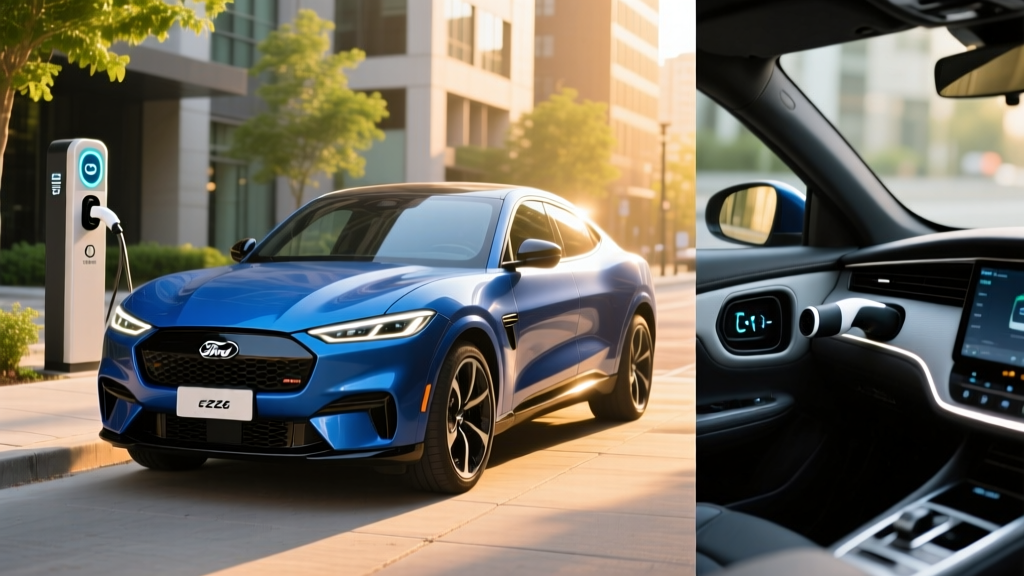
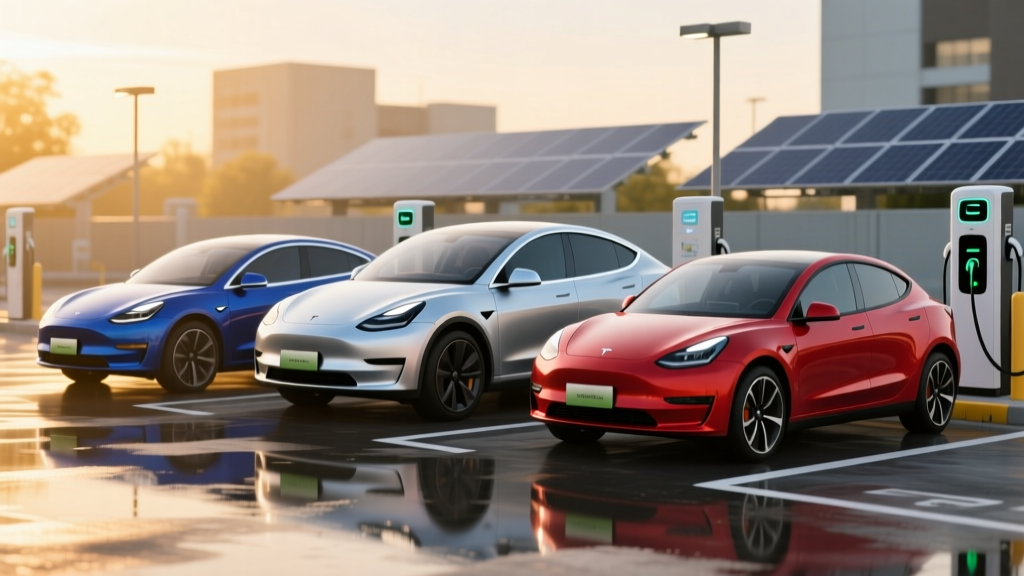
If you have been watching the electric vehicle market from the sidelines, the timing has rarely been better. Used EV prices are decreasing as many leased vehicles return to dealer lots in record volumes. A wave of 2022 and 2023 lease returns — Tesla Model Ys, Hyundai Ioniq 5s, Ford Mustang Mach-Es, and BMW i4s — is flooding the secondary market, pushing transaction prices down 18–25% compared to their 2024 peaks according to industry tracking data.
For budget-conscious buyers, this creates a rare convergence: lower upfront prices, eligibility for the federal used-EV tax credit (up to $4,000 under IRC §25E), and dramatically reduced fuel and maintenance costs. But the ownership math is not universally favorable. Insurance premiums run higher, depreciation curves remain steeper than gas cars, and not every buyer qualifies for the credits that make the numbers work.
This guide runs the full 5-year total cost of ownership for a representative used EV purchase in 2026, maps out every incentive you can claim, and tells you exactly where the savings hold up — and where they do not.
5-Year Total Cost of Ownership: Used EV vs. Comparable Gas Car
The most honest way to evaluate any vehicle purchase is the total cost of ownership (TCO) over your expected holding period. Below is a 5-year/75,000-mile TCO comparison between a typical used EV (represented by a 2023 Hyundai Ioniq 5 SEL, purchased used in 2026 at approximately $27,000 before incentives) and a comparable used gas compact SUV (2023 Mazda CX-5, purchased used at approximately $23,500).
| Cost Category | Used EV (2023 Ioniq 5 SEL) | Used Gas (2023 CX-5) | EV Advantage |
|---|---|---|---|
| Purchase Price (before credits) | $27,000 | $23,500 | -$3,500 |
| Federal Used-EV Credit (§25E) | -$4,000 | $0 | +$4,000 |
| Effective Purchase Price | $23,000 | $23,500 | +$500 |
| Fuel/Energy (75,000 mi) | $3,750 | $8,440 | +$4,690 |
| Maintenance (5 years) | $1,800 | $4,200 | +$2,400 |
| Insurance (5 years) | $9,500 | $7,200 | -$2,300 |
| Depreciation (est. resale at yr 5) | -$9,200 | -$7,050 | -$2,150 |
| Total 5-Year Cost | $28,850 | $36,290 | +$7,440 |
Assumptions: Electricity at $0.14/kWh national average, EV efficiency at 3.5 mi/kWh (28.6 kWh/100mi), gas at $3.45/gallon, gas vehicle at 28 MPG combined. Insurance based on national average premiums for each vehicle class. Depreciation estimated from current resale trend data. Your actual numbers will vary by state, utility rate, driving pattern, and insurer.
The used EV comes out roughly $7,400 ahead over five years. But notice the structure: the savings come from fuel and maintenance, while insurance and depreciation partially offset them. Buyers who drive fewer miles, pay high insurance rates, or live in states with expensive electricity will see a narrower gap.
Federal Tax Credits: New and Used EV Rules for 2026
The federal incentive landscape is the single biggest variable in your purchase math. Two separate credits apply depending on whether you buy new or used, and both carry eligibility requirements that trip up many buyers.
New EV Credit (IRC §30D): Up to $7,500
The new clean vehicle credit offers up to $7,500 for qualifying new EVs, split into two $3,750 halves based on battery component manufacturing and critical mineral sourcing. Since 2024, buyers can transfer the credit to the dealer at point of sale, reducing the purchase price directly rather than waiting for a tax refund.
§30D Eligibility Checklist (2026 Rules):
- MSRP Caps: Vans, SUVs, and pickup trucks must have an MSRP at or below $80,000; sedans and other body styles at or below $55,000
- Buyer Income Limits: Modified AGI must not exceed $300,000 (joint filers), $225,000 (head of household), or $150,000 (single filers)
- Battery Sourcing: Critical minerals and battery components must meet escalating domestic/free-trade-partner sourcing thresholds that tighten each year
- Final Assembly: Vehicle must undergo final assembly in North America (verify at NHTSA's VIN decoder)
- Filing: Claim via IRS Form 8936; point-of-sale transfer available through registered dealers
The battery sourcing requirements have progressively tightened, and as of 2026, vehicles with any battery components from a "foreign entity of concern" (FEOC) are disqualified entirely. This has removed several previously eligible models. Always verify current eligibility on the IRS clean vehicle credit page before committing to a purchase, as the qualifying model list changes frequently.
Used EV Credit (IRC §25E): Up to $4,000
This is the credit that makes the current wave of lease returns especially attractive. The previously owned clean vehicle credit offers 30% of the sale price, up to a maximum of $4,000, for qualifying used EVs.
Key §25E requirements:
- Sale price must be $25,000 or less
- Buyer income limits: $150,000 (joint), $112,500 (head of household), $75,000 (single)
- Vehicle must be at least 2 model years old
- Buyer must not have claimed the used-EV credit in the prior 3 years
- Vehicle must be purchased from a licensed dealer (private-party sales do not qualify)
- Point-of-sale transfer is available, reducing your out-of-pocket at the dealership
The $25,000 price cap is the most restrictive element. As used EV prices are decreasing as many leased vehicles return, more 2022–2023 models are falling under this threshold for the first time — making the §25E credit accessible to a much wider pool of buyers in 2026 than it was even a year ago.
State, Local, and Utility Incentives
Regional incentives vary significantly and change frequently. Always verify current programs with your state energy office, local air quality district, and electric utility before purchasing. Some notable examples:
- California (CVRP): Up to $7,000 for income-qualified buyers purchasing new or used EVs; additional $2,000 for residents in disadvantaged communities
- Colorado: State tax credit of up to $5,000 for new EVs, $2,500 for used EVs (income-capped)
- Maryland: Up to $3,000 excise tax credit for qualifying EVs
- Utility rebates: Many utilities (e.g., PG&E, ConEdison, Xcel Energy) offer $500–$1,500 rebates for home Level 2 charger installation, and some offer reduced EV-specific electricity rates that lower your per-mile charging cost
Check fueleconomy.gov and the Alternative Fuels Data Center for state-specific incentive databases.
Charging vs. Gasoline: The Real Per-Mile Cost
Fuel savings are the most consistent advantage of EV ownership, but the magnitude depends entirely on your electricity rate, charging habits, and local gas prices. Let us run the math with concrete numbers.
| Scenario | EV Cost/Mile | Gas Cost/Mile (28 MPG) | Savings/Mile |
|---|---|---|---|
| Home charging, $0.12/kWh, 3.5 mi/kWh | $0.034 | $0.123 | $0.089 |
| Home charging, $0.18/kWh, 3.5 mi/kWh | $0.051 | $0.123 | $0.072 |
| Home charging, $0.28/kWh (CA/HI peak), 3.5 mi/kWh | $0.080 | $0.123 | $0.043 |
| Public DC fast charging, $0.40/kWh, 3.0 mi/kWh | $0.133 | $0.123 | -$0.010 |
| Public DC fast charging, $0.55/kWh (premium networks) | $0.183 | $0.123 | -$0.060 |
The takeaway is unambiguous: home charging is where EV fuel savings live. At typical residential rates ($0.12–$0.18/kWh), you will spend 3 to 5 cents per mile on electricity versus 12+ cents on gasoline. Over 15,000 annual miles, that translates to $1,080–$1,335 in annual fuel savings.
However, if you rely exclusively on public DC fast charging at $0.40–$0.55/kWh — common on networks like Electrify America and EVgo for non-subscribers — your per-mile cost can actually exceed gasoline. This is the reality for apartment dwellers and street-parkers who lack home charging access. Before buying any used EV, confirm you have a viable Level 2 home charging solution (a standard 240V outlet or hardwired station delivering 7–11 kW).
For a used 2023 Ioniq 5 with its 77.4 kWh usable battery (NMC chemistry), expect an EPA range of 260–303 miles depending on trim and drivetrain. In real-world mixed driving, plan for approximately 230–270 miles, dropping to 190–220 miles in sustained cold weather (below 30°F) due to battery resistance and cabin heating demands. DC fast charging peaks at approximately 235 kW on a 350 kW-capable station, achieving 10–80% in roughly 18 minutes when the battery is preconditioned — but expect the charge curve to taper significantly above 80%, adding another 15–20 minutes to reach full.
Maintenance Savings: Where EVs Shine
EVs have far fewer moving parts than internal combustion vehicles — no engine, no transmission, no exhaust system, no spark plugs, and no oil to change. This structural simplicity translates directly to lower maintenance spending.
| Maintenance Item | EV (5-Year Cost) | Gas Vehicle (5-Year Cost) |
|---|---|---|
| Oil changes | $0 | $600–$900 |
| Brake pads/rotors | $200–$400 (regen extends life 2–3x) | $800–$1,500 |
| Transmission fluid/service | $0 | $200–$400 |
| Coolant flush | $150–$250 | $200–$400 |
| Cabin air filter | $150–$250 | $150–$250 |
| Tire rotation/replacement | $1,200–$1,800 (heavier vehicle, instant torque wears tires faster) | $1,000–$1,500 |
| Wiper blades, bulbs, misc. | $100–$200 | $150–$300 |
| Estimated 5-Year Total | $1,800–$2,900 | $3,100–$5,250 |
Regenerative braking is the unsung maintenance hero. Because the electric motor handles most deceleration — sending energy back into the battery — the physical brake pads see dramatically less use. Many EV owners report original brake pads at 80,000+ miles. On the Ioniq 5, one-pedal driving mode (i-Pedal) maximizes regen and further reduces brake wear.
The one maintenance area where EVs can cost more is tires. EVs are typically 500–1,000 lbs heavier than equivalent gas vehicles due to battery mass, and instant electric torque accelerates tread wear. Budget for tire replacement every 30,000–40,000 miles rather than the 50,000+ miles typical for lighter gas cars. EV-specific tires (like the Michelin e.Primacy or Hankook iON) are engineered for lower rolling resistance and noise but carry a 10–20% price premium.
One critical consideration for used EV buyers: the high-voltage battery warranty. Most manufacturers provide 8 years/100,000 miles of battery coverage (mandated minimum in CARB states like California is 10 years/150,000 miles). A 2023 Ioniq 5 purchased in 2026 would still carry approximately 5 years and 75,000+ miles of remaining battery warranty, protecting you against defects and capacity loss below 70% state of health. Always request the battery state of health (SoH) report before purchasing — many dealers can pull this via the OBD-II port or manufacturer diagnostic tool.
Insurance: The Cost EV Owners Cannot Avoid
Insurance is consistently the line item that erodes EV savings, and it deserves an honest reckoning. On average, insuring an EV costs 15–25% more than an equivalent gas vehicle. For our Ioniq 5 example, expect annual premiums around $1,800–$2,100 versus $1,400–$1,600 for a CX-5 — a $300–$500 annual gap.
The reasons are structural, not arbitrary:
- Higher repair costs: EV battery packs are expensive to replace if damaged ($10,000–$20,000+), and even minor collision damage near the battery enclosure can trigger a total-write-off by cautious insurers
- Specialized labor: High-voltage system repairs require certified technicians, and fewer shops have this capability, driving up labor rates
- Higher vehicle values: Even with depreciation, used EVs often carry higher actual cash values than comparable gas cars of the same age, raising comprehensive and collision premiums
- Parts availability: Some EV-specific body panels and structural components have longer lead times, increasing rental car costs factored into premiums
Mitigation strategies: Shop quotes from at least three insurers (GEICO, Progressive, and State Farm tend to be more EV-competitive). Ask about EV-specific discounts — some insurers offer 5–10% reductions. If you are a low-mileage driver, usage-based programs (like Progressive's Snapshot or Allstate's Drivewise) can significantly reduce premiums. And bundling with homeowners or renters insurance typically saves 10–15%.
Depreciation and Resale Value: The Honest Picture
EV depreciation has been the most volatile variable in ownership economics, and 2025–2026 have been particularly turbulent years. Several factors converged to accelerate used EV value loss:
- Tesla price cuts: Aggressive new-vehicle price reductions in 2023–2024 cascaded through the entire used EV market, pulling down residual values for every brand
- Lease returns: The 2022–2023 leasing boom is now unwinding, flooding the market with off-lease Model Ys, Ioniq 5s, Mach-Es, and EV6s — increasing supply faster than demand can absorb
- Rapid tech advancement: Newer models with NACS charging ports, longer range, and faster charging make 2–3-year-old EVs feel dated more quickly than gas cars do
- Battery degradation uncertainty: Some buyers remain wary of out-of-warranty battery replacement costs ($10,000–$20,000), suppressing demand for older used EVs
Current 3-year depreciation for mainstream EVs sits at approximately 45–55% of original MSRP, compared to 35–45% for comparable gas vehicles. However, this is precisely why used EV prices are decreasing as many leased vehicles return — and why this is a buyer's market. You are purchasing into a depreciation curve that has already absorbed the steepest initial drop.
A 2023 Ioniq 5 SEL originally stickered at approximately $48,000. In 2026, clean examples with 30,000–45,000 miles are transacting at $25,000–$29,000 — roughly 47–52% of original MSRP. Apply the $4,000 used-EV credit, and your effective cost drops to $21,000–$25,000 for a vehicle with 260+ miles of range, DC fast charging to 235 kW, and substantial remaining warranty coverage.
Going forward, expect EV depreciation to moderate as the market normalizes. Vehicles with NACS ports (standard on all new EVs from 2025 onward) and proven battery longevity data will hold value better. Tesla, Hyundai/Kia, and BMW currently show the strongest residual retention among EV brands.
Frequently Asked Questions
How much does it really cost to own a used EV over 5 years?
Based on our analysis of a representative used EV (2023 Hyundai Ioniq 5 SEL at ~$27,000), the 5-year total cost of ownership including purchase, fuel, maintenance, insurance, and depreciation comes to approximately $28,850 — about $7,400 less than a comparable used gas SUV over the same period. Your actual cost will vary based on electricity rates, annual mileage, insurance premiums, and whether you qualify for the $4,000 federal used-EV credit.
Do I qualify for the federal used-EV tax credit?
You likely qualify if your modified adjusted gross income is below $150,000 (single), $112,500 (head of household), or $150,000 (joint), and the used EV's sale price is $25,000 or less. The vehicle must be at least 2 model years old and purchased from a licensed dealer. You cannot have claimed the used-EV credit in the prior 3 years. Verify current rules on the IRS website as requirements may shift. Point-of-sale transfer is available, meaning the dealer applies the credit as a discount at purchase.
How much do I save on fuel and maintenance with a used EV?
Fuel savings typically run $1,000–$1,400 per year if you charge primarily at home at average residential electricity rates ($0.12–$0.18/kWh). Maintenance savings add another $400–$700 annually thanks to eliminated oil changes, reduced brake wear from regenerative braking, and fewer mechanical systems to service. Combined, expect $1,400–$2,100 in annual operating savings versus a comparable gas vehicle — translating to $7,000–$10,500 over five years.
Are EVs more expensive to insure?
Yes, typically 15–25% more expensive than comparable gas vehicles. The average EV insurance premium is $1,800–$2,100 per year versus $1,400–$1,600 for a gas equivalent. Higher repair costs, expensive battery replacement, and specialized labor requirements drive the premium. You can offset this by shopping multiple insurers, bundling policies, and enrolling in usage-based discount programs.
How well do used EVs hold their value?
EVs currently depreciate faster than gas vehicles — approximately 45–55% over three years versus 35–45% for gas cars. However, this steep initial depreciation makes used EVs excellent value for second owners: you are buying after the largest value drop has already occurred. As used EV prices are decreasing as many leased vehicles return, the current market offers particularly strong value. Going forward, models with NACS charging compatibility and proven battery durability are expected to retain value better than early-generation EVs.
What should I check before buying a used EV?
Prioritize these four items: (1) Battery state of health (SoH) — request a diagnostic report showing capacity retention, ideally above 90% for a 2–3-year-old vehicle. (2) Remaining battery warranty — confirm the 8-year/100,000-mile coverage has not been voided. (3) Charging port type — pre-2025 non-Tesla EVs typically have CCS1 ports; verify adapter availability if you plan to use Tesla Superchargers with a NACS adapter. (4) Home charging feasibility — confirm your electrical panel can support a Level 2 charger (typically a 40–50 amp circuit requiring a 240V outlet), with installation costs ranging from $500–$2,000 depending on panel capacity and wiring distance.