Buying a pre-owned electric vehicle is one of the smartest financial moves in the EV market right now — especially when you factor in the federal used EV tax credit worth up to $4,000. Unlike the new-vehicle credit with its complex battery-sourcing requirements, the previously owned clean vehicle credit under IRS §25E has simpler rules but strict income and price caps that trip up many buyers.
This guide breaks down exactly how the $4,000 used EV tax credit works in 2026, what vehicles qualify, whether you meet the income limits, and — critically — what your real total cost of ownership looks like over five years. We'll run the numbers on fuel savings, maintenance, insurance premiums, and depreciation so you can decide if a used EV actually saves you money.
The $4,000 Used EV Tax Credit: How It Works in 2026
The used EV credit (officially the Previously Owned Clean Vehicle Credit) provides 30% of the sale price, up to a maximum of $4,000, for qualifying pre-owned electric vehicles and plug-in hybrids. If you buy a used EV for $13,333 or more, you hit the $4,000 cap. Buy one for $10,000? Your credit is $3,000.
As of 2026, this credit can be transferred to the dealer at the point of sale, meaning you get the discount upfront rather than waiting to claim it on your tax return. This is a significant cash-flow advantage — effectively reducing your purchase price or down payment on the spot.
§25E Used EV Tax Credit Eligibility Checklist (2026)
- Vehicle sale price: Must be $25,000 or less
- Vehicle age: Must be at least 2 model years older than the current year (for 2026 purchases, model year 2024 or earlier)
- Buyer income caps (Modified AGI): $75,000 single / $112,500 head of household / $150,000 married filing jointly
- Vehicle type: Must be a qualified plug-in EV or fuel cell vehicle with a battery capacity of at least 7 kWh
- Dealer requirement: Must be purchased from a licensed dealer (private-party sales do not qualify)
- Usage: Must be for personal use, primarily in the United States
- Prior credit history: The same vehicle cannot have been claimed for a used EV credit by a prior buyer (VIN is tracked)
- Frequency limit: You can only claim this credit once every 3 years
Source: IRS.gov — Used Clean Vehicle Credit. Rules are subject to change; verify with a tax professional before purchasing.
The income caps are the biggest disqualifier. A married couple earning $155,000 combined is ineligible — there's no phase-out, just a hard cutoff. However, you can use either your current-year or prior-year MAGI, whichever is lower, which provides some planning flexibility.
Which Used EVs Qualify for the $4,000 Credit?
The $25,000 price cap and 2-model-year age requirement create a specific sweet spot in the used EV market. Here are vehicles commonly found in the qualifying range as of early 2026:
| Vehicle | EPA Range | Battery (kWh) | Typical Used Price | Est. Credit |
|---|---|---|---|---|
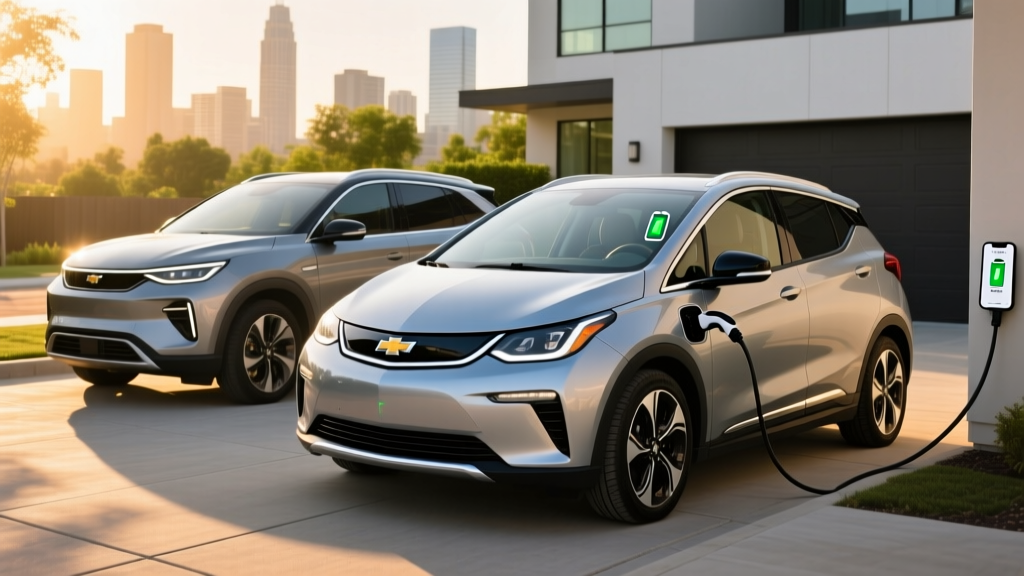
| 2022 Chevrolet Bolt EV | 259 mi | 65 kWh (NMC) | $16,000–$19,500 | $4,000 |
| 2022 Nissan Leaf SV Plus | 212 mi | 62 kWh (NMC) | $14,000–$17,500 | $4,000 |
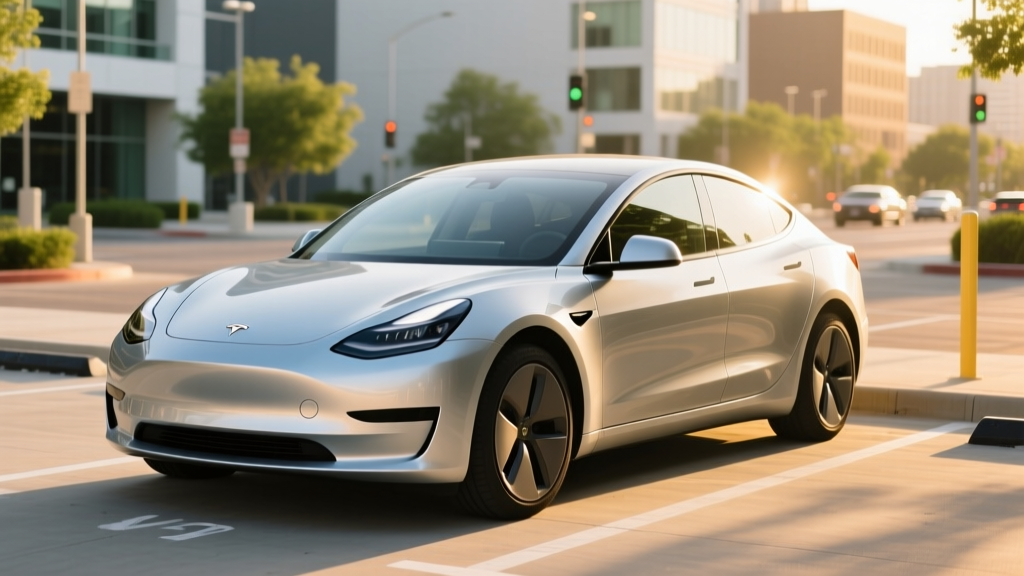
| 2023 Tesla Model 3 RWD | 272 mi | 57.5 kWh (LFP) | $21,000–$24,500 | $4,000 |
| 2022 Hyundai Kona Electric | 258 mi | 64 kWh (NMC) | $17,000–$20,000 | $4,000 |
| 2021 Volkswagen ID.4 Pro | 260 mi | 82 kWh (NMC) | $18,500–$22,000 | $4,000 |
Real-world range caveat: These EPA figures assume moderate temperatures and mixed driving. Expect 15–25% range reduction in sustained highway driving at 75+ mph, and 20–40% loss in sub-freezing winter conditions depending on whether the vehicle has a heat pump. The Tesla Model 3 LFP and VW ID.4 both include heat pumps; the Bolt EV and Leaf do not.
5-Year Total Cost of Ownership: Used EV vs. Comparable Gas Car
The tax credit lowers your purchase price, but the real financial story is what happens over five years of ownership. Let's compare a used 2022 Chevrolet Bolt EV (purchased at $18,000, after $4,000 credit = $14,000 net) against a comparable used 2022 Honda Civic sedan (purchased at $19,500, no credit).
| Cost Category | Used Bolt EV (5 Yr) | Used Civic Gas (5 Yr) | Difference |
|---|---|---|---|
| Net Purchase Price | $14,000 | $19,500 | EV saves $5,500 |
| Fuel / Charging (60,000 mi) | $3,450 | $6,750 | EV saves $3,300 |
| Maintenance | $1,200 | $2,800 | EV saves $1,600 |
| Insurance (5 yr total) | $8,750 | $7,500 | EV costs $1,250 more |
| Depreciation (5 yr loss) | $7,000 | $7,500 | EV saves $500 |
| Total 5-Year Cost | $34,400 | $44,050 | EV saves $9,650 |
Assumptions: 12,000 miles/year; home charging at $0.14/kWh (national average); gas at $3.50/gallon; Civic at 33 MPG combined (fueleconomy.gov); Bolt at 28 kWh/100 mi. Insurance based on national averages for comparable used vehicles.
Charging vs. Gas: The Per-Mile Math
Fuel savings are where EVs consistently outperform, but the exact number depends on how and where you charge. Here's the breakdown:
Cost Per Mile: EV Charging vs. Gasoline
| Scenario | Cost/Mile | Annual (12k mi) |
| Home Level 2 charging ($0.14/kWh, 3.5 mi/kWh) | $0.04/mi | $480 |
| Home with time-of-use off-peak ($0.08/kWh) | $0.023/mi | $274 |
| Public DC fast charging ($0.40/kWh avg) | $0.114/mi | $1,371 |
| Gas car at 30 MPG, $3.50/gal | $0.117/mi | $1,400 |
| Gas car at 25 MPG, $3.50/gal | $0.14/mi | $1,680 |
Key insight: Home-charged EVs cost 65–83% less per mile than gas. But exclusive public DC fast charging erases most of the fuel savings — this is why home charging access is the single biggest factor in EV economics.
If you rely entirely on public fast charging at $0.35–$0.48/kWh (typical Electrify America or EVgo rates in 2026), your per-mile cost is roughly equal to a 30 MPG gas car. The financial case for an EV depends heavily on having Level 1 or Level 2 home charging.
Maintenance Savings: What You Actually Skip
EVs eliminate the most common recurring maintenance items on gas vehicles. Over five years and 60,000 miles, here's what a typical gas car requires that an EV does not:
| Maintenance Item | Gas Car (5 yr cost) | EV (5 yr cost) |
|---|---|---|
| Oil changes (every 5,000–7,500 mi) | $500–$800 | $0 |
| Transmission fluid service | $150–$300 | $0 |
| Spark plugs / ignition | $200–$400 | $0 |
| Brake pads (front + rear) | $400–$700 | $0–$200 |
| Air filters / cabin filters | $100–$200 | $60–$120 |
| Tire rotation + replacement | $1,200–$1,800 | $1,200–$1,800 |
| Coolant flush | $100–$150 | $0–$100 |
| Total Estimated | $2,650–$4,350 | $1,260–$2,220 |
Why EV brakes last longer: Regenerative braking handles 70–90% of deceleration in normal driving, drastically reducing friction brake wear. Many EV owners report original brake pads at 80,000+ miles. However, EV tires tend to wear 15–20% faster due to higher vehicle weight and instant torque — budget accordingly.
Insurance: The Cost EV Owners Often Overlook
EV insurance premiums run 15–25% higher than comparable gas vehicles on average. For a used Bolt EV, expect annual premiums around $1,600–$1,900 depending on your state, driving record, and coverage level, versus $1,350–$1,600 for a used Civic.
Why the premium? Three factors:
- Higher repair costs: EV battery packs and power electronics are expensive to replace after collision damage. Even minor underbody impacts can total a battery.
- Specialized labor: Fewer shops have certified EV technicians, raising labor rates for bodywork.
- Parts scarcity: Used EV parts inventory is thinner than for mass-market gas vehicles, extending repair timelines and rental car costs.
Some insurers now offer EV-specific policies with discounts for low annual mileage or telematics-based driving. Shop at least 3–4 quotes — the spread between insurers on EVs is wider than on gas cars.
Depreciation and Resale Value: The Used EV Reality
EV depreciation has been volatile. Between 2023 and 2025, Tesla's aggressive new-vehicle price cuts cascaded through the used market, hammerning resale values across all EV brands. A 2022 Bolt EV that sold for $26,000 new might now fetch $16,000–$18,000 — a 31–38% loss over three years.
However, this depreciation has largely already happened by the time you buy used. You're purchasing after the steepest drop. From your purchase point forward, expect used EV depreciation to roughly track the broader compact car market: approximately 12–18% per year for the next 3–5 years, assuming no further market disruptions.
Key depreciation factors for used EV buyers:
- Battery State of Health (SoH): Request a battery health report before purchase. Most EVs retain 85–92% capacity at 60,000 miles. Anything below 80% significantly impacts resale value.
- Remaining warranty: Federal law mandates EV battery warranties of at least 8 years / 100,000 miles. A 2022 model still has substantial factory coverage remaining.
- Charging standard: Vehicles with CCS connectors may depreciate faster as the industry shifts to NACS (Tesla's standard). However, CCS-to-NACS adapters are widely available, mitigating this risk.
State, Local, and Utility Incentives
Beyond the Federal Credit: Regional Incentives
The $4,000 federal credit stacks with many state and utility programs, but availability varies dramatically by location. Examples of additional savings available in 2026:
- Colorado: State tax credit of up to $5,000 for EVs priced under $35,000 (including used)
- California (CVRP): Up to $2,000 rebate for low-income buyers purchasing used EVs (income-dependent)
- Utility rebates: Many utilities offer $250–$1,500 for home charger installation (e.g., PG&E, ConEd, Xcel Energy)
- HVAC/panel upgrades: Some programs cover 200A panel upgrades needed for Level 2 charging
- HOV lane access: Several states grant carpool lane stickers to EVs regardless of occupancy
Check your state energy office and local utility for current programs. These change frequently and often have funding caps.
Frequently Asked Questions
Can I get the $4,000 used EV tax credit if I buy from a private seller?
No. The §25E credit requires purchase from a licensed dealer. Private-party sales, even through platforms like Facebook Marketplace or Craigslist, do not qualify. The dealer must report the sale to the IRS and provide you with a time-of-sale report confirming the vehicle's eligibility.
What if my income is slightly over the limit?
The income caps are hard cutoffs — there is no phase-out range. However, you can use either your current-year or prior-year Modified Adjusted Gross Income (MAGI), whichever is lower. If your income fluctuates, strategic timing of your purchase year may help. Consult a tax professional for planning advice specific to your situation.
Does the used EV credit affect my eligibility for other tax credits?
The used EV credit (§25E) is separate from the new EV credit (§30D) and the home charger credit (§30C). You can claim the used EV credit and later claim the home charger credit if you install a Level 2 charger. However, you can only claim the §25E used credit once every 3 years per taxpayer.
How do I verify a used EV's battery health before buying?
Ask the dealer for a battery State of Health (SoH) report, which shows remaining capacity as a percentage of original. Some manufacturers (Hyundai, Tesla) display this in the vehicle's settings menu. Third-party services like Recurrent provide battery health reports based on telematics data. Aim for 85%+ SoH on a 3–4 year old EV.
Is the point-of-sale transfer option available for the used EV credit?
Yes, as of 2024, the IRS allows the used EV credit to be transferred to the dealer at the point of sale, giving you the discount as a price reduction rather than a tax-time refund. The dealer must be registered with the IRS Energy Credits Online system. Confirm this with the dealer before finalizing the purchase.
What happens if I claim the credit but my tax liability is less than $4,000?
The §25E used EV credit is non-refundable, meaning it can only reduce your tax liability to zero — it won't generate a refund beyond what you owe. If your total federal tax liability is $2,500, you'd only benefit from $2,500 of the credit. However, using the point-of-sale transfer, you receive the full $4,000 discount upfront regardless of your tax liability. Note: the IRS has indicated that point-of-sale transfers may require reconciliation on your return — consult a tax professional for details.
Bottom Line: Is the $4,000 Used EV Credit Worth It?
For buyers who meet the income requirements and have access to home charging, the $4,000 used EV tax credit makes pre-owned electric vehicles among the best value propositions in the car market. A $18,000 Bolt EV becomes $14,000 after the credit — and over five years, you'll save an additional $6,000–$8,000 in fuel and maintenance compared to a gas equivalent.
The caveats are real: insurance costs more, public charging erodes fuel savings, and you need to verify battery health carefully. But with proper due diligence — checking SoH, confirming dealer IRS registration, verifying your MAGI — the used EV credit is one of the most accessible paths into electric driving at a genuinely affordable total cost.