Quick Verdict: The Solterra Finds Its Lane in 2026
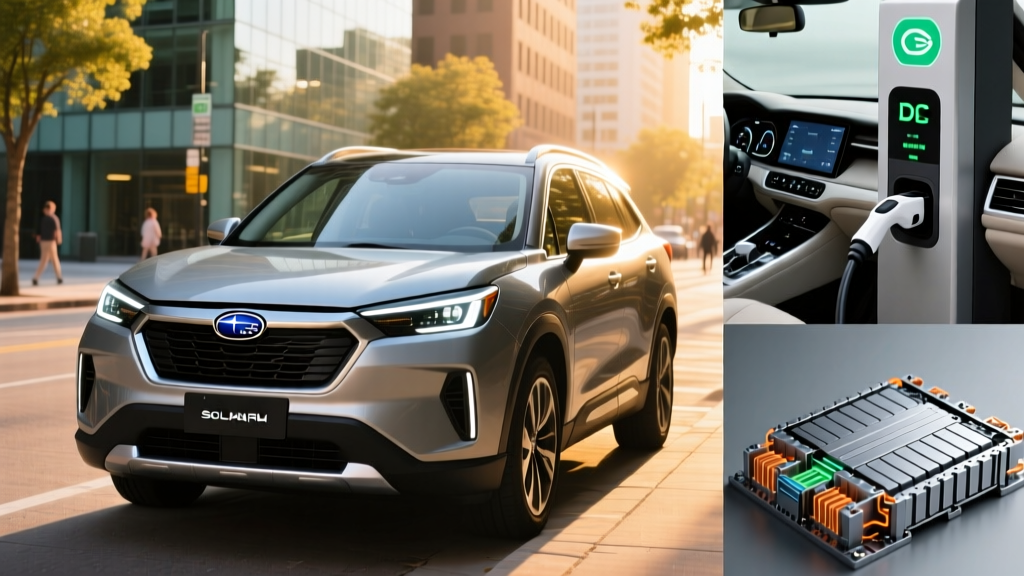
The 2026 Subaru Solterra enters its fourth model year with a clearer identity than ever: it's the EV for buyers who prioritize standard all-wheel drive, genuine off-road capability, and Subaru's safety-first reputation over maximum range or blistering acceleration. Built on the same Toyota-developed e-TNGA platform as the bZ4X, the Solterra distinguishes itself with Subaru's X-MODE traction system, higher ground clearance, and a more rugged aesthetic. For 2026, Subaru has refined the charging hardware and expanded the battery's usable buffer, addressing the most common critiques from early adopters.
If you're researching a 2026 Solterra lease, this review breaks down every number that matters — real-world range, charging curves, total cost, and how it stacks up against the Hyundai Ioniq 5, Ford Mustang Mach-E, and Toyota bZ4X. We'll also cover whether the federal tax credit applies and how leasing versus buying affects your bottom line.
Range, Battery, and Efficiency: What the EPA Says vs. Reality
Real-World Expectation: Plan for 185–210 miles on highway road trips at 70+ mph. In freezing temperatures (below 32°F), expect a 20–30% reduction, dropping effective range to roughly 160–190 miles on smaller-wheel trims.
The 2026 Solterra carries a 72.8 kWh lithium-ion battery pack (approximately 68 kWh usable) using NMC (nickel-manganese-cobalt) chemistry. Subaru and Toyota have historically maintained a larger top and bottom buffer than competitors, which protects long-term battery health but limits the range figure relative to pack size. For 2026, Subaru has slightly expanded the usable window through software optimization, contributing to a modest range bump over the 2025 model.
Efficiency lands at 104 MPGe combined (roughly 32 kWh/100 miles) according to fueleconomy.gov. That's competitive with the Mach-E AWD but trails the Ioniq 5 AWD, which benefits from a more aggressive heat-pump strategy and slightly lower curb weight.
| Trim | Wheel Size | EPA Range | MPGe (Combined) | kWh/100 mi |
|---|---|---|---|---|
| Base | 18" | 242 mi | 107 | 31 |
| Premium | 20" | 228 mi | 102 | 33 |
| Limited / Touring | 20" | 228 mi | 101 | 33 |
Why real-world range falls short: The Solterra's boxy shape, standard dual-motor AWD, and 8.3 inches of ground clearance create more aerodynamic drag than lower-slung crossovers. At sustained highway speeds above 70 mph, energy consumption rises noticeably. Cold weather compounds this — the Solterra's battery preconditioning for DC fast charging helps, but cabin heating in sub-freezing conditions draws heavily from the pack. If your daily commute is under 60 miles round-trip, the EPA range is more than adequate. For road trips exceeding 180 miles between chargers, plan conservatively.
Charging Speed: DC Fast Charge and Home Level 2
Charging remains the Solterra's most debated specification. For 2026, Subaru has improved the thermal management system and raised the peak DC fast-charge rate, but the charge curve still tapers earlier than segment leaders like the Ioniq 5 or Kia EV6, which leverage 800-volt architectures.
| Charging Level | Power / Rate | Time / Speed | Connector |
|---|---|---|---|
| Level 1 (120V household) | ~1.4 kW | ~3–4 miles per hour | J1772 / NACS (with adapter) |
| Level 2 (240V home/public) | 7.2 kW (onboard charger max) | ~23 miles per hour; 0–100% in ~9.5 hours | J1772 / NACS |
| DC Fast Charge | Peak ~135 kW | 10–80% in ~35 minutes | CCS1 (NACS adapter included) |
Understanding the charge curve: The Solterra reaches its peak ~135 kW rate only between roughly 10% and 30% state of charge. From 30–60%, the rate settles around 90–100 kW, and above 70% it tapers sharply to protect the NMC cells. This means a 10–80% session takes approximately 35 minutes at a 150+ kW station, but a 10–90% session can stretch to 55 minutes or more. If you primarily charge at home overnight on Level 2, this taper is irrelevant — you'll wake up to a full battery regardless. For road trips, plan stops around the 10–80% window for the fastest turnaround.
Subaru includes a NACS adapter with 2026 models, granting access to Tesla Supercharger stations — a significant infrastructure advantage as the Supercharger network remains the most reliable DC fast-charging ecosystem in North America. Home Level 2 installation typically costs $800–$2,000 depending on panel capacity and run length (always consult a licensed electrician for final specs).
Performance and Drivetrain: AWD Standard, Off-Road Ready
| Specification | Value |
|---|---|
| Drivetrain | Dual-motor AWD (standard all trims) |
| Horsepower | 215 hp (combined) |
| Torque | 249 lb-ft |
| 0–60 mph | 6.5 seconds |
| Ground Clearance | 8.3 inches |
| Towing Capacity | 2,000 lbs (with dealer-installed hitch) |
| Drive Modes | Normal, Eco, Power, Snow/Dirt, Deep Snow/Mud (X-MODE) |
The Solterra's dual-motor setup — one motor per axle — delivers Subaru's legendary symmetrical all-wheel drive in electric form. The 6.5-second 0–60 mph time won't embarrass you at a merge, but it's not the thrust you'll feel in a Mach-E GT or Ioniq 5 with the larger battery. Where the Solterra excels is low-speed traction control: X-MODE modulates torque to individual wheels with impressive precision on gravel, snow, and mud. This is the EV that actual Subaru owners recognize — it handles a dirt forest road or a snowy driveway with the same confidence as an Outback.
Ride quality is compliant and well-damped, though the 4,500+ lb curb weight is noticeable through corners. The steering is light and accurate, and the turning radius is surprisingly tight for a midsize crossover. Regenerative braking offers multiple levels adjustable via paddle shifters, though it doesn't quite achieve true one-pedal driving — you'll still use the brake pedal for complete stops.
Interior, Cargo, and Technology
The 2026 Solterra's cabin leans utilitarian rather than luxurious — hard plastics appear on lower door panels and the center console, a deliberate choice for durability and cost control. The 12.3-inch touchscreen (standard on Premium and above) runs Subaru's latest Starlink infotainment with wireless Apple CarPlay and Android Auto. Physical knobs for climate control and volume are a welcome ergonomic decision that many EV competitors have abandoned.
| Measurement | Value |
|---|---|
| Front Legroom | 42.1 inches |
| Rear Legroom | 35.7 inches |
| Cargo Volume (rear seats up) | 23.8 cu ft |
| Cargo Volume (rear seats folded) | 63.5 cu ft |
| Frunk (front trunk) | None — space occupied by HVAC and electronics |
The absence of a frunk is a notable omission in a segment where competitors offer 2–3 cubic feet of front storage. Subaru uses that space for power electronics and the HVAC system. Rear cargo volume at 23.8 cu ft is adequate but trails the Ioniq 5 (27.2 cu ft) and Mach-E (29.7 cu ft). If cargo capacity is a top priority, measure your stroller or gear before committing.
Driver Assistance: Subaru's EyeSight suite is standard across all trims, including adaptive cruise control, lane-centering assist, pre-collision braking, and evasive steering assist. For 2026, Subaru has added a hands-on detection system with improved capacitive sensing on the steering wheel. This is SAE Level 2 driver assistance — you must keep your hands on the wheel and eyes on the road at all times. It is not self-driving. EyeSight remains one of the most conservative and reliable Level 2 systems available, prioritizing safety over aggressive lane changes or speed optimization.
Pricing, Lease Options, and Federal Tax Credit
| Trim | Base MSRP | Est. Lease (36 mo / 10k mi/yr) | Federal §30D Credit Eligible? |
|---|---|---|---|
| Base | $39,995 | ~$349–$399/mo* | Up to $7,500 (see rules below) |
| Premium | $43,495 | ~$399–$449/mo* | Up to $7,500 |
| Limited | $47,195 | ~$449–$499/mo* | Up to $7,500 |
| Touring | $49,995 | ~$499–$549/mo* | Up to $7,500 |
*Lease estimates are illustrative and vary by dealer, region, credit score, money factor, and residual value. Confirm with your local Subaru dealer.
Federal Tax Credit Eligibility (IRS §30D): The 2026 Solterra is assembled in Japan (at Toyota's Motomachi plant), which creates a complex eligibility picture. Under current IRS rules, vehicles must meet North American final assembly requirements to qualify for the full $7,500 credit when purchased. However, when leased, the Solterra may qualify under the commercial clean vehicle credit (§45W), which the leasing company can pass through as a capitalized-cost reduction — effectively lowering your monthly payment. This is a critical distinction for anyone researching a 2026 Solterra lease.
- MSRP Cap: SUVs must be under $80,000 (all Solterra trims qualify)
- Buyer Income Cap (purchase only): $150,000 single / $300,000 joint AGI
- Battery Sourcing: Critical minerals and battery components must meet phased-in percentages from US/free-trade-agreement partners
- Assembly: Final assembly in North America required for purchase credit; lease credit (§45W) has different rules
- Point-of-Sale Transfer: Eligible credits can be transferred to the dealer at purchase for an upfront price reduction
Ownership Costs, Warranty, and Longevity
Subaru backs the Solterra with a competitive warranty package:
- Basic Vehicle Warranty: 3 years / 36,000 miles
- Powertrain Warranty: 5 years / 60,000 miles
- Battery Warranty: 8 years / 100,000 miles (covers capacity below 70% of original)
The 70% capacity retention threshold over 8 years is standard for the segment. Subaru's larger battery buffer strategy — keeping more of the 72.8 kWh pack outside the usable window — is designed to minimize degradation over time. Early Solterra owners (2023–2024 models) have reported minimal degradation in the 2–4% range over the first two years, which is encouraging for long-term durability.
Five-year cost considerations: Electricity costs for the Solterra average $0.04–$0.06 per mile (depending on local rates and home vs. public charging mix), compared to $0.12–$0.16 per mile for a comparable gas-powered Subaru Outback at 27 MPG combined. Insurance premiums for the Solterra run 10–20% higher than the gas Outback due to higher repair costs and vehicle value — get quotes before signing.
Solterra vs. the Competition: Which EV Fits Your Life?
| Spec | Subaru Solterra | Hyundai Ioniq 5 AWD | Ford Mach-E (AWD ER) | Toyota bZ4X |
|---|---|---|---|---|
| EPA Range (best trim) | 242 mi | 290 mi | 312 mi | 252 mi |
| DC Fast Charge (10–80%) | ~35 min | ~18 min (800V) | ~38 min | ~35 min |
| AWD Standard? | Yes | No (optional) | No (optional) | Yes (AWD trim) |
| Ground Clearance | 8.3" | 6.1" | 5.7" | 8.1" |
| 0–60 mph | 6.5 sec | 5.1 sec | 5.8 sec | 6.5 sec |
| Starting MSRP | $39,995 | $47,400 | $43,495 | $38,465 |
| X-MODE / Off-Road | Yes | No | No | Limited |
- You need standard AWD and genuine light off-road capability (dirt roads, snow, camping)
- You prioritize Subaru's safety reputation and EyeSight system
- Your daily driving is under 150 miles and you charge at home
- You want access to Tesla Superchargers via the included NACS adapter
- Maximum range is your top priority (Mach-E Extended Range, Ioniq 5)
- You want the fastest DC charging in the segment (Ioniq 5/EV6 with 800V)
- Cargo space and frunk storage are non-negotiable
- You want a sporty, performance-oriented drive (Mach-E GT, Ioniq 5 N)
Pros, Cons, and Final Take
- Standard dual-motor AWD across all trims — no upcharge for traction
- X-MODE off-road system is genuinely useful on unpaved and low-traction surfaces
- 8.3" ground clearance beats every competitor in the segment
- Physical climate and volume controls — no screen-diving for basic adjustments
- NACS adapter included — access to 20,000+ Tesla Superchargers
- Strong EyeSight safety suite standard on every trim
- Competitive lease pricing when §45W commercial credit passes through
- Range trails key competitors by 40–70 miles (EPA)
- DC fast charging is adequate but not class-leading — 800V rivals charge nearly twice as fast
- No frunk (front trunk) — cargo space limited to rear hatch area
- Interior materials feel budget-conscious at the $47K+ Limited trim
- Japan assembly complicates purchase tax-credit eligibility (§30D)
- Rear legroom (35.7") is tight for taller passengers on long trips
The 2026 Solterra isn't trying to win the range or charging-speed arms race. It's the EV for Subaru loyalists who want electric propulsion without sacrificing the all-weather, all-surface capability that defines the brand. If that's you — and you can charge at home — the Solterra delivers a satisfying, honest ownership experience. If you're cross-shopping purely on spec-sheet numbers, the Ioniq 5 and Mach-E will win on paper. Drive all three before deciding.
Frequently Asked Questions
What is the real-world range of the 2026 Subaru Solterra?
The EPA rates the Solterra at 228–242 miles depending on trim and wheel size. In real-world highway driving at 70–75 mph, expect 185–210 miles. In freezing weather with cabin heat active, plan for 160–190 miles. For daily commuting under 60 miles round-trip, range is a non-issue with home charging.
How fast does the 2026 Solterra charge?
On a DC fast charger (150+ kW), the Solterra charges from 10–80% in approximately 35 minutes, peaking at ~135 kW before tapering. On a home Level 2 charger (7.2 kW), a full charge takes about 9.5 hours, adding roughly 23 miles of range per hour. Level 1 (standard 120V outlet) adds 3–4 miles per hour — suitable for topping off but not for daily replenishment if you drive more than 30 miles.
Does the 2026 Solterra qualify for the $7,500 federal EV tax credit?
It depends on how you acquire it. Because the Solterra is assembled in Japan, it likely does not qualify for the §30D purchase credit, which requires North American final assembly. However, when leased, the vehicle may qualify under the §45W commercial clean vehicle credit, which the leasing company can pass to you as a cap-cost reduction (lowering your monthly payment). Always confirm with your dealer and tax professional before signing — IRS rules are subject to change.
Is leasing the 2026 Solterra better than buying?
Leasing often makes more financial sense for the Solterra in 2026. The lease pathway can unlock the §45W commercial credit as a cap-cost reduction, effectively saving you up to $7,500 that may not be available through a direct purchase. Leasing also protects you from long-term depreciation risk and lets you upgrade as battery technology improves. Buying makes sense if you plan to keep the vehicle 8+ years, drive over 15,000 miles annually (lease penalties), or want to build equity.
Is the Solterra worth buying over the Hyundai Ioniq 5 or Ford Mach-E?
If you value standard AWD, off-road capability, and Subaru's safety-first engineering, yes. The Solterra sacrifices 40–70 miles of EPA range and ~17 minutes of DC charging speed compared to the Ioniq 5, but it delivers 8.3 inches of ground clearance, X-MODE traction, and a driving character that no competitor replicates. For pure efficiency and tech, the Ioniq 5 wins. For all-conditions confidence and brand loyalty, the Solterra holds its own.
Can the 2026 Solterra use Tesla Superchargers?
Yes. Subaru includes a NACS adapter with the 2026 Solterra, enabling access to Tesla's Supercharger network (20,000+ stations in North America). This significantly expands your DC fast-charging options, particularly on road trips through rural areas where Electrify America or EVgo coverage may be sparse.
What does the Solterra's battery warranty cover?
Subaru warrants the battery pack for 8 years or 100,000 miles against capacity loss below 70% of its original state of health. If the battery degrades beyond that threshold within the warranty period, Subaru will repair or replace it at no cost. The larger-than-average buffer strategy (keeping more capacity outside the usable window) is designed to minimize the chance of hitting that threshold under normal use.