What Exactly Is Underneath a Tesla in 2026?
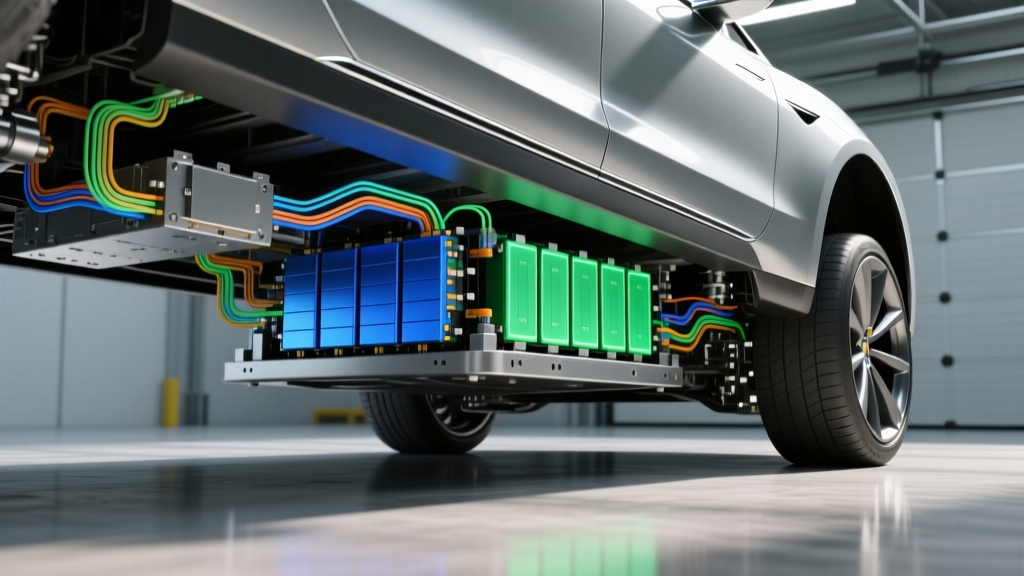
Search for "underneath a Tesla" and you'll find a mix of curiosity about the flat skateboard platform, the structural battery pack, and the absence of a traditional drivetrain tunnel. Unlike legacy automakers that adapted gas-car chassis to fit batteries, Tesla designs its vehicles around a dedicated EV architecture from the ground up. In 2026, that means a 4680-cell structural battery pack on newer models, a low center of gravity, and packaging that maximizes interior volume while minimizing mechanical complexity.
This guide examines what lives beneath the floorpan of the current Tesla lineup — the Model 3, Model Y, Model S, Model X, and the newly ramped-up Cybertruck — and translates those engineering decisions into the numbers that actually matter to buyers: real-world range, charging speed, efficiency, cargo space, and total cost after federal tax credits.
The Structural Battery Pack: Chemistry, Capacity, and What It Means for You
The most consequential component underneath a Tesla is the battery pack. Tesla currently uses two primary cell chemistries across its fleet:
- LFP (Lithium Iron Phosphate) — used in Standard Range / RWD variants. Heavier per kWh but significantly longer cycle life, lower degradation, and Tesla recommends charging to 100% daily.
- NMC/NCA (Nickel-based) — used in Long Range and Performance variants. Higher energy density for maximum range, but Tesla recommends daily charging to 80% and 100% only for trips.
| Model / Trim | Chemistry | Battery (kWh usable) | EPA Range (mi) | Weight Impact |
|---|---|---|---|---|
| Model 3 RWD | LFP | ~60 kWh | 272 | Heavier cells, shorter pack |
| Model 3 Long Range AWD | NMC | ~82 kWh | 363 | Optimized energy density |
| Model 3 Performance | NMC | ~82 kWh | 330 | Same pack, higher output |
| Model Y RWD | LFP | ~60 kWh | 270 | Compact pack layout |
| Model Y Long Range AWD | NMC | ~82 kWh | 330 | Structural pack (4680 cells) |
| Cybertruck AWD | NMC (4680) | ~123 kWh | 340 | Massive structural pack |
| Model S Long Range | NMC | ~100 kWh | 402 | Legacy 18650/2170 format |
The 4680 cell — named for its 46mm diameter and 80mm height — is Tesla's in-house dry-electrode design. It's physically larger than the 2170 cells used in older Model 3 and Model Y builds. In the structural battery pack, these cells are bonded directly into the vehicle floor, acting as a stressed member of the chassis. This reduces part count, lowers weight overall, and increases torsional rigidity. The trade-off: if a cell fails outside warranty, the entire pack section may require replacement rather than individual cell swaps.
EPA range numbers assume a mix of city and highway driving at moderate temperatures. In practice:
- Highway-only (75+ mph): Expect 10-15% less than EPA. A Model 3 LR rated at 363 mi will deliver roughly 305-320 mi at sustained interstate speeds.
- Cold weather (below 32°F / 0°C): Plan for 20-30% range reduction, depending on cabin heating use. The Model Y's heat pump helps mitigate this vs. resistive heaters in older EVs.
- City/regenerative driving: You can occasionally exceed EPA range in stop-and-go traffic thanks to regen recapture.
Charging Speed: DC Fast Charge and Home Level 2 Breakdown
What's underneath a Tesla also determines how fast it can accept a charge. Tesla's 4680-cell vehicles support peak DC fast-charge rates up to 250 kW at V3 Superchargers, while the Cybertruck pushes to approximately 350 kW at V4 Supercharger stalls (where available). However, peak kW is not sustained kW — the charging curve tapers significantly above 50% state of charge (SoC).
| Model | Peak DC kW | 10-80% Time | Level 2 Home Rate | Miles Added/Hr (L2) |
|---|---|---|---|---|
| Model 3 RWD | 170 kW | ~25 min | 11.5 kW (48A) | ~44 mi/hr |
| Model 3 Long Range | 250 kW | ~22 min | 11.5 kW (48A) | ~44 mi/hr |
| Model Y Long Range | 250 kW | ~22 min | 11.5 kW (48A) | ~44 mi/hr |
| Cybertruck AWD | 350 kW | ~15 min | 11.5 kW (48A) | ~30 mi/hr |
| Model S LR | 250 kW | ~27 min | 11.5 kW (48A) | ~41 mi/hr |
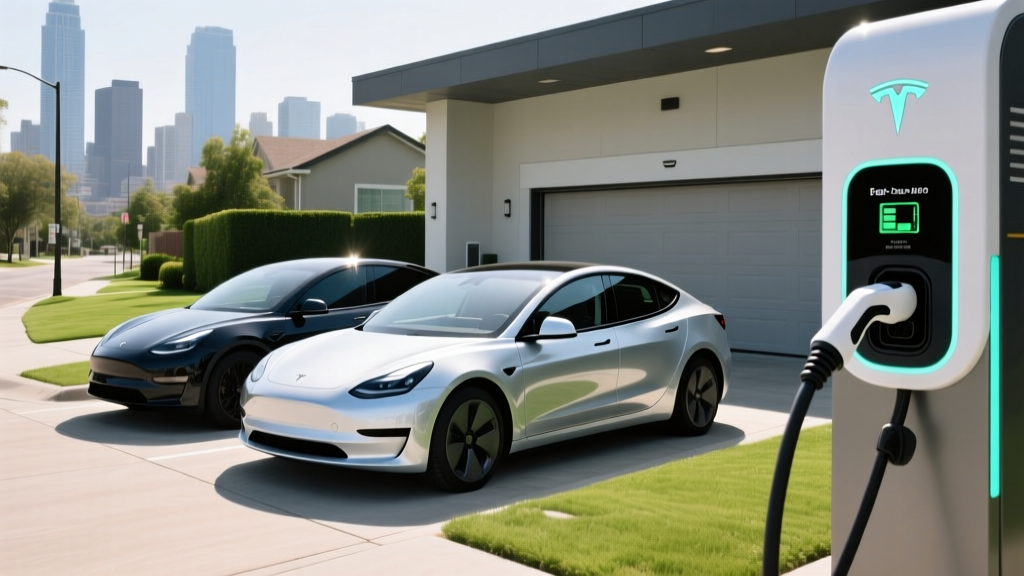
At home, Tesla's Wall Connector on a 60-amp circuit delivers up to 11.5 kW (48 amps). That's enough to fully recharge a Model 3 LR from 20% to 80% overnight in roughly 5-6 hours. If your home electrical panel only supports a 40-amp circuit, expect approximately 7.7 kW and proportionally slower charging. A panel upgrade to 200A service may be necessary for homes with older 100A panels — factor in $1,500-$3,000 for that electrical work, performed by a licensed electrician.
Preconditioning matters. When you navigate to a Supercharger in the Tesla's built-in navigation, the battery management system begins warming or cooling the pack to optimal temperature before you arrive. Without preconditioning — especially in cold weather — your initial charge rate at the stall can be cut in half until the pack reaches ~30°C (86°F).
Performance, Efficiency, and Drivetrain Specs
Beneath the floorpan, Tesla uses permanent magnet synchronous motors (rear) and induction motors (front, on AWD models). The front induction motor can freewheel when not needed, eliminating drag and boosting efficiency during light-load cruising. Here's the performance snapshot:
| Model | Drivetrain | 0-60 mph | Horsepower | MPGe (combined) | kWh/100mi |
|---|---|---|---|---|---|
| Model 3 RWD | RWD (single motor) | 5.8 sec | 283 hp | 132 MPGe | 25 kWh |
| Model 3 LR AWD | Dual-motor AWD | 4.2 sec | 384 hp | 131 MPGe | 26 kWh |
| Model 3 Performance | Dual-motor AWD | 2.9 sec | 510 hp | 120 MPGe | 28 kWh |
| Model Y LR AWD | Dual-motor AWD | 4.8 sec | 384 hp | 122 MPGe | 28 kWh |
| Cybertruck AWD | Dual-motor AWD | 4.1 sec | 600 hp | 66 MPGe | 52 kWh |
| Model S LR | Dual-motor AWD | 3.1 sec | 670 hp | 124 MPGe | 27 kWh |
Efficiency figures sourced from fueleconomy.gov (EPA). The Model 3 remains one of the most efficient EVs on the market at 25-26 kWh per 100 miles, translating to roughly 3.5-4.0 miles per kWh. The Cybertruck's aerodynamic penalty and 6,800-lb curb weight crater its efficiency to 52 kWh/100mi — a critical consideration for road-trippers.
Pricing, Tax Credits, and What You'll Actually Pay
Under current IRS §30D rules, the federal EV tax credit provides up to $7,500 for qualifying new EVs, but eligibility hinges on three moving targets:
- MSRP caps: SUVs/pickups/vans ≤ $80,000; sedans ≤ $55,000
- Buyer income limits: MAGI ≤ $150,000 (single), $225,000 (HOH), $300,000 (joint)
- Battery sourcing: Critical minerals and battery components must meet escalating North American/free-trade-partner thresholds — percentages increase annually
- Point-of-sale transfer: You can apply the credit as a dealer discount at purchase, reducing out-of-pocket cost immediately
- FEOC exclusion: Vehicles with battery components from a Foreign Entity of Concern (e.g., certain Chinese suppliers) are disqualified
| Model / Trim | Base MSRP | As-Tested (typical) | §30D Credit Eligible? | Effective Price (est.) |
|---|---|---|---|---|
| Model 3 RWD | $38,990 | $39,990 | Yes — up to $7,500 | ~$31,490 |
| Model 3 LR AWD | $45,990 | $47,990 | Yes — up to $7,500 | ~$38,490 |
| Model 3 Performance | $52,990 | $54,990 | Yes — up to $7,500 | ~$45,490 |
| Model Y RWD | $44,990 | $45,990 | Yes — up to $7,500 | ~$37,490 |
| Model Y LR AWD | $48,990 | $51,990 | Yes — up to $7,500 | ~$41,490 |
| Cybertruck AWD | $79,990 | $84,990 | Partial — verify sourcing | ~$72,490 |
| Model S LR | $74,990 | $79,990 | Yes (sedan cap $55K exceeded — verify) | Varies |
Important caveat: The Model S exceeds the $55,000 sedan MSRP cap for §30D eligibility as currently structured. The Cybertruck's eligibility depends on battery-sourcing compliance, which shifts annually. Always confirm your specific VIN's eligibility at fueleconomy.gov before purchasing, and consult a tax professional for your personal situation.
Cargo, Passenger Space, and Practicality
The flat floor that defines what's underneath a Tesla translates to meaningful interior advantages. Without a transmission tunnel, driveshaft, or exhaust routing, cabin floor space is maximized, and the front trunk (frunk) provides additional sealed storage.
| Model | Cargo (rear seats up) | Cargo (rear seats folded) | Frunk | Rear Legroom |
|---|---|---|---|---|
| Model 3 | 23 cu ft | — (trunk, not hatch) | 3.1 cu ft | 35.3 in |
| Model Y | 30 cu ft | 72 cu ft | 4.1 cu ft | 41.6 in |
| Cybertruck | 34 cu ft (bed) | — (6-ft bed) | 7.1 cu ft (e-frunk) | 41.2 in |
| Model S | 28 cu ft | 63 cu ft (hatch) | 5.3 cu ft | 35.4 in |
The Model Y's hatchback design and 72 cu ft maximum cargo volume make it the practicality leader for families. The Model 3's traditional trunk opening limits bulk cargo despite competitive total volume. The Cybertruck's 6-foot bed and vault-style tonneau cover are purpose-built for hauling, but the stainless steel exoskeleton dents are permanent — a real ownership consideration.
Warranty, Battery Longevity, and Degradation
Tesla's battery and drive unit warranty is one of the most important factors in long-term ownership cost:
- Basic Vehicle Warranty: 4 years / 50,000 miles
- Battery & Drive Unit (RWD/LFP): 8 years / 100,000 miles — 70% minimum capacity retention
- Battery & Drive Unit (LR/Performance AWD): 8 years / 120,000 miles — 70% minimum capacity retention
Real-world degradation data from fleet studies shows Tesla NMC packs losing approximately 10-12% capacity over 150,000 miles. LFP packs demonstrate slower degradation curves, often retaining 90%+ capacity at 100,000 miles, making them a strong choice for high-mileage commuters who charge to 100% daily. A full pack replacement outside warranty currently ranges from $12,000 to $16,000 depending on the model and pack size.
Tech, Driver Assists, and Notable Drawbacks
Tesla's minimalist interior centers on a 15.4-inch touchscreen that controls virtually all vehicle functions — including glove box release, mirror adjustment, and vent direction. There is no traditional instrument cluster; speed and navigation appear on the upper-left corner of the main display.
Tesla's Autopilot and Full Self-Driving (Supervised) are Level 2 driver-assistance systems. They do not make the vehicle self-driving. The driver must remain fully engaged, hands on the wheel (or torque-attentive), and eyes on the road at all times. Tesla's camera-only "Tesla Vision" approach lacks the LiDAR redundancy used by Waymo (Level 4) and Cruise. Expect occasional phantom braking, lane-centering oscillation on faded markings, and reduced capability in heavy rain or construction zones.
- Drive autonomously without supervision — FSD (Supervised) still requires driver confirmation for lane changes, turns, and stops in many scenarios
- Handle unmapped construction zones reliably
- Perform in heavy snow or when cameras are obstructed by dirt/ice
- Replace attentive driving — NHTSA has investigated multiple Tesla Autopilot-involved crashes linked to driver inattention
Standout tech: Over-the-air (OTA) updates continuously add features — recent updates have improved regenerative braking customization, added dashcam sentry-mode enhancements, and refined route planning with real-time Supercharger availability. The Tesla app provides best-in-class remote preconditioning, location tracking, and charging management.
Notable drawbacks: Panel gaps remain inconsistent on some Fremont-built vehicles (Austin-built Model Y quality has improved). The lack of physical buttons frustrates some drivers, especially for climate and wiper controls. The camera-only approach to driver assistance has drawn NHTSA scrutiny, and insurance premiums for Teslas run 15-30% higher than comparable EVs from Hyundai, Kia, and Ford in most states.
Who Should Buy a Tesla — And Who Should Look Elsewhere?
- You want access to the Supercharger network — still the most reliable DC fast-charging ecosystem in North America, with 6,000+ stalls and 99.9% uptime
- You prioritize OTA software updates and a tech-forward ownership experience
- You're a daily commuter covering 30-80 miles and can charge at home on Level 2
- You value efficiency — the Model 3 is among the most energy-efficient EVs available
- You want physical buttons, a traditional instrument cluster, or Apple CarPlay/Android Auto (Tesla uses a proprietary infotainment system)
- You need a dealer service network — Tesla's mobile ranger and service center model means longer wait times for body repair in many markets
- You're towing heavy loads — the Model Y maxes out at 3,500 lbs; the Cybertruck handles 11,000 lbs but range drops to ~150 mi under load
- You live in a region with limited Supercharger coverage (rural Montana, parts of the Dakotas) and need CCS compatibility for Electrify America or EVgo stations
- Best-in-class Supercharger network access
- Class-leading efficiency (Model 3: 25 kWh/100mi)
- Strong OTA update cadence adds real features post-purchase
- LFP option for daily 100% charging without degradation anxiety
- Low center of gravity = confident handling
- No Apple CarPlay / Android Auto
- Panel gap inconsistency (improving but not eliminated)
- Higher insurance premiums vs. competitors
- Camera-only ADAS draws regulatory scrutiny
- Touchscreen-only controls frustrate some drivers
Frequently Asked Questions
What is the real-world range of a Tesla?
EPA estimates range from 272 mi (Model 3 RWD) to 402 mi (Model S LR). In real-world highway driving at 75 mph, expect 10-15% less than the sticker number. In sub-freezing temperatures, plan for 20-30% reduction. The Model 3 Long Range AWD delivers approximately 305-320 highway miles on a full charge in fair weather.
How fast does a Tesla charge at home and on the road?
On a Tesla V3 Supercharger (250 kW peak), a Model 3 Long Range charges from 10-80% in roughly 22 minutes. At home on a Level 2 Wall Connector (11.5 kW), you'll add approximately 44 miles of range per hour of charging — enough to fully replenish overnight for most daily driving patterns.
Does the Tesla Model 3 qualify for the $7,500 federal tax credit?
The Model 3 RWD and Long Range AWD currently qualify for up to $7,500 under IRS §30D, subject to buyer income limits ($150K single / $300K joint MAGI) and battery-sourcing requirements. The credit can be transferred at point of sale as a dealer discount. Always verify your specific VIN's eligibility at fueleconomy.gov, as sourcing rules tighten annually.
Is a Tesla worth buying vs. Hyundai Ioniq 6, Ford Mustang Mach-E, or BMW i4?
Tesla wins on Supercharger network access, efficiency, and software. The Hyundai Ioniq 6 offers 800V ultra-fast charging (10-80% in ~18 min at 350 kW chargers) and physical buttons. The Mach-E provides a more traditional crossover feel with Apple CarPlay. The BMW i4 delivers superior build quality and a conventional luxury interior. If Supercharger reliability and OTA updates are your top priorities, Tesla remains the benchmark. If you want faster peak charging or a traditional cockpit, test-drive the competition.
How long does a Tesla battery last?
Tesla warranties its battery packs for 8 years / 100,000-120,000 miles (depending on trim) with a 70% minimum capacity retention guarantee. Fleet data shows most NMC packs retaining 88-90% capacity at 150,000 miles. LFP packs degrade more slowly. Full replacement costs $12,000-$16,000 outside warranty — a rare but real expense to budget for in long-term ownership planning.