If you've ever popped the hood of a Tesla expecting to see an engine, the empty space staring back at you can feel almost anticlimactic. There are no pistons, no exhaust headers, no serpentine belts. But that cavernous gap — the front trunk, or "frunk" — is just one piece of a far more sophisticated story. Understanding what is actually under the hood of a Tesla, both literally in the frunk and figuratively beneath the floor and axles, reveals why these vehicles behave, charge, and age the way they do.
This guide walks through the physical layout of every current-production 2026 Tesla — Model 3, Model Y, Model S, Model X, and the newly ramping Cybertruck — with hard numbers on battery chemistry, motor architecture, frunk dimensions, and how all of it translates into the range, charging, and ownership experience you'll actually live with.
What Physically Lives Under a Tesla's Hood
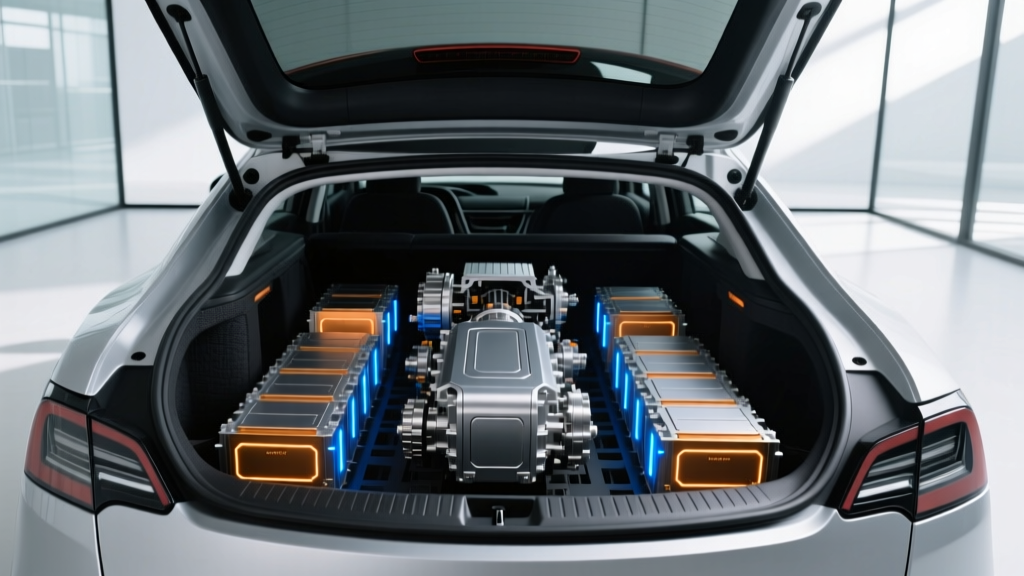
Lift the front hood of any modern Tesla and you'll find one of two things: a storage compartment (the frunk) or a sealed equipment bay housing the vehicle's 12V lithium-ion auxiliary battery, the high-voltage DC-DC converter, the onboard charger, the heat-pump assembly (called the "octovalve" thermal manifold in Tesla's engineering docs), and the cabin HVAC compressor. On dual-motor variants, you'll also find the front drive unit — a compact permanent-magnet synchronous reluctance motor roughly the size of a large duffel bag — mounted low between the front wheels.
There is no engine bay in the traditional sense. The "skunkworks" layout frees up 3–7 cubic feet of lockable front cargo space on most models, and concentrates heavy components low and between the axles, which is why Teslas post some of the lowest rollover-risk scores in NHTSA testing.
2026 Tesla Model-by-Model: What's Under the Hood
Specs below reflect the 2026 model year as sold in the U.S. Tesla updates pricing and trims frequently; always confirm on Tesla.com before ordering.
| Model / Trim | EPA Range | Battery (kWh, chemistry) | Drivetrain | 0–60 mph | HP | Frunk (cu ft) | Base MSRP |
|---|---|---|---|---|---|---|---|
| Model 3 RWD | 272 mi | ~60 kWh, LFP | Rear (single motor) | 5.8 s | 283 | 3.1 | $38,990 |
| Model 3 Long Range AWD | 341 mi | ~79 kWh, NMC | Dual-motor AWD | 4.2 s | 346 | 3.1 | $45,990 |
| Model 3 Performance | 315 mi | ~79 kWh, NMC | Dual-motor AWD | 2.9 s | 510 | 3.1 | $52,990 |
| Model Y Long Range AWD | 320 mi | ~79 kWh, NMC | Dual-motor AWD | 4.8 s | 384 | 4.1 | $46,990 |
| Model Y Performance | 292 mi | ~79 kWh, NMC | Dual-motor AWD | 3.5 s | 456 | 4.1 | $51,990 |
| Model S Long Range | 402 mi | ~100 kWh, NMC | Dual-motor AWD | 3.1 s | 670 | 5.3 | $79,990 |
| Model S Plaid | 359 mi | ~100 kWh, NMC | Tri-motor AWD | 1.99 s | 1,020 | 5.3 | $89,990 |
| Model X Long Range | 335 mi | ~100 kWh, NMC | Dual-motor AWD | 3.8 s | 670 | 6.6 | $84,990 |
| Cybertruck AWD | 340 mi | ~123 kWh, NMC (4680 cells) | Dual-motor AWD | 4.1 s | 600 | 7.0 (front trunk + sail pillars) | $79,990 |
Source: fueleconomy.gov and Tesla U.S. spec sheets. Frunk volumes are manufacturer-published usable figures.
Battery Chemistry: LFP vs NMC Under the Floor
The most consequential thing "under the hood" of a Tesla isn't actually under the hood at all — it's the structural battery pack bolted into the floorpan. Tesla uses two distinct lithium-ion chemistries in 2026, and the choice dramatically affects how you should own the car.
| Attribute | LFP (Lithium Iron Phosphate) | NMC (Nickel Manganese Cobalt) |
|---|---|---|
| Used in | Model 3 RWD, base Model Y RWD | Long Range, Performance, S, X, Cybertruck |
| Energy density | Lower (~160 Wh/kg cell) | Higher (~250 Wh/kg cell) |
| Cycle life | 3,000+ cycles to 80% SoH | 1,000–1,500 cycles to 80% SoH |
| Charging to 100% daily | Recommended (BMS needs full SoC to calibrate) | Discouraged — keep at 80% daily, 100% for trips |
| Cold-weather range loss | ~25–35% at 20°F | ~15–25% at 20°F |
| Cobalt content | None | Present — supply-chain exposure |
| Cost per kWh | Lower | Higher |
Charging: DC Fast, Level 2, and the Curve Nobody Talks About
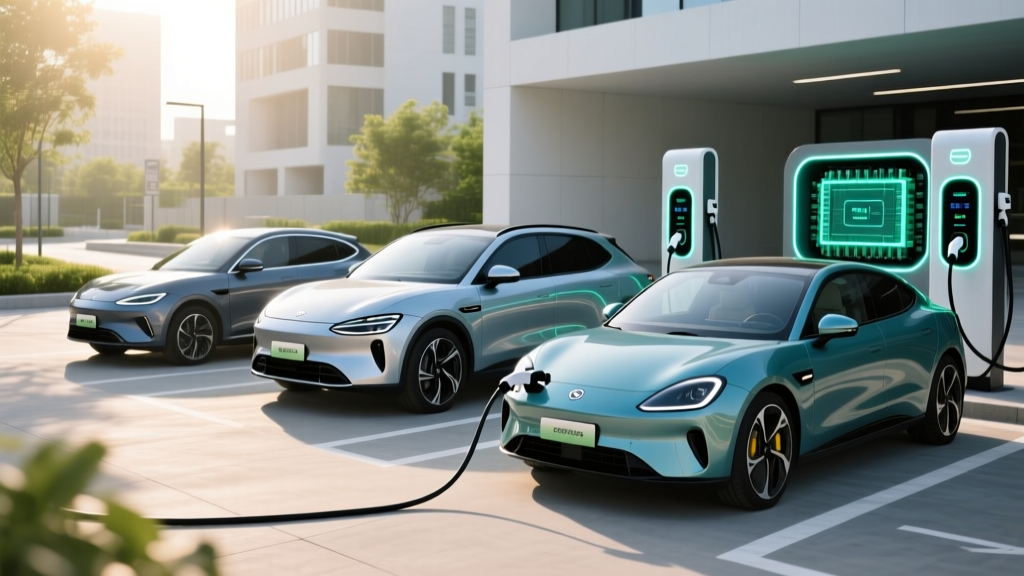
Tesla's Supercharger network remains the most reliable public DC fast-charging ecosystem in North America, and in 2026 every new Tesla ships with the native NACS charge port — no adapter needed for Tesla's 250 kW V3 Superchargers or the newer 350+ kW V4 posts. Third-party networks like Electrify America and EVgo also now host NACS cables at most new installations.
| Charging Method | Power (kW) | Miles of Range per Hour | 10–80% Time |
|---|---|---|---|
| Level 1 (120V household) | ~1.4 kW | 3–5 mi/hr | Multi-day (not practical for full charge) |
| Level 2 (Tesla Wall Connector, 48A / 240V) | 11.5 kW | ~44 mi/hr (Model 3 LR) | ~7.5 hours (0–100%) |
| DC Fast (V3 Supercharger, peak) | 250 kW | ~1,000 mi/hr at peak | ~25 min (Model 3 LR), ~28 min (Model Y LR) |
| DC Fast (V4 Supercharger, Cybertruck/S/X) | Up to 350 kW | ~1,200 mi/hr at peak | ~20 min (Cybertruck, 4680 cells) |
The charge curve caveat: Peak kW is not sustained kW. A Model 3 Long Range peaks at ~250 kW only between roughly 10–30% SoC, then tapers to ~150 kW by 50%, ~80 kW by 70%, and ~40 kW above 85%. The "10–80% in 25 minutes" figure reflects this curve. Charging from 80–100% can add another 20+ minutes — plan road-trip stops around 80% and move on unless you need the full pack for the next leg.
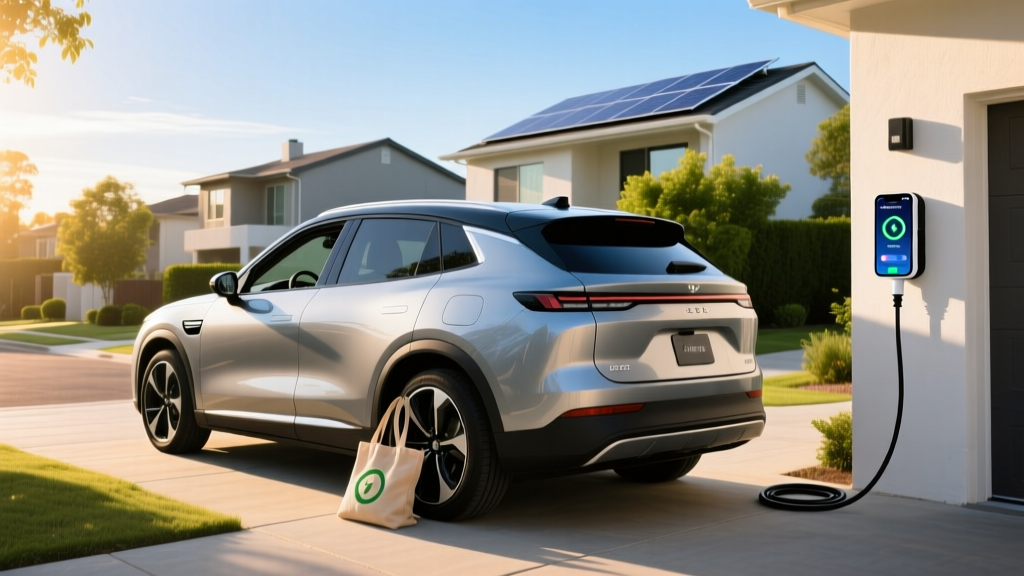
For home charging, Tesla's Gen 3 Wall Connector ($475 hardware) on a 60A circuit delivers the full 48A / 11.5 kW. Most owners with daily commutes under 80 miles round-trip recover overnight with margin to spare. Professional installation runs $600–$2,200 depending on panel proximity and whether your home needs a 200A service upgrade.
Tax Credits, Pricing, and What You Actually Pay
The federal §30D Clean Vehicle Credit remains available in 2026 for qualifying new EVs, but eligibility is a moving target governed by MSRP caps, buyer income limits, and battery critical-mineral sourcing rules enforced by the IRS. Here's how current Tesla pricing stacks up.
| Model | Base MSRP | Federal §30D Eligible? | Effective Price (if credit applies) |
|---|---|---|---|
| Model 3 RWD | $38,990 | Yes (LFP sourcing meets 2026 thresholds) | ~$31,490 via point-of-sale transfer |
| Model 3 Long Range AWD | $45,990 | Yes (under $55k sedan cap) | ~$38,490 |
| Model 3 Performance | $52,990 | Yes (under $55k sedan cap) | ~$45,490 |
| Model Y Long Range AWD | $46,990 | Yes (under $80k SUV cap) | ~$39,490 |
| Model Y Performance | $51,990 | Yes (under $80k SUV cap) | ~$44,490 |
| Model S / X | $79,990+ | No (exceeds $55k sedan / $80k SUV MSRP cap) | MSRP as listed |
| Cybertruck AWD | $79,990 | Likely (under $80k truck cap — verify sourcing) | ~$72,490 |
Critical §30D caveats for 2026:
- Buyer income cap: Modified AGI must not exceed $150k single / $225k head-of-household / $300k joint filing. (IRS §30D guidelines.)
- MSRP cap: Sedans ≤ $55,000; SUVs, vans, and trucks ≤ $80,000. Adding options that push MSRP above the threshold disqualifies the vehicle.
- Critical minerals & battery components: A phased percentage of battery critical minerals must be sourced from U.S. or FTA-partner countries. Tesla's LFP cells (sourced largely from CATL in China) have periodically affected eligibility — always confirm the specific VIN on the IRS qualifying-vehicle list before purchase.
- Point-of-sale transfer: The credit can be applied as a down-payment reduction at the dealer, but only if you attest to income eligibility and the dealer is registered with IRS Energy Credits Online.
Tech, Driver Assistance, and What Tesla Still Gets Wrong
Every 2026 Tesla ships with the current-generation infotainment stack on a 15.4-inch (Model 3/Y) or 17-inch (Model S/X/Cybertruck) center display, over-the-air updates, and Tesla's Basic Autopilot suite — which includes adaptive cruise control and lane-centering. This is SAE Level 2 driver assistance, meaning you must keep hands on the wheel and eyes on the road at all times. Tesla's optional Full Self-Driving (Supervised) software ($8,000 or $99/month in 2026) adds city-street navigation and stop-light recognition, but it remains a Level 2 system requiring active supervision — it is not a Level 4 autonomous system like Waymo's driverless robotaxi service.
Standout tech:
- Heat pump standard on all trims — reduces cold-weather range penalty by ~30% versus resistive cabin heaters.
- Sentry Mode dashcam recording and remote climate preconditioning via the Tesla app.
- Vehicle-to-load (V2L) capability via the Cybertruck's Powershare outlets (120V/240V, up to 11.5 kW export).
- OTA updates that have historically added measurable range and charge-speed improvements post-purchase.
Notable drawbacks:
- No Apple CarPlay or Android Auto — Tesla's closed ecosystem is a dealbreaker for some buyers.
- Model 3 Highland refresh removed turn-signal stalks and ultrasonic parking sensors, replacing them with screen-based controls and Tesla Vision camera estimates. Real-world parking accuracy is inconsistent.
- Insurance premiums on Teslas run 15–30% above segment averages in most states, per IIHS loss data.
- Panel-gap quality on Fremont-built vehicles remains variable; Austin-built Model Y and Cybertruck show measurable improvement.
Pros
- Class-leading Supercharger network access (native NACS, no adapter)
- Heat pump standard — genuine cold-weather advantage
- OTA updates extend vehicle capability post-sale
- Lowest cost-per-mile in segment when home-charging on off-peak rates
- Strong residual values relative to non-Tesla EVs
Cons
- No CarPlay/Android Auto
- FSD remains Level 2 despite the "self-driving" branding
- LFP trims suffer larger cold-weather range loss
- Insurance costs above segment average
- Service center wait times in high-growth metro areas
Warranty and Long-Term Battery Health
Tesla's baseline warranty covers the vehicle for 4 years / 50,000 miles. The battery and drive-unit warranty varies by model:
- Model 3 RWD (LFP): 8 years / 100,000 miles, ≥70% capacity retention
- Model 3 Long Range / Performance, Model Y: 8 years / 120,000 miles, ≥70% retention
- Model S / X / Cybertruck: 8 years / 150,000 miles, ≥70% retention
Real-world degradation data from fleet-telemetry aggregators like Recurrent Auto shows 2021–2024 Model 3 and Model Y packs averaging ~5–7% capacity loss at 100,000 miles, with the steepest drop occurring in the first 15,000 miles before stabilizing. LFP packs show slower long-term fade but more variability in state-of-charge estimation — Tesla's BMS periodically asks LFP owners to charge to 100% to recalibrate. Out-of-warranty pack replacement in 2026 runs $12,000–$18,000 depending on model and pack size, based on published service-center invoices.
Who Should Buy Which Tesla
- Choose Model 3 RWD if you commute under 60 miles daily, can charge at home nightly, and want the lowest entry price with LFP longevity.
- Choose Model 3 Long Range AWD if you road-trip 4+ times per year and need 300+ miles of real-world highway range.
- Choose Model Y Long Range AWD if you need family cargo space, child-seat room, and the most balanced range-to-price ratio in the Tesla lineup.
- Choose Model S/X only if you prioritize prestige, air suspension, and 400-mile range — and accept the loss of the §30D credit above MSRP caps.
- Choose Cybertruck if you need truck-bed utility, V2L power export, and can tolerate first-model-year build variability.
Frequently Asked Questions
What is the real-world range of a Tesla in 2026?
Real-world range depends heavily on speed, temperature, and terrain. Expect 80–88% of EPA at sustained 70 mph in fair weather, 65–75% in freezing temperatures, and 55–65% at 80+ mph in cold headwinds. A Model Y Long Range EPA-rated at 320 miles typically delivers 260–280 miles on a 70-mph highway trip in 60°F weather.
How fast does a Tesla charge at home and on the road?
At home on a 48A Level 2 Tesla Wall Connector, expect ~44 miles of range per hour (Model 3/Y) or ~34 mi/hr (Model S/X). On a 250 kW V3 Supercharger, 10–80% takes roughly 25–28 minutes. On a V4 post with a 4680-cell Cybertruck, 10–80% can drop to ~20 minutes.
Does every Tesla qualify for the $7,500 federal tax credit?
No. Model S and Model X exceed the §30D MSRP cap and do not qualify. Model 3, Model Y, and Cybertruck trims under their respective MSRP caps can qualify for up to $7,500 — but buyer income limits, battery critical-mineral sourcing rules, and VIN-specific IRS listings all apply. Verify eligibility on irs.gov and confirm with your tax professional before relying on the credit.
Is Tesla's Full Self-Driving actually self-driving?
No. FSD (Supervised) is an SAE Level 2 driver-assistance system. The driver must remain engaged, hands on the wheel, and eyes on the road at all times. Only Level 4 services like Waymo operate without a human driver in defined geofenced areas.
How long will a Tesla battery last before needing replacement?
Fleet data suggests most NMC Tesla packs retain 85–92% capacity at 150,000 miles. LFP packs in Model 3 RWD project to exceed 3,000 full charge cycles before hitting 80% state-of-health — equivalent to roughly 450,000 miles at the pack's rated range. Full replacement, if needed out of warranty, costs $12,000–$18,000 in 2026.
Is a Tesla worth buying vs. Hyundai Ioniq 5, Ford Mustang Mach-E, or BMW i4?
Tesla wins on Supercharger network access, OTA updates, and software integration. Competitors like the Ioniq 5 offer faster peak DC charging (800V architecture, 10–80% in ~18 min on a 350 kW post), Apple CarPlay, and more conventional ergonomics. The right choice depends on whether native Supercharger access and Tesla's software ecosystem outweigh the interior refinement and charging-architecture advantages of rivals — a comparison we break down in our dedicated Model Y vs. Ioniq 5 review.