If you drive for Uber (or plan to), you've likely seen mentions of "Uber electric vehicle grants" and wondered whether they're real money or just marketing. Here's the direct answer: Uber has periodically offered EV incentive programs — often in partnership with cities, utilities, or charging networks — that provide cash bonuses, charging credits, or per-trip payouts to drivers who switch to battery-electric vehicles. However, these programs are not a single nationwide grant. They are hyper-local, time-limited, and often tied to specific metros (Los Angeles, London, Amsterdam, etc.) or partnerships (Hertz/Tesla rentals, EVgo charging credits). In the U.S., the most reliable financial stack for an Uber driver going electric in 2026 combines the federal §30D clean vehicle credit (up to $7,500 if you meet income, MSRP, and battery-sourcing rules), any state/local rebate, utility off-peak charging rates, and whatever Uber EV program is active in your city at the time.
What Uber's EV Programs Actually Look Like in 2026
Uber's EV incentives fall into three buckets, and they change frequently based on city regulation, utility partnerships, and Uber's own sustainability commitments:
- Zero Emissions Bonus: In participating cities, Uber pays drivers an extra $1 per trip (capped, often at $20/week or similar) when using a fully electric vehicle. This is the longest-running Uber EV incentive and has been active in metros like Los Angeles, San Francisco, Seattle, and New York at various points.
- Charging Credits: Partnerships with networks like EVgo or ChargePoint have provided drivers with $20–$100 in free DC fast charging credits upon switching to an EV or completing a set number of EV trips.
- Rental/Lease Partnerships: Uber's partnership with Hertz for Tesla Model 3 rentals (launched 2021–2022) gave drivers access to EVs without purchase. As of 2026, Uber has shifted toward partnerships with fleet operators offering Chevy Equinox EV, Hyundai Ioniq 5, and Tesla Model Y at weekly rental rates typically between $299–$399/week, sometimes subsidized by local clean-air grants.
Critical reality check: these programs are not guaranteed income. They have enrollment caps, expiration dates, and city-specific eligibility. Always verify current availability in your driver app before making a purchase decision based on them.
EV vs Gas for Rideshare: The Real Cost Math
The core question for any Uber driver isn't just "is there a grant?" — it's whether an EV actually saves money over a gas car when you're driving 1,500–2,500 miles per month. Let's run the numbers for a typical full-time rideshare driver doing ~2,000 miles/month in a moderate-cost metro.
| Category | EV (Chevy Equinox EV 3LT) | Gas (Toyota Camry LE) |
|---|---|---|
| Fuel / Electricity | $1,920 (home L2 @ $0.13/kWh, 3.2 mi/kWh) | $2,640 (32 MPG combined @ $3.52/gal) |
| Maintenance | $400 (tire rotation, cabin filter, fluid top-off) | $1,100 (oil changes, filters, brakes) |
| Insurance (rideshare endorsement) | $3,200 | $2,700 |
| Depreciation (5-yr estimate) | $5,800/yr | $3,900/yr |
| Total Annual Operating | ~$11,320 | ~$10,340 |
The takeaway: EVs win on fuel and maintenance — saving roughly $1,420/year in those categories alone. But higher insurance premiums and steeper depreciation (especially on higher-priced EVs) can eat those gains if you're not careful with your purchase price. The math flips strongly in the EV's favor when: (a) you buy a sub-$40,000 EV, (b) you qualify for the full $7,500 federal credit, and (c) you charge at home on off-peak rates.
The 2026 Vehicle Stack That Makes Sense for Uber Drivers
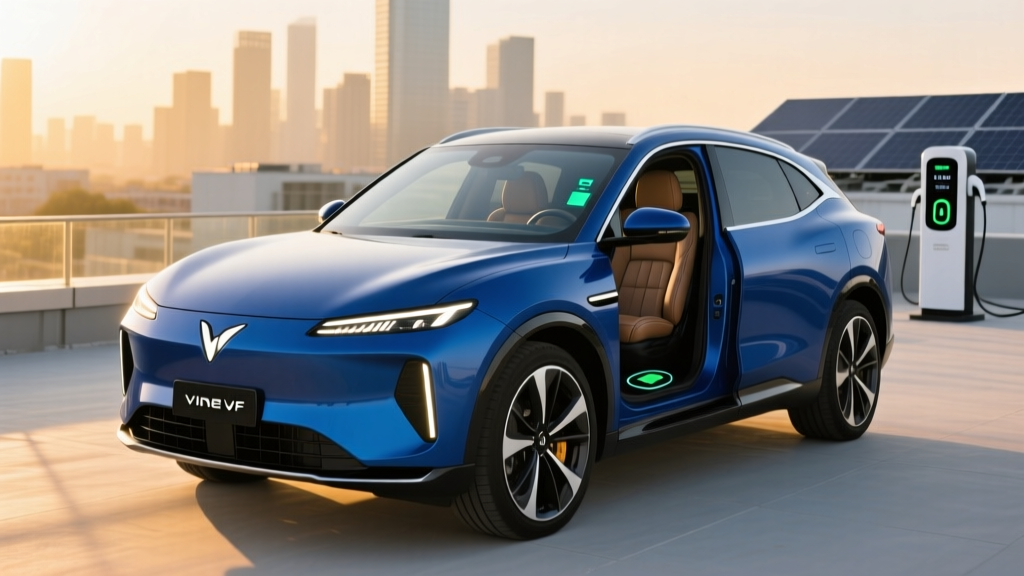
Not every EV is a good rideshare car. You need rear-seat space, solid range (EPA 280+ miles to handle a full shift without mid-day charging), fast DC charging (to minimize downtime), and a purchase price that keeps your per-mile cost low. Here's what fits in 2026:
| Model | EPA Range | Battery | DC Fast Charge (10-80%) | Base MSRP | §30D Eligible? |
|---|---|---|---|---|---|
| Chevy Equinox EV 3LT | 319 mi | 85 kWh (NMC) | ~150 kW peak, ~30 min | $34,900 | Likely (verify sourcing) |
| Hyundai Ioniq 5 SEL | 318 mi | 77.4 kWh (NMC) | ~240 kW peak, ~18 min | $43,200 | Check IRS list |
| Tesla Model Y Long Range | 320 mi | 75 kWh (NMC/NCA) | ~250 kW peak, ~18 min | $44,990 | Check IRS list |
| Nissan Leaf SV Plus | 212 mi | 60 kWh (NMC) | ~100 kW peak, ~40 min (CHAdeMO) | $33,990 | Likely |
Stacking Uber EV Incentives with Federal & State Credits
The real financial opportunity for Uber drivers is layering multiple incentive sources. Here's how the stack works in 2026:
- Federal §30D Clean Vehicle Credit: Up to $7,500 for new EVs. Requirements include: vehicle MSRP under $55,000 (sedans) or $80,000 (SUVs/trucks), buyer AGI under $150K single / $300K joint, battery critical minerals and components sourced from FTA-partner countries, and final assembly in North America. As of 2024, this credit can be transferred to the dealer at point of sale, reducing your purchase price immediately. Verify current eligible models on fueleconomy.gov.
- State rebates: California's CVRP offers up to $7,000 for income-qualified buyers; Colorado offers $5,000; New York offers $2,000. These vary enormously and change annually.
- Utility EV rates: Many utilities (PG&E, SCE, ConEdison, Xcel) offer off-peak charging rates as low as $0.07–$0.10/kWh overnight — cutting your per-mile fuel cost to roughly $0.025–$0.035.
- Uber Zero Emissions Bonus: If active in your city, this adds $1/trip (capped). Over 100 trips/week, that's up to $100/week or ~$5,200/year — but only if the program is currently funded and you're enrolled.
| Myth | Fact |
|---|---|
| "Uber gives every driver $7,500 to buy an EV." | That's the federal §30D tax credit, not an Uber grant. Uber's own incentives are typically $1/trip bonuses or charging credits worth $500–$2,000/year, and only in participating cities. |
| "Any EV qualifies for Uber's EV bonus." | Uber typically requires a fully battery-electric vehicle (no PHEVs). The vehicle must also meet Uber's age and condition requirements (usually model year 2016 or newer, varies by city). |
| "I don't need home charging — public DC fast chargers are fine." | DC fast charging costs $0.30–$0.50/kWh at public stations — often more expensive than gas per mile. Without home Level 2 charging, the EV cost advantage largely disappears. Budget $1,200–$2,500 for a home L2 install (240V, 40–48A circuit). |
| "EV batteries won't last through a rideshare career." | Most EV batteries are warranted for 8 years/100,000 miles at 70% capacity retention. Real-world data from high-mileage Teslas shows ~10–15% degradation at 150,000 miles. For a 3-year rideshare stint, battery replacement is very unlikely. |
| "I can charge during my shift at a Supercharger in 15 minutes." | Peak charge rates (e.g., 250 kW) apply only from ~10–50% SoC. Above 80%, charging slows dramatically to protect the battery. Real-world 10–80% sessions take 18–30 minutes, plus 5–10 minutes to plug in, precondition, and get back on the road. Budget 35–45 minutes per DC fast charge stop. |
Home Charging: The Make-or-Break Factor
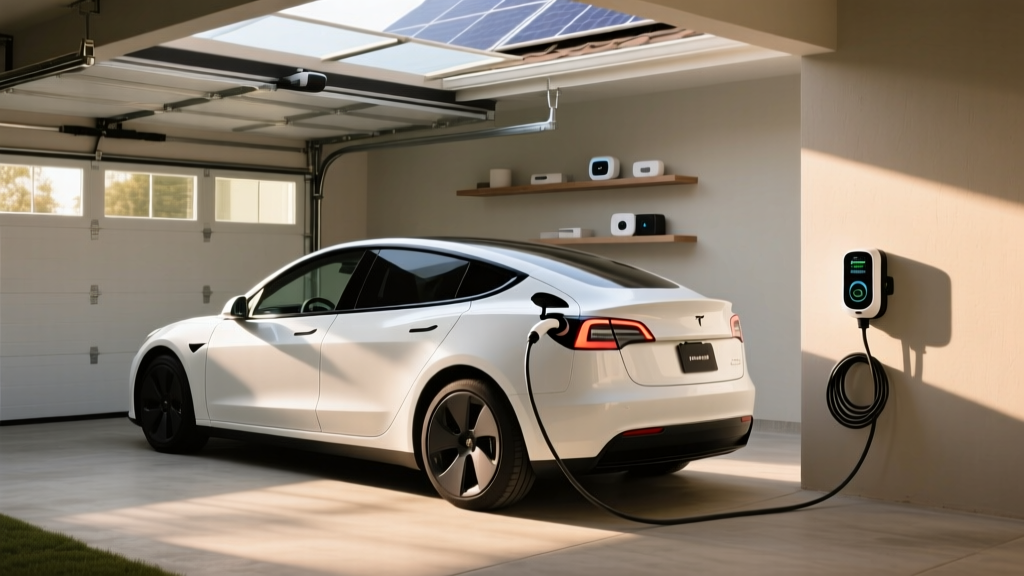
Here's the ownership reality that Uber EV grant promotions rarely mention: the economics of EV rideshare collapse without affordable home charging. A Level 2 home charger (240V, 40–48 amps, delivering 9.6–11.5 kW) adds roughly 30–40 miles of range per hour of charging. A full overnight charge from 20% to 100% takes 7–9 hours — perfect for a driver who charges between shifts.
| Component | Cost Range | Notes |
|---|---|---|
| Level 2 EVSE (ChargePoint Home Flex, Emporia Vue, Tesla Wall Connector) | $350–$700 | 48A units cost more; hardwired vs NEMA 14-50 plug |
| Electrician labor (240V/50A circuit) | $500–$1,500 | Varies by panel proximity and conduit run length |
| Permit & inspection | $100–$300 | Required in most jurisdictions |
| Electrical panel upgrade (if needed) | $1,500–$3,500 | If your panel is 100A or maxed out; upgrade to 200A |
| Total (no panel upgrade) | $950–$2,500 | Most common scenario |
| Total (with panel upgrade) | $2,450–$6,000 | Older homes, apartments |
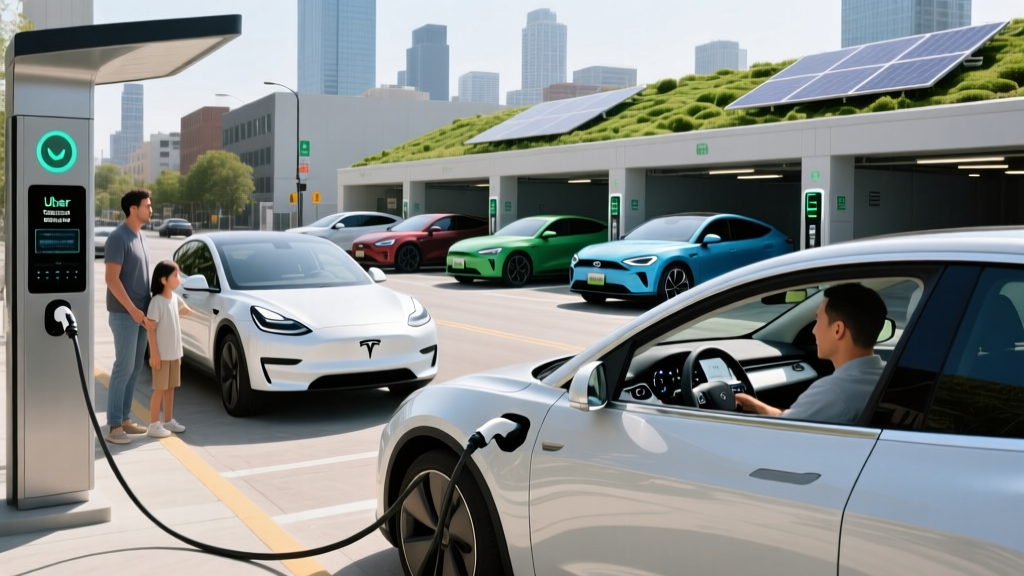
If you rent or live in an apartment without charging access, your options narrow significantly. Some cities have curbside Level 2 chargers, and workplace charging is growing, but relying on public charging for daily rideshare shifts erodes the cost advantage. In that scenario, a hybrid (like the Toyota Prius at 57 MPG combined) may be the smarter financial play until home charging becomes feasible.
Decision Framework: Should You Go EV for Uber?
- You can install a Level 2 charger at home (or already have one)
- You drive 1,500+ miles/month and your local utility offers off-peak EV rates below $0.12/kWh
- You qualify for the federal §30D credit (check IRS eligibility rules) and ideally a state rebate
- Your city has an active Uber Zero Emissions Bonus or similar EV driver incentive
- Your climate is temperate or you're prepared for 20–30% winter range loss
- You plan to keep the vehicle 3+ years to ride out initial depreciation
- You rent and have no access to home or workplace charging
- Your area has limited public DC fast charging infrastructure
- You drive fewer than 1,000 miles/month (the fuel savings don't offset higher EV purchase price)
- You live in an extremely cold climate (regular sub-20°F winters) without a garage for preconditioning
- You need to minimize upfront cost and don't qualify for §30D (income or MSRP caps)
What First-Time EV Rideshare Buyers Must Know
If you're transitioning from a gas car to an EV for Uber, here are the ownership realities that don't appear in any grant application:
- Preconditioning matters. Before a DC fast charge session, your EV needs to warm the battery to optimal temperature (typically 80–95°F). Most EVs do this automatically when you navigate to a charger. Skipping preconditioning can cut your peak charge rate by 30–50%, turning an 18-minute charge into a 35-minute one.
- kW vs kWh — don't confuse them. kW (kilowatts) is the rate of charging power — like the speed of water flowing from a hose. kWh (kilowatt-hours) is the battery capacity — like the size of the tank. A 75 kWh battery charged at 150 kW theoretically fills in 30 minutes, but real-world charge curves taper above 50–60% SoC.
- Tire wear increases 15–25%. EVs are heavier (the Equinox EV weighs ~4,700 lbs vs a Camry at ~3,300 lbs) and deliver instant torque. Budget for tire replacement every 25,000–35,000 miles instead of the 45,000+ you'd get on a gas sedan.
- Insurance costs more. EV insurance premiums run 15–30% higher than comparable gas cars due to higher repair costs and battery replacement risk. Get quotes before purchasing — the difference can be $400–$800/year with a rideshare endorsement.
- Regenerative braking saves your brake pads. One-pedal driving means your friction brakes see far less use. Many EV owners report original brake pads lasting 100,000+ miles. This is one area where EVs genuinely save on maintenance.
Frequently Asked Questions
Does Uber directly pay for my electric vehicle?
No. Uber does not purchase vehicles for drivers or provide direct vehicle-purchase grants. Uber's EV incentives are trip-based bonuses, charging credits, or subsidized rental partnerships. The actual vehicle purchase incentives come from federal (§30D tax credit), state, and utility programs — not from Uber itself.
Can I use a plug-in hybrid (PHEV) for Uber's EV bonus?
Generally, no. Uber's Zero Emissions programs typically require a fully battery-electric vehicle (BEV). Plug-in hybrids like the Toyota RAV4 Prime or Chrysler Pacifica PHEV do not qualify for Uber's EV-specific bonuses, though they can be excellent cost-saving vehicles for rideshare in their own right due to their electric-only range for short trips and gas flexibility.
How do I find out if Uber has an active EV grant in my city?
Open your Uber Driver app and navigate to Account → Earnings → Promotions, or check Uber's official sustainability page. You can also search for your city's name plus "Uber clean air plan" or "Uber zero emissions" — many city-specific programs are announced through local government press releases.
Is it worth buying an EV just for Uber incentives?
Only if the total cost of ownership — after all credits, fuel savings, and maintenance savings — is lower than a comparable gas or hybrid vehicle over your planned ownership period (typically 3–5 years). The Uber-specific incentives alone ($1/trip bonus, charging credits) are usually worth $1,000–$5,000/year and should be treated as a supplementary benefit, not the primary reason to buy. The federal §30D credit ($7,500) and fuel savings (~$700–$1,200/year) are the primary financial drivers.
What happens to my EV battery if I drive 50,000+ miles a year for Uber?
High-mileage driving accelerates battery degradation slightly, but modern thermal management systems handle it well. Real-world data from NHTSA-reported fleets and independent testing shows NMC batteries retaining 85–90% capacity at 100,000 miles with mostly Level 2 charging. Frequent DC fast charging (daily) may increase degradation to 12–18% loss at 100,000 miles. All major manufacturers warranty the battery for 8 years/100,000 miles at minimum 70% capacity retention — if degradation exceeds that threshold, the manufacturer replaces or repairs the battery at no cost.