The Quick Answer: Which Two Seat Electric Car Should You Buy?
The two-seat electric car market in 2026 remains a niche, but viable options exist depending on your use case. For city commuting under 40 miles round-trip, micro-EVs like the Microlino (EPA-est. ~100 miles range, ~$18,000) offer ultra-low running costs. For highway-capable daily driving, the Smart #1 Brabus (285-mile EPA range, 422 hp, ~$52,000 before incentives) is the most complete package. If you need a true two-seater with cargo space, the Fiat Topolino (~47-mile range, ~$11,000) serves as a neighborhood runabout. None of these qualify for the full $7,500 federal §30D credit due to battery-sourcing rules or MSRP caps — always verify current IRS eligibility before purchasing.
What Exactly Counts as a Two Seat Electric Car?
The term "two seat electric car" covers a wide spectrum in 2026: from ultra-compact quadricycles (classified as L7e in Europe, often low-speed vehicles in the U.S.) to fully highway-capable subcompacts. The distinction matters enormously for safety, range, and where you can legally drive them.
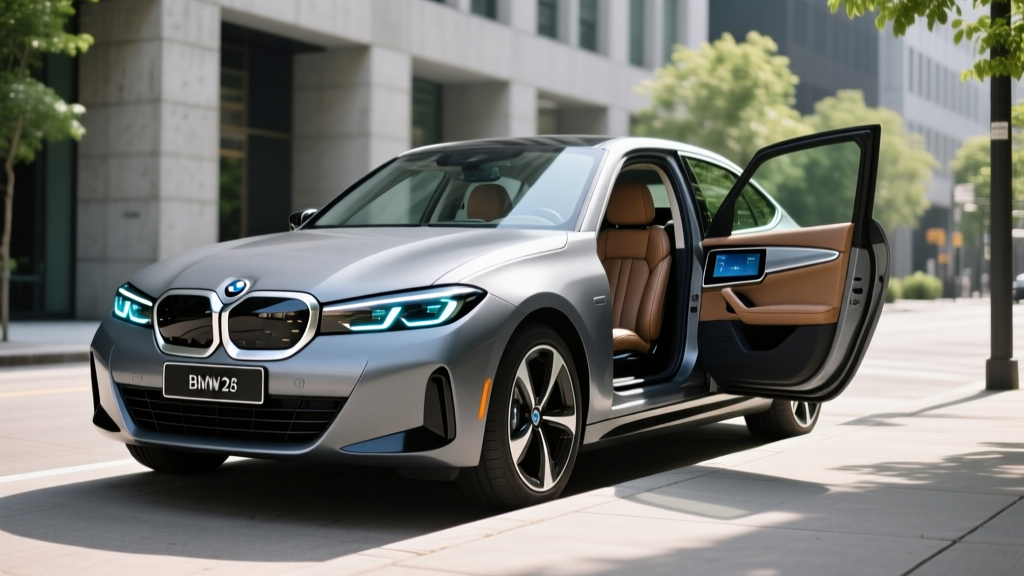
Highway-capable two-seaters — vehicles like the Smart #1 (in two-seat cargo variants) or converted roadsters — meet full FMVSS safety standards, carry standard license plates, and can travel at interstate speeds. These typically offer 150+ miles of EPA range and DC fast-charging capability.
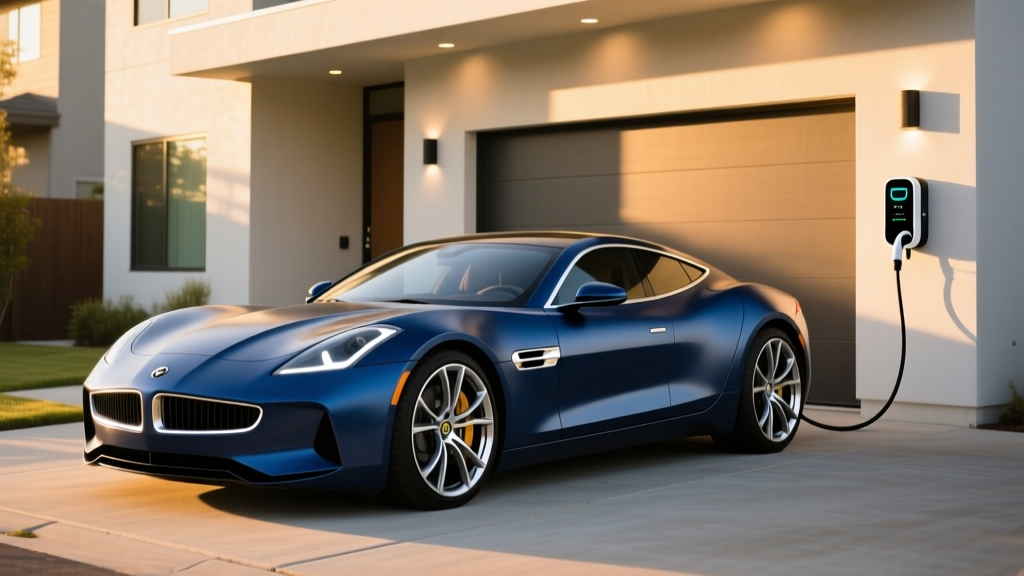
Neighborhood Electric Vehicles (NEVs) / low-speed vehicles — like the Fiat Topolino or Citroën Ami — are federally limited to 25 mph, cannot legally travel on roads with speed limits above 35 mph, and carry minimal crash protection. They're best understood as weather-protected electric scooters, not car replacements.
Micro-cars (EU L7e class) — the Microlino and similar vehicles sit between NEVs and full cars. In the U.S., their legal status varies by state. Some can be registered as full passenger vehicles; others are restricted. Always check your state DMV before purchasing.
2026 Two Seat Electric Car Spec Comparison
| Spec | Microlino Lite | Fiat Topolino | Smart #1 Brabus | Ryvid R180 (Announced) |
|---|---|---|---|---|
| Body Style | 3-door micro-car | 2-door quadricycle | 5-door subcompact SUV (2-seat cargo variant available in EU) | 2-seat roadster |
| EPA Range | ~115 mi (est.) | ~47 mi | 285 mi | ~250 mi (preliminary) |
| Battery (kWh) | 10.5 kWh (LFP) | 5.4 kWh (LFP) | 66 kWh (NMC) | ~60 kWh (NMC, prelim.) |
| Horsepower | 17 hp | 8 hp | 422 hp | ~400 hp (prelim.) |
| 0-60 mph | N/A (top speed ~56 mph) | N/A (top speed ~28 mph) | 4.3 sec | ~3.5 sec (prelim.) |
| Max DC Charge (kW) | None (AC only) | None (AC only) | 150 kW | ~175 kW (prelim.) |
| 10-80% DC Charge | N/A | N/A | ~28 min | ~25 min (prelim.) |
| Level 2 AC Charge (kW) | 3.3 kW | 2.3 kW | 22 kW | ~11 kW (prelim.) |
| Base MSRP | ~$18,500 | ~$11,200 | ~$52,000 | ~$45,000 (prelim.) |
| Federal Tax Credit | Not eligible | Not eligible | Partial (up to $3,750 — verify sourcing) | TBD (announced) |
| Battery Warranty | 8 yr / 62,000 mi | 8 yr / 50,000 mi | 8 yr / 100,000 mi | TBD |
Sources: Manufacturer spec sheets; fueleconomy.gov for EPA data where available. Smart #1 Brabus U.S. availability is limited — verify with local dealers. Ryvid R180 specs are preliminary and subject to change.
Real-World Range vs. EPA Sticker
Microlino Lite: EPA-est. ~115 mi. Real-world city driving: 90-105 mi. Highway speeds (if legal in your state) will drop this to 60-75 mi due to extreme aerodynamic drag at speed.
Smart #1 Brabus: EPA 285 mi. Real-world highway (70 mph): ~230-250 mi. Cold weather (below 30°F): expect 190-215 mi without preconditioning. The heat pump (standard on Brabus) recovers ~10-15% of cold-weather range compared to resistive heating.
EV vs. Gas: What Does a Two-Seater Actually Cost to Run?
The economic case for a two-seat electric car hinges on how you charge it. If you have access to Level 1 or Level 2 home charging, the savings over a gas equivalent are substantial. If you rely entirely on public DC fast charging, the advantage narrows considerably.
| Cost Factor | Smart #1 Brabus (EV) | Mazda MX-5 Miata (Gas Baseline) |
|---|---|---|
| Base MSRP | $52,000 | $30,170 |
| Fuel/Energy Cost per Mile | $0.04 (home L2, $0.13/kWh avg.) / $0.12 (public DCFC, $0.38/kWh avg.) | $0.14 (26 MPG combined, $3.50/gal) |
| Annual Fuel/Energy (12,000 mi) | $480 (home) / $1,440 (public) | $1,680 |
| Annual Maintenance | ~$300 (tire rotation, cabin filter, fluid top-off) | ~$650 (oil changes, filters, spark plugs, brake pads) |
| Insurance (avg. annual) | ~$1,800-$2,400 | ~$1,200-$1,600 |
| 5-Year Total Fuel + Maint. | $3,900 (home) / $8,700 (public) | $11,650 |
| Estimated 5-Year Depreciation | ~45-55% ($23,400-$28,600) | ~30-35% ($9,050-$10,560) |
Fuel costs based on U.S. average electricity rate of $0.13/kWh (residential) and $0.38/kWh (public DCFC) per EIA data. Gas at $3.50/gal national average. Insurance figures from aggregated 2025-2026 quotes — your rate varies by ZIP code, driving record, and coverage level.
The takeaway: The Smart #1 Brabus costs roughly $22,000 more upfront than a Miata. Even with 5 years of home-charging fuel savings (~$7,750), you don't break even on purchase price alone. The two-seat EV makes financial sense if: (a) you value the tech and driving experience, (b) you have access to cheap home charging, or (c) your state/local incentives bridge the gap. It does not make sense as a pure cost-saving play against an efficient gas sports car.
Real-World Ownership: What First-Time Two Seat EV Buyers Get Wrong
Misconception #1: "A small battery means fast charging"
Not necessarily. The Microlino's 10.5 kWh battery charges at only 3.3 kW on AC — meaning a full charge takes about 3.5 hours. That's fine for overnight charging but impractical for mid-day top-ups. Small batteries often lack DC fast-charging hardware entirely, which limits their utility on longer trips.
Misconception #2: "It's tiny, so it must be cheap to insure"
EV insurance premiums are driven by repair costs, parts availability, and battery replacement risk — not vehicle size. Two-seat EVs from low-volume manufacturers (Microlino, Ryvid) often carry higher premiums than mainstream EVs because body panels and battery modules are harder to source. Always get an insurance quote before committing.
Misconception #3: "I don't need home charging for a short-range EV"
If you're buying a 47-mile-range Fiat Topolino and don't have home or workplace charging, you'll be hunting for public chargers daily — and public Level 2 chargers are unreliable, often occupied, or broken. A 2025 J.D. Power study found that 20% of public Level 2 chargers were non-functional at the time of visit. For any EV with under 100 miles of range, home charging isn't optional — it's essential.
Misconception #4: "Federal tax credits make these affordable"
Under current IRS §30D rules, the federal clean vehicle credit requires: (a) final assembly in North America, (b) battery component and critical mineral sourcing thresholds that tighten annually, (c) MSRP caps ($80,000 for SUVs/vans/pickups, $55,000 for sedans), and (d) buyer income caps ($150K single, $300K joint). Most two-seat EVs sold in the U.S. are assembled overseas and fail the sourcing requirements. Always verify eligibility on the IRS website or with a tax professional before relying on the credit.
| Myth | Fact |
|---|---|
| Small EV batteries charge quickly at public stations | Most micro-EVs lack DC fast charging entirely; they're limited to 2-4 kW AC |
| Two-seat EVs are cheap to insure | Low-volume EV body/battery parts drive premiums up; always quote before buying |
| Public charging is fine for a short-range EV | 20% of public L2 chargers are non-functional; home charging is essential for sub-100-mi range |
| Every EV gets the $7,500 federal credit | §30D requires North American assembly, battery sourcing, MSRP caps, and income limits — most micro-EVs don't qualify |
Home Charging Setup for a Two Seat Electric Car
Charging infrastructure is where two-seat EV ownership lives or dies. Here's what you actually need:
Level 1 (120V outlet): Sufficient for micro-EVs. The Microlino at 3.3 kW would take ~3.5 hours on Level 1 — but most 120V circuits deliver only 1.4 kW (12A continuous), extending that to ~7.5 hours. Fine for overnight, inadequate for same-day reuse.
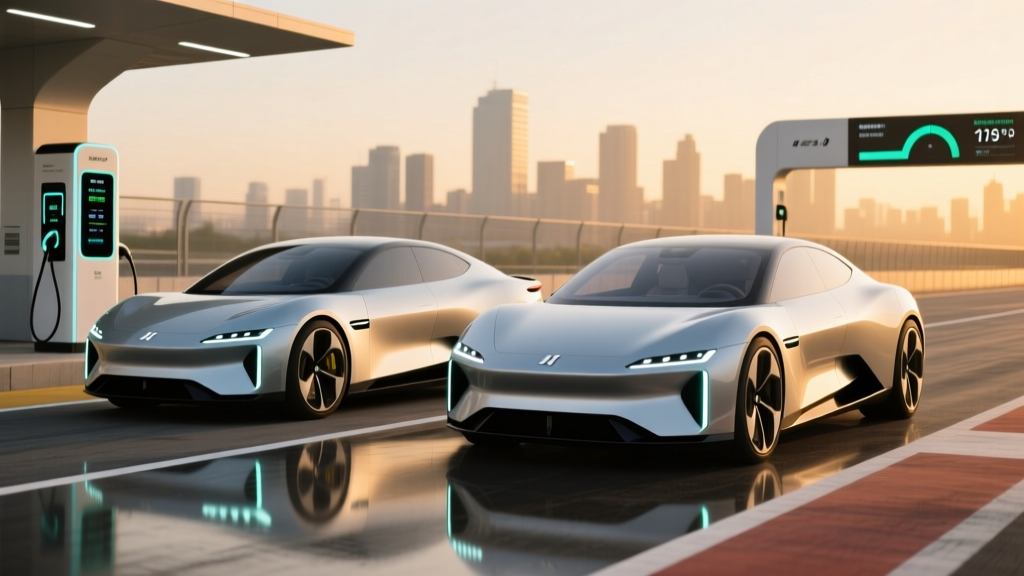
Level 2 (240V, dedicated circuit): The minimum viable setup for the Smart #1 Brabus. Its 22 kW onboard charger can accept up to 22 kW, but most home Level 2 stations deliver 7.7-11.5 kW (32-48A). At 11.5 kW, a full charge takes ~6 hours. Installation costs vary widely:
| Item | Typical Cost Range |
|---|---|
| Level 2 charger (hardware) | $300-$700 (ChargePoint Home Flex, Emporia Vue, Tesla Wall Connector) |
| Electrical panel upgrade (if needed, 100A→200A) | $1,500-$3,500 |
| Wiring & conduit run (50 ft avg.) | $500-$1,500 |
| Electrician labor | $500-$2,000 |
| Permit & inspection | $100-$400 |
| Total (no panel upgrade) | $1,400-$4,600 |
| Total (with panel upgrade) | $2,900-$8,100 |
Always hire a licensed electrician and pull permits. Electrical work without permits can void home insurance claims. Final costs depend on your panel capacity, wire run distance, and local labor rates.
Decision Framework: Should You Buy a Two Seat Electric Car?
Buy a two-seat electric car IF:
- You have home or workplace Level 2 charging — this is non-negotiable for sub-150-mile range vehicles.
- Your daily commute is under 60 miles round-trip — and you don't regularly need to carry more than one passenger or large cargo.
- You live in a mild climate — cold weather (below 30°F) reduces range by 20-40%, and micro-EVs with small batteries feel this acutely. A 115-mile Microlino becomes a 70-mile car in a Minnesota winter.
- You already own a larger vehicle for road trips, hauling, and passenger duty. A two-seat EV works best as a second car for commuting and errands.
- You value low running costs over upfront price — the per-mile energy cost is 3-4x cheaper than gas, but the purchase price premium takes years to recoup.
Skip the two-seat EV and consider instead IF:
- You lack home charging — public charging for a sub-100-mile EV is a daily burden, not a convenience.
- You need one car to do everything — road trips, family hauling, winter driving. Look at a 4-seat EV (Chevy Equinox EV, Hyundai Ioniq 5) or a PHEV (Toyota RAV4 Prime) instead.
- You live in a region with extreme cold — LFP batteries (used in most micro-EVs) lose more range in cold than NMC chemistry, and small battery packs have less thermal mass to manage.
- You're buying purely for cost savings — the upfront premium of most two-seat EVs over gas equivalents (Miata, Fiat 500) means a 7-10 year payback period on fuel savings alone.
Frequently Asked Questions
Are there any fully electric two-seat cars available in the U.S. in 2026?
Yes, but options are limited. The Microlino (imported through select dealers), Fiat Topolino (classified as a low-speed vehicle in most states), and the Smart #1 (in specific configurations) are the primary options. The Ryvid R180 roadster has been announced but is not yet in production. The used market offers more variety — including the Smart EQ ForTwo (discontinued after 2024 model year, available used from ~$15,000-$22,000).
How much does it cost to charge a two-seat EV at home vs. gas?
At the U.S. average residential electricity rate of $0.13/kWh, fully charging the Microlino's 10.5 kWh battery costs about $1.37 — yielding roughly $0.012 per mile. A gas car getting 30 MPG at $3.50/gallon costs $0.117 per mile. That's roughly a 10x per-mile cost advantage for the EV when charging at home. Public DC fast charging at $0.38/kWh narrows the gap to about 3x.
Do two-seat electric cars qualify for the federal tax credit?
Most do not. Under current IRS §30D rules, vehicles must meet North American assembly requirements, battery sourcing thresholds, MSRP caps, and buyer income limits. The Microlino is assembled in Italy; the Fiat Topolino in Morocco. Always check the IRS qualified vehicle list and consult a tax professional before assuming credit eligibility.
Is a neighborhood electric vehicle (NEV) the same as a two-seat electric car?
No. NEVs like the Fiat Topolino or Citroën Ami are federally limited to 25 mph and cannot legally operate on roads with speed limits above 35 mph. They lack airbags, crash structures, and highway safety equipment. They're suitable for planned communities, campus environments, and low-speed urban errands — not as primary transportation on arterial roads.
What happens to a two-seat EV battery after 8-10 years?
LFP batteries (used in the Microlino and Topolino) typically retain 80-90% of original capacity after 2,000+ charge cycles — roughly 10-15 years of daily use. NMC batteries (Smart #1) retain ~80% after 1,000-1,500 cycles. All vehicles listed carry 8-year battery warranties with a minimum 70% capacity retention threshold. Replacement costs vary: the Microlino's 10.5 kWh pack would cost roughly $2,500-$4,000 to replace, while the Smart #1's 66 kWh pack could cost $12,000-$18,000 out of warranty.
Can I take a two-seat EV on a road trip?
The Smart #1 Brabus, with 285 miles of EPA range and 150 kW DC fast charging (10-80% in ~28 minutes), is road-trip capable on major corridors with Electrify America or Tesla Supercharger access (via NACS adapter). The Microlino and Topolino are not — their lack of DC fast charging and sub-120-mile range make them strictly local vehicles. Plan routes around charging availability and expect real-world highway range to be 15-25% below EPA estimates.