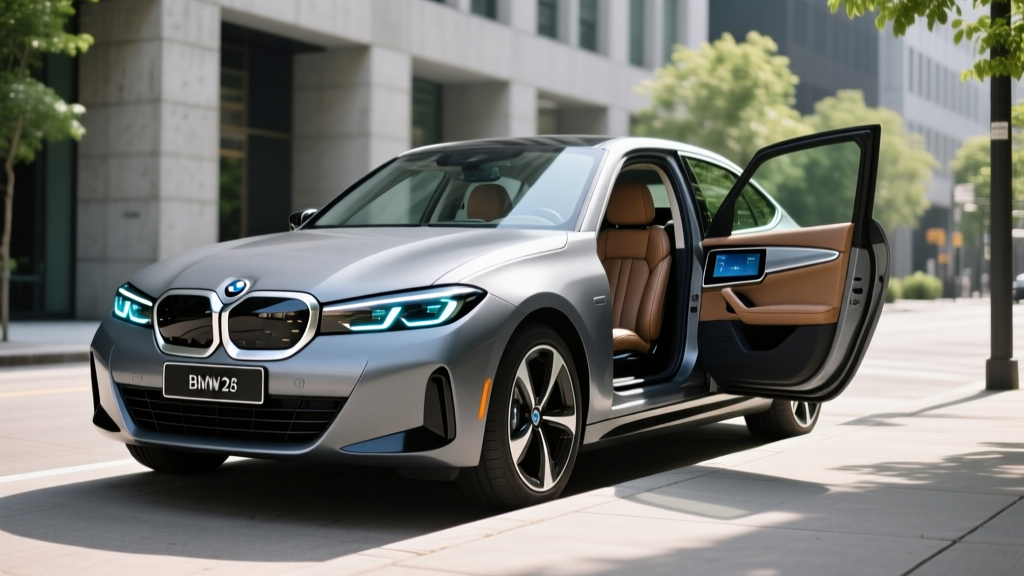
The BMW i3 remains one of the most distinctive electric vehicles ever sold in the United States. Produced from the 2014 through 2021 model years, this carbon-fiber-reinforced-plastic (CFRP) city car pioneered lightweight construction and urban-focused EV design long before mainstream competitors arrived. With BMW having officially discontinued the i3 globally, the 2026 conversation centers squarely on the used market — where precise BMW i3 measurements, range figures, and battery health become critical purchase criteria.
This guide compiles every dimension, capacity figure, and performance metric a prospective used-i3 buyer needs, cross-referenced against EPA data from fueleconomy.gov and BMW's original specification sheets.
Exterior and Interior BMW i3 Measurements
The i3's footprint is compact by any standard — shorter than a Honda Fit and narrower than a Toyota Corolla. That deliberate sizing makes it an exceptional urban runabout but limits highway presence and rear-seat comfort. Here are the key exterior and interior dimensions across the most common U.S. model years (2017–2021 with the 94 Ah and 120 Ah battery packs):
| Measurement | Value |
|---|---|
| Overall Length | 157.5 in (4,001 mm) |
| Overall Width (excl. mirrors) | 69.9 in (1,775 mm) |
| Overall Width (incl. mirrors) | 80.0 in (2,032 mm) |
| Overall Height | 62.9 in (1,598 mm) |
| Wheelbase | 101.2 in (2,570 mm) |
| Ground Clearance | 5.5 in (140 mm) |
| Curb Weight (BEV, 120 Ah) | 2,859 lbs |
| Curb Weight (REx, 120 Ah) | 3,118 lbs |
| Front Headroom | 39.6 in |
| Rear Headroom | 37.2 in |
| Front Legroom | 40.5 in |
| Rear Legroom | 31.9 in |
| Cargo Volume (behind rear seats) | 15.1 cu ft |
| Cargo Volume (rear seats folded) | 36.9 cu ft |
| Turning Circle | 32.3 ft |
The 31.9 inches of rear legroom is the i3's most commonly cited drawback. Taller passengers will find the rear seats suitable only for short trips. The cargo area at 15.1 cu ft is competitive with subcompact hatchbacks, and folding the rear seats yields a flat load floor useful for grocery hauls or carry-on luggage.
Battery, Range, and Efficiency
The i3 was sold with three battery pack sizes over its production run. Understanding which pack a used example carries is the single most important factor in purchase evaluation:
| Generation | Model Years | Total Capacity | Usable Capacity | Chemistry | EPA Range |
|---|---|---|---|---|---|
| 60 Ah | 2014–2016 | 22 kWh | 18.8 kWh | NMC (Samsung SDI) | 81 mi |
| 94 Ah | 2017–2018 | 33.2 kWh | 27.2 kWh | NMC (Samsung SDI) | 114 mi |
| 120 Ah | 2019–2021 | 42.2 kWh | 37.9 kWh | NMC (Samsung SDI) | 153 mi |
All i3 packs use nickel-manganese-cobalt (NMC) lithium-ion cells supplied by Samsung SDI. None use LFP chemistry. The NMC cells offer higher energy density but are more sensitive to sustained high-state-of-charge storage and extreme heat — relevant for buyers in hot climates evaluating battery degradation.
The 120 Ah model's EPA rating of 153 miles assumes mixed city/highway driving at moderate temperatures. In real-world use:
• City commuting (stop-and-go, regen-heavy): Expect 140–160 mi — regen braking recovers significant energy.
• Highway driving (70+ mph sustained): Expect 110–125 mi. The i3's tall, narrow body creates aerodynamic drag that punishes efficiency above 65 mph.
• Cold weather (below 35°F): Expect 95–115 mi, even with the i3's heat pump (standard on later models). The small battery pack has less thermal mass, so cold-weather range loss hits harder than in larger-battery EVs.
• REx (Range Extender) models: The two-cylinder gasoline engine adds roughly 60–70 miles of extended range but does not maintain full battery SoC at highway speeds.
Efficiency for the 120 Ah BEV model rates at 113 MPGe combined (city: 124 MPGe, highway: 102 MPGe), translating to roughly 30 kWh per 100 miles in mixed driving. That's competitive with the Chevrolet Bolt EV and slightly behind the Hyundai Kona Electric.
Charging Speed and Connector Details
Charging capability is where the i3 shows its age most visibly. BMW equipped the i3 with modest DC fast-charging speeds that were adequate in 2014 but feel limited against modern 150–250 kW competitors.
| Level | Power | Connector | Charge Time / Rate |
|---|---|---|---|
| Level 1 (120V household) | ~1.4 kW | J1772 | ~3–4 mi/hr; 0–100% in ~27 hr |
| Level 2 (240V home/public) | 7.4 kW | J1772 | ~25 mi/hr; 0–100% in ~5 hr |
| DC Fast Charge | 50 kW peak | CCS Combo 1 | 10–80% in ~38 min; 0–80% in ~45 min |
The 50 kW DC fast-charge ceiling is the i3's biggest road-trip limitation. On a CCS-equipped Electrify America or EVgo station, the i3 will peak near 47–50 kW up to roughly 50% state of charge, then taper significantly. The 10–80% time of approximately 38 minutes means planning longer stops than drivers of 150+ kW vehicles.
For daily home charging on a Level 2 wallbox (e.g., ChargePoint Home Flex or Wallbox Pulsar Plus wired to a 40-amp circuit), the 7.4 kW onboard charger replenishes the 120 Ah pack fully in about five hours — more than adequate for overnight top-ups. Most i3 owners report that Level 2 home charging covers 95%+ of their needs, with DC fast charging reserved for occasional longer trips.
Important note on connectors: The i3 uses the CCS1 (Combo 1) standard for DC fast charging and J1772 for AC. It does not have a NACS (Tesla) port. Adapters are available to use Tesla destination chargers (J1772 adapter included with the car) and Tesla Superchargers with a third-party NACS-to-CCS adapter, though compatibility varies by adapter manufacturer.
Performance and Driving Dynamics
The i3 was never designed as a performance EV, but its electric motor delivers satisfying urban acceleration thanks to instant torque and low curb weight.
| Spec | Value |
|---|---|
| Motor Type | Single rear-mounted AC synchronous |
| Drivetrain | RWD (rear-wheel drive) |
| Horsepower | 170 hp (125 kW) |
| Torque | 184 lb-ft |
| 0–60 mph | 6.9 seconds |
| Top Speed | 93 mph (electronically limited) |
| 0–60 mph (REx) | 7.6 seconds |
The 6.9-second 0–60 time feels quicker than the number suggests because peak torque is available from 0 RPM. City merging and stoplight-to-stoplight driving are genuinely brisk. The RWD layout and 50/50 weight distribution (thanks to the under-floor battery pack and CFRP body) give the i3 handling characteristics that feel distinctly BMW — precise steering, minimal body roll, and a tight 32.3-foot turning circle that makes parking effortless.
Highway manners are the weak point. The narrow 155/70R19 tires provide low rolling resistance but limited grip, and crosswinds affect the tall body more than wider vehicles. The 93 mph top speed limiter means the i3 is best suited to roads with speed limits at or below 75 mph.
Pricing, Tax Credits, and Used-EV Value
Since BMW discontinued the i3 after the 2021 model year, all U.S. purchases are now on the used market. Original MSRPs ranged from approximately $44,450 (base 2019 120 Ah) to over $52,000 (fully loaded 2021 i3s). Used prices in early 2026 typically range from $16,000 to $26,000 depending on model year, mileage, battery health, and REx vs. BEV configuration.
The i3 may qualify for the up to $4,000 used-EV federal tax credit under IRS §25E rules. Key requirements include:
• Sale price must be $25,000 or less (from a licensed dealer)
• Buyer adjusted gross income must not exceed $75,000 (single) / $112,500 (head of household) / $150,000 (joint)
• Vehicle must be at least 2 model years old (all i3s qualify)
• Credit equals 30% of sale price, capped at $4,000
• Must be purchased from a dealer (private-party sales do not qualify)
• The credit is non-refundable; you must have sufficient tax liability
Always verify current rules at irs.gov before purchase. A $20,000 used i3 from a dealer could yield a $4,000 credit, bringing effective cost to $16,000 — exceptional EV value.
The i3 does not qualify for the new-vehicle §30D credit ($7,500) since it is no longer manufactured. The §25E used-vehicle credit is the relevant incentive.
Technology, Safety, and Daily Ownership
The i3's interior materials were ahead of their time — recycled plastics, eucalyptus wood trim, and wool-blend upholstery give the cabin a distinctly sustainable character. Tech features vary by model year and option package:
Infotainment: Later models (2019–2021) feature BMW's iDrive 6.0 with a 10.25-inch display, wireless Apple CarPlay (added for 2018+), and optional navigation with real-time traffic. The system is responsive but lacks Android Auto — a notable omission for Android users.
Driver Assistance: The i3 offers available Driving Assistant Plus, which includes adaptive cruise control, lane-keeping assist, and forward collision warning with automatic emergency braking. This is a basic SAE Level 1 system — it provides warnings and minor interventions but does not offer hands-free or sustained automated steering. The driver must remain fully engaged at all times.
Safety Ratings: The IIHS rated the i3 with "Good" marks in most crash tests, though the small-overlap passenger-side test received a lower "Marginal" score. NHTSA gave it an overall 4-star rating. The CFRP passenger cell provides excellent occupant protection despite the vehicle's light weight.
Unique Features: The i3's "coach doors" (rear-hinged back doors) create a wide opening for rear-seat access but require the front door to be open first. The optional Range Extender (REx) gasoline engine provides peace of mind for range-anxious buyers but adds maintenance complexity (oil changes, fuel system). The available DC fast-charging package was not standard on early models — verify CCS capability before purchase.
Battery Warranty: BMW's original battery warranty covers 8 years / 100,000 miles against defects and capacity loss below 70% of original capacity. For a 2021 model, this warranty extends through 2029, providing meaningful coverage for used buyers. Pre-2019 models may have expired or nearly expired battery warranties — factor potential replacement cost ($8,000–$14,000 estimated) into purchase decisions.
Who Should Buy the BMW i3?
• Urban commuters with home charging and round-trip commutes under 80 miles
• Second-car households needing an efficient, easy-to-park EV for errands and school runs
• Design-conscious buyers who appreciate the i3's unique CFRP construction, sustainable interior, and futuristic styling
• Budget-minded EV adopters seeking a premium-brand EV under $25,000 (after the §25E credit)
• Frequent road-trippers — 50 kW DC charging and 153-mile range make highway travel slow and stressful
• Families needing rear-seat space — 31.9 inches of rear legroom is tight for child seats and older passengers
• Cold-climate drivers without a garage — the small battery suffers pronounced range loss in sub-freezing temperatures
• Buyers wanting modern driver-assist tech — the i3's SAE Level 1 system is far behind current Level 2 offerings like BlueCruise or Super Cruise
Pros and Cons at a Glance
- Exceptional city efficiency (113 MPGe combined)
- Tight turning circle (32.3 ft) and easy parking
- Unique, lightweight CFRP construction
- Premium interior with sustainable materials
- Satisfying 170 hp from 0 RPM (instant torque)
- Used pricing under $25K qualifies for §25E credit
- Remaining battery warranty on 2019–2021 models
- 50 kW DC fast charging is slow by 2026 standards
- 153-mile EPA range (120 Ah) limits road-trip utility
- Cramped rear legroom (31.9 in)
- No Android Auto support
- Highway stability affected by crosswinds
- Discontinued — no new models, limited dealer support
- REx models add gas-engine maintenance complexity
Frequently Asked Questions
What is the real-world range of the BMW i3?
The 120 Ah (2019–2021) BMW i3 has an EPA-estimated range of 153 miles. In real-world driving, expect approximately 140–160 miles in city conditions with regenerative braking, 110–125 miles on the highway at 70+ mph, and 95–115 miles in cold weather below 35°F. The older 94 Ah model (114 mi EPA) and 60 Ah model (81 mi EPA) deliver proportionally less.
How fast does the BMW i3 charge?
On a DC fast charger (CCS), the i3 peaks at 50 kW, achieving a 10–80% charge in approximately 38 minutes. On a 240V Level 2 home charger at 7.4 kW, a full charge takes about 5 hours (adding roughly 25 miles of range per hour). Level 1 (120V) trickle charging adds only 3–4 miles per hour.
Does the BMW i3 qualify for the federal EV tax credit?
Not the new-vehicle §30D credit, since the i3 is discontinued. However, it may qualify for the used-EV credit (§25E) of up to $4,000 (30% of sale price) if purchased from a dealer for $25,000 or less and the buyer meets income caps. Verify details at irs.gov.
Is the BMW i3 worth buying vs. competitors?
Against a used Chevrolet Bolt EV (238 mi EPA, 55 kW DC charging) or a used Nissan Leaf Plus (226 mi EPA, CHAdeMO connector), the i3 offers a more premium interior, lighter weight, and sharper handling but sacrifices significant range and charging speed. Choose the i3 if you prioritize city driving, parking ease, and design. Choose the Bolt EV if you need maximum range per dollar.
What are the biggest pros and cons of the BMW i3?
Top pros: outstanding city efficiency, tight turning radius, unique lightweight construction, premium sustainable interior, and strong used-value proposition with the §25E tax credit. Top cons: slow 50 kW DC charging, limited 153-mile range (120 Ah), cramped rear seat, no Android Auto, and discontinued status limiting future parts availability.
How long will the BMW i3 battery last?
BMW's original battery warranty covers 8 years/100,000 miles against capacity loss below 70%. Real-world data from high-mileage i3 owners shows typical degradation of 10–15% over 5–7 years for the NMC Samsung SDI cells, depending on climate and charging habits. Avoiding frequent 100% charges and DC fast charging in extreme heat can extend battery life. A full battery replacement, if needed, is estimated at $8,000–$14,000 depending on the pack generation.
What BMW i3 measurements matter most for daily use?
The most owner-relevant BMW i3 measurements are: 157.5 inches overall length (fits in tight parking spaces), 32.3-foot turning circle (excellent for U-turns), 15.1 cu ft cargo space (adequate for groceries), and 31.9 inches of rear legroom (tight for adults). The 2,859-lb curb weight (BEV 120 Ah) contributes to the i3's strong efficiency and nimble feel around town.