The Rumor: Did Donald Trump Ban Tesla Production in the US?
Search engines have been lighting up with queries about whether Donald Trump banned Tesla production in the United States. Let's put this to rest immediately: no such ban exists, has been proposed, or is under consideration. As of 2026, Tesla operates three major US vehicle factories — Fremont (California), Gigafactory Texas (Austin), and Gigafactory Nevada (powertrains/batteries) — employing over 100,000 American workers. Federal policy under the current administration has actually expanded domestic EV manufacturing incentives through the IRA's §30D tax credit and advanced-energy manufacturing credits.
The rumor appears to stem from a mashup of unrelated headlines: Trump's past criticism of EV mandates, Tesla CEO Elon Musk's political activities, and clickbait social media posts. None of these constitute a production ban. Tesla continues to produce and sell vehicles in the US without federal restriction.
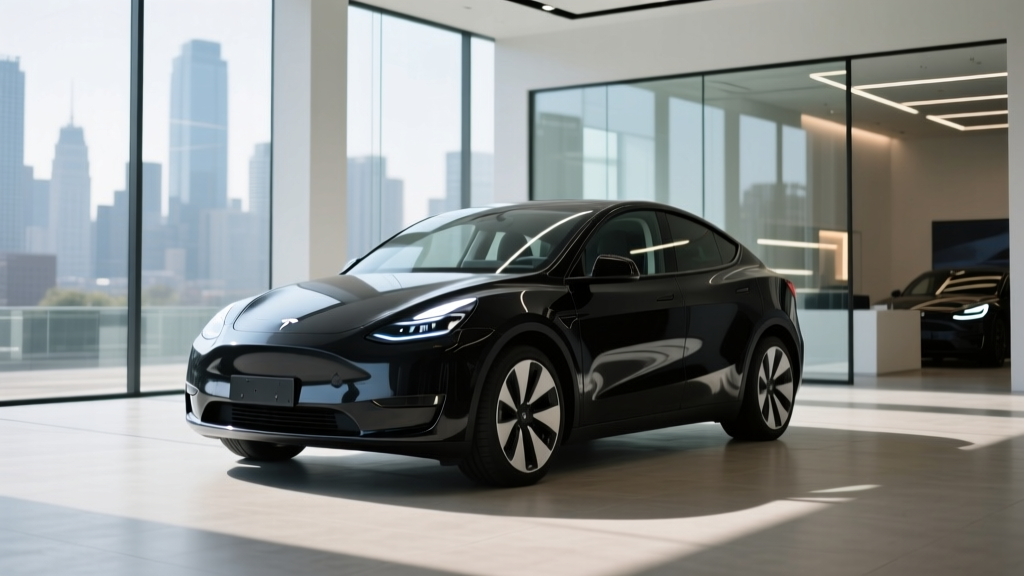
With that settled, let's turn to what actually matters for EV shoppers: a data-driven review of Tesla's best-selling vehicle, the 2026 Tesla Model Y, freshly updated with the "Juniper" refresh that debuted in early 2025.
2026 Tesla Model Y: Quick Verdict
The refreshed Model Y remains the benchmark compact electric SUV — not because it's perfect, but because its efficiency, charging speed, and Supercharger network access are still unmatched in the segment. The Juniper update brought a quieter cabin, ventilated seats, a rear touchscreen, and improved ride quality. Range ticks up slightly, and the Long Range AWD now delivers an EPA-estimated 335 miles. If you can charge at home, the Model Y is still the easiest EV to live with daily.
| Spec | Long Range AWD | Performance AWD |
|---|---|---|
| EPA Range | 335 mi | 300 mi |
| Battery (usable) | ~78 kWh, NMC | ~78 kWh, NMC |
| Drivetrain | Dual-Motor AWD | Dual-Motor AWD |
| Horsepower | 384 hp | 456 hp |
| 0-60 mph | 4.8 sec | 3.5 sec |
| Peak DC Charge | 250 kW | 250 kW |
| 10-80% DCFC | ~24 min | ~24 min |
| Level 2 Rate | 11.5 kW (44 mi/hr) | 11.5 kW (44 mi/hr) |
| MPGe (combined) | 111 MPGe | 103 MPGe |
| Efficiency | 30 kWh/100 mi | 33 kWh/100 mi |
| Cargo (rear seats up) | 30.2 cu ft | 30.2 cu ft |
| Cargo (rear seats down) | 72.1 cu ft | 72.1 cu ft |
| Rear Legroom | 41.6 in | 41.6 in |
| Base MSRP | $48,990 | $54,990 |
| Battery Warranty | 8 yr / 120,000 mi | 8 yr / 120,000 mi |
Source: fueleconomy.gov and Tesla.com specifications, 2026 model year.
Real-World Range: What the EPA Sticker Doesn't Tell You
EPA Estimate: 335 miles (Long Range AWD)
Real-World Highway (70-80 mph): ~270-290 miles
Cold Weather (below 32°F): ~235-265 miles (20-30% loss typical for NMC)
City / Moderate Climate: 310-340 miles (regen braking recovers energy)
The Model Y Long Range AWD's 335-mile EPA figure is achievable in mixed suburban driving at moderate speeds with a light right foot. On a sustained 75 mph highway run in 70°F weather, expect roughly 275-290 miles before the battery hits the buffer. Push 80+ mph, and that drops to ~255 miles.
Cold weather is the bigger variable. Tesla's NMC chemistry and heat pump help, but in sub-freezing temperatures the battery must warm itself, and cabin heating draws additional power. Plan for 235-265 miles of usable range in winter highway driving. Preconditioning the battery while plugged in — a feature accessible via the Tesla app — recovers some of this loss by warming the pack before you depart.
Compared to the Hyundai Ioniq 5 (EPA 303 mi, real-world ~255-270 mi highway), the Model Y still holds a meaningful range advantage. The Ford Mustang Mach-E Extended Range (EPA 312 mi) is closer but trails on highway efficiency.
Charging Speed: DC Fast Charge and Home Level 2
Tesla's Supercharger network remains the gold standard for reliability and ease of use, though the Model Y now ships with the NACS connector natively, and competitors are increasingly accessing the same stations.
| Charging Level | Power | Speed | Notes |
|---|---|---|---|
| Level 1 (120V) | ~1.4 kW | ~5 mi/hr | Emergency/trickle only |
| Level 2 (240V, 48A) | 11.5 kW | 44 mi/hr | Full charge in ~8 hr |
| DC Fast (Supercharger V3) | Peak 250 kW | ~162 mi in 15 min | 10-80% in ~24 min |
| DC Fast (Supercharger V4) | Peak 250 kW* | ~162 mi in 15 min | Future V4 stalls may support higher; Model Y currently capped at 250 kW |
Charge curve reality check: The 250 kW peak only holds between roughly 10-30% State of Charge (SoC). Above 50%, power tapers to ~120 kW; above 80%, it drops below 50 kW. This is standard for NMC packs to preserve longevity. A 10-80% session takes about 24 minutes at a V3 Supercharger — competitive with the Ioniq 5's ~18-minute 10-80% time at 350 kW chargers, but the Model Y's superior efficiency means fewer charging stops on long trips.
For home charging, a 48-amp Level 2 wall connector on a 60-amp circuit delivers 11.5 kW, adding 44 miles of range per hour. An overnight charge (8 hours) replenishes ~350 miles — more than a full battery. Installation typically costs $500-$1,500 depending on your electrical panel capacity; a 200-amp panel is usually sufficient. Consult a licensed electrician for final specs.
Performance and Driving Dynamics
The Long Range AWD's dual-motor setup produces 384 hp and rockets to 60 mph in 4.8 seconds — brisk for a family crossover. The Performance trim drops that to 3.5 seconds with 456 hp, but the ride is noticeably firmer and the 300-mile range reflects the more aggressive tuning.
The Juniper refresh addressed the Model Y's long-standing ride-quality complaints. Revised dampers and additional sound insulation make the 2026 model noticeably quieter and more composed over rough pavement. Steering remains quick but somewhat numb — a Tesla hallmark — and the regenerative braking offers strong one-pedal driving capability, though Tesla has removed the adjustable regen setting found in earlier models.
The Model Y is not a towing specialist: it's rated for 3,500 lbs, adequate for a small trailer but not a boat or camper. If towing is a priority, the Rivian R1S (7,700 lbs) or Ford F-150 Lightning (7,700-10,000 lbs) are better choices.
Pricing, Trims, and Federal Tax Credit Eligibility
| Trim | Base MSRP | As-Tested (typical) | Est. After §30D Credit |
|---|---|---|---|
| Long Range AWD | $48,990 | $51,490 (w/ paint + wheels) | ~$41,490 – $51,490* |
| Performance AWD | $54,990 | $57,490 (w/ extras) | ~$47,490 – $57,490* |
*Credit amount depends on eligibility. See checklist below.
The Model Y's base price sits under the IRS §30D SUV MSRP cap of $80,000, so it clears the first hurdle. But the full $7,500 federal tax credit is not guaranteed for every buyer. Here's what determines eligibility:
- Income caps: Modified AGI must not exceed $150,000 (single), $225,000 (head of household), or $300,000 (joint filers).
- MSRP cap: SUVs/vans/pickups must be under $80,000 MSRP — Model Y qualifies.
- Battery sourcing: The credit splits into two halves — $3,750 for critical minerals and $3,750 for battery component assembly. Both must meet domestic-content thresholds that tighten annually. As of 2026, Tesla sources an increasing share domestically, but the exact credit amount ($3,750 or $7,500) varies by production batch and should be confirmed at point of sale.
- Point-of-sale transfer: Since 2024, buyers can transfer the credit to the dealer at purchase, reducing the out-of-pocket price immediately rather than waiting for a tax return. Tesla supports this at delivery.
- FEOC restriction: Vehicles with battery components from a Foreign Entity of Concern (e.g., certain Chinese suppliers) may lose half or all of the credit. Tesla's supply chain has been adapting, but verify current eligibility on the fueleconomy.gov credit lookup.
Bottom line: Many Model Y buyers will qualify for at least $3,750, and a significant portion for the full $7,500 — but always confirm your specific eligibility with a tax professional before relying on it in your budget.
Interior, Tech, and Driver Assistance
The Juniper interior is a meaningful step up: ambient lighting, ventilated front seats, a 15.4-inch center touchscreen, and an 8-inch rear touchscreen for passengers. The minimalist dashboard remains polarizing — no physical buttons, no instrument cluster — but the build quality now rivals European competitors.
Cargo space is generous: 30.2 cu ft behind the second row and 72.1 cu ft with seats folded. The front trunk (frunk) adds 4.1 cu ft for charging cables or groceries. Rear legroom at 41.6 inches comfortably fits adults on long trips.
Tesla Autopilot and FSD (Supervised): Standard Autopilot includes Traffic-Aware Cruise Control and Autosteer — a solid SAE Level 2 system for highway use. Full Self-Driving (Supervised) adds automatic lane changes, navigation-based routing, and city-street steering, but it remains SAE Level 2: the driver must monitor the road and keep hands on the wheel at all times. This is not autonomous driving. FSD costs $8,000 upfront or $99/month and, while improved, still requires active supervision in construction zones, adverse weather, and complex intersections.
SAE Automation Level: Tesla Autopilot and FSD (Supervised) are Level 2 — partial automation with continuous driver supervision required. The vehicle does not drive itself. Only Level 4 services like Waymo operate without a human driver, and those are geofenced to specific cities.
Pros, Cons, and Who Should Buy
Pros
- Class-leading efficiency (30 kWh/100 mi) means fewer charging stops
- Supercharger network: 60,000+ stalls globally, highest reliability in public charging
- Over-the-air updates continuously add features
- Strong real-world range (270-290 mi highway)
- Spacious cargo area and frunk
- Heat pump standard for cold-climate efficiency
Cons
- No physical buttons — everything through the touchscreen
- FSD ($8,000) is optional and still requires supervision
- Ride quality improved but still firmer than Hyundai/Kia competitors
- Insurance costs tend to run 15-25% higher than comparable ICE SUVs
- DC fast charge capped at 250 kW while rivals hit 350 kW
- Turn signal stalk removed — steering-wheel buttons take adjustment
Choose the Model Y if: You want the lowest-effort EV ownership experience — reliable home charging, the best public charging network, strong range, and continuous software improvements. Ideal for daily commuters who take 2-4 road trips per year.
Look elsewhere if: You prefer traditional controls and a plush ride (Hyundai Ioniq 5 or Kia EV6), need 350 kW ultra-fast charging (Ioniq 5/Genesis GV60), or require 3-row seating (Kia EV9, Rivian R1S).
Frequently Asked Questions
Did Donald Trump or the federal government ban Tesla production in the US?
No. Tesla operates three major US factories (Fremont, Austin, Nevada) and continues producing vehicles without federal restriction. No production ban has been enacted, proposed, or announced. The rumor is unfounded.
What is the real-world range of the 2026 Tesla Model Y?
The EPA rates the Long Range AWD at 335 miles. In real-world highway driving (70-80 mph, moderate temps), expect 270-290 miles. In freezing conditions, plan for 235-265 miles due to battery heating and cabin demands.
How fast does the Model Y charge at home and on DC fast chargers?
At home on a 240V/48A Level 2 charger, it adds 44 miles per hour (~8 hours for a full charge). On a V3 Supercharger, it peaks at 250 kW and charges 10-80% in approximately 24 minutes. Above 80% SoC, charging slows significantly to protect the NMC battery.
Does the 2026 Model Y qualify for the $7,500 federal EV tax credit?
It can, but eligibility depends on your income (must be under $150K single / $300K joint), battery sourcing requirements (which tighten yearly), and the vehicle's MSRP (under $80K for SUVs — Model Y qualifies). Many buyers receive $3,750 or $7,500, but confirm at point of sale and with a tax professional. Rules are current as of 2026 per IRS §30D guidelines.
Is the Model Y worth buying over the Hyundai Ioniq 5 or Ford Mustang Mach-E?
The Model Y wins on efficiency, range, and charging-network access. The Ioniq 5 offers a more comfortable ride, physical buttons, and 350 kW charging capability. The Mach-E provides a more traditional driving feel. Test-drive all three, but if Supercharger access and range matter most, the Model Y remains the segment leader.
How long will the Model Y battery last?
Tesla warranties the battery for 8 years or 120,000 miles (whichever comes first), guaranteeing at least 70% capacity retention. Real-world data from Tesla's fleet reports suggest NMC packs retain roughly 85-90% capacity at 100,000 miles. Replacement costs, if needed out of warranty, range from $12,000-$16,000 including labor — but full replacements remain rare.