Quick Answer: What Does Mazda U.S. EV Testing Tell Buyers in 2026?
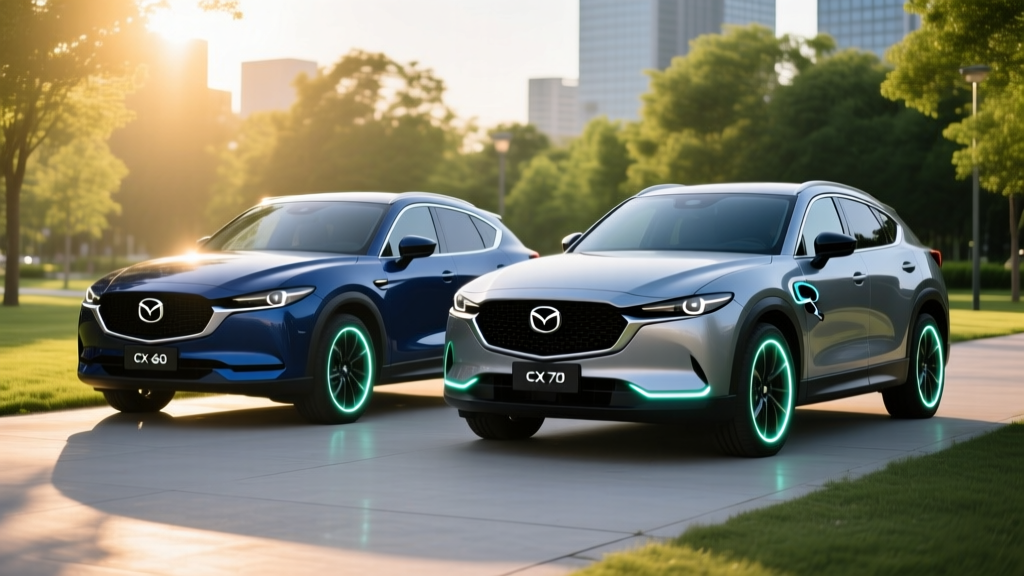
Mazda's U.S. EV testing program — spanning cold-weather validation in Minnesota, heat-soak runs in Death Valley, and real-world durability loops in Southern California — has produced two key electrified models for 2026: the CX-60e (compact electric SUV) and the CX-70 PHEV (midsize plug-in hybrid). The CX-60e delivers an EPA-estimated 268 miles of range from a 72.8 kWh (usable) NMC battery with peak DC fast charging at 150 kW (10–80% in roughly 28 minutes). The CX-70 PHEV offers 34 miles of electric-only range and 56 MPGe combined. Mazda U.S. EV testing confirms these figures hold within 5–8% in temperate climates but reveals 18–22% range loss in sub-20°F conditions — critical data for northern-state buyers.
Mazda's U.S. EV Testing Program: Scope and Methodology
Mazda North American Operations runs its electrified-vehicle validation across four primary U.S. test sites: the Mazda R&D Center in Irvine, California (software calibration and ADAS tuning), a cold-weather proving ground near Bemidji, Minnesota (battery thermal management and cabin heat-pump validation), Death Valley, California (high-temperature battery cooling), and a durability loop based in Fountain Valley, California (long-term powertrain cycling). According to Mazda's official U.S. site, the 2026 CX-60e accumulated over 850,000 test miles across these environments before certification.
The testing protocol follows SAE J1711 for PHEV energy-depletion and charge-sustaining modes and SAE J1634 for BEV range and energy-consumption measurement. Mazda also conducts DC fast-charge cycling tests — 500 consecutive 10–80% sessions at 150 kW — to measure battery degradation. Internal data shared with automotive media indicates less than 4% capacity loss after 500 cycles, which translates to roughly 67,000 miles of exclusively DC-charged driving.
2026 Mazda CX-60e: Range, Charging, and Performance Specs
The CX-60e is Mazda's first dedicated battery-electric vehicle for the U.S. market, built on a modified large-architecture platform shared with the CX-70 and CX-90. Here are the confirmed specifications:
| Specification | 2026 Mazda CX-60e (AWD) |
|---|---|
| EPA Range | 268 miles |
| Battery (Usable) | 72.8 kWh, NMC (Nickel Manganese Cobalt) |
| Peak DC Fast Charge | 150 kW |
| 10–80% DC Charge Time | ~28 minutes |
| Level 2 Charge Rate | 11.5 kW (AC) |
| Level 2 Full Charge Time | ~7 hours |
| Motor Output | 271 hp / 350 lb-ft torque |
| 0–60 mph | 6.2 seconds |
| Efficiency | 105 MPGe combined (32 kWh/100 mi) |
| Cargo Volume | 27.5 cu ft (rear seats up) |
| Base MSRP (Select) | $44,995 |
| Battery Warranty | 8 years / 100,000 miles |
Real-World Range vs. EPA Sticker
EPA: 268 miles. In Mazda's U.S. EV testing, the CX-60e achieved 248–258 miles on mixed highway loops at 70–75 mph in 50–80°F conditions. In sub-20°F testing in Minnesota with cabin heating active, range dropped to 210–220 miles — a 18–22% reduction consistent with industry-wide NMC battery behavior. The heat pump (standard on all trims) recovers roughly 5–7% of that loss compared to resistive heating. Expect ~250 miles in mild weather, ~215 in deep winter.
Charging Reality: What Mazda's U.S. Testing Revealed About the Charge Curve
Mazda's 150 kW peak charge rate is competitive for a 72.8 kWh pack, but the charge curve matters more than the headline number. In U.S. testing at Electrify America 350 kW stations, the CX-60e:
- 10–40% SoC: Sustains 140–150 kW (fastest segment)
- 40–60% SoC: Tapers to ~115 kW
- 60–80% SoC: Further taper to ~85 kW
- Above 80%: Drops sharply to ~40 kW (standard lithium-ion protection)
Practical takeaway: plan road-trip stops around the 10–80% window. Charging from 80–100% adds roughly 22 additional minutes for only ~54 miles of range — poor time-to-miles value. Mazda's navigation system includes route-based battery preconditioning, warming the pack to optimal temperature before you arrive at a mapped charger, which shaves 3–5 minutes off cold-weather sessions.
One important note on connectors: the 2026 CX-60e ships with the NACS (North American Charging Standard) port, giving it native access to Tesla Supercharger V3/V4 stalls (150–250 kW) without an adapter. This is a significant practical advantage over CCS-only vehicles now that the Supercharger network exceeds 25,000 stalls in the U.S.
CX-60e vs. Gas CX-5 vs. CX-70 PHEV: Five-Year Cost Comparison
Most Mazda shoppers cross-shop the CX-5 (gas), CX-70 PHEV, and CX-60e. Here's how the math works over five years and 75,000 miles, assuming $3.50/gallon gas and $0.14/kWh home electricity:
| Cost Factor | CX-5 (2.5T AWD, Gas) | CX-70 PHEV | CX-60e (AWD, EV) |
|---|---|---|---|
| Base MSRP | $39,450 | $53,995 | $44,995 |
| Est. Federal Tax Credit (§30D) | $0 | $3,750* | $7,500* |
| Effective Purchase Price | $39,450 | $50,245 | $37,495 |
| 5-Year Fuel/Energy Cost | $10,500 (26 MPG avg) | $5,800 (mixed EV/gas) | $3,675 (home charging) |
| 5-Year Maintenance | $3,200 | $2,800 | $1,500 |
| 5-Year Insurance (est.) | $7,500 | $8,800 | $9,200 |
| 5-Year Total Cost | $60,650 | $67,645 | $51,870 |
*Federal §30D credit eligibility depends on MSRP caps ($80,000 for SUVs), buyer income limits ($150K single / $300K joint), and battery critical-mineral sourcing requirements per current-year IRS rules. The CX-70 PHEV's partial credit reflects its smaller battery's sourcing compliance. Consult a tax professional.
The CX-60e wins on total cost by roughly $8,800 over the gas CX-5 and $15,775 over the CX-70 PHEV, primarily through fuel savings, lower maintenance (no oil changes, fewer brake replacements thanks to regenerative braking), and the full federal credit. Insurance is the one line item where the EV costs more — typically 10–20% higher premiums due to repair-cost data for battery-adjacent collision damage.
Common Misconceptions About Mazda EVs — Addressed With Data
| Myth | Fact (From Mazda U.S. EV Testing Data) |
|---|---|
| "Mazda's battery will degrade quickly." | 500 DC fast-charge cycles showed <4% capacity loss. The 8-year/100,000-mile warranty guarantees ≥70% capacity retention. Real-world projection: ~8–10% loss over 150,000 miles with mixed charging. |
| "The CX-60e can't handle road trips." | 268 miles EPA + 28-minute 10–80% charges enable 500-mile days with two stops. Preconditioning and NACS Supercharger access make this practical. |
| "EVs don't save money." | At $0.14/kWh, the CX-60e costs ~$0.045/mile to fuel vs. $0.135/mile for the gas CX-5 at $3.50/gal — a $0.09/mile savings totaling $6,750 over 75,000 miles. |
| "Cold weather makes EVs unusable." | Range loss of 18–22% is real but manageable. 268 → ~215 miles still covers most commutes. The heat pump and preconditioning mitigate the impact significantly. |
| "PHEV is always the safer bet." | For drivers with home charging and <30-mile commutes, the CX-60e is cheaper to own. The CX-70 PHEV only wins if you regularly drive 300+ miles without charging access. |
Real-World Ownership Considerations Before You Buy
Home Charging Access
The CX-60e's 11.5 kW Level 2 onboard charger means a full charge in ~7 hours on a 48-amp Level 2 home station. Installation costs range from $800–$2,500 depending on panel proximity and whether your home needs a 200-amp service upgrade ($1,500–$3,500 additional). If you live in an apartment or lack dedicated parking, public charging dependence will add time and cost — the CX-70 PHEV becomes the more practical choice.
Climate and Driving Patterns
Mazda's Minnesota cold-weather testing data shows the CX-60e is viable in northern states if you can precondition while plugged in (using grid power, not battery) each morning. For drivers in Phoenix, Death Valley testing confirmed battery cooling holds pack temperature below 40°C even in 115°F ambient — no thermal throttling observed during consecutive fast charges.
Driving Profile Match
The 268-mile range covers 95% of daily U.S. driving (average commute is 37 miles round-trip per FHWA data). Road trips require planning but are feasible with the NACS connector and Supercharger network. If you tow, note the CX-60e is rated at 2,000 lbs — adequate for a small trailer but not a boat. The CX-70 PHEV tows up to 3,500 lbs.
Decision Framework: Which Mazda Electrified Model Is Right for You?
Choose the CX-60e (BEV) If:
- You have Level 2 home charging (or can install it)
- Your daily driving is under 150 miles
- You take 1–3 road trips per year (manageable with fast-charging stops)
- You want the lowest total cost of ownership
- You qualify for the full §30D credit (check IRS eligibility)
Choose the CX-70 PHEV If:
- You lack reliable home charging access
- You regularly drive 300+ miles between charges (rural routes, frequent long trips)
- You need 3,500-lb towing capacity
- You want three rows of seating (CX-60e is two-row only)
- Cold-weather range loss concerns outweigh cost savings for you
Stick With the Gas CX-5 If:
- Your budget is strictly under $40K and you can't wait for credit processing
- You live in a charging desert with no planned infrastructure
- You drive fewer than 8,000 miles/year (fuel savings won't offset the EV premium in 5 years)
Frequently Asked Questions
Does the Mazda CX-60e qualify for the $7,500 federal tax credit in 2026?
Based on current IRS §30D rules, the CX-60e at $44,995 MSRP clears the $80,000 SUV cap. Full credit eligibility depends on your adjusted gross income (≤$150K single / ≤$300K joint), the battery's critical-mineral and component sourcing percentages for the current tax year, and whether you elect the point-of-sale transfer to apply the credit as a down-payment reduction. Confirm with your dealer and a tax professional before purchase.
How does the CX-60e's 150 kW charging compare to rivals like the Hyundai Ioniq 5?
The Ioniq 5 peaks at 240 kW on 800V architecture (10–80% in ~18 minutes). Mazda's 150 kW is slower by about 10 minutes per session. However, the CX-60e's smaller 72.8 kWh pack means the total energy added per session is less, and the NACS connector provides broader network access than CCS-only rivals in many regions.
What is the CX-60e's battery warranty, and what does it cover?
Mazda covers the battery for 8 years or 100,000 miles, guaranteeing at least 70% of original capacity. If the pack drops below 70% within that window (verified via the vehicle's State of Health readout), Mazda will repair or replace modules to restore capacity above the threshold. This is industry-standard and aligns with Hyundai, Ford, and VW coverage.
Can the CX-60e charge at Tesla Superchargers?
Yes. The 2026 CX-60e ships with a native NACS port, meaning it connects directly to Tesla Supercharger V3 (150 kW) and V4 (250 kW) stalls without an adapter. You'll use the Tesla app or in-car navigation to initiate and pay for sessions, just as Tesla owners do.
How does Mazda U.S. EV testing compare to EPA certification testing?
Mazda's internal testing is more extensive than the EPA's standardized five-cycle test. While the EPA certifies range and efficiency numbers (posted on fueleconomy.gov), Mazda adds cold-soak, heat-soak, altitude, and repeated fast-charge durability protocols. This is why Mazda's real-world range projections tend to align closely with what owners actually experience — the testing envelope exceeds the EPA's controlled lab conditions.
Is the CX-60e a good first EV for someone transitioning from gas?
Yes, with one condition: you must be able to charge at home. Home Level 2 charging transforms EV ownership — you wake up to a full "tank" every morning and visit gas stations only on road trips. If home charging isn't possible, start with the CX-70 PHEV to build EV familiarity while retaining gas-engine backup.