Quick Verdict: The Trump Red Tesla Model Y in 2026
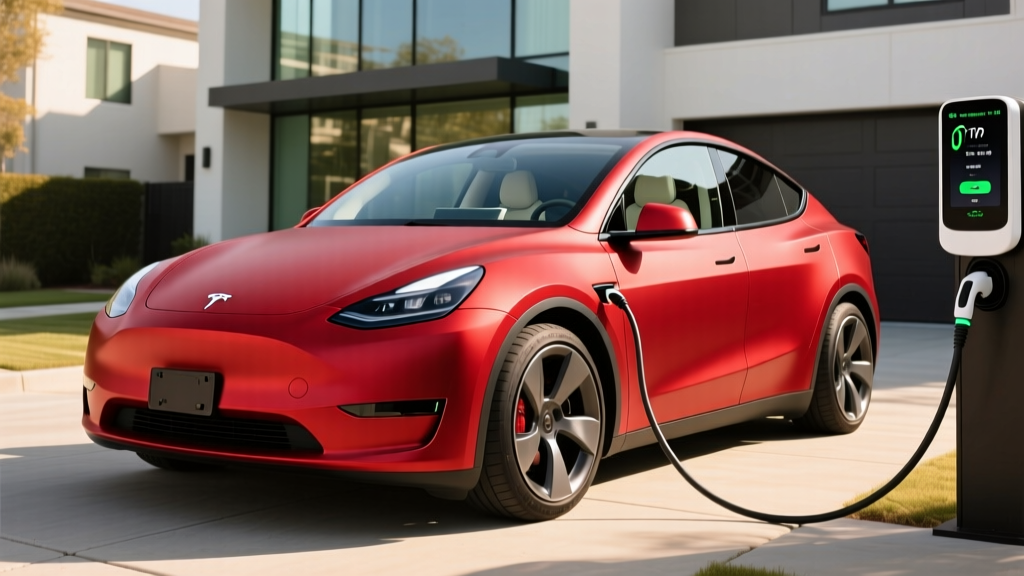
The "Trump Red Tesla" search trend reflects a very real phenomenon: Tesla's Ultra Red paint (introduced as a $2,500 premium option and colloquially dubbed "Trump Red" across social media for its bold, patriotic hue) has become one of the most-searched configurations for the 2026 Model Y Juniper refresh. Beyond the color, the 2026 Model Y Long Range AWD remains one of the most capable electric SUVs on the market — but it faces stiffer competition than ever from the Hyundai Ioniq 5, Ford Mustang Mach-E, and Kia EV9.
This review covers the 2026 Tesla Model Y Long Range AWD in full: real-world range expectations, charging speed, pricing after federal tax credits, and whether the Ultra Red premium is worth it. We'll also separate paint-job hype from the engineering substance underneath.
2026 Tesla Model Y Long Range AWD: Core Specifications
| Attribute | 2026 Model Y Long Range AWD |
|---|---|
| EPA Range | 320 miles |
| Battery Capacity | 78.1 kWh usable (NMC chemistry) |
| Drivetrain | Dual-motor AWD |
| Horsepower | 384 hp (combined) |
| 0-60 mph | 4.8 seconds |
| Max DC Fast Charge | 250 kW (peak) |
| 10-80% DC Charge Time | ~25 minutes |
| Level 2 Home Charge Rate | 11.5 kW (~44 mi/hr on 48A circuit) |
| Efficiency | 122 MPGe combined / 28 kWh/100 mi |
| Cargo Volume | 30.2 cu ft (rear seats up) / 72.1 cu ft (folded) |
| Rear Legroom | 38.4 inches |
| Base MSRP | $46,630 (including destination) |
| Battery Warranty | 8 years / 120,000 miles |
Real-World Range: What 320 EPA Miles Actually Means
EPA Sticker: 320 miles
Real-World Expectation: ~260-280 miles on sustained highway driving at 70-75 mph; ~230-250 miles in freezing temperatures (below 32°F) without preconditioning; ~300+ miles in mixed city/suburban driving with regen braking engaged.
The 2026 Model Y Long Range AWD carries an EPA-estimated 320 miles of range on its 78.1 kWh usable NMC (nickel manganese cobalt) battery pack. That number is achievable in ideal conditions — moderate temperatures, mixed city/highway driving, and speeds under 65 mph.
However, Tesla's efficiency advantage shows up most clearly on the highway. In independent 70-mph range tests, the Model Y consistently delivers 270-280 miles before hitting a 10% state of charge buffer. That's better than most competitors, but it's still a meaningful gap from the EPA sticker.
Cold weather is the great equalizer. Without preconditioning the battery (which Tesla's navigation system does automatically when you route to a Supercharger), expect 20-30% range loss in sub-freezing conditions. The 2026 Model Y's standard heat pump helps cabin efficiency, but battery chemistry still suffers in extreme cold. If you live in Minnesota or Maine, plan for ~230 miles of usable winter range on a full charge.
Charging Speed: DC Fast Charge and Home Level 2
Charging is where Tesla still holds a structural advantage — not just in speed, but in network access. The 2026 Model Y supports:
| Charging Level | Power / Rate | Miles Added | Notes |
|---|---|---|---|
| Level 1 (120V household) | ~1.4 kW | ~5 mi/hr | Emergency/trickle only |
| Level 2 (240V, 48A) | 11.5 kW | ~44 mi/hr | Full charge in ~7 hours |
| DC Fast (Tesla Supercharger V3/V4) | 250 kW peak | ~200 mi in 15 min | 10-80% in ~25 min |
| DC Fast (CCS adapter, non-Tesla) | Up to 150-250 kW | Varies by station | Requires NACS-to-CCS adapter |
The charging curve matters. The 250 kW peak only sustains roughly between 10% and 30% state of charge. From 50-80%, the rate tapers to 80-120 kW. From 80-100%, it slows dramatically to protect the NMC cells — expect the last 20% to take nearly as long as the first 50%. This is why Tesla and every EV manufacturer recommend daily charging to 80% and only charging to 100% before long trips.
For home charging, a 48-amp Level 2 wall connector on a 60-amp circuit delivers a full overnight charge in about 7 hours. Installation typically costs $800-$2,000 depending on panel capacity and conduit run distance — and may require a 200-amp panel upgrade ($1,500-$3,000) in older homes.
As of 2026, the Tesla Supercharger network has expanded to over 30,000 stalls in North America, and the NACS connector (now the industry standard adopted by Ford, GM, Rivian, and others) means Model Y owners still have first-party, native access without adapters at Superchargers.
Performance and Driving Dynamics
The 2026 Model Y Long Range AWD delivers 384 combined horsepower from its dual-motor setup, launching from 0-60 mph in 4.8 seconds. That's quick enough to merge onto any highway with confidence, though it's a step below the Performance variant's 3.5-second sprint.
The Juniper refresh brought meaningful improvements to ride quality: revised damper tuning, acoustic glass, and a more compliant rear subframe reduce the harshness that plagued earlier Model Y generations. It's still firmer than a Hyundai Ioniq 5 or a Ford Mustang Mach-E, but the gap has narrowed considerably.
One-pedal driving via regenerative braking remains a Tesla strong suit. The 2026 model offers adjustable regen strength through the touchscreen, though Tesla removed the full "stop-and-hold" capability in some markets before restoring it — check your region's firmware version.
Pricing, Trims, and Federal Tax Credit Eligibility
Here's where the math gets specific. The 2026 Model Y lineup breaks down as follows:
| Trim | MSRP (incl. destination) | Est. After §30D Credit* |
|---|---|---|
| Long Range AWD | $46,630 | ~$39,130 |
| Long Range AWD (Ultra Red + FSD) | $57,130 | ~$49,630 |
| Performance AWD | $51,630 | ~$44,130 |
*Federal tax credit estimates assume full eligibility. See below for §30D requirements.
The Ultra Red paint adds $2,500. Full Self-Driving (Supervised) adds $8,000 as of 2026 (Tesla has fluctuated this price repeatedly). Premium interior is now standard on all trims, so there are fewer à la carte options than in prior years.
Federal §30D Tax Credit — 2026 Eligibility Requirements:
- MSRP Cap: Vehicle must have an MSRP at or below $80,000 for SUVs (Model Y qualifies)
- Buyer Income Cap: AGI must not exceed $150,000 (single), $225,000 (head of household), or $300,000 (joint filers)
- Battery Sourcing: Critical minerals and battery components must meet escalating domestic/free-trade-partner sourcing thresholds — Tesla's U.S. production gives the Model Y an advantage here, but specific eligibility can shift by build date
- Point-of-Sale Transfer: As of 2024+, the credit can be transferred to the dealer at purchase, reducing your out-of-pocket cost immediately rather than waiting for a tax return
- Credit Amount: Up to $7,500, split between critical minerals ($3,750) and battery components ($3,750) — partial credit of $3,750 is possible if only one threshold is met
Always verify current eligibility at IRS.gov and consult a tax professional before purchasing. Rules change, and build-date-specific sourcing requirements can affect qualification.
Tech, Interior, and Autopilot: Standout Features and Drawbacks
The 2026 Model Y Juniper interior is markedly improved over pre-2025 versions. Key tech features include:
- 15.4-inch center touchscreen with faster processor and ambient lighting strip
- Ventilated front seats (now standard on Long Range and above)
- Rear 8-inch touchscreen for rear-seat climate and entertainment control
- Autopilot (basic) standard — adaptive cruise, lane centering, automatic emergency braking
- FSD (Supervised) available for $8,000 — adds city-street navigation, traffic light/stop sign recognition, lane changes
- Over-the-air updates continue to add features post-purchase
SAE Automation Level: Tesla Autopilot and FSD (Supervised) are SAE Level 2 driver-assistance systems. The driver must remain fully engaged, hands on or near the wheel, and eyes on the road at all times. This is NOT self-driving. Tesla's naming ("Full Self-Driving") is marketing, not a technical description of capability.
Notable Drawbacks:
- No physical buttons for climate, wipers, or turn signals (all screen-based or stalkless) — a persistent complaint from new Tesla owners
- No Apple CarPlay or Android Auto — Tesla's proprietary infotainment only
- Panel gaps and paint quality, while improved, still lag behind legacy automakers at this price point
- Insurance costs remain 15-30% higher than comparable ICE SUVs in most states
- FSD (Supervised) remains a Level 2 system despite the name — evaluate whether $8,000 is justified for your use case
Who Should Buy the 2026 Model Y (and Who Shouldn't)
Pros
- Best-in-class Supercharger network access (native NACS, no adapter needed)
- 320 EPA miles — strong real-world highway range
- Class-leading efficiency at 122 MPGe combined
- Spacious cargo area (72.1 cu ft with seats folded)
- Over-the-air updates add value over time
- Strong resale value relative to most EVs
Cons
- Ultra Red paint + FSD pushes price past $57K before credit
- No Apple CarPlay/Android Auto
- Ride quality improved but still firm vs. Ioniq 5 or Mach-E
- Stalkless turn signals require retraining muscle memory
- FSD is expensive and still Level 2 — not autonomous
- Insurance premiums above segment average
Choose the 2026 Model Y Long Range AWD if:
- You road-trip frequently and value Supercharger reliability over everything
- You want maximum cargo space in an electric SUV under $50K (after credit)
- You prefer minimal maintenance and OTA feature updates
- You're drawn to the Ultra Red aesthetic and understand it's a $2,500 cosmetic premium
Look at competitors instead if:
- You need Apple CarPlay (Hyundai Ioniq 5, Kia EV6)
- You want a softer, more refined ride (Ford Mustang Mach-E, Ioniq 5)
- You need three rows of seating (Kia EV9)
- You want to avoid Tesla's political brand association — the Ultra Red / "Trump Red" connection is real, and it affects resale perception in some markets
Frequently Asked Questions
What is the real-world range of the 2026 Tesla Model Y Long Range?
The EPA rates it at 320 miles. In real-world highway driving at 70-75 mph, expect 260-280 miles. In freezing weather without preconditioning, plan for 230-250 miles. City driving with regen braking can push closer to 300+ miles.
How fast does the Model Y charge at home and on the road?
On a 48-amp Level 2 home charger, it adds ~44 miles per hour and fully charges in about 7 hours. On a Tesla V3/V4 Supercharger, it peaks at 250 kW and charges from 10-80% in approximately 25 minutes — though the rate tapers significantly above 50% state of charge.
Does the 2026 Model Y qualify for the $7,500 federal EV tax credit?
It can, but eligibility depends on your income (AGI caps apply), the vehicle's MSRP (must be ≤$80,000 for SUVs — Model Y qualifies), and battery-sourcing requirements that can shift by build date. The credit can be transferred at point of sale. Verify current rules at IRS.gov before purchasing.
Is the Ultra Red ("Trump Red") paint worth $2,500?
It's purely cosmetic. The multi-coat red is visually striking and photographs well, but it doesn't affect range, performance, or resale value in any measurable way. In some markets, Tesla's brand association with political figures may actually suppress resale demand for conspicuous configurations — consider your local market if resale matters to you.
Is the Model Y still worth buying vs. the Hyundai Ioniq 5 or Ford Mach-E in 2026?
It depends on your priorities. The Model Y wins on Supercharger network access, cargo space, and efficiency. The Ioniq 5 wins on ride comfort, infotainment (CarPlay), and 800V charging architecture. The Mach-E wins on driving dynamics and interior materials. All three are excellent — test-drive each before deciding.
What is the battery warranty on the 2026 Model Y?
Tesla covers the battery and drive unit for 8 years or 120,000 miles, whichever comes first, with a guaranteed minimum 70% capacity retention over that period. This is competitive with Hyundai's 10-year/100,000-mile battery warranty, though Hyundai's terms are slightly more generous on duration.