Rumors and politically charged search queries like "trump ban tesla production" surface periodically on social media and forums, usually tied to broader debates about EV mandates, federal subsidies, and the intersection of politics and the auto industry. As of early 2026, no federal ban on Tesla production exists, has been proposed in any legislative chamber, or is under executive consideration. Tesla's U.S. factories in Fremont, Austin, and Sparks (Nevada battery production) continue operating at full capacity.
What is real is the ongoing policy debate around the Inflation Reduction Act's §30D EV tax credit, potential rollbacks of EPA emissions standards, and how a change in presidential administration could reshape the EV landscape. For buyers researching Tesla in this climate, the practical question isn't about a production ban — it's whether the 2026 Tesla Model Y still makes financial and practical sense given shifting incentive rules.
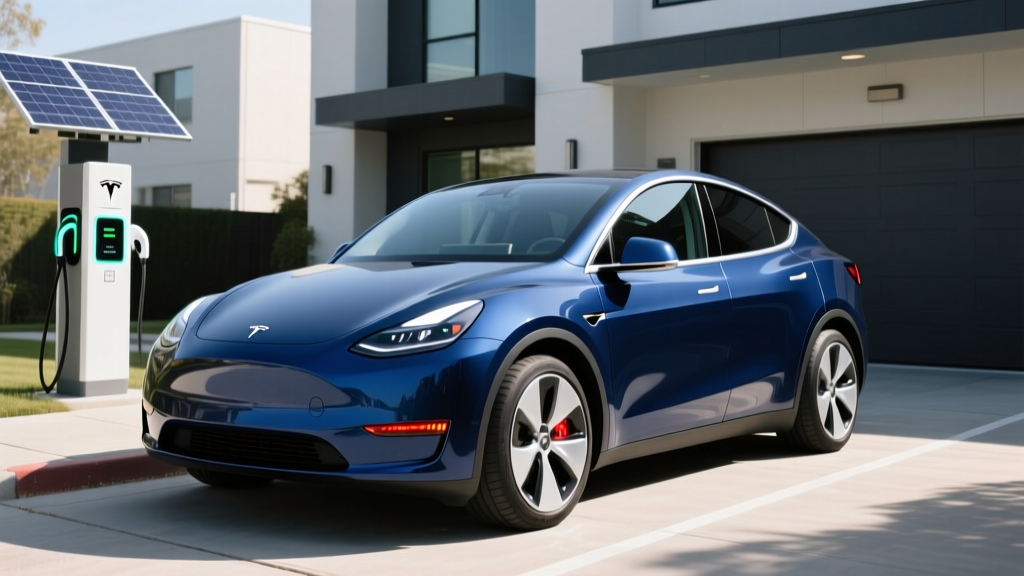
Below is our data-driven review of the current Model Y lineup, with the exact numbers you need to decide.
2026 Tesla Model Y: Core Specifications
| Spec | Long Range RWD | Long Range AWD | Performance AWD |
|---|---|---|---|
| EPA Range | 320 mi | 305 mi | 285 mi |
| Battery (usable) | ~75 kWh, NMC | ~75 kWh, NMC | ~75 kWh, NMC |
| MPGe (combined) | 122 MPGe | 116 MPGe | 110 MPGe |
| Efficiency | 27 kWh/100 mi | 29 kWh/100 mi | 31 kWh/100 mi |
| 0–60 mph | 5.8 sec | 4.8 sec | 3.5 sec |
| Horsepower | 346 hp | 384 hp | 456 hp |
| Drivetrain | Rear-Wheel Drive | Dual-Motor AWD | Dual-Motor AWD |
| Top Speed | 125 mph | 135 mph | 155 mph |
| Base MSRP | $44,990 | $47,990 | $52,490 |
| Destination Fee | $1,390 | ||
All 2026 Model Y variants use Tesla's latest structural battery pack with nickel-manganese-cobalt (NMC) chemistry. The RWD Standard Range model that previously used LFP (lithium iron phosphate) cells has been consolidated into the Long Range RWD trim for 2026, with NMC offering higher energy density at the cost of more careful state-of-charge management recommendations.
Real-World Range: What the EPA Number Doesn't Tell You
Real-World Highway (70 mph, 75°F): ~265–280 miles
Real-World Highway (70 mph, 30°F, no heat pump advantage): ~220–245 miles
City/Commuter (regenerative braking active): ~295–310 miles
The EPA cycle is weighted toward city driving with moderate speeds and frequent stops — conditions where regenerative braking recovers significant energy. On sustained highway runs at 75 mph, expect to lose roughly 12–17% off the sticker number in mild weather. Cold weather (below 40°F) compounds this: battery resistance increases, cabin heating draws 2–5 kW continuously, and you'll see 25–30% range reduction on highway trips.
The Model Y does include a heat pump as standard equipment, which significantly reduces the cold-weather penalty compared to older EVs using resistive PTC heaters. Tesla's thermal management system also preconditioning the battery when you navigate to a Supercharger, which preserves both range and charging speed in cold conditions.
Charging Speed: Supercharger Network and Home Level 2
| Charging Level | Power (kW) | Speed (mi/hr added) | 10–80% Time |
|---|---|---|---|
| Level 1 (120V household) | ~1.4 kW | ~4 mi/hr | N/A (overnight trickle) |
| Level 2 (240V, 48A Wall Connector) | 11.5 kW | ~44 mi/hr | ~7.5 hours |
| DC Fast — Tesla V3 Supercharger | Peak 250 kW | ~1,000 mi/hr (peak) | ~22 minutes |
| DC Fast — Tesla V4 Supercharger | Peak 250 kW | ~1,000 mi/hr (peak) | ~20 minutes |
| DC Fast — CCS adapter (Electrify America, etc.) | Peak 250 kW | Varies by station | ~25 minutes |
Tesla's charging advantage isn't just peak kW — it's the sustained charge curve. The Model Y holds near-peak charging rates longer than many competitors, tapering gradually rather than dropping sharply after 50% SoC. On a V3 or V4 Supercharger, you'll pull 200+ kW from roughly 10–55% SoC, then taper to ~120 kW through 80%, and drop further to ~60 kW from 80–90%.
For home charging, the Tesla Wall Connector at 48 amps on a 60A circuit delivers 11.5 kW — enough to fully replenish a depleted battery overnight. Installation typically costs $500–$2,000 depending on panel proximity and whether a service upgrade is needed.
Since 2024, Tesla has opened its Supercharger network to non-Tesla EVs via the NACS connector standard, and conversely, Tesla owners can use a CCS adapter (sold separately for ~$175) to access Electrify America, EVgo, and other CCS networks. This dual-network access is a significant practical advantage for road trips through areas where Supercharger density is lower.
Pricing, Tax Credits, and Total Cost
| Trim | MSRP + Dest. | §30D Credit | Effective Price |
|---|---|---|---|
| Long Range RWD | $46,380 | Up to $7,500* | ~$38,880 |
| Long Range AWD | $49,380 | Up to $7,500* | ~$41,880 |
| Performance AWD | $53,880 | Up to $7,500* | ~$46,380 |
*The §30D federal tax credit is subject to multiple eligibility requirements that change frequently. As of 2026, the following rules apply:
- MSRP Cap: SUVs/crossovers must be under $80,000 (all Model Y trims qualify).
- Buyer Income Cap: Modified AGI must not exceed $150,000 (single), $225,000 (head of household), or $300,000 (joint filers).
- Battery Sourcing: The $7,500 credit is split into two $3,750 halves — one for critical-mineral sourcing and one for battery-component manufacturing. Vehicles meeting only one requirement receive $3,750. Tesla's supply chain has been progressively re-shored, but the IRS qualified-vehicle list should be checked at time of purchase, as sourcing compliance can change month to month.
- Point-of-Sale Transfer: Since 2024, the credit can be transferred to the dealer at purchase, reducing your out-of-pocket cost immediately rather than waiting for tax filing.
Given the political debate referenced by queries like "trump ban tesla production," it's worth noting that legislative proposals to modify or sunset the §30D credit early have been introduced but not enacted. Buyers concerned about credit availability should not assume it will persist indefinitely — if you're ready to buy, the credit is currently active.
Interior, Cargo, and Daily Practicality
The 2026 Model Y maintains its position as one of the most space-efficient electric crossovers on the market:
- Cargo (rear seats up): 30.2 cu ft
- Cargo (rear seats folded): 72.1 cu ft
- Front trunk (frunk): 4.1 cu ft
- Rear legroom: 41.6 inches
- Front headroom: 41.0 inches
- Seating: 5-passenger standard (7-seat option discontinued for 2026)
The minimalist interior centers on a 15.4-inch touchscreen handling virtually all vehicle controls. Build quality at the Austin Gigafactory has improved markedly since early Fremont production, with tighter panel gaps and fewer rattles. Ventilated front seats, a panoramic glass roof (with improved UV rejection for 2026), and a power-folding second row are standard.
Notable drawbacks remain: the lack of physical buttons for climate and wiper controls requires touchscreen interaction that some drivers find distracting. There's no Apple CarPlay or Android Auto — Tesla's proprietary infotainment is the only option, though it includes native Spotify, Netflix (parked), and a capable navigation system.
Driver Assistance: Autopilot and FSD (Supervised)
Autopilot and FSD (Supervised) require continuous driver engagement. These are NOT self-driving systems. The driver must keep hands on the wheel and eyes on the road at all times. Only Level 4 services like Waymo operate without a human driver in defined areas.
Every Model Y includes Basic Autopilot (lane centering, adaptive cruise, emergency braking, blind-spot monitoring). The Enhanced Autopilot package ($6,000) adds automatic lane changes, Navigate on Autopilot, and Smart Summon. Full Self-Driving (Supervised) at $8,000 adds traffic-light and stop-sign recognition with automatic response, and city-street autosteer.
FSD (Supervised) has improved substantially through Tesla's end-to-end neural network approach (v12.x and later), but it still makes occasional errors — phantom braking, hesitant unprotected left turns, and inconsistent construction-zone handling. Treat it as a fatigue-reduction tool, not a replacement for attentive driving. Tesla's NHTSA-reported incident data should be reviewed by any buyer considering the FSD upgrade.
Pros and Cons: The Honest Assessment
Pros
- Class-leading Supercharger network access (17,000+ U.S. stations)
- Strong real-world efficiency (27 kWh/100 mi on Long Range RWD)
- Excellent sustained DC fast-charge curve
- Spacious cargo area with flat load floor
- Over-the-air updates continuously add features
- Strong resale value relative to EV segment average
- Heat pump standard — better cold-weather range retention
Cons
- No Apple CarPlay / Android Auto
- Minimalist interior forces touchscreen reliance for basic controls
- FSD (Supervised) is expensive and still requires full driver attention
- Ride quality is firm — noticeable on rough pavement
- No spare tire (tire repair kit only)
- Insurance costs run 15–25% above segment average
- §30D credit eligibility depends on evolving battery-sourcing rules
Who Should Buy the 2026 Model Y?
Best for: Daily commuters with home Level 2 charging, families needing cargo versatility, and road-trippers who value the Supercharger network's reliability. The Long Range RWD at ~$39K after credits is one of the most practical EVs in its price bracket.
Look elsewhere if: You need a plush, quiet ride (consider the Hyundai Ioniq 5 or BMW iX), you refuse to live without CarPlay, or your daily driving exceeds 250 highway miles between charging opportunities.
Key competitors to cross-shop:
- Ford Mustang Mach-E Extended Range: 320 mi EPA, $51,995 — more engaging to drive, less cargo space
- Hyundai Ioniq 5 Long Range: 305 mi EPA, $49,850 — 800V architecture charges faster (10–80% in 18 min), CarPlay included
- Chevrolet Equinox EV: 319 mi EPA, ~$36,000 after credit — lower price, slower charging
Frequently Asked Questions
Is there actually a Trump ban on Tesla production?
No. As of 2026, no federal legislation, executive order, or regulatory action bans or restricts Tesla's vehicle production. The search trend likely stems from political commentary conflating EV policy debates (potential §30D credit modifications, EPA standard rollbacks) with production bans. Tesla's four U.S. production facilities operate normally.
What is the real-world range of the 2026 Model Y?
The Long Range RWD is EPA-rated at 320 miles, but expect 265–280 miles on highway trips in mild weather and 220–245 miles in freezing conditions. City commuters using regenerative braking can approach the EPA number.
How fast does the Model Y charge at home and on the road?
At home on a 240V/48A Wall Connector (11.5 kW), you'll add roughly 44 miles per hour of charging — a full charge takes about 7.5 hours. On a Tesla V3/V4 Supercharger (peak 250 kW), a 10–80% charge takes approximately 20–22 minutes thanks to a strong sustained charge curve.
Does the 2026 Model Y qualify for the $7,500 federal EV tax credit?
All Model Y trims fall under the $80,000 SUV MSRP cap. However, the full $7,500 depends on battery-sourcing requirements (critical minerals and component manufacturing), which change periodically. Check the IRS qualified vehicles list before purchasing. Buyer income caps also apply ($150K single / $300K joint).
How does the Model Y compare to competitors on value?
After the §30D credit, the Long Range RWD at ~$38,880 offers 320 miles of EPA range, Supercharger access, and class-leading cargo space. The Hyundai Ioniq 5 charges faster but has less range and cargo room. The Ford Mach-E drives better but costs more. The Chevy Equinox EV is cheaper but charges slower and has a less mature charging ecosystem.
Is FSD (Supervised) worth the $8,000 upgrade?
For most buyers, no. Basic Autopilot handles highway cruising well. FSD (Supervised) is a Level 2 system — you must remain fully attentive — and its $8,000 cost is hard to justify when it still makes errors in complex urban environments. Consider Enhanced Autopilot ($6,000) if you frequently drive highways, or skip both if you're budget-conscious.