The Short Answer on the Toyota RAV4 EV Electric
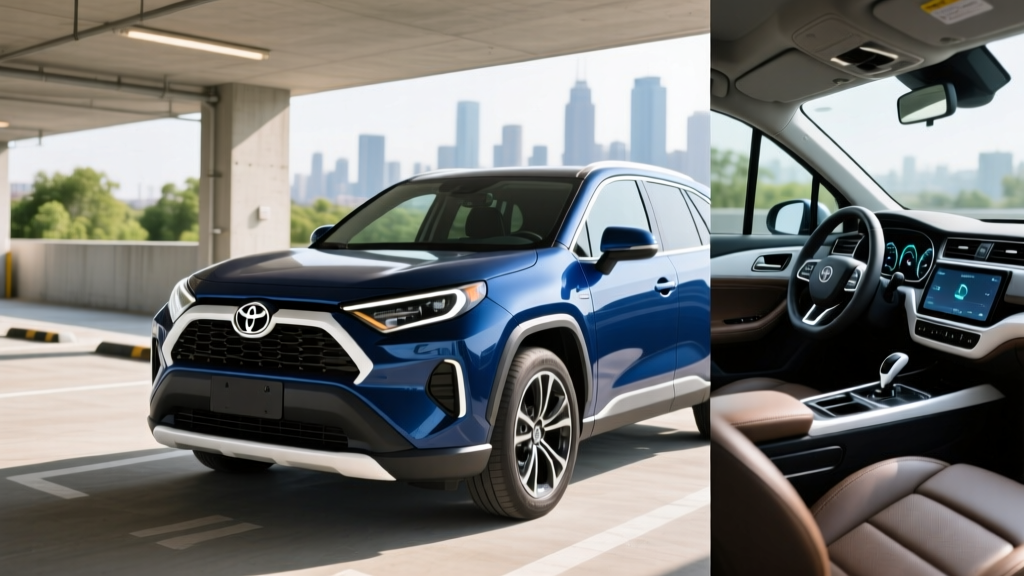
There is no new Toyota RAV4 EV electric on sale in the United States as of 2026. The original RAV4 EV — built in partnership with Tesla using a Model S-derived powertrain — was discontinued after the 2014 model year. Toyota's current RAV4 lineup offers a conventional hybrid (RAV4 Hybrid) and a plug-in hybrid (RAV4 Prime), but no fully electric version. If you're searching for a battery-electric Toyota SUV, your closest current options are the Toyota bZ4X or the upcoming three-row bZ Large SUV (announced, expected late 2026/2027). For a RAV4-sized electric SUV from another brand, strong contenders include the Hyundai Ioniq 5, Tesla Model Y, and Ford Mustang Mach-E.
The search term "Toyota RAV4 EV electric" pulls hundreds of queries a month, and it's easy to see why: the RAV4 is America's best-selling non-truck, and buyers naturally wonder if Toyota has electrified it fully. This guide breaks down what actually exists, what the original RAV4 EV was, what Toyota has confirmed for the future, and how the current RAV4 Prime plug-in hybrid stacks up as a practical alternative — with real numbers on range, cost, and ownership.
What Happened to the Original Toyota RAV4 EV?
The Toyota RAV4 EV had two production runs, both limited and both now discontinued:
- First generation (1997–2003): Nickel-metal hydride battery, roughly 95 miles of range, sold primarily in California. Fewer than 1,500 units produced.
- Second generation (2012–2014): Developed with Tesla, using a 41.8 kWh lithium-ion battery pack and a Tesla-derived electric motor producing 154 hp. EPA-rated range was 103 miles. Only about 2,600 units were sold, all in California.
The second-generation RAV4 EV was essentially a compliance car — built to meet California's zero-emission vehicle mandates rather than as a mass-market product. It charged at a maximum of 10 kW on Level 2 (no DC fast charging capability), took roughly 5 hours for a full charge, and carried an MSRP around $49,500 before incentives. By 2014 standards, it was already outclassed by the Nissan Leaf (84 miles, available nationwide) and the Tesla Model S (208+ miles).
Toyota ended the program as it shifted toward hydrogen fuel cells (the Mirai) and hybrids rather than battery-electric vehicles. The partnership with Tesla also dissolved acrimoniously, with both companies filing lawsuits.
Toyota's Current Electric and Electrified SUV Lineup (2026)
Toyota's 2026 U.S. lineup includes two battery-electric SUVs and two electrified RAV4 variants:
| Model | Powertrain | EPA Electric Range | Battery / Fuel | Starting MSRP (2026) |
|---|---|---|---|---|
| Toyota bZ4X | BEV (all-electric) | 236–252 mi | 71.4 kWh (NMC) | ~$37,070 |
| Toyota bZ Large SUV | BEV (announced) | Est. 300+ mi | TBD (est. 80–100 kWh) | TBD |
| RAV4 Hybrid | HEV (self-charging) | N/A (gas-electric) | 1.6 kWh NiMH | ~$33,425 |
| RAV4 Prime | PHEV (plug-in) | 42 mi electric-only | 18.1 kWh lithium-ion | ~$44,590 |
The bZ4X is Toyota's only current all-electric SUV. It seats five, offers 236–252 miles of EPA range depending on trim and drivetrain, and supports DC fast charging at up to 150 kW — though real-world testing shows sustained rates closer to 100–120 kW with a 10–80% charge time of approximately 30–35 minutes. According to fueleconomy.gov, the front-wheel-drive bZ4X achieves 119 MPGe combined.
RAV4 Prime vs. an Imagined RAV4 EV: Cost and Efficiency Compared
Since a new RAV4 EV doesn't exist, the most relevant comparison is the RAV4 Prime (plug-in hybrid) against the bZ4X (all-electric) and a hypothetical all-electric RAV4. Here's how the real options stack up on ownership economics:
| Metric | RAV4 Prime (PHEV) | bZ4X (BEV) | RAV4 Hybrid (HEV) |
|---|---|---|---|
| Base MSRP (2026) | ~$44,590 | ~$37,070 | ~$33,425 |
| Federal Tax Credit (§30D) | Up to $7,500 (if eligible) | Up to $7,500 (if eligible) | None |
| Effective Price After Max Credit | ~$37,090 | ~$29,570 | ~$33,425 |
| EPA Electric-Only Range | 42 mi | 252 mi (FWD) | 0 mi |
| Combined MPGe / MPG | 94 MPGe (elec) / 38 MPG (gas) | 119 MPGe | 39 MPG combined |
| Annual Fuel Cost (EPA est.) | ~$1,150 (mixed elec/gas) | ~$650 (electricity) | ~$1,550 (gasoline) |
| Home Charging Required? | Strongly recommended (Level 2) | Essential (Level 2) | No |
| Battery Warranty | 10 yr / 150,000 mi | 10 yr / 150,000 mi | 10 yr / 150,000 mi |
A note on the §30D tax credit: Eligibility depends on your adjusted gross income (single filers: $150,000 cap; joint: $300,000), vehicle MSRP caps ($55,000 for SUVs), and battery-component/critical-mineral sourcing requirements that tighten annually. The credit can now be transferred to the dealer at point of sale as an instant discount. Always verify current-year rules on IRS.gov before purchasing.
Real-World Ownership: What the Numbers Don't Show
Spec sheets don't capture the daily realities of living with an electrified vehicle. Here's what matters once you drive off the lot:
Home Charging Access Is the Make-or-Break Factor
If you're considering the bZ4X (or waiting for a future electric RAV4), home Level 2 charging is nearly mandatory for practical ownership. A 240V Level 2 charger at 7–11 kW adds roughly 25–40 miles of range per hour of charging — enough to replenish a full battery overnight. Installation typically costs $800–$2,500 depending on whether your electrical panel needs an upgrade from 100A to 200A service.
Without home charging, you'll rely on public DC fast chargers, which cost $0.30–$0.50+ per kWh (roughly double home rates) and require 30–45 minute stops. For apartment dwellers or street-parkers, the RAV4 Prime PHEV is far more forgiving — its 42-mile electric range covers most commutes, and you can still drive on gas when charging isn't available.
Cold-Weather Range Loss Is Real
Lithium-ion batteries lose efficiency in cold temperatures. Expect 20–30% range reduction at freezing temperatures (32°F / 0°C) and up to 40% loss at 0°F (−18°C), based on AAA testing data. The bZ4X's 252-mile EPA range could drop to roughly 175–200 miles in harsh winter conditions. The RAV4 Prime's gasoline engine eliminates this anxiety entirely — when the battery depletes, the hybrid system takes over seamlessly.
Charging Speed: Peak kW vs. Sustained Reality
The bZ4X advertises a 150 kW peak DC fast-charge rate, but like all EVs, it cannot sustain that speed throughout the session. The charge curve typically peaks early (between 10–40% state of charge) and tapers significantly above 80%. A realistic 10–80% session takes 30–35 minutes at a capable 150+ kW station. This is slower than the Hyundai Ioniq 5 (10–80% in ~18 minutes at 240 kW peak) or the Tesla Model Y (10–80% in ~20 minutes at 250 kW peak on V3 Superchargers).
Will Toyota Ever Build a RAV4 EV?
Toyota has not confirmed a fully electric RAV4, but the company's electrification strategy has shifted significantly since 2023. Toyota now plans to launch 30 battery-electric models globally by 2030, with next-generation EVs built on a dedicated platform promising improved range, faster charging, and lower costs. The bZ Large SUV (announced, expected late 2026 or 2027) will be a three-row electric SUV built in Kentucky, and a RAV4-sized electric crossover on Toyota's next-gen platform is widely anticipated — though not officially confirmed for the U.S. market.
If Toyota does launch an electric RAV4, expect it to target 280–320 miles of EPA range, support 200+ kW DC fast charging, and price between $38,000–$45,000 before incentives — competitive with the Tesla Model Y and Hyundai Ioniq 5.
Decision Framework: What Should You Actually Buy?
Choose the RAV4 Prime (PHEV) if:
- You want RAV4 practicality with electric commuting (42 miles covers ~75% of U.S. daily drives)
- You lack reliable home charging or take frequent long road trips
- You live in a cold-weather state and can't afford 30% range loss in winter
- You want to avoid range anxiety entirely while still reducing fuel consumption
Choose the Toyota bZ4X (BEV) if:
- You have Level 2 home charging and want the lowest per-mile operating cost
- Your daily driving is under 150 miles and you rarely road-trip more than 250 miles one-way
- You want a Toyota-badged EV now and don't need RAV4-level cargo space (bZ4X has 27.7 cu ft vs. RAV4's 37.6 cu ft)
Choose a competitor's electric SUV (Ioniq 5, Model Y, Mach-E) if:
- You want faster DC charging (18–25 min 10–80%) for road-trip practicality
- You need more cargo space and rear-seat room than the bZ4X offers
- You want access to the Tesla Supercharger network (Model Y, or any NACS-equipped EV)
Wait for a future electric RAV4 if:
- You're set on a RAV4-sized Toyota EV and can wait 1–2 years for potential announcements
- Your current vehicle is running fine and you want Toyota's next-gen battery platform
Common Misconceptions About the RAV4 EV
| Myth | Fact |
|---|---|
| "Toyota sells a RAV4 EV in 2026" | The RAV4 EV was discontinued after 2014. Toyota currently sells the bZ4X (BEV), RAV4 Prime (PHEV), and RAV4 Hybrid (HEV). |
| "The RAV4 Prime is basically an EV" | The Prime has 42 miles of electric-only range, then operates as a hybrid. It has a gas engine and requires gasoline for longer trips. |
| "I can buy a used RAV4 EV and it'll be fine" | The 2012–2014 RAV4 EV has a 103-mile range, no DC fast charging, limited parts availability, and an aging 41.8 kWh battery. Out-of-warranty battery replacement could exceed the car's value. |
| "Toyota is behind on EVs" | Toyota leads globally in hybrid sales and has committed to 30 BEV models by 2030. The bZ4X exists now, and next-gen models are in development — but Toyota's EV rollout has been slower than Hyundai, Tesla, or Ford. |
| "All EVs qualify for the $7,500 tax credit" | Eligibility depends on your income, the vehicle's MSRP, and battery sourcing. Credits can change annually. Check IRS.gov for current rules. |
Frequently Asked Questions
Is there a 2026 Toyota RAV4 EV?
No. Toyota does not currently produce a fully electric RAV4. The RAV4 EV was discontinued in 2014. The closest Toyota alternatives are the bZ4X (all-electric SUV) and the RAV4 Prime (plug-in hybrid with 42 miles of electric range).
How much does a RAV4 Prime cost after the tax credit?
The 2026 RAV4 Prime starts around $44,590. If you qualify for the full $7,500 §30D federal credit (income and sourcing requirements apply), the effective price drops to approximately $37,090. Verify eligibility on IRS.gov and confirm with your dealer at point of sale.
Is the RAV4 Prime worth it over the RAV4 Hybrid?
If you can charge at home and your commute is under 42 miles, the Prime lets you drive almost entirely on electricity most days while retaining gas-engine flexibility for road trips. The ~$11,000 price premium over the Hybrid is partially offset by the potential $7,500 tax credit and lower fuel costs. According to EPA estimates, the Prime saves roughly $400/year in fuel vs. the Hybrid for a typical driver.
What's the best electric SUV if I want something RAV4-sized?
The Tesla Model Y (310–330 mi EPA range, ~$44,990), Hyundai Ioniq 5 (303 mi, ~$42,600), and Ford Mustang Mach-E (250–320 mi, ~$39,995) are all strong RAV4-sized electric SUVs. Each offers faster DC charging than the bZ4X and more cargo space. The Model Y benefits from Tesla's Supercharger network; the Ioniq 5 offers the fastest charging speeds in the segment.
Will Toyota release an electric RAV4 in the future?
Toyota has not officially confirmed an electric RAV4, but the company's next-generation EV platform (announced for 2026–2028 models) is expected to underpin a range of SUVs. Industry analysts widely expect a RAV4-class electric crossover to be part of Toyota's expanded BEV lineup, potentially arriving for the 2028 or 2029 model year.
Can I still buy a used RAV4 EV?
Yes, but with significant caveats. The 2012–2014 RAV4 EV has only 103 miles of EPA range, no DC fast charging, and a Tesla-derived powertrain with increasingly limited parts support. Battery degradation on a 10+ year-old pack is a real concern, and replacement costs could exceed the vehicle's resale value. It's best suited as a low-mileage city car for buyers who understand the risks.
The Bottom Line
If you searched for "Toyota RAV4 EV electric" hoping to find a current model to buy, the honest answer is that it doesn't exist yet. Toyota's electrified RAV4 strategy centers on the RAV4 Prime plug-in hybrid — a genuinely compelling vehicle that delivers 42 miles of electric commuting without range anxiety. For a fully electric Toyota SUV today, the bZ4X is your option, though it trails competitors on charging speed and cargo space. The smartest move depends on your charging access, driving patterns, and patience: buy a RAV4 Prime now if you want flexibility, choose a competitor's EV if you want faster charging and more room, or wait for Toyota's next-generation electric platform to potentially bring the RAV4 EV back to life.