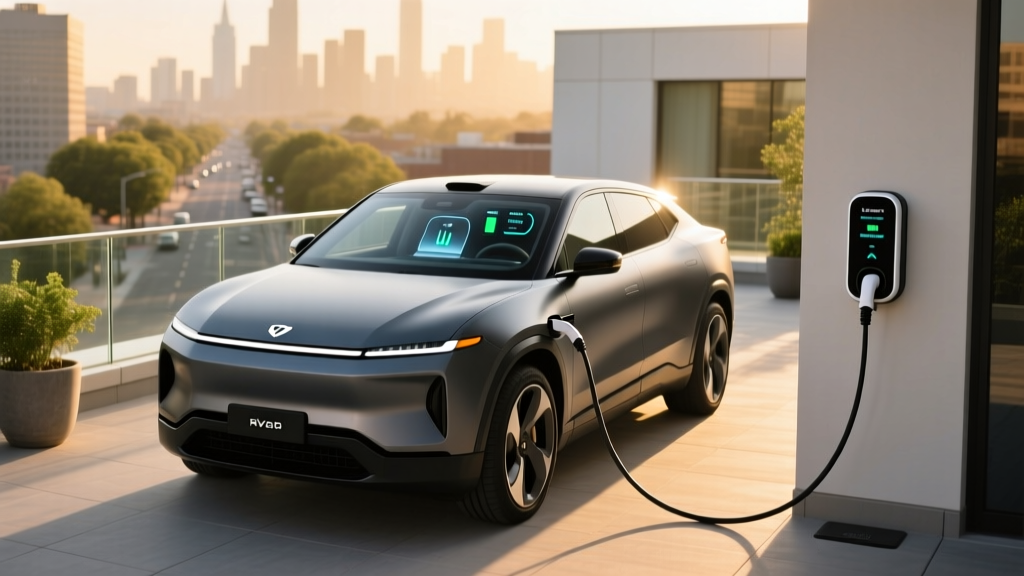
The Rivian R2 arrives in the first half of 2026 as the smaller, more affordable sibling to the R1S and R1T. Positioned squarely against the Tesla Model Y, Ford Mustang Mach-E, and Hyundai Ioniq 5, the R2 targets buyers who want a compact electric SUV with genuine off-road chops, a usable frunk, and a price tag that undercuts Rivian's existing lineup by a wide margin. With a starting MSRP around $45,000, the R2 is the vehicle that will determine whether Rivian can scale from niche adventurer brand to mainstream EV contender.
But before you chase the first Rivian R2 lease deals, you need the real numbers — not the marketing highlights. This profile breaks down the R2's estimated EPA range, battery chemistry, charging behavior, performance, and total ownership cost, with the kind of real-world caveats that spec sheets leave out.
Rivian R2 Spec Sheet: The Numbers That Matter
| Specification | Value |
|---|---|
| Base MSRP (Dual-Motor AWD) | ~$45,000 |
| Estimated EPA Range | ~330 miles |
| Battery Capacity (Usable) | ~85 kWh (estimated) |
| Battery Chemistry | NMC (Nickel Manganese Cobalt) — expected for AWD; LFP possible for future RWD base trim |
| Max DC Fast Charge Rate | ~200 kW (peak) |
| 10–80% DC Fast Charge Time | ~25 minutes (estimated) |
| Level 2 Home Charging (11.5 kW) | ~25 miles of range per hour |
| 0–60 mph | ~4.5 seconds (Dual-Motor) |
| Horsepower | ~450 hp (Dual-Motor, estimated) |
| Drivetrain | Dual-Motor AWD (launch); RWD single-motor expected later |
| Efficiency | ~110 MPGe / ~30 kWh/100 mi (estimated) |
| Cargo Volume (behind 2nd row) | ~30 cu ft (estimated); ~65 cu ft with seats folded |
| Front Trunk (Frunk) | ~10 cu ft (estimated, sealed and drainable) |
| Battery/Powertrain Warranty | 8 years / 100,000 miles (expected, per Rivian R1 precedent) |
| NACS Charge Port | Yes — native NACS (Tesla Supercharger compatible) |
Note: As of early 2026, the Rivian R2 is in pre-production with first deliveries expected mid-2026. Specifications above are based on Rivian's published estimates and R1 platform data. Final EPA certification figures may differ. Always confirm with the manufacturer before signing a lease or purchase agreement.
Real-World Range: What the EPA Sticker Doesn't Tell You
Real-World Expectation: Plan for roughly 270–290 miles on sustained highway driving at 70–75 mph. In cold weather (below 32°F / 0°C), expect a 20–30% reduction, bringing usable range to approximately 230–265 miles. City driving with regenerative braking can meet or slightly exceed the EPA figure.
The ~330-mile EPA target positions the R2 competitively against the Tesla Model Y Long Range (310 miles EPA) and well ahead of the base Hyundai Ioniq 5 (303 miles EPA). But EPA range is measured under specific laboratory conditions that don't reflect sustained highway speeds or winter driving.
Rivian's R1S and R1T have historically delivered about 85–90% of their EPA estimates in mixed real-world driving, and cold-weather testing of the R1 platform has shown 20–30% range loss in sub-freezing temperatures. The R2's smaller frontal area and lighter weight should help efficiency, but the boxy SUV shape still carries an aerodynamic penalty versus sleeker crossovers. If your commute involves mountain passes or frequent winter driving, budget your daily range accordingly.
Rivian is expected to offer a heat pump as standard equipment on the R2, which mitigates cold-weather range loss by efficiently warming the cabin without drawing heavily from the traction battery. This is a meaningful advantage over EVs that rely on resistive heating.
Charging Speed: DC Fast Charging and Home Level 2
The R2 will ship with a native NACS (North American Charging Standard) port, giving it direct access to Tesla's Supercharger network — currently the most reliable and extensive DC fast-charging infrastructure in the U.S. This eliminates the need for a CCS-to-NACS adapter that some competitors still require.
| Charging Level | Power | Miles of Range Added Per Hour | Notes |
|---|---|---|---|
| Level 1 (120V household outlet) | ~1.4 kW | ~3–4 miles/hour | Emergency/top-up only; ~80+ hours for full charge |
| Level 2 (240V, 48A home charger) | ~11.5 kW | ~25 miles/hour | Full charge in ~8–9 hours; ideal for overnight |
| DC Fast Charge (peak) | ~200 kW | ~150+ miles in 15 min | 10–80% in ~25 min; tapers significantly above 80% |
A few practical notes on the charging curve: the ~200 kW peak rate is not sustained across the entire session. Like all EVs, the R2's battery management system will taper charge speed as the state of charge climbs — you'll see the fastest rates between roughly 10% and 50% SoC, with a noticeable slowdown past 80%. This is normal lithium-ion behavior, not a defect. On a road trip, plan your stops around 10–80% charges rather than trying to fill to 100%, which can add 20+ unnecessary minutes at a stall.
For home charging, a 48-amp Level 2 wall connector on a 60-amp circuit will replenish the R2's battery overnight. Expect installation costs of $800–$2,500 depending on your electrical panel's capacity and the distance from panel to charger location. Homes with older 100-amp panels may require a $1,500–$3,000 panel upgrade to support a dedicated 60-amp EV circuit. Always get a quote from a licensed electrician before committing.
Performance and Drivetrain
The launch R2 Dual-Motor AWD is expected to produce approximately 450 horsepower and achieve a 0–60 mph time around 4.5 seconds. That puts it in the same performance bracket as the Tesla Model Y Long Range (4.8 seconds) and comfortably ahead of most gas-powered compact SUVs.
Rivian's dual-motor AWD system uses independent front and rear motors with torque vectoring, which provides genuine traction benefits in snow, mud, and loose gravel — not just pavement grip. The R1T and R1S have proven this architecture on trails like Moab's Hell's Revenge, and the R2 inherits a simplified version of the same capability. Expect around 8.5 inches of ground clearance and approach/departure angles that exceed the Model Y by a significant margin.
A single-motor RWD variant is expected to follow the AWD launch, likely at a lower price point (~$40,000 MSRP) and with slightly more range due to reduced weight and drivetrain losses. This RWD trim may use LFP (lithium iron phosphate) battery chemistry, which trades some energy density for longer cycle life, lower cost, and the ability to charge to 100% daily without degradation concerns — ideal for commuters with predictable routes.
Pricing, Lease Deals, and Federal Tax Credit Eligibility
The R2's ~$45,000 starting price is strategically aimed at the heart of the U.S. EV market. But the effective price depends heavily on your eligibility for the federal §30D tax credit and how Rivian structures its lease programs.
- Maximum credit: Up to $7,500 for qualifying new EVs
- MSRP cap: SUVs must be ≤ $80,000 (R2 qualifies easily at ~$45,000)
- Buyer income cap: AGI ≤ $150,000 (single) / $225,000 (head of household) / $300,000 (joint)
- Battery sourcing: Critical minerals and battery components must meet escalating domestic-sourcing thresholds — check IRS.gov §30D guidance for current-year requirements
- Point-of-sale transfer: Eligible buyers can transfer the credit to the dealer at purchase, reducing the upfront price
Tax credit eligibility is complex and changes annually. Consult a tax professional and verify current sourcing requirements before relying on the credit in your purchase math.
| Scenario | Amount |
|---|---|
| Base MSRP (Dual-Motor AWD) | ~$45,000 |
| Estimated with options (Adventure package, larger wheels) | ~$50,000–$53,000 |
| Federal §30D credit (if fully eligible) | –$7,500 |
| Effective price after max credit | ~$37,500 |
| Estimated monthly lease (36 mo, $4,500 down, with credit applied) | ~$400–$500/month (projected) |
On leasing specifically: Under current IRS rules, the §30D credit applies to purchases. However, the commercial clean vehicle credit (§45W) can apply to leases, where the leasing company (Rivian or its financing partner) claims the credit and may pass the savings to the lessee through reduced monthly payments. Rivian has not yet published official lease terms for the R2. When R2 lease deals become available, scrutinize whether the advertised monthly payment already reflects the passed-through credit — some manufacturers absorb it rather than reducing your payment.
Interior, Cargo, and Technology
The R2 is a five-passenger compact SUV, smaller than the three-row R1S but designed to maximize interior utility. Estimated cargo volume is approximately 30 cubic feet behind the second row and 65 cubic feet with the rear seats folded — competitive with the Model Y's ~30/76 cu ft split.
The R2's standout utility feature is its front trunk (frunk), estimated at around 10 cubic feet. Rivian has made the frunk a brand signature: sealed, drainable, and usable as a cooler or secure storage for wet gear. This is a practical advantage over the Model Y's smaller frunk and most competitors that lack one entirely.
On the technology front, expect the R2 to feature:
- A 15.6-inch center touchscreen running Rivian's in-house software (no Apple CarPlay or Android Auto — Rivian uses native integration for maps, media, and vehicle controls)
- A digital instrument cluster and optional head-up display
- Rivian's Driver+ assistance suite: adaptive cruise control, lane centering, and automated lane changes on mapped highways — this is a SAE Level 2 system requiring continuous driver supervision, not autonomous driving
- Over-the-air (OTA) software updates for feature additions and performance improvements
- Camp Kitchen and gear tunnel accessories (carryover options from the R1 platform, adapted for the R2's dimensions)
Notable drawbacks: The lack of Apple CarPlay/Android Auto is a dealbreaker for some buyers who prefer their phone's native interface. Rivian's software is polished, but third-party app integration is limited compared to systems that support phone projection. Additionally, Rivian's service center network is still expanding — buyers in rural areas should confirm proximity to an authorized service location before committing.
Pros, Cons, and Who the R2 Suits Best
- ~330-mile EPA range covers most commutes and road trips without range stress
- Native NACS port = direct Tesla Supercharger access, no adapter needed
- Genuine off-road capability in a compact EV package
- Large, drainable frunk adds real utility
- Qualifies for up to $7,500 federal tax credit (subject to eligibility)
- Heat pump expected standard for cold-weather efficiency
- No Apple CarPlay or Android Auto
- Service center network still growing — rural owners may face long tow distances
- ~200 kW peak DC charge rate trails the Ioniq 5's ~240 kW and some 800V competitors
- Rivian's production ramp history (R1T/R1S delays) raises delivery-timeline uncertainty
- Final EPA certification and pricing not yet confirmed
Who should consider the R2?
- Outdoor-active families who need AWD, ground clearance, and cargo flexibility but don't need three rows
- Commuters with home charging who want 300+ miles of range and low running costs
- Current Tesla Model Y shoppers who want Supercharger access but prefer a more rugged aesthetic and frunk utility
- First-time EV buyers drawn to the ~$45,000 price point and potential $7,500 credit
Who should look elsewhere?
- Buyers who demand CarPlay/Android Auto (consider the Ioniq 5 or Mach-E)
- Those needing the fastest possible DC charging for frequent long road trips (the Ioniq 5's 800V architecture charges 10–80% in ~18 minutes)
- Anyone who needs a vehicle immediately — R2 deliveries are expected mid-2026, and early reservation holders will get priority
Rivian R2 vs. Key Competitors
| Attribute | Rivian R2 AWD | Tesla Model Y LR | Hyundai Ioniq 5 AWD |
|---|---|---|---|
| Starting MSRP | ~$45,000 | ~$47,000 | ~$49,500 |
| EPA Range | ~330 mi | ~310 mi | ~290 mi (AWD) |
| Max DC Charge Rate | ~200 kW | ~250 kW | ~240 kW (800V) |
| 10–80% DC Time | ~25 min | ~20 min | ~18 min |
| 0–60 mph | ~4.5 sec | ~4.8 sec | ~5.1 sec |
| Charge Port | NACS (native) | NACS (native) | CCS1 (adapter for NACS) |
| Frunk | ~10 cu ft | ~4 cu ft | ~0.85 cu ft |
| Apple CarPlay | No | No | Yes (wireless) |
| Off-Road Capability | High | Low | Moderate |
The R2's advantage is the combination of range, frunk utility, and genuine off-road capability at a competitive price. The Model Y counters with faster charging, a more mature Supercharger network (though R2 accesses the same network), and Tesla's software ecosystem. The Ioniq 5 wins on charging speed (800V architecture), CarPlay support, and proven reliability, but trails on range and lacks a meaningful frunk.
Frequently Asked Questions
What is the real-world range of the Rivian R2?
The estimated EPA range is approximately 330 miles. In real-world driving, expect 270–290 miles on sustained highway trips and 230–265 miles in cold weather below freezing. City driving with regenerative braking may match or slightly exceed the EPA figure.
How fast does the Rivian R2 charge?
On a DC fast charger, the R2 peaks at approximately 200 kW and can charge from 10–80% in roughly 25 minutes. At home on a Level 2 (240V, 48A) charger, expect about 25 miles of range per hour, or a full overnight charge in 8–9 hours.
How much does the R2 cost after tax credits?
If you qualify for the full $7,500 federal §30D credit, the effective price drops from ~$45,000 to approximately $37,500. Eligibility depends on your income, the vehicle's battery sourcing compliance, and MSRP caps. Consult IRS guidance on clean vehicle credits and a tax professional.
Does the Rivian R2 qualify for the federal EV tax credit?
Based on its ~$45,000 MSRP (well under the $80,000 SUV cap), the R2 should qualify on the price test. However, the critical-mineral and battery-component sourcing requirements are the determining factors, and these thresholds tighten annually. Verify current-year compliance on the IRS website before assuming the full $7,500 credit.
Is the Rivian R2 worth buying vs. the Tesla Model Y?
If you prioritize off-road capability, a large frunk, and a more distinctive design, the R2 is compelling. If you want the fastest charging, the most proven software, and immediate availability, the Model Y remains the benchmark. Both access the Supercharger network via NACS.
When will Rivian R2 lease deals be available?
Rivian has not published official lease terms as of early 2026. Lease deals are expected to coincide with the start of deliveries in mid-2026. Reservation holders will likely receive first access. Monitor Rivian's website and your reservation portal for lease program announcements.
What is the battery warranty on the Rivian R2?
Rivian is expected to carry over its R1-series warranty structure: 8 years or 100,000 miles for the battery pack and drive unit, with a capacity retention threshold (typically 70% of original capacity). Final R2 warranty terms will be confirmed at launch.