Quick Answer: There is no fully electric Toyota Prius. The 2026 Prius comes in two flavors: a conventional hybrid (HEV) starting around $28,350 and a plug-in hybrid (PHEV) called the Prius Prime starting around $33,775. The Prius Prime offers up to 44 miles of electric-only range and qualifies for up to $3,750 in federal tax credits under current IRS §30D rules. If you want a zero-emission, gas-free Toyota, you'll need to look at the bZ4X or bZ4X Touring instead.
Why People Search for a "Prius Electric Car" — and What Toyota Actually Sells
The Prius nameplate has been synonymous with fuel efficiency since 2000, so it's natural that shoppers exploring electric vehicles assume Toyota has flipped the Prius to full battery-electric. It hasn't — at least not as of the 2026 model year. What Toyota does offer is remarkably efficient, and for many drivers, the distinction between "electric car" and "plug-in hybrid" matters less than they think.
The 2026 Toyota Prius lineup breaks down like this:
- Prius HEV (hybrid): No plug. Runs on a 1.8-liter four-cylinder paired with an electric motor-generator and a small ~1.0 kWh nickel-metal hydride battery. EPA-rated at up to 57 MPG combined (LE trim).
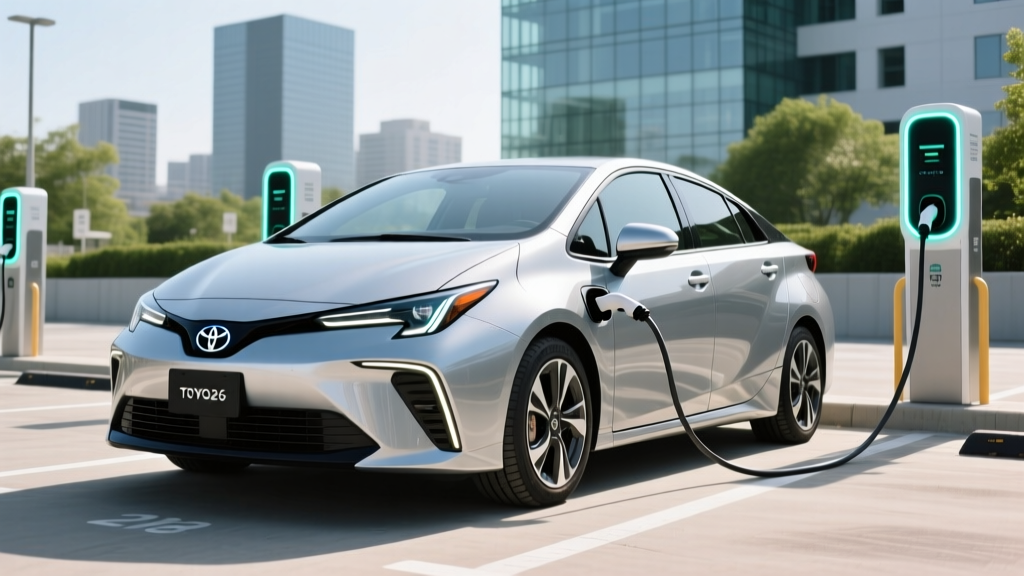
- Prius Prime (PHEV): Plugs in. Uses a 2.0-liter engine with a larger ~13.6 kWh lithium-ion battery pack. EPA-rated at up to 44 miles of electric-only range and 52 MPGe combined when using both electric and gas power.
Neither is a battery-electric vehicle (BEV). Neither has a NACS or CCS charge port capable of DC fast charging. But the Prime's ability to drive 44 miles on electricity alone before the engine kicks in covers the daily commute of roughly 78% of American drivers, according to fueleconomy.gov commuting data.
2026 Prius vs. Prius Prime: Spec-by-Spec Comparison
Before deciding whether the Prius or Prius Prime fits your life, compare the hard numbers. These figures reflect 2026 model-year data from Toyota's official specifications and EPA testing.
| Specification | 2026 Prius LE (HEV) | 2026 Prius Prime SE (PHEV) |
|---|---|---|
| Powertrain | 1.8L 4-cyl + electric motor | 2.0L 4-cyl + electric motor |
| Combined Horsepower | 138 hp | 220 hp |
| 0–60 mph | ~9.9 seconds | ~6.6 seconds |
| Battery Capacity | ~1.0 kWh (NiMH) | ~13.6 kWh (Li-ion) |
| Electric-Only Range | N/A (no plug) | 44 miles (EPA) |
| EPA Combined MPG / MPGe | 57 MPG | 52 MPGe / 48 MPG (gas-only) |
| Total Range (gas + electric) | ~590 miles | ~440 miles |
| Charging (Level 1, 120V) | N/A | ~11 hours (0–100%) |
| Charging (Level 2, 240V) | N/A | ~4 hours (0–100%) |
| DC Fast Charging | N/A | Not supported |
| Starting MSRP | $28,350 | $33,775 |
| Federal Tax Credit (§30D) | Not eligible | Up to $3,750 |
| Drivetrain | FWD (AWD optional on some trims) | FWD only |
| Battery Warranty | 10 yr / 150,000 mi | 10 yr / 150,000 mi |
Sources: Toyota Motor North America, fueleconomy.gov
Real Costs: Prius Prime PHEV vs. a Battery-Electric Vehicle
The core question for someone searching "Prius electric car" is whether to buy the plug-in Prius Prime or go full BEV with something like a Tesla Model 3, Hyundai Ioniq 6, or Chevrolet Equinox EV. The answer depends on your charging situation, driving pattern, and budget. Here's a five-year cost snapshot comparing the Prius Prime to a typical mid-price BEV with ~300 miles of range.
| Cost Factor (5-Year Estimate) | Prius Prime SE (PHEV) | Typical 300-Mi BEV (e.g., Ioniq 6) |
|---|---|---|
| Purchase Price (MSRP) | $33,775 | $42,500 |
| Federal Tax Credit | −$3,750 | −$7,500 (if eligible) |
| Net After Credit | $30,025 | $35,000 |
| Home Charger Install (Level 2) | $0 (120V sufficient) or ~$600 | $800–$2,000 |
| Annual Electricity (12,000 mi/yr) | ~$220/yr (EV portion only) | ~$540/yr |
| Annual Gasoline | ~$580/yr (mixed driving) | $0 |
| 5-Year Fuel/Energy Total | ~$4,000 | ~$2,700 |
| Maintenance (5-year est.) | ~$2,200 (oil changes, filters) | ~$1,000 (no oil changes) |
| Insurance (avg. 5-year) | ~$7,500 | ~$9,000 |
| Estimated 5-Year Total Cost | ~$47,725 | ~$50,400 |
Key takeaways from this comparison:
- Upfront cost favors the Prime. Even after the BEV's larger tax credit, the Prius Prime costs roughly $5,000 less to drive off the lot — a meaningful difference if you're budget-constrained.
- Fuel costs favor the BEV, but only by about $1,300 over five years. The gap narrows if most of your driving falls within the Prime's 44-mile electric window.
- Maintenance is cheaper on the BEV — no oil changes, fewer moving parts — but the Prime's Toyota reliability record keeps its maintenance costs modest.
- Insurance tends to be higher on BEVs due to higher repair costs and battery replacement risk, though this varies by insurer and state.
Who Should Buy the Prius Prime (and Who Should Go Full EV)
The decision between a PHEV like the Prius Prime and a BEV isn't about which technology is "better" in the abstract. It's about your specific daily life. Use this framework:
Choose the Prius Prime (PHEV) if:
- Your daily commute is under 44 miles round-trip, and you can plug in at home overnight (even a standard 120V outlet works — it just takes ~11 hours).
- You take road trips of 200+ miles several times a year and don't want to plan around DC fast-charging stations.
- You live in an apartment or rent and cannot install a Level 2 charger — the Prime still delivers meaningful electric miles on 120V trickle charging.
- Your total budget is under $35,000 after incentives.
- You live in an extremely cold climate (below 0°F regularly), where BEV range can drop 20–40% and the Prius Prime's gas engine provides reliable backup.
Choose a full BEV (bZ4X, Model 3, Ioniq 6, etc.) if:
- You have reliable access to Level 2 home charging and your daily drive exceeds 44 miles — you'd burn gas in the Prime most days.
- You want zero tailpipe emissions and lower lifetime maintenance costs.
- You qualify for the full $7,500 federal tax credit (see IRS §30D rules for income caps: $150K single / $300K joint, plus MSRP and battery sourcing requirements).
- You drive in stop-and-go urban traffic where regenerative braking maximizes BEV efficiency.
- You plan to keep the car 8–10 years and want to avoid long-term engine and transmission maintenance entirely.
Common Misconceptions About the Prius and Electrification
Misinformation around the Prius lineup runs deep. Let's correct the most frequent assumptions with data:
| Myth | Fact |
|---|---|
| "The Prius is an electric car." | The Prius HEV has no plug and cannot drive on electricity alone. The Prius Prime (PHEV) can drive 44 miles electric-only but still has a gas engine. Neither is a BEV. |
| "The Prius Prime can DC fast-charge." | It cannot. The Prime supports Level 1 (120V) and Level 2 (240V) AC charging only. Max Level 2 rate is approximately 3.3 kW. There is no CCS or NACS port. |
| "Hybrid batteries need expensive replacement." | Toyota warranties the hybrid battery for 10 years / 150,000 miles. Real-world data shows most Prius batteries last 150K–200K+ miles. Replacement, if needed, runs $2,000–$4,000 — not the $8,000+ of a BEV pack. |
| "The Prius is slow." | The 2026 Prius Prime makes 220 hp and hits 60 mph in ~6.6 seconds — faster than many compact crossovers and competitive with hot hatchbacks. |
| "PHEVs are just complicated — two systems to maintain." | Modern PHEVs like the Prime share a powertrain architecture proven over millions of Toyota hybrid miles. The added complexity is real but modest, and Toyota's reliability data supports long-term durability. |
| "I don't need to plug in the Prime — it charges itself." | The regenerative braking recovers some energy, but to access the full 44 miles of EV range, you must plug in. Unplugged, the Prime operates as a conventional hybrid at ~48 MPG. |
Real-World Ownership: What the EPA Numbers Don't Tell You
The EPA's 44-mile electric range figure for the Prius Prime assumes moderate temperatures, mixed city/highway driving, and no heavy climate-control use. In practice:
- Summer (A/C on, 85°F): Expect 38–42 miles of real electric range. Air conditioning draws from the battery but is relatively efficient on the Prime's heat-pump-equipped system.
- Winter (heater on, 25°F): Expect 28–35 miles. Cold temperatures reduce lithium-ion battery efficiency and cabin heating is energy-intensive. The Prime will automatically start the gas engine in very cold conditions to provide heat, which can reduce your electric-only miles further.
- Highway-only (70 mph sustained): Expect 32–38 miles. Higher speeds increase aerodynamic drag, and the Prime's EV mode is optimized for city and suburban speeds.
- Level 1 charging reality: If you only have a standard 120V outlet, a full charge takes roughly 11 hours. That's fine for overnight replenishment if you drive under 44 miles daily. You'll wake up to a full battery every morning — which is effectively the same experience as BEV ownership for daily commuting.
One ownership advantage the Prime has over most BEVs: you never need to worry about public charging infrastructure. If you forget to plug in, or if you're on a cross-country trip, the gas engine covers you seamlessly. There's no range anxiety — just a fuel gauge and 440+ total miles of range.
Tax Credit Eligibility: What You Actually Qualify For
The Prius Prime qualifies for a partial federal tax credit under IRS §30D, but eligibility is not automatic. Here's what determines your credit amount:
- Vehicle eligibility: The 2026 Prius Prime qualifies for up to $3,750 (based on current critical-mineral and battery-component sourcing thresholds). The full $7,500 requires meeting both the critical-mineral and battery-component requirements, which the Prime currently satisfies only partially.
- Income caps: Adjusted gross income must not exceed $150,000 (single filer), $225,000 (head of household), or $300,000 (married filing jointly).
- MSRP cap: The Prius Prime (classified as a sedan) must have an MSRP at or below $55,000. All 2026 Prime trims fall well under this threshold.
- Point-of-sale transfer: As of 2024, you can transfer the credit to the dealer at purchase, reducing your out-of-pocket cost immediately rather than waiting to claim it on your tax return. Confirm with your dealer that they support this.
- Battery sourcing rules change annually: The percentage of critical minerals and battery components that must be sourced from the U.S. or FTA partners increases each year. Check IRS.gov for the latest qualifying vehicle list before purchasing.
A practical note: the conventional Prius HEV does not qualify for any federal EV tax credit because it has no plug and is not classified as a clean vehicle under §30D. If tax incentives are a priority, the Prime is the path.
Frequently Asked Questions
Will Toyota ever make a fully electric Prius?
Toyota has not announced a battery-electric Prius as of early 2026. The company's EV strategy centers on its bZ series (bZ4X and upcoming models). Toyota executives have indicated they see PHEVs as a bridge technology for markets where charging infrastructure is still developing. If a full-electric Prius arrives, it would likely be a 2028+ model at the earliest.
Can I charge the Prius Prime at a Tesla Supercharger?
No. The Prius Prime uses a J1772 connector for Level 1 and Level 2 AC charging. It does not support DC fast charging at all, so Tesla Superchargers (which are DC) are incompatible. You can charge at any public Level 2 station with a J1772 plug — ChargePoint, EVgo, and most workplace chargers will work.
Is the Prius Prime better than the regular Prius?
It depends on your situation. The Prime offers significantly more power (220 hp vs. 138 hp), 44 miles of electric driving, and a partial tax credit — but costs ~$5,400 more upfront. If you can plug in nightly and your commute is under 44 miles, the Prime will run almost entirely on electricity on weekdays, saving fuel. If you can't plug in or you drive long distances daily, the standard Prius HEV at 57 MPG may be the more practical and cost-effective choice.
How long does the Prius Prime battery last?
Toyota warranties the Prime's lithium-ion hybrid battery for 10 years or 150,000 miles, whichever comes first. The battery is designed to last the life of the vehicle. Because the Prime's battery is relatively small (~13.6 kWh) and the vehicle's software limits the usable state-of-charge window to reduce stress, degradation is minimal compared to larger BEV packs. Real-world reports from earlier-generation Primes suggest 150,000–200,000+ miles before any significant capacity loss.
Does the Prius Prime save money compared to a gas-only car?
Yes, but the savings depend on how much you drive in electric mode. If you charge nightly and commute 30 miles round-trip, you'll use almost no gasoline on weekdays. Over a year of 12,000 miles, a Prius Prime driver who charges regularly might spend $500–$700 on fuel and electricity combined, compared to $1,400–$1,800 for a 30 MPG gas-only compact sedan (at $3.50/gallon). The annual savings of roughly $800–$1,100 recoups the Prime's price premium within 5–6 years before tax credits — or 2–3 years after the $3,750 credit.
Bottom Line: The Prius Isn't Electric, but the Prime Might Be All You Need
If you searched for "Prius electric car" hoping for a fully electric Toyota icon, the honest answer is that it doesn't exist yet. But the 2026 Prius Prime occupies a practical middle ground that many buyers actually need: 44 miles of daily electric driving for commutes and errands, a gas engine for road trips and cold weather, a sub-$34,000 starting price, and the backing of Toyota's hybrid reliability record.
For households with one car and no guaranteed home Level 2 charging, the Prime eliminates the infrastructure dependency that still blocks BEV adoption for millions of Americans. For those with reliable home charging and longer commutes, a full BEV will deliver lower operating costs and zero tailpipe emissions — but at a higher purchase price.
The right choice isn't about which technology is superior in theory. It's about which one fits your driveway, your commute, and your budget today.