The Quick Answer: Toyota's 2026 EV Lineup Explained
Toyota sells two battery-electric vehicles in the U.S. for the 2026 model year: the bZ4X compact SUV (starting ~$37,070, up to 252 miles EPA range) and the newly launched bZ Woodland midsize SUV (starting ~$43,000 estimated, up to ~280 miles EPA range). Both use NMC lithium-ion batteries, support DC fast charging up to 150 kW (bZ4X) or 175 kW (bZ Woodland), and come with Toyota's 8-year/100,000-mile EV battery warranty. Federal §30D tax credit eligibility up to $7,500 may apply depending on trim MSRP caps, buyer income limits, and battery component/critical-mineral sourcing requirements — check current IRS rules before purchasing.
Toyota's Current Electric Vehicle Lineup
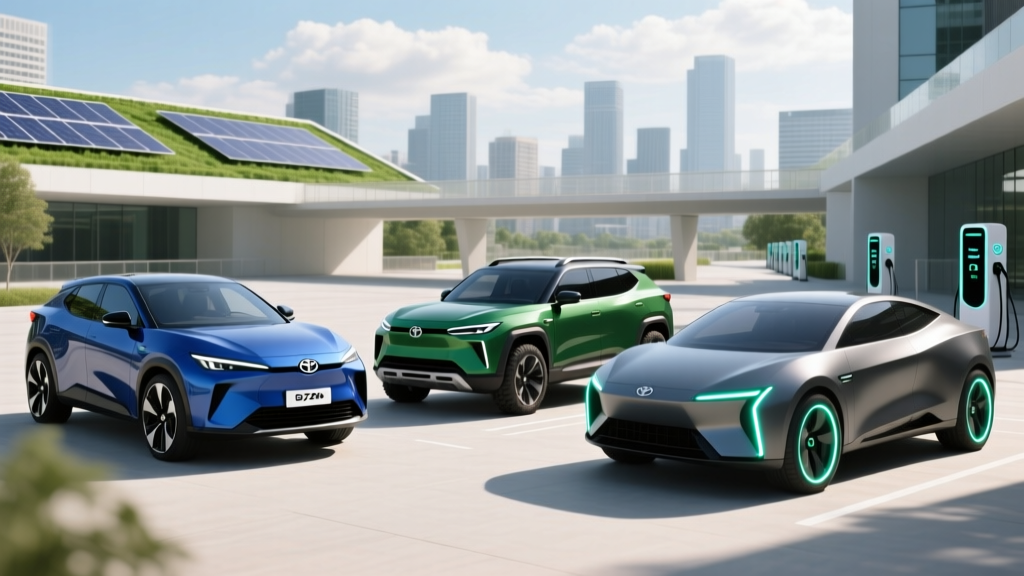
Toyota's EV strategy has drawn both criticism and cautious optimism. While competitors like Hyundai, Kia, and Tesla pushed ahead with dedicated EV platforms years ago, Toyota spent much of the early 2020s emphasizing hybrids and hydrogen. That calculus has shifted. By 2026, Toyota offers two production BEVs to U.S. buyers, with more on the horizon.
2026 Toyota bZ4X
The bZ4X is Toyota's first mass-market battery-electric vehicle, built on the e-TNGA platform shared with the Subaru Solterra. After a rocky 2022 launch marred by a wheel-hub recall, the bZ4X has settled into a competent, if conservative, compact EV SUV. For 2026, Toyota has refreshed the model with a revised front fascia, updated infotainment (Toyota Audio Multimedia with a 12.3-inch display), and modest efficiency tweaks.
| Specification | FWD XLE | AWD XLE |
|---|---|---|
| Base MSRP | $37,070 | $39,120 |
| EPA Range | 252 miles | 228 miles |
| Usable Battery | 71.4 kWh (NMC) | 71.4 kWh (NMC) |
| Combined MPGe | 119 MPGe | 104 MPGe |
| DC Fast Charge Peak | 150 kW | 150 kW |
| 10–80% DC Time | ~32 minutes | ~32 minutes |
| Level 2 AC Rate | 7.2 kW | 7.2 kW |
| Horsepower | 201 hp | 215 hp |
| 0–60 mph | 7.1 sec | 6.5 sec |
| Battery Warranty | 8 years / 100,000 miles | |
Real-World Range Reality: The bZ4X FWD carries a 252-mile EPA rating, but expect roughly 210–230 miles on sustained highway driving at 70+ mph. In cold weather (below 30°F), plan for a 20–30% reduction — potentially dropping usable range to ~175 miles. The AWD variant's 228-mile EPA figure translates to roughly 190–205 miles highway in moderate conditions. These figures trail competitors like the Hyundai Ioniq 5 (303 mi EPA) and Tesla Model Y (308 mi EPA), which matters for road-trippers.
2026 Toyota bZ Woodland
The bZ Woodland is Toyota's answer to buyers who found the bZ4X too small and under-ranged. Positioned as a midsize electric SUV (slotting between the bZ4X and the three-row bZ Large SUV expected later), the bZ Woodland targets the Subaru Outback and Tesla Model Y crowd with standard AWD, increased ground clearance, and a larger battery pack.
| Specification | bZ Woodland AWD |
|---|---|
| Base MSRP (est.) | ~$43,000 |
| EPA Range (est.) | ~280 miles |
| Usable Battery | ~84 kWh (NMC) |
| DC Fast Charge Peak | 175 kW |
| 10–80% DC Time (est.) | ~28 minutes |
| Level 2 AC Rate | 11 kW |
| Horsepower | ~338 hp |
| 0–60 mph (est.) | ~5.5 sec |
| Towing Capacity | 3,500 lbs |
Note: The bZ Woodland is newly launched for the 2026 model year. Final EPA certification figures may differ slightly from estimates above. Verify at fueleconomy.gov before purchasing.
EV vs. Hybrid vs. Gas: How Toyota's EVs Compare
Toyota practically invented the modern hybrid with the Prius, and its 2026 hybrid lineup remains formidable. So how do the new Toyota EVs stack up against the company's own hybrids — and conventional gas models?
| Metric | bZ4X FWD (EV) | RAV4 Hybrid AWD | RAV4 Gas AWD |
|---|---|---|---|
| Base MSRP | $37,070 | $33,425 | $30,825 |
| EPA Efficiency | 119 MPGe | 40 MPG combined | 30 MPG combined |
| Est. Annual Fuel/Energy Cost* | ~$590 | ~$1,350 | ~$1,800 |
| Annual Maintenance (est.) | ~$300 | ~$550 | ~$650 |
| Federal Tax Credit (potential) | Up to $7,500** | None (HEV) | None |
*Based on 15,000 miles/year, $0.16/kWh national average electricity rate, $3.60/gallon gasoline. Your rates vary by utility and region. Source: fueleconomy.gov cost-to-drive tool.
**Federal §30D credit eligibility depends on MSRP caps (SUVs capped at $80,000), buyer AGI limits ($150K single / $300K joint), and battery sourcing requirements. Confirm at IRS.gov §30D.
The numbers tell a clear story: the bZ4X costs more upfront than a RAV4 Hybrid, but the annual energy and maintenance savings — roughly $1,000–$1,300 per year — can close the gap within 3–4 years, especially if you qualify for the full federal credit. For buyers who drive more than 15,000 miles annually or face higher gasoline prices, the payback accelerates.
Real Costs of Owning a Toyota EV
Sticker price is only the starting point. Here's what a realistic five-year ownership picture looks like for the bZ4X FWD, compared to its closest gas-powered counterpart.
| Cost Category | bZ4X FWD | RAV4 Gas AWD |
|---|---|---|
| Purchase Price | $37,070 | $30,825 |
| Federal Tax Credit | –$3,750 (est. partial*) | $0 |
| Energy/Fuel (5 yrs, 75K mi) | $2,950 | $9,000 |
| Maintenance (5 yrs) | $1,500 | $3,250 |
| Insurance (5 yrs, est.) | $7,500 | $6,250 |
| Est. Depreciation | $16,500 | $12,000 |
| 5-Year Total (est.) | $28,770 | $37,325 |
*The bZ4X may qualify for a partial or full §30D credit depending on model-year battery sourcing compliance. Toyota has been working to shift supply chains to meet critical-mineral and battery-component requirements. Verify current eligibility before purchase.
Key takeaways from this breakdown:
- Energy savings are substantial: At $0.16/kWh (national average residential rate), charging a bZ4X costs roughly $0.04 per mile versus $0.12 per mile for gasoline at $3.60/gallon. If you have access to cheaper overnight utility rates or free workplace charging, the gap widens further.
- Insurance costs more for EVs: Expect premiums 15–25% higher than equivalent gas vehicles. EV repair costs, battery replacement risk, and parts pricing drive this. Get quotes before committing.
- Maintenance is genuinely lower: No oil changes, no transmission fluid, fewer brake replacements (thanks to regenerative braking). Toyota recommends cabin air filter, tire rotation, and brake-fluid checks — that's about it.
- Depreciation remains a wildcard: EV depreciation has been volatile. The bZ4X saw steep initial drops, but Toyota's brand reputation and the 8-year battery warranty may stabilize long-term values.
Charging a Toyota EV: What You Need to Know
Charging infrastructure is the single biggest variable in EV satisfaction. Here's the practical picture for Toyota's EVs.
Home Charging (Level 2)
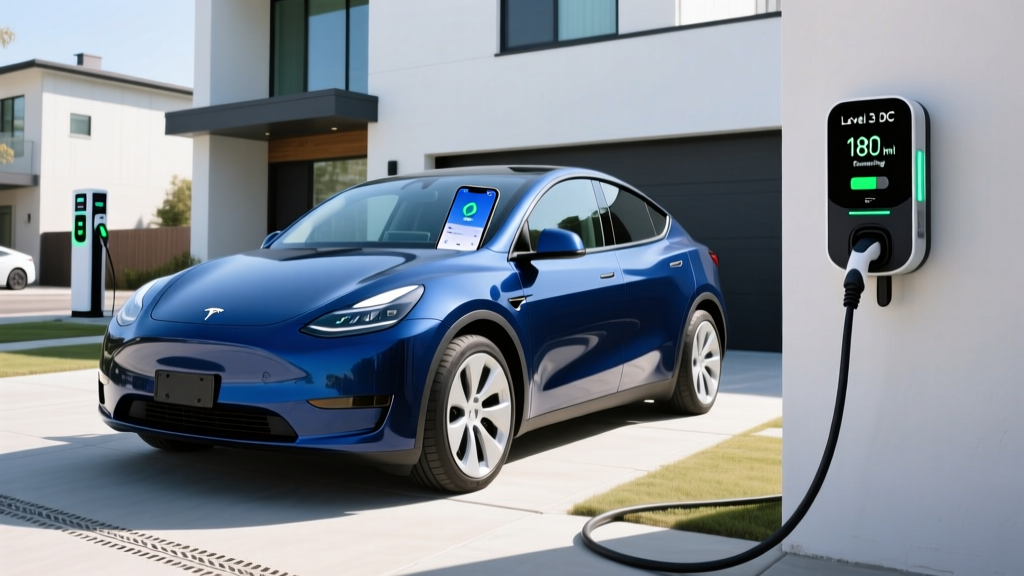
The bZ4X accepts up to 7.2 kW on Level 2 AC (J1772 connector), meaning a full charge from empty takes roughly 10 hours on a 32-amp Level 2 home charger. The bZ Woodland's 11 kW onboard charger cuts this to about 7.5 hours — you'll wake up to a full battery every morning with overnight charging.
Home Level 2 installation costs vary widely:
- Simple install (charger near panel, 200-amp service): $500–$1,200 total (equipment + electrician)
- Standard install (50–100 ft run, new 240V circuit): $1,200–$2,500
- Panel upgrade required (older home with 100-amp service): $2,500–$5,000+ including panel replacement
Always get a quote from a licensed electrician before purchasing a charger. The federal Alternative Fuel Vehicle Refueling Property Credit (§30C) may cover up to 30% of home charging equipment and installation costs (capped at $1,000), subject to income and census-tract eligibility.
DC Fast Charging
The bZ4X's 150 kW peak DC charge rate is adequate but trails competitors. Hyundai's Ioniq 5 peaks at 240 kW (on 800V architecture), and the Tesla Model Y can sustain 250 kW. Toyota's charge curve also tapers noticeably above 80% State of Charge (SoC) — this is normal for NMC battery chemistry, but it means the last 20% can take as long as the first 80%.
Common Toyota EV Misconceptions
| Myth | Fact |
|---|---|
| "Toyota EVs can't road trip." | The bZ4X can road trip, but 228–252 miles of real-world range means more frequent stops. Plan for 30-minute DC fast-charge breaks every 180–200 miles on the highway. The bZ Woodland's ~280-mile range improves this significantly. |
| "The battery will need replacing in a few years." | Toyota warranties its EV batteries for 8 years/100,000 miles against capacity dropping below 70%. Industry data shows modern NMC packs retaining 85–90% capacity at 100,000 miles with normal use. Replacement costs $12,000–$18,000 out of warranty, but most owners will never need one. |
| "I need a Tesla to use Superchargers." | Toyota's bZ models use the CCS1 connector (with NACS adapter compatibility expanding via Tesla's Supercharger network opening). As of 2026, Toyota provides a NACS adapter for bZ owners to access Tesla Superchargers in many regions. |
| "EVs don't work in cold weather." | Cold weather reduces range 20–30% — this is real but manageable. The bZ4X includes a battery preconditioning feature for DC fast charging and an available heat pump (standard on some trims) that significantly reduces cabin-heating energy draw. Precondition while plugged in to preserve range. |
| "I'll definitely get the $7,500 tax credit." | Eligibility depends on MSRP caps ($80,000 for SUVs), buyer adjusted gross income ($150K single / $300K joint filer), and stringent battery component and critical-mineral sourcing rules that change annually. Some Toyota EV trims may qualify for a partial credit ($3,750) or the full amount depending on the model year's sourcing compliance. Verify at IRS.gov before purchase. |
Who Should Buy a Toyota EV? A Decision Framework
Buy the Toyota bZ4X if:
- You want a compact EV SUV from a mainstream brand with a strong dealer network
- Your daily commute is under 100 miles round-trip and you can charge at home
- You value Toyota's reliability reputation and 8-year battery warranty
- You're upgrading from a RAV4 and want similar dimensions with zero tailpipe emissions
- Price sensitivity matters — the bZ4X undercuts the Model Y and Ioniq 5 on base MSRP
Buy the Toyota bZ Woodland if:
- You need more range (~280 mi), cargo space, and towing capacity (3,500 lbs)
- You want standard AWD for snow, rain, or light off-pavement use
- You're cross-shopping the Subaru Outback, Tesla Model Y, or Hyundai Ioniq 5
- You take occasional road trips and want fewer charging stops
Consider a Toyota Hybrid instead (RAV4 Hybrid, Prius, Highlander Hybrid) if:
- You cannot install a home Level 2 charger (apartment, street parking, no garage)
- You regularly drive 400+ miles between stops in rural areas with sparse charging
- You live in an extreme cold climate (sustained sub-zero temperatures) and need maximum flexibility
- Upfront budget is tight — the RAV4 Hybrid starts ~$3,600 less than the bZ4X
- You want proven long-term reliability data spanning decades (Toyota hybrids have it; Toyota EVs don't yet)
Look at competitors (Hyundai Ioniq 5, Tesla Model Y, Kia EV6) if:
- Maximum range is your top priority (Ioniq 5: 303 mi, Model Y: 308 mi)
- Fastest DC charging matters (Ioniq 5/EV6 at 240 kW on 800V architecture: 10–80% in ~18 min)
- You want the most mature public charging network (Tesla Supercharger advantage, though this is opening to other brands)
What's Next for Toyota EVs?
Toyota has announced a broadening EV offensive through the end of the decade. Confirmed or strongly signaled upcoming models include:
- bZ Large SUV (announced): A three-row electric SUV targeting the Kia EV9 and Tesla Model X segment. Expected for the 2027 model year with 300+ miles of range. Specs remain preliminary.
- Next-generation EV platform: Toyota has previewed a dedicated next-gen EV architecture promising improved energy density, faster charging, and lower production costs — expected to underpin models from 2027 onward.
- Solid-state battery roadmap: Toyota holds significant solid-state battery patents and has announced plans for commercialization, but production-scale deployment in consumer vehicles remains years away. Don't delay a purchase waiting for solid-state.
Frequently Asked Questions
Does the Toyota bZ4X qualify for the federal EV tax credit?
It depends on the specific model year's battery sourcing compliance and your personal tax situation. Under current IRS §30D rules, the bZ4X qualifies as an SUV (MSRP cap: $80,000), but the credit amount — $0, $3,750, or $7,500 — hinges on whether the battery meets critical-mineral and component sourcing thresholds that tighten annually. Buyer income caps also apply ($150,000 single / $300,000 joint AGI). Check the IRS Clean Vehicle Credit page and confirm with a tax professional before relying on the credit in your budget.
How long does it take to charge a Toyota bZ4X at home?
On a Level 2 home charger (240V, 32-amp, 7.2 kW), a full charge from near-empty takes approximately 10 hours. In practice, most owners plug in nightly and top up 20–40% of battery — which takes 2–4 hours. On a standard 120V household outlet (Level 1, ~1.4 kW), a full charge takes 50+ hours, making Level 1 practical only for overnight top-ups of less than 40 miles.
Is the Toyota bZ4X good for road trips?
It's capable but requires more planning than longer-range EVs. With 228–252 miles of EPA range (less at highway speeds or in cold weather), expect to stop every 180–200 miles for a 25–35 minute DC fast-charge session. For a 600-mile trip, that's two charging stops. The expanding CCS and Tesla Supercharger (via NACS adapter) network makes this feasible on most interstate corridors, but rural routes still have gaps.
How does Toyota's EV battery warranty compare?
Toyota provides an 8-year/100,000-mile warranty on the high-voltage battery, covering capacity loss below 70% of original. This matches the industry standard (Hyundai, Kia, Ford, and most others offer the same 8/100k terms). California and states adopting CARB standards may have extended PZEV warranty provisions — check your state's rules.
Should I wait for Toyota's next-gen EVs or buy now?
If you need a vehicle now and the bZ4X or bZ Woodland fits your needs, there's no strong reason to wait. Next-generation models (2027+) will likely offer better range and faster charging, but EV technology improves incrementally, not in leaps. Waiting for "the perfect EV" is a trap — today's models are genuinely capable for daily use. If your current vehicle is functional and you're flexible, waiting 12–18 months will bring more options.
Can I charge a Toyota bZ at Tesla Superchargers?
Yes, with an adapter. Toyota provides (or makes available) a NACS-to-CCS adapter enabling bZ owners to access Tesla's Supercharger network. Availability of adapter hardware and Supercharger stall compatibility varies by region and station generation. Check Toyota's owner resources and Tesla's "Open Supercharger" map for current coverage.