The Quick Answer
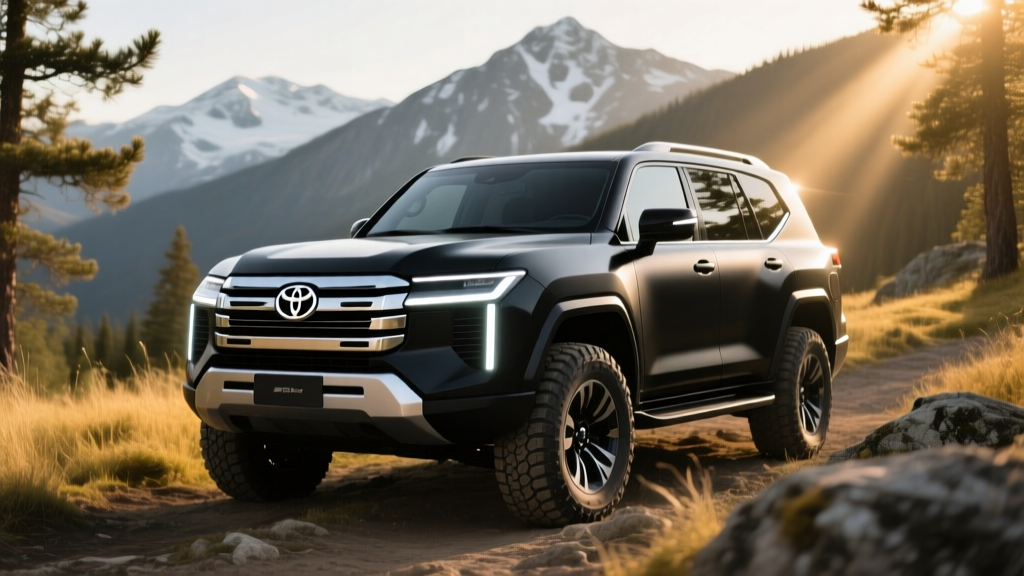
As of 2026, Toyota has not announced a dedicated Land Cruiser EV. The current 2026 Land Cruiser is offered exclusively as a hybrid (i-FORCE MAX powertrain), and Toyota's broader EV strategy centers on the bZ series and upcoming three-row SUVs on the e-TNGA platform. If a Land Cruiser EV arrives, expect it no earlier than 2028-2029, likely with 250+ miles of EPA range, dual-motor AWD, and a starting MSRP above $70,000. For now, buyers wanting an electrified Land Cruiser should consider the hybrid variant or cross-shop dedicated EV SUVs like the Rivian R1S or Cadillac Escalade IQ.
Why Toyota Hasn't Rushed a Land Cruiser EV
The Land Cruiser nameplate carries specific expectations: extreme durability, off-road capability, and global reliability in harsh environments. Toyota's cautious approach to full EVs for this model reflects several engineering and market realities.
First, battery weight compounds off-road challenges. A 100+ kWh battery pack adds 1,200-1,500 pounds, increasing ground pressure and suspension stress on technical terrain. Second, Toyota's core Land Cruiser markets—Middle East, Africa, Australia—have limited charging infrastructure outside major cities. Third, Toyota has prioritized its mass-market bZ4X and upcoming bZ Large SUV for family buyers before tackling the niche off-road segment.
Toyota's bZ4X (EPA range: 252 miles, 71.4 kWh usable battery, 150 kW peak DC charging) demonstrated the brand's first dedicated EV platform, but its modest off-road capability and 0-60 time of 7.1 seconds fall short of Land Cruiser expectations.
What an Electric Land Cruiser Would Require
If Toyota greenlights a Land Cruiser EV, it must meet benchmarks set by both the current hybrid Land Cruiser and rival electric SUVs. Here's what the spec sheet needs to look like:
| Spec | 2026 Land Cruiser Hybrid | Hypothetical Land Cruiser EV | Rivian R1S (Dual Motor) | Cadillac Escalade IQ |
|---|---|---|---|---|
| Powertrain | 2.4L turbo hybrid | Dual/Tri-motor AWD | Dual-motor AWD | Dual-motor AWD |
| Horsepower | 326 hp | 450-550 hp (est.) | 533 hp | 680 hp |
| 0-60 mph | 6.2 sec | 4.5-5.0 sec (est.) | 4.5 sec | 4.9 sec |
| EPA Range | ~27 mpg (570 mi range) | 250-300 mi (est.) | 352 mi | 450 mi |
| Battery Capacity | 1.87 kWh (hybrid) | 100-120 kWh (est.) | 128 kWh | 200 kWh |
| DC Fast Charge Peak | N/A | 250-350 kW (est.) | 220 kW | 350 kW |
| 10-80% Charge Time | N/A | 20-28 min (est.) | ~30 min | ~20 min |
| Towing Capacity | 6,000 lbs | 7,000-8,000 lbs (est.) | 7,700 lbs | 8,000 lbs |
| Ground Clearance | 8.7 in | 9-11 in (est.) | 14.9 in (max) | 10.0 in |
| Starting MSRP | $57,345 | $70,000-$85,000 (est.) | $79,900 | $129,990 |
Key takeaway: A Land Cruiser EV would need at least 250 miles of real-world range (not just EPA sticker), 300+ kW charging capability to minimize trail-side downtime, and approach/departure angles matching the current model's off-road credentials. Battery chemistry matters too—an LFP (lithium iron phosphate) pack would offer better longevity and thermal stability for desert use, though at the cost of lower energy density and heavier weight.
EV vs Hybrid: The Real Ownership Math
For buyers considering the current Land Cruiser hybrid versus waiting for a potential EV, here's a 5-year cost projection assuming 15,000 miles/year:
| Category | 2026 Land Cruiser Hybrid | Hypothetical Land Cruiser EV |
|---|---|---|
| Purchase Price | $62,000 (avg trim) | $78,000 (est.) |
| Federal Tax Credit (§30D) | $0 (hybrid ineligible) | $0-$7,500 (depends on battery sourcing & buyer income) |
| Effective Purchase | $62,000 | $70,500-$78,000 |
| Fuel/Energy (5 yrs) | $9,800 (27 mpg, $3.50/gal) | $4,200 (home charging @ $0.14/kWh) |
| Maintenance (5 yrs) | $3,200 | $1,800 |
| Insurance (5 yrs) | $8,500 | $9,800 (EV premium) |
| Depreciation (est.) | $22,000 | $28,000 (higher EV depreciation risk) |
| Total 5-Year Cost | $105,500 | $114,300-$121,800 |
The hybrid wins on pure economics today. The EV's fuel savings (~$5,600 over 5 years) don't offset the higher purchase price, insurance premiums, and steeper depreciation. This equation shifts if you have access to cheap solar charging, qualify for the full $7,500 tax credit, or drive significantly more than 15,000 miles annually.
Real-world caveat: The §30D tax credit has strict requirements as of 2026. Per IRS rules, the buyer's AGI cannot exceed $150,000 (single) or $300,000 (joint), the vehicle MSRP must be under $80,000 for SUVs, and battery components/critical minerals must meet North American sourcing thresholds. A hypothetical $78,000 Land Cruiser EV could qualify, but only if Toyota sources batteries from compliant suppliers—a challenge given current supply chains.
Off-Road EV Reality: What Trail Runners Should Know
If you're eyeing a Land Cruiser EV for overlanding or technical trails, understand these limitations:
- Range anxiety is real off-road: Low-range crawling at 5-10 mph can consume 2-3x the energy of highway driving due to constant motor load and regenerative braking inefficiency at low speeds. A 250-mile EPA range might shrink to 80-100 miles on a technical trail day.
- Cold weather compounds the problem: Battery efficiency drops 20-30% below freezing. Winter wheeling in Colorado or Montana could cut range further.
- Charging infrastructure gaps: Popular off-road areas (Moab, Rubicon Trail, remote forest roads) have zero DC fast chargers. You'd need to tow a generator or plan multi-day trips around charging stops.
- Weight distribution advantages: EVs have a low center of gravity (battery pack under the floor), reducing rollover risk. Instant torque also aids rock crawling precision.
Rivian's R1S has proven EVs can off-road competently, but its 352-mile EPA range and 14.9-inch max ground clearance come at a $79,900 starting price. A Land Cruiser EV would need to match or exceed these capabilities at a lower cost to justify the wait.
Decision Framework: Should You Wait or Buy Now?
Buy the 2026 Land Cruiser Hybrid If:
- You need a vehicle in the next 6-12 months
- You regularly drive in areas with sparse charging infrastructure
- Your budget is under $65,000
- You prioritize proven reliability and global serviceability
- You tow frequently (hybrid range isn't impacted by trailer weight as severely as EV range)
Wait for a Land Cruiser EV (or buy a Rivian R1S) If:
- You have home Level 2 charging and primarily drive in urban/suburban areas
- You're willing to spend $75,000+ and can wait until 2028-2029
- You want instant torque for rock crawling and don't mind range trade-offs
- You qualify for the §30D tax credit and want to reduce long-term fuel costs
- You're open to cross-shopping the Rivian R1S, which is available now with strong off-road credentials
Common Misconceptions About a Land Cruiser EV
| Myth | Fact |
|---|---|
| "Toyota will never make an EV Land Cruiser—they're too conservative." | Toyota has committed to 30 EV models by 2030. A Land Cruiser EV is plausible, but Toyota prioritizes high-volume models first. The bZ Large SUV (expected 2026-2027) will test the three-row EV market before a niche off-roader. |
| "An EV Land Cruiser would have worse off-road capability." | Not necessarily. EVs offer precise torque vectoring, instant low-end torque, and a lower center of gravity. The challenge is range and charging access, not mechanical capability. |
| "I can't tow with an EV—it destroys range." | Towing does reduce EV range by 30-50%, but the same is true for gas vehicles (though less dramatically). A Land Cruiser EV with a 120 kWh battery could still achieve 150-180 miles while towing 5,000 lbs—adequate for most boat/trailer trips with planned charging stops. |
| "EVs are cheaper to own in every scenario." | False. As the cost table above shows, higher purchase prices, insurance premiums, and depreciation can offset fuel savings, especially for low-mileage drivers or those without access to cheap home charging. |
What Toyota's EV Roadmap Tells Us
Toyota's announced EV strategy provides clues about a potential Land Cruiser EV timeline:
- 2024-2025: bZ4X (compact crossover) and bZ3 (sedan, China-only) establish the e-TNGA platform.
- 2026-2027: Expected launch of bZ Large SUV (three-row family hauler) and next-gen battery tech with 20% more energy density.
- 2028-2030: Potential for niche models like a Land Cruiser EV or Tacoma EV, assuming battery costs drop below $100/kWh and charging infrastructure expands in off-road regions.
Toyota's official communications emphasize a "multi-pathway" approach—hybrids, plug-in hybrids, hydrogen, and BEVs—rather than an all-in EV pivot. This suggests a Land Cruiser EV, if it comes, will coexist with a hybrid variant rather than replace it.
Frequently Asked Questions
Will Toyota make a Land Cruiser EV?
Toyota has not announced a Land Cruiser EV as of 2026. The company's EV roadmap focuses on mass-market models first. A Land Cruiser EV is plausible by 2028-2029 but not confirmed.
What's the best electric SUV for off-roading right now?
The Rivian R1S (Dual Motor, $79,900) offers 352 miles of EPA range, 14.9 inches of ground clearance, and proven off-road capability. The GMC Hummer EV SUV is another option, though its $100,000+ price and 3,000+ pound weight limit practicality.
Does the current Land Cruiser hybrid qualify for a tax credit?
No. The §30D federal tax credit applies only to plug-in EVs and PHEVs with sufficient battery capacity. The Land Cruiser's 1.87 kWh hybrid battery does not qualify. However, some state incentives may apply—check your local programs.
How much would a Land Cruiser EV cost?
Based on competitor pricing and battery cost projections, expect a starting MSRP of $70,000-$85,000, depending on battery size and trim. This would position it between the current Land Cruiser hybrid ($57,345) and luxury EV SUVs like the Cadillac Escalade IQ ($129,990).
Can I install a Level 2 charger at home for a future Land Cruiser EV?
Most homes with a 200-amp electrical panel can support a Level 2 charger (7-11 kW, adding 25-40 miles of range per hour). Installation costs range from $800-$2,500 depending on panel upgrades and wiring distance. Consult a licensed electrician for a site-specific quote.