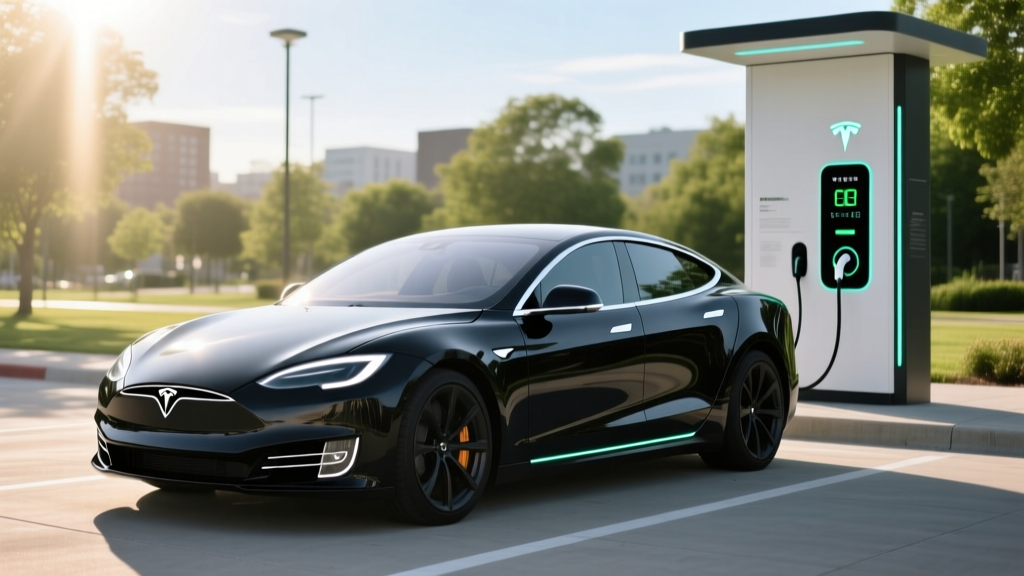
Every few months, a video circulates showing a Tesla engulfed in flames, and search engines light up with the query "Tesla blew up." The imagery is dramatic, the headlines are clickable, and the implications for EV safety feel alarming. But as with most viral phenomena, the full story is more nuanced — and more data-driven — than a 30-second clip suggests.
This article isn't a Tesla review in the traditional sense. Instead, it's an evidence-based examination of what actually happens when a Tesla (or any EV) catches fire, how lithium-ion battery safety engineering works in 2026, how EV fire rates compare to internal combustion vehicles, and what prospective buyers should actually be concerned about when evaluating battery safety.
The Viral "Tesla Blew Up" Phenomenon: What's Really Happening
When people search for "Tesla blew up," they're typically reacting to one of three scenarios:
- Post-collision thermal events: A high-speed crash damages the battery pack, and a fire develops minutes or even hours later.
- Charging-related incidents: Rare cases where a battery enters thermal runaway during or after DC fast charging.
- Spontaneous (and extremely rare) fires: Vehicles parked or idle that develop a battery fault leading to ignition.
The critical context that viral videos omit: every single one of these scenarios also happens with gasoline vehicles, at dramatically higher rates. A cracked fuel line, a ruptured gas tank in a rear-end collision, or an electrical short in a 12V system can ignite a gas car just as readily. The difference is that gas car fires are so routine — roughly 170,000+ highway vehicle fires per year in the U.S., according to NFPA data — that they rarely make the news. An EV fire, by contrast, is novel enough to generate millions of views.
How Lithium-Ion Battery Fires Actually Work
Understanding why a "Tesla blew up" headline is both alarming and misleading requires understanding lithium-ion battery chemistry. EV battery packs contain hundreds or thousands of individual cells. When one cell is damaged — by impact, manufacturing defect, or extreme thermal stress — it can enter a condition called thermal runaway.
Thermal runaway is a chain reaction: one overheating cell transfers heat to its neighbors, which then also enter thermal runaway, creating a cascading fire that burns extremely hot (up to 2,000°F+) and is difficult to extinguish because the battery generates its own oxygen during decomposition.
Why EV Battery Fires Are Different (But Not More Common)
When an EV battery fire does occur, it presents unique challenges:
- Higher temperatures: Lithium-ion fires burn hotter than gasoline fires.
- Longer duration: Firefighters may need 3,000–6,000+ gallons of water to fully extinguish a pack fire, versus ~300 gallons for a gas car fire.
- Re-ignition risk: Damaged cells can re-ignite hours or days after initial extinguishment, requiring the vehicle to be stored in an isolated area.
- Toxic off-gassing: Burning lithium-ion cells release hydrogen fluoride gas, requiring hazmat protocols.
These characteristics make EV fires more complex for first responders, but they do not make them more frequent. This distinction is essential for buyers evaluating safety risk.
Tesla's Battery Safety Engineering in 2026
Tesla has iterated significantly on battery pack safety across its model lineup. Here's what's protecting you in a current-production 2026 Tesla:
| Feature | Function |
|---|---|
| Structural Battery Pack | The pack is a stressed member of the chassis, improving torsional rigidity and distributing crash forces away from cells. |
| Cell-Level Thermal Barriers | Fire-retardant materials between cells slow or prevent thermal propagation from one cell to the next. |
| Bottom Armor / Skid Plate | Titanium and high-strength steel underbody shields protect the pack from road debris impacts. |
| BMS (Battery Management System) | Monitors cell voltage, temperature, and impedance in real time; isolates faulty modules before thermal runaway begins. |
| Vent/Exhaust Routing | If cells do vent hot gas, directional channels route it away from the passenger cabin. |
| LFP Chemistry (Standard Range) | Lithium iron phosphate cells have a higher thermal runaway threshold (~270°C vs ~210°C for NMC), making them inherently more stable. |
The shift to LFP (lithium iron phosphate) chemistry in Standard Range models is one of the most significant safety improvements in Tesla's recent history. LFP cells are harder to push into thermal runaway, degrade more slowly, and tolerate repeated 100% charging without damage. The trade-off: lower energy density, which means slightly less range for the same pack weight.
EV Fire Rates vs. Gas Car Fire Rates: The Numbers
This is the data point that matters most for buyers concerned about a "Tesla blew up" scenario:
| Powertrain Type | Fires per 100K Vehicles | Primary Causes |
|---|---|---|
| Battery Electric (BEV) | ~25 | Collision damage, manufacturing defects, charging faults |
| Hybrid (HEV/PHEV) | ~3,475 | ICE components + electrical system + fuel system |
| Gasoline (ICE) | ~1,529 | Fuel leaks, electrical shorts, exhaust heat, collisions |
Source: Analysis based on NHTSA recall and incident data, National Transportation Safety Board reports, and Bureau of Transportation Statistics. Hybrid figures are elevated partly due to recall-related fire-risk classifications.
The data is unambiguous: you are far less likely to experience a vehicle fire in a battery-electric car than in a gasoline car. The perception gap exists because EV fires are newsworthy precisely because they're unusual.
What Tesla Owners Should Actually Monitor
Rather than worrying about spontaneous combustion, current and prospective Tesla owners should focus on the maintenance and monitoring items that genuinely affect battery longevity and safety:
1. Watch for Battery Health Warnings
Tesla's BMS will alert you to cell imbalance, excessive degradation, or thermal anomalies via the touchscreen. Never ignore a "Battery Health" or "Service Required" notification. These are early-warning systems that can prevent a fault from escalating.
2. Avoid Chronic Deep Discharge on NMC Packs
If your Tesla has an NMC (nickel manganese cobalt) battery — typically Long Range and Performance trims — daily charging to 100% accelerates degradation and increases long-term cell stress. Tesla recommends setting your charge limit to 80% for daily use and only charging to 100% when you need maximum range for a trip. LFP-equipped Standard Range models can be charged to 100% regularly without concern.
3. Inspect After Significant Underbody Impacts
If you hit a large pothole, curb, or road debris hard enough to produce an audible impact, schedule a service inspection. Damage to the skid plate or battery housing may not be immediately visible but could compromise cell integrity over time.
4. Use Reputable Charging Equipment
Stick to UL-listed home chargers (Tesla Wall Connector, ChargePoint Home Flex, Emporia Vue) and well-maintained public DC fast-charging networks. Damaged cables, non-certified adapters, or electrical faults in substandard equipment can create charging-side risks.
Tesla Safety Ratings: Beyond the Fire Question
While fire risk captures headlines, overall crash safety is a more statistically relevant concern for any car buyer. Tesla's 2026 lineup performs well in standardized testing:
| Model | NHTSA Overall | IIHS Rating |
|---|---|---|
| Model 3 (2026) | 5 Stars | Top Safety Pick+ |
| Model Y (2026) | 5 Stars | Top Safety Pick+ |
| Model S (2025) | 5 Stars | Good (most categories) |
| Model X (2025) | 5 Stars | Good (most categories) |
| Cybertruck (2025) | Not Yet Rated | Not Yet Rated |
Ratings sourced from NHTSA and IIHS. Check current scores as testing updates throughout the model year.
The low center of gravity from the floor-mounted battery pack gives every Tesla a very low rollover risk — one of the key reasons for consistent 5-star NHTSA scores. In a crash, the battery housing actually acts as additional structural reinforcement.
Tesla Model Lineup at a Glance (2026)
For buyers who've done their fire-safety research and are ready to evaluate the actual vehicles, here's a quick-reference spec table for Tesla's current production lineup:
| Spec | Model 3 LR AWD | Model Y LR AWD | Model S LR | Model X LR |
|---|---|---|---|---|
| EPA Range | 363 mi | 320 mi | 402 mi | 335 mi |
| Battery (usable) | ~75 kWh (NMC) | ~75 kWh (NMC) | ~95 kWh (NMC) | ~95 kWh (NMC) |
| Peak DC Charge | 250 kW | 250 kW | 250 kW | 250 kW |
| 10–80% DC Time | ~28 min | ~28 min | ~32 min | ~32 min |
| 0–60 mph | 4.2 sec | 4.8 sec | 3.1 sec | 3.8 sec |
| Base MSRP | $47,740 | $49,990 | $79,990 | $84,990 |
| Battery Warranty | 8 yr / 120K mi | 8 yr / 120K mi | 8 yr / 150K mi | 8 yr / 150K mi |
Prices and specs per Tesla's official configurator and fueleconomy.gov. Verify current pricing before purchase.
Federal Tax Credit: Does a Tesla Qualify?
Under current IRS §30D rules, Tesla vehicles face a mixed picture for the federal EV tax credit. Here's the framework:
- MSRP Cap: SUVs (Model Y, Model X) must be under $80,000; sedans (Model 3, Model S) must be under $55,000.
- Buyer Income Cap: Modified adjusted gross income must not exceed $300,000 (joint), $225,000 (head of household), or $150,000 (single).
- Battery Sourcing: Critical minerals and battery components must meet phased-in domestic/free-trade sourcing requirements that tighten annually through 2030.
- Point-of-Sale Transfer: Eligible buyers can transfer the credit to the dealer at purchase, reducing the upfront price rather than waiting for a tax refund.
As of early 2026, the Model Y Long Range at $49,990 may qualify for up to $7,500 depending on battery-component sourcing compliance, while the Model 3 Standard Range (with LFP cells sourced from CATL) may face partial or full credit reduction due to foreign-entity-of-concern (FEOC) restrictions on Chinese-sourced minerals. Always verify current eligibility on IRS.gov before assuming a credit amount.
The Bottom Line: Should "Tesla Blew Up" Searches Scare You?
No — but they should educate you. Here's the practical framework:
Choose a Tesla (or any EV) if:
- You want statistically lower fire risk than a gasoline vehicle
- You value top-rated crash safety and low rollover risk
- You have access to home charging (Level 2) for daily convenience
- You understand that while EV fires are rarer, they require specialized response
Consider alternatives or wait if:
- You lack access to reliable home or workplace charging
- You live in an area with limited first-responder EV training
- You need a vehicle you can fully refuel in 5 minutes for frequent long-distance towing
- The complexity of EV battery safety gives you anxiety that data alone won't resolve
Frequently Asked Questions
Has Tesla ever issued a recall for battery fire risk?
Yes. Tesla has issued limited recalls related to battery safety — for example, certain Model S vehicles from the 2013–2015 era were recalled to add additional underbody shielding after road-debris-induced fires. More recently, some 2024 Cybertruck units were recalled for a potential battery coolant leak. Recalls are a sign of a functioning safety system, not inherently a sign of danger — gasoline vehicles are recalled for fire risks far more frequently.
Can a Tesla catch fire while charging?
It's theoretically possible but extremely rare. Tesla's BMS actively monitors cell temperatures during charging and will throttle or halt charging if anomalies are detected. The vast majority of charging-related fires across all EV brands have been linked to damaged charging equipment, improper electrical installations, or pre-existing battery damage — not normal charging operation.
Are LFP Tesla batteries safer than NMC?
Yes, from a thermal stability standpoint. LFP (lithium iron phosphate) cells have a higher thermal runaway onset temperature (~270°C) compared to NMC (~210°C), and they release less oxygen during decomposition, making a fire less likely to propagate. If battery safety is your top priority, the Standard Range Tesla models with LFP packs are the most chemically stable option in the lineup.
What should I do if my Tesla is in a collision?
Exit the vehicle normally if possible. Inform first responders that the vehicle is electric. Even if there's no visible fire, Tesla recommends a post-collision inspection at a service center, as battery damage may not be immediately apparent. The vehicle's high-voltage system automatically disconnects in a significant collision.
How does Tesla's fire rate compare to other EV brands?
Comprehensive brand-by-brand fire rate data is limited, but Tesla's fleet is among the most monitored in the world due to over-the-air telemetry. Tesla's published safety data and NHTSA complaint records suggest its fire rate is consistent with or lower than the EV industry average. Brands using LFP chemistry broadly (like BYD) may have a marginal theoretical advantage in thermal stability.