The Case for a Toyota EREV Family Hauler
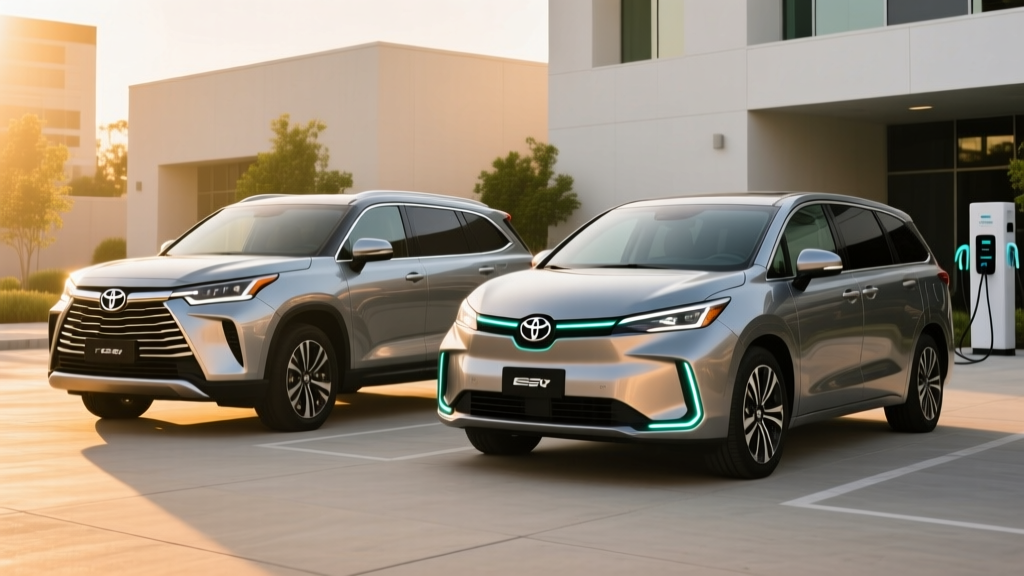
Toyota has spent years refining its hybrid expertise, but the shift toward extended-range electric vehicles (EREVs) represents a strategic pivot for America's best-selling three-row SUV and minivan. As of early 2026, Toyota has announced that both the Highlander and Sienna will receive EREV powertrain options, positioning them as bridge vehicles for families who want substantial electric-only driving without range anxiety. Here's what we know from official previews, patent filings, and Toyota's public statements — and where gaps remain.
Range Reality Check (Preliminary Estimates)
Target EPA Range (Electric-Only): 60-70 miles (announced)
Real-World Expectation: Expect 45-55 miles of usable electric range in mixed driving. Highway-heavy commutes at 70+ mph will yield closer to 40 miles; cold-weather operation (below 32°F) with cabin heating could reduce electric range by 25-35%, dropping to 30-40 miles.
Total Range (Gas + Electric): 550-600+ miles combined (estimated)
Powertrain Architecture: How Toyota's EREV System Works
Unlike Toyota's conventional hybrids (HEVs) or plug-in hybrids (PHEVs) like the RAV4 Prime, an EREV uses the gasoline engine exclusively as a generator. The wheels are always driven by electric motors. This means:
- Series-hybrid operation: The 2.5L four-cylinder engine never mechanically connects to the drivetrain
- Larger battery pack: Estimated 25-30 kWh usable capacity (likely NMC chemistry for energy density in a space-constrained platform)
- Smoother driving feel: Electric-motor torque delivery without traditional transmission shifts
- Engine runs at optimal RPM: Improves efficiency when generating electricity, reduces noise
This architecture differs from the Sienna's current 2.5L hybrid system, which uses a planetary gearset to blend engine and motor power. The EREV approach sacrifices some highway efficiency for superior city/stop-and-go performance and a quieter, more refined driving experience.
Spec Table: 2026 Toyota Highlander & Sienna EREV (Announced/Estimated)
| Specification | Highlander EREV (Est.) | Sienna EREV (Est.) |
|---|---|---|
| Electric-Only Range (EPA) | 60-65 miles | 65-70 miles |
| Battery Capacity (Usable) | 25-28 kWh | 27-30 kWh |
| Battery Chemistry | NMC (estimated) | NMC (estimated) |
| Combined System Output | 300-340 hp | 300-340 hp |
| 0-60 mph | 6.8-7.2 sec | 7.0-7.5 sec |
| Drivetrain | AWD (dual-motor) | AWD (dual-motor) |
| DC Fast Charge (Peak) | 50-75 kW (est.) | 50-75 kW (est.) |
| 10-80% DC Charge Time | 35-45 min (est.) | 35-45 min (est.) |
| Level 2 Home Charge Rate | 6.6 kW | 6.6 kW |
| Level 2 Time (0-100%) | 4-5 hours | 4.5-5.5 hours |
| MPGe (Electric Mode) | 85-95 MPGe | 85-95 MPGe |
| MPG (Gas Generator Mode) | 35-38 MPG | 36-40 MPG |
| Cargo Volume (Behind 3rd Row) | 16.1 cu ft | 33.5 cu ft |
| Cargo Volume (Max) | 84.3 cu ft | 101.0 cu ft |
| Seating Capacity | 7-8 passengers | 7-8 passengers |
| Towing Capacity | 3,500-5,000 lbs | 3,500 lbs |
| Battery Warranty | 8 yr / 100,000 mi | 8 yr / 100,000 mi |
| Powertrain Warranty | 5 yr / 60,000 mi | 5 yr / 60,000 mi |
Charging Speed: What to Expect
EREVs typically prioritize home charging over DC fast charging, since most daily driving falls within the electric-only range. Here's the projected charging profile:
| Charging Level | Power (kW) | Time to Full | Miles Added per Hour |
|---|---|---|---|
| Level 1 (120V Household) | 1.4 kW | 18-22 hours | 3-4 miles/hr |
| Level 2 (240V Home/Public) | 6.6 kW | 4-5.5 hours | 15-18 miles/hr |
| DC Fast Charge (Peak) | 50-75 kW | 10-80% in 35-45 min | N/A |
Real-World Charging Insight: The 6.6 kW Level 2 rate is standard for Toyota PHEVs and means overnight charging is practical for most users. A typical 240V/30A home circuit delivers 7.2 kW, so the vehicle's onboard charger becomes the bottleneck. DC fast charging at 50-75 kW is modest by BEV standards (many now exceed 200 kW), but acceptable for an EREV where you'll rarely need rapid top-ups. Expect the charge curve to taper significantly above 80% state of charge to preserve battery longevity.
Pricing, Trim Levels, and Federal Tax Credit Eligibility
| Model / Trim | Est. Base MSRP | Federal Tax Credit (§30D) | Est. Net Price |
|---|---|---|---|
| Highlander EREV LE | $48,000-$52,000 | Up to $7,500* | $40,500-$44,500 |
| Highlander EREV XLE | $54,000-$58,000 | Up to $7,500* | $46,500-$50,500 |
| Highlander EREV Limited | $60,000-$64,000 | Up to $7,500* | $52,500-$56,500 |
| Sienna EREV LE | $46,000-$50,000 | Up to $7,500* | $38,500-$42,500 |
| Sienna EREV XLE | $52,000-$56,000 | Up to $7,500* | $44,500-$48,500 |
| Sienna EREV Limited | $58,000-$62,000 | Up to $7,500* | $50,500-$54,500 |
*Federal tax credit eligibility depends on multiple factors per IRS §30D rules. Requirements include:
- MSRP Cap: SUVs/vans ≤ $80,000 (both models qualify)
- Buyer Income Cap: AGI ≤ $300,000 (joint) / $225,000 (head of household) / $150,000 (single)
- Battery Sourcing: Critical minerals and battery components must meet phased-in domestic/F TA content thresholds (2026 requirements are stricter than 2024)
- Point-of-Sale Transfer: Eligible buyers can transfer the credit to the dealer for an immediate price reduction
Critical Caveat: Toyota has not confirmed whether the EREV battery supply chain will meet 2026 critical-mineral sourcing requirements. If battery components or minerals are sourced from prohibited foreign entities of concern (FEOC), the credit could be reduced to $3,750 or eliminated entirely. Verify eligibility at purchase time — do not assume full credit availability.
Interior Space and Practicality
Both vehicles retain their existing dimensions and packaging, with the EREV battery mounted low in the chassis to preserve cabin and cargo volume:
Highlander EREV
- Third-Row Legroom: 27.7 inches (tight for adults on long trips)
- Second-Row Legroom: 38.4 inches
- Cargo Behind 3rd Row: 16.1 cu ft (fits 2-3 carry-on bags)
- Cargo Behind 2nd Row: 48.4 cu ft
- Max Cargo (2nd/3rd folded): 84.3 cu ft
Sienna EREV
- Third-Row Legroom: 33.5 inches (genuinely usable for adults)
- Second-Row Legroom: 41.0 inches (captain's chairs) / 38.0 inches (bench)
- Cargo Behind 3rd Row: 33.5 cu ft (class-leading)
- Cargo Behind 2nd Row: 75.2 cu ft
- Max Cargo (2nd/3rd folded): 101.0 cu ft
Practical Takeaway: The Sienna's minivan architecture delivers substantially more usable space, especially for families hauling strollers, sports gear, or luggage for seven passengers. The Highlander's SUV form factor sacrifices cargo volume for a higher driving position and available 5,000-lb towing (pending EREV confirmation).
Technology and Driver Assistance
Toyota's EREV models are expected to feature:
- Toyota Safety Sense 3.0: Pre-Collision System, Full-Speed Dynamic Radar Cruise Control, Lane Tracing Assist, Road Sign Assist
- Infotainment: 12.3-inch touchscreen, wireless Apple CarPlay/Android Auto, over-the-air updates
- Digital Instrument Cluster: 12.3-inch configurable display with energy flow visualization
- Proactive Driving Assist: Gentle braking/acceleration support in curves and approaching slower traffic (SAE Level 2 — driver supervision required)
- Available Advanced Park: Automated parallel/perpendicular parking with remote control
Notable Drawbacks: Toyota's infotainment system, while improved, still lags competitors in responsiveness and voice-recognition accuracy. The EREV's series-hybrid operation may feel disconnected to drivers accustomed to direct engine response, particularly during hard acceleration when the generator revs independently of vehicle speed.
Who Should Buy the Toyota Highlander or Sienna EREV?
Ideal For:
- Daily commuters with 30-50 mile round trips: Electric-only operation eliminates gas use for most weekdays
- Families without reliable home charging: Gas generator eliminates range anxiety for apartment dwellers
- Road-trip enthusiasts: 550+ mile total range means fewer stops on long drives
- Toyota loyalists: Familiar ergonomics, strong resale value, extensive dealer network
- Cold-climate buyers: Gas engine provides cabin heat without range penalty in winter
Consider Alternatives If:
- You want pure electric operation: BEVs like the Kia EV9 or Rivian R1S offer 300+ mile electric range
- You prioritize maximum towing: Full-size SUVs (Tahoe, Expedition) offer 8,000+ lb capacity
- You need DC fast charging: EREV's 50-75 kW peak is slow vs. BEV standards
- You want cutting-edge tech: Tesla, Rivian, and Lucid lead in software and autonomous features
- Budget is primary concern: Current hybrid Highlander/Sienna models cost $8,000-$12,000 less
Competitive Comparison
The EREV segment remains small in 2026, but key alternatives include:
- Chrysler Pacifica PHEV: 32-mile electric range, proven platform, but aging design
- Kia Carnival Hybrid: Conventional hybrid (no plug-in), 33 MPG combined, lower price
- Honda Odyssey (Hybrid TBD): No plug-in option currently available
- BEV Alternatives: Kia EV9 (270-mile range), Rivian R1S (350-mile range) — but no gas backup
Verdict: The Toyota EREV fills a genuine gap for families who want substantial electric driving without committing to full electrification. It's a pragmatic choice, not a technological showcase.
FAQ: Toyota Highlander & Sienna EREV
When will the Toyota Highlander and Sienna EREV be available?
Toyota has announced EREV powertrains for both models, with production expected to begin in late 2026 for the 2027 model year. Exact on-sale dates vary by region and trim level.
What is the real-world electric range?
Expect 45-55 miles in mixed driving, dropping to 30-40 miles in cold weather or highway-heavy use. The EPA estimate of 60-70 miles assumes optimal conditions.
How fast does it charge at home?
The 6.6 kW Level 2 onboard charger adds 15-18 miles of electric range per hour. A full 0-100% charge takes 4-5.5 hours on a 240V circuit.
Does it qualify for the $7,500 federal tax credit?
Eligibility depends on your income, the vehicle's MSRP (both models qualify), and whether the battery meets 2026 critical-mineral sourcing requirements. Verify with your dealer and review IRS guidance before purchase.
Can I tow with the EREV models?
The Highlander EREV is expected to retain 3,500-5,000 lb towing capacity (pending final certification). The Sienna EREV will likely match the current hybrid's 3,500 lb rating.
Is the EREV worth the premium over the standard hybrid?
If your daily driving fits within the electric range and you have access to Level 2 charging, the EREV can eliminate most gas consumption. The payback period depends on local electricity/gas prices and whether you qualify for the federal tax credit. For drivers covering 40 miles daily, annual fuel savings could reach $1,200-$1,800.
What's the difference between EREV and Toyota's current hybrid system?
Current Toyota hybrids (HEVs) use the engine and motors together to drive the wheels. The EREV uses the engine only as a generator — the wheels are always electrically driven. This provides smoother acceleration, quieter operation, and a larger battery for extended electric-only range.
Note: Specifications in this article are based on Toyota's preliminary announcements and industry analysis as of early 2026. Final EPA ratings, pricing, and availability will be confirmed closer to launch. Always verify details with your local Toyota dealer before making a purchase decision.