Quick Answer: Is There a Toyota Highlander All-Electric in 2026?
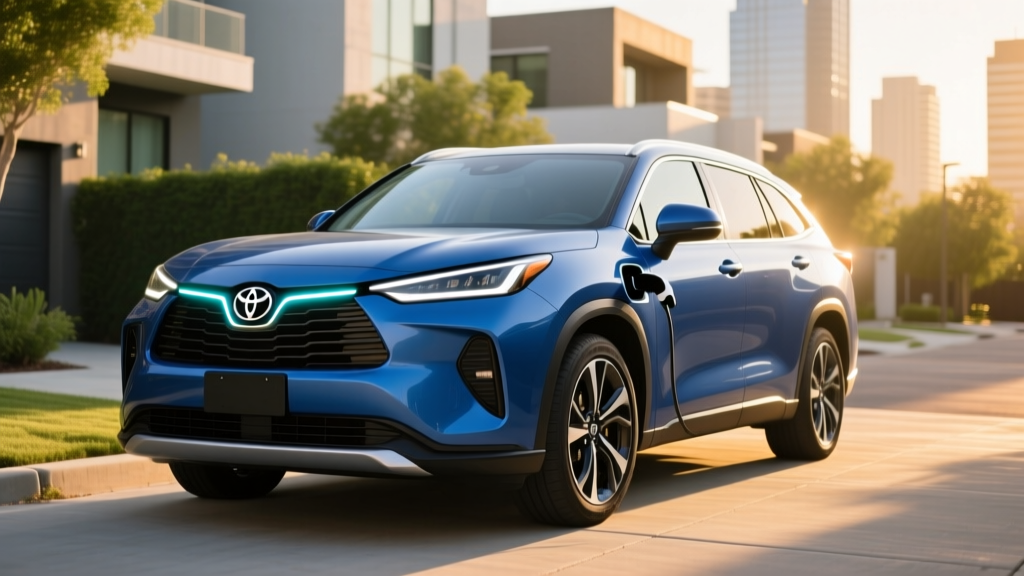
As of 2026, Toyota does not sell a fully electric Highlander. The Highlander lineup remains exclusively hybrid (HEV) and the closely related Grand Highlander offers hybrid and hybrid-max powertrains. Toyota has announced a next-generation three-row electric SUV for the U.S. market built on its dedicated EV platform, but it has not reached dealerships. If you specifically want a Toyota Highlander all electric, you'll need to wait or pivot to a competitor like the Kia EV9, Hyundai Ioniq 9, or Volkswagen ID. Buzz. Below, we map exactly what Toyota offers today, what's coming, and which alternatives best match the Highlander's size, seating, and price point.
Toyota's Current Three-Row Lineup: Hybrid, Not Electric
Toyota's strategy for family SUVs in 2026 centers on hybrids rather than battery-electric vehicles. The Toyota Highlander Hybrid and Grand Highlander Hybrid deliver strong fuel economy without the charging infrastructure demands of a full EV. Here's what's actually on sale:
| Model | Powertrain | EPA MPG (Combined) | Seating | Starting MSRP |
|---|---|---|---|---|
| Highlander Hybrid | 2.5L 4-cyl HEV (243 hp) | 35 MPG | 7-8 | ~$42,000 |
| Grand Highlander Hybrid | 2.5L 4-cyl HEV (245 hp) | 34 MPG | 7-8 | ~$46,000 |
| Grand Highlander Hybrid MAX | 2.4L Turbo HEV (362 hp) | 27 MPG | 7 | ~$54,000 |
Source: fueleconomy.gov and Toyota press materials. None of these vehicles have a plug — they are conventional hybrids (HEVs), not plug-in hybrids (PHEVs) or battery-electric vehicles (BEVs). This means no federal §30D tax credit eligibility, but also no range anxiety, no charging installation, and no cold-weather battery degradation concerns.
What Toyota Has Announced for Electric SUVs
Toyota has previewed a three-row electric SUV concept and confirmed plans for a production model on its next-generation EV architecture. Key announced details remain preliminary:
- Platform: Dedicated EV skateboard (successor to bZ4X's e-TNGA)
- Expected battery: ~100 kWh usable, likely NMC chemistry for energy density in a large SUV
- Targeted EPA range: ~300+ miles (unconfirmed, preliminary estimate)
- Charging: NACS connector (Toyota confirmed the switch to Tesla's North American Charging Standard for future U.S. models)
- Timeline: Production expected late 2026 or 2027 model year — not yet available for purchase
Until Toyota formally releases specs, pricing, and EPA certification, treat all figures above as estimates. Toyota's historical EV launches (bZ4X) arrived with conservative range and slower charging than competitors, so buyers should wait for verified numbers before comparing against established three-row EVs.
Three-Row Electric Alternatives You Can Buy Today
If you're searching for a Toyota Highlander all electric because you want a spacious, family-friendly EV SUV, several strong competitors are already on the market. Here's how they stack up against the Highlander Hybrid's size and price bracket:
| Model | Battery (kWh) | EPA Range | Peak DC Charge (kW) | 10-80% Time | Starting MSRP |
|---|---|---|---|---|---|
| Kia EV9 (LR AWD) | 100 kWh (NMC) | 270-304 mi | 236 kW | ~20 min | ~$56,000 |
| Hyundai Ioniq 9 (LR) | 110.3 kWh (NMC) | ~300+ mi | 350 kW (est.) | ~18 min | ~$58,000 |
| VW ID. Buzz (Pro S) | 86 kWh (NMC) | 234 mi | 175 kW | ~26 min | ~$60,000 |
| Tesla Model X (LR) | 100 kWh (NMC) | 320 mi | 250 kW | ~22 min | ~$80,000 |
Sources: fueleconomy.gov, manufacturer spec sheets.
Real-World Range Reality Check
EPA range figures assume ideal conditions. For three-row EVs carrying a full family plus cargo, expect:
- Highway driving (75+ mph): 10-15% below EPA sticker
- Cold weather (below 32°F): 20-30% range reduction without preconditioning
- Towing: 40-50% range reduction — most three-row EVs are not rated for heavy towing
A Kia EV9 with an EPA 304-mile range may realistically deliver 250-270 miles on a summer road trip and closer to 210-230 miles in winter. Plan charging stops accordingly.
Cost Comparison: Electric SUV vs. Highlander Hybrid
The decision between waiting for Toyota's electric SUV, buying a competitor EV, or sticking with the Highlander Hybrid comes down to total cost of ownership. Here's a 5-year breakdown assuming 15,000 miles per year, home Level 2 charging at $0.14/kWh (national average), and gas at $3.40/gallon:
| Cost Category | Highlander Hybrid | Kia EV9 LR AWD |
|---|---|---|
| Purchase Price (MSRP) | $46,000 | $56,000 |
| Federal Tax Credit (§30D) | $0 | Up to $7,500* |
| Home Charger Install | $0 | $800-$2,000 |
| Fuel/Energy (5 years) | $7,285 (gas) | $4,200 (electric) |
| Maintenance (5 years) | $2,500 | $800 |
| Insurance (5 years, est.) | $7,500 | $9,000 |
| Estimated 5-Year Total | $63,285 | $61,300-$62,500 |
*The §30D federal tax credit has strict eligibility requirements. See the IRS clean vehicle credit page for current income caps, MSRP limits ($80,000 for SUVs), battery sourcing rules, and point-of-sale transfer options. Not every buyer qualifies for the full $7,500.
The EV closes the cost gap primarily through fuel and maintenance savings, but higher insurance premiums and upfront charging installation partially offset these gains. If you lack home charging access and rely entirely on public DC fast charging ($0.35-$0.55/kWh), the EV's energy cost rises to $6,000-$9,500 over five years — erasing most of the fuel savings.
First-Time EV Buyer: What You Must Know
If you're considering a three-row electric SUV as your first EV, these practical realities shape the ownership experience:
Home Charging Is Non-Negotiable for Most Owners
Level 1 charging (120V standard outlet) adds roughly 3-5 miles of range per hour — inadequate for a 100 kWh battery in a large SUV. A Level 2 home charger (240V, 32-48 amps) adds 25-40 miles per hour and fully replenishes overnight. Installation costs $800-$2,000 if your electrical panel has capacity, but can reach $3,000-$5,000 if you need a panel upgrade from 100A to 200A service. Confirm your panel capacity with a licensed electrician before purchasing any EV.
Understand kW vs. kWh
The most common confusion for new EV buyers: kW (kilowatts) measures power — how fast energy flows, like water pressure from a hose. kWh (kilowatt-hours) measures energy — how much the battery holds, like the size of a fuel tank. A 100 kWh battery charged at 50 kW would theoretically take 2 hours, but real charging follows a curve: peak speed only applies at low state of charge, tapering significantly above 80%.
Cold Weather Impacts Range and Charging
Lithium-ion batteries lose efficiency below freezing. Expect 20-30% range reduction in sustained cold (below 32°F), and significantly slower DC fast charging unless the vehicle has active battery preconditioning. The Kia EV9 and Hyundai Ioniq 9 both include heat pumps and preconditioning routines — use them before arriving at a fast charger in winter.
Public Charging Reliability Varies
Tesla Superchargers remain the most reliable DC fast-charging network in the U.S. Non-Tesla networks (Electrify America, EVgo, ChargePoint) have improved but still experience higher downtime rates. If you choose a non-Tesla EV, verify that it supports NACS (or has an adapter) for future Supercharger access — most 2025+ models do.
Common Misconceptions About Toyota and Electric SUVs
| Myth | Fact |
|---|---|
| "The Toyota Highlander comes in an all-electric version." | No. The 2026 Highlander is hybrid-only. Toyota has not released a BEV Highlander. |
| "Toyota hybrids qualify for the $7,500 EV tax credit." | Conventional hybrids (HEVs) do not qualify. Only plug-in vehicles (PHEVs/BEVs) with eligible battery sourcing are eligible under §30D. |
| "An electric three-row SUV can tow as much as a gas Highlander." | The gas Highlander tows up to 5,000 lbs. Most electric three-row SUVs are rated for 2,000-5,000 lbs, but towing cuts range by 40-50%. |
| "EV batteries need replacement every few years." | Modern NMC and LFP batteries are warrantied for 8 years/100,000 miles with a minimum 70% capacity retention threshold. Real-world degradation data shows most packs retain 85-90% after 5 years. |
| "I'll save money immediately by going electric." | Upfront costs (higher MSRP, charger installation, potential panel upgrade) mean break-even typically occurs in years 3-5 depending on mileage, electricity rates, and credit eligibility. |
Decision Framework: Which Path Is Right for You?
Choose the Toyota Highlander Hybrid if:
- You cannot install a Level 2 home charger (apartment, condo, street parking)
- You regularly drive in extreme cold (below 0°F) where range loss compounds
- You tow frequently (camping trailers, boats) and cannot afford 40-50% range penalties
- You want the lowest upfront cost with proven Toyota reliability and no new infrastructure requirements
- You prefer to wait for Toyota's dedicated electric SUV rather than buy a competitor
Choose a three-row electric SUV (Kia EV9, Hyundai Ioniq 9) if:
- You have reliable Level 2 home charging and drive under 300 miles between stops
- You qualify for the §30D federal tax credit (check income caps: $150K single / $300K joint for new EVs)
- Your daily commute is under 60 miles round-trip and you rarely tow
- You want lower per-mile fuel costs and reduced maintenance (no oil changes, fewer brake replacements with regen braking)
- You live in a state with additional EV rebates (California, Colorado, Massachusetts, etc.) that stack with federal credits
Wait for Toyota's announced electric SUV if:
- You're committed to the Toyota brand and dealer network
- Your current vehicle has 1-2 years of useful life remaining
- You want to see verified EPA range, charging speed, and pricing before committing
Frequently Asked Questions
Will Toyota make an all-electric Highlander?
Toyota has announced a three-row electric SUV for the U.S. market but has not confirmed whether it will carry the Highlander nameplate. The production timeline targets late 2026 or 2027. No verified specs are available yet.
Does the Toyota Highlander Hybrid plug in?
No. The Highlander Hybrid is a conventional hybrid (HEV), not a plug-in hybrid (PHEV). It charges its small battery through regenerative braking and the gas engine. You cannot plug it in, and it has no electric-only driving range.
What three-row EV is closest to the Highlander in price?
The Kia EV9 starts around $56,000 — roughly $10,000 more than the Highlander Hybrid, but eligible for up to $7,500 in federal tax credits if you meet income and sourcing requirements. After credits, the gap narrows to approximately $2,500-$5,000 before factoring in home charger installation.
How much does it cost to charge a three-row EV at home?
At the national average of $0.14/kWh, fully charging a 100 kWh battery costs roughly $14. For 15,000 miles of annual driving at 3.0 miles/kWh (typical for a large SUV), expect annual home charging costs of $700-$850 — compared to $1,450-$1,600 for gas in a 35 MPG Highlander Hybrid.
Is a three-row electric SUV practical for road trips?
Yes, with planning. A Kia EV9 with ~270 real-world highway miles can cover most legs between major cities. DC fast charging at 200+ kW adds 150+ miles in 15-20 minutes. The key constraint is charging infrastructure in rural areas — check your typical routes on PlugShare or the DOV EV charging locator before committing.
What about the Toyota bZ4X — is that a three-row EV?
No. The bZ4X is a compact two-row crossover with an EPA range of 222-252 miles and seating for five. It does not compete with the Highlander in size or capacity. Toyota's three-row EV will be a separate, larger model when it launches.