Quick Answer: What Is Toyota's Full Electric Car?
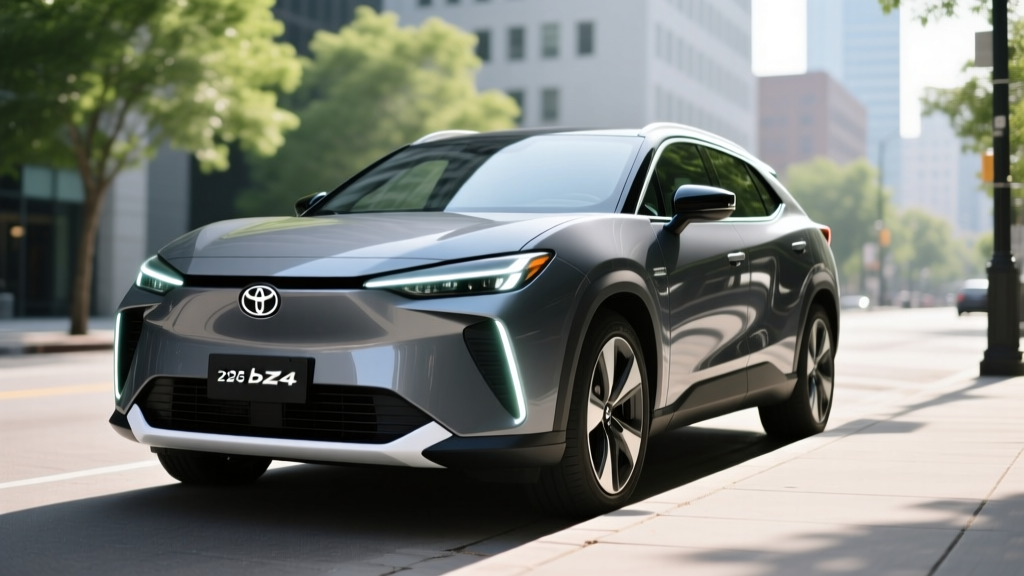
As of the 2026 model year, Toyota's only full electric car (BEV) available in the U.S. is the bZ4X, a compact crossover SUV. It offers an EPA-estimated range of up to 252 miles (FWD trim), a 71.4 kWh lithium-ion battery, and DC fast charging that peaks at 150 kW (FWD) or 165 kW (AWD). Pricing starts at approximately $37,070 MSRP before incentives. Toyota has announced additional BEVs (including a next-generation three-row SUV) expected by 2027, but they are not yet on sale.
The 2026 Toyota bZ4X: Full EV Specs at a Glance
Toyota entered the battery-electric market cautiously, and the bZ4X reflects that measured approach. It's not the longest-range EV in its class, nor the fastest-charging, but it competes on price, brand trust, and dealer network accessibility. Here are the exact figures you need:
| Specification | bZ4X XLE FWD | bZ4X XLE AWD | bZ4X Limited FWD | bZ4X Limited AWD |
|---|---|---|---|---|
| EPA Range | 252 mi | 228 mi | 236 mi | 222 mi |
| Battery Capacity (usable) | 71.4 kWh (NMC chemistry) | |||
| MPGe (combined) | 119 MPGe | 104 MPGe | 112 MPGe | 102 MPGe |
| Peak DC Fast Charge | 150 kW | 165 kW | 150 kW | 165 kW |
| 10–80% DC Charge Time | ~30 minutes (est.) | ~30 minutes (est.) | ||
| Level 2 Charge Rate | 6.6 kW onboard charger | |||
| Horsepower | 201 hp | 214 hp | 201 hp | 214 hp |
| 0–60 mph | 7.1 sec | 5.8 sec | 7.1 sec | 5.8 sec |
| Starting MSRP (2026) | $37,070 | $39,120 | $42,870 | $44,920 |
| Battery Warranty | 8 years / 100,000 miles (min. 70% capacity retention) | |||
Source: fueleconomy.gov and Toyota Motor Corporation U.S.A. specifications.
Real-World Range: What to Actually Expect
The EPA sticker says 252 miles for the FWD bZ4X, but real-world conditions rarely match laboratory estimates perfectly. Here's how to calibrate your expectations:
Real-World Range Reconciliation
- Mild weather, mixed driving (city + suburban): Expect 230–245 miles — close to EPA.
- Sustained highway driving at 70–75 mph: Expect 195–220 miles. The bZ4X's boxy crossover shape creates more aerodynamic drag than a sedan, and EVs lose efficiency at higher speeds because there are no gears to optimize.
- Cold weather (below 32°F / 0°C): Expect 160–190 miles. Lithium-ion batteries lose capacity in cold temperatures, and cabin heating draws heavily from the pack. The bZ4X uses a resistive heater on some trims rather than a more efficient heat pump, which amplifies winter range loss compared to competitors like the Hyundai Ioniq 5.
- Hilly terrain or heavy cargo: Subtract 10–15% from the EPA figure.
The critical takeaway: if your daily round-trip commute exceeds 120 miles, or you regularly drive in freezing climates, the AWD bZ4X's 222–228 mile EPA range may feel tight. You'll want reliable home charging to start every morning with a full battery.
Charging the bZ4X: Speeds, Connectors, and Costs
Understanding charging requires distinguishing between kW (kilowatts — the rate of power delivery, like water pressure) and kWh (kilowatt-hours — the total energy stored, like gallons in a tank). The bZ4X's 71.4 kWh battery needs a certain number of kWh replenished; the kW rate determines how fast that happens.
| Charging Level | Power (kW) | Miles of Range Added per Hour | Typical Use Case |
|---|---|---|---|
| Level 1 (120V household outlet) | ~1.2 kW | ~4–5 mi/hr | Overnight trickle; emergency backup |
| Level 2 (240V home / public) | 6.6 kW (bZ4X max) | ~22–25 mi/hr | Daily home charging; full charge in ~11 hours |
| DC Fast Charge (public) | Up to 150–165 kW peak | ~130+ mi in first 15 min | Road trips; 10–80% in ~30 minutes |
Charging Curve Reality
The bZ4X's peak DC rate (150 or 165 kW) is not sustained for the entire session. Like all EVs, charging slows significantly above 80% State of Charge (SoC) to protect battery health. A typical 10–80% session at a compatible DC fast charger takes approximately 30 minutes, but an 80–100% top-off can add another 20–25 minutes. For road trips, plan to charge from 10% to 80% and move on — the last 20% is painfully slow.
The bZ4X uses the CCS1 connector standard. Toyota has committed to adopting the Tesla NACS (North American Charging Standard) connector on future models, and current bZ4X owners can access Tesla Supercharger stations using a manufacturer-approved adapter. This significantly expands the available fast-charging network.
What Does Charging Cost?
Electricity rates vary widely by region and utility plan. Here's a representative cost comparison:
| Fueling Method | Cost per Mile (approx.) | Annual Cost (12,000 mi/yr) |
|---|---|---|
| Home Level 2 charging ($0.14/kWh avg.) | $0.042 | ~$504 |
| Public DC fast charging ($0.35/kWh avg.) | $0.105 | ~$1,260 |
| Gasoline equivalent (Toyota RAV4 AWD, 30 MPG combined, $3.40/gal) | $0.113 | ~$1,360 |
Home charging delivers clear savings — roughly 60–65% less per mile than gasoline. Public DC fast charging narrows the gap considerably, and in some regions with high utility rates (California, parts of the Northeast), it can approach or exceed the cost of gasoline per mile. If you cannot charge at home, the bZ4X's economics become much less compelling.
bZ4X vs. Gas and Hybrid: What Are You Really Comparing?
Toyota built its reputation on hybrids, and many buyers cross-shop the bZ4X against the RAV4 Hybrid or RAV4 Prime PHEV. Here's how the numbers stack up:
| Attribute | bZ4X XLE AWD (BEV) | RAV4 Hybrid AWD (HEV) | RAV4 Prime AWD (PHEV) |
|---|---|---|---|
| Starting MSRP | $39,120 | $33,425 | $43,690 |
| EPA Range / Efficiency | 228 mi / 104 MPGe | ~580 mi / 39 MPG combined | 42 mi electric + ~480 mi gas / 94 MPGe + 38 MPG |
| Annual Fuel/Energy Cost (12k mi/yr, home charging) | ~$504 | ~$1,046 | ~$650 (mixed electric + gas) |
| Federal Tax Credit (§30D) | Up to $7,500 (see eligibility below) | None | Up to $7,500 (see eligibility below) |
| Oil Changes | Never | Every 10,000 mi | Every 10,000 mi |
| Estimated 5-Year Maintenance | ~$1,200 | ~$2,800 | ~$2,400 |
Source: fueleconomy.gov — compare specific model years for updated figures.
The bZ4X's effective price after a potential $7,500 federal tax credit drops to roughly $31,620, undercutting the RAV4 Hybrid and dramatically undercutting the RAV4 Prime. However, the RAV4 Hybrid offers 580 miles of total range with zero charging infrastructure requirements, making it the pragmatic choice for apartment dwellers or frequent road-trippers in charging-desert regions.
Federal Tax Credit Eligibility: The §30D Rules
The bZ4X may qualify for the federal EV tax credit under IRS §30D, but eligibility depends on several factors that change periodically. Here's the current framework:
- MSRP cap: The vehicle must have an MSRP below $80,000 for SUVs (the bZ4X qualifies at all trim levels).
- Buyer income cap: Modified adjusted gross income must not exceed $300,000 (joint filers), $225,000 (head of household), or $150,000 (single filers).
- Battery sourcing requirements: A percentage of critical minerals and battery components must be sourced from the U.S. or free-trade-agreement countries. These thresholds increase annually, and some vehicles that previously qualified may lose eligibility. Verify current status at fueleconomy.gov.
- Point-of-sale transfer: As of 2024, you can transfer the credit to the dealer at purchase, reducing your out-of-pocket cost immediately rather than waiting to claim it on your tax return.
Critical caveat: Battery sourcing rules tighten each year. Always confirm current bZ4X eligibility on IRS.gov before relying on the credit in your purchase decision. Consult a tax professional for your specific situation.
Common Misconceptions About the Toyota bZ4X
| Myth | Fact |
|---|---|
| "The bZ4X will need a $20,000 battery replacement in a few years." | Toyota warranties the battery for 8 years/100,000 miles with a minimum 70% capacity retention guarantee. Industry data from Recurrent Auto shows modern NMC batteries typically retain 85–92% capacity after 100,000 miles. Full replacement is rare and would be covered under warranty if capacity drops below the threshold within the warranty period. |
| "It can't handle cold weather." | It can, but with meaningful range loss (30–40% in sub-freezing temperatures). Preconditioning the battery while plugged in — using the Toyota app to warm the cabin and battery on grid power before departure — mitigates this significantly. If you live in Minnesota or Maine, plan for 160–190 real-world miles in January and charge daily. |
| "I can charge at any station." | The bZ4X uses CCS1 for DC fast charging. While the NACS adapter opens Tesla Supercharger access, not all Electrify America, EVgo, or ChargePoint stations deliver the full 150–165 kW the bZ4X can accept. Older 50 kW CHAdeMO stations will charge the bZ4X very slowly. Always check the station's maximum output in your charging app before routing there. |
| "It qualifies for the full $7,500 tax credit automatically." | Not necessarily. The credit splits into two halves ($3,750 for critical minerals, $3,750 for battery components), and sourcing requirements tighten annually. The bZ4X's eligibility status can change — verify before purchase. |
Who Should Buy the Toyota bZ4X — And Who Shouldn't?
Decision Framework: Is the bZ4X Right for You?
Choose the bZ4X if:
- You have reliable Level 2 home charging (garage or driveway with a 240V outlet).
- Your daily driving is under 100 miles round-trip, with occasional 200-mile trips.
- You live in a mild-to-moderate climate (rarely below 20°F).
- You value Toyota's dealer network for service and warranty claims.
- You qualify for the federal tax credit, bringing the effective price below $32,000.
- You want a BEV but aren't ready to commit to a Tesla or newer-brand EV.
Choose the RAV4 Hybrid instead if:
- You live in an apartment or condo without charging access.
- You regularly drive 300+ miles between stops in rural areas or charging deserts.
- You live in extreme cold (regular sub-zero °F winters) and can't garage the vehicle.
- Your budget is strictly under $34,000 and you don't qualify for the EV tax credit due to income limits.
Choose the RAV4 Prime (PHEV) if:
- You want 42 miles of electric-only commuting but need gas flexibility for road trips.
- You have home charging but also take frequent 400+ mile trips where charging infrastructure is sparse.
- You want the best of both worlds and can absorb the higher $43,690 starting price.
Look at competitors (Hyundai Ioniq 5, Kia EV6, Tesla Model Y) if:
- You need 300+ miles of EPA range.
- You want faster DC charging (the Ioniq 5 peaks at 240 kW, doing 10–80% in ~18 minutes).
- You need more cargo space or a frunk (front trunk) for additional storage.
5-Year Ownership Cost Snapshot
| Cost Category (5 years / 60,000 mi) | bZ4X XLE FWD | RAV4 Hybrid XLE AWD |
|---|---|---|
| Purchase Price (after potential tax credit) | $29,570 (assumes $7,500 credit) | $33,425 |
| Fuel / Energy | $2,520 (home charging) | $5,230 (gasoline) |
| Maintenance | $1,200 | $2,800 |
| Insurance (avg.) | $7,500 | $6,200 |
| Estimated Depreciation | $11,800 | $9,400 |
| Estimated 5-Year Total | $52,590 | $57,055 |
Note: Insurance premiums for EVs tend to run 15–25% higher than comparable gas vehicles due to higher repair costs and parts pricing. Depreciation estimates are based on current market trends and may shift as EV adoption grows. Your actual costs will vary by region, driving habits, and electricity rates.
What's Next for Toyota's Electric Lineup
Toyota has announced plans to introduce a broader BEV lineup by 2027–2028, including a next-generation electric SUV with an anticipated 350+ mile range using improved battery chemistry. The company is also investing in solid-state battery technology, which promises faster charging and higher energy density, though mass production timelines remain uncertain. Until those models arrive, the bZ4X is Toyota's sole full electric car offering in the U.S.
Does Toyota make a full electric car?
Yes. The Toyota bZ4X is Toyota's only battery-electric vehicle (BEV) currently on sale in the U.S. as of the 2026 model year. It's a compact crossover SUV with up to 252 miles of EPA-estimated range.
How long does the bZ4X battery last?
Toyota warranties the bZ4X battery for 8 years or 100,000 miles, guaranteeing a minimum of 70% capacity retention. Real-world data from similar NMC batteries suggests 85–92% capacity retention at 100,000 miles is typical with normal use. Avoid routinely charging to 100% or draining to 0% to maximize longevity.
Can I charge the Toyota bZ4X at a Tesla Supercharger?
Yes, using a Toyota-approved NACS adapter. Toyota has partnered with Tesla to provide Supercharger access for bZ4X owners. The adapter allows the CCS1-equipped bZ4X to connect to NACS Supercharger stalls. Confirm adapter availability with your dealer.
Is the bZ4X good in snow and cold weather?
The AWD bZ4X provides competent traction in snow, but expect 30–40% range reduction in sub-freezing temperatures. Preconditioning the battery while plugged in and using seat/steering wheel heaters instead of cabin heat can help preserve range. Plan for 160–190 real-world miles in harsh winter conditions.
Does the bZ4X qualify for the $7,500 federal tax credit?
It may, but eligibility depends on current battery sourcing requirements under IRS §30D, your income level, and the vehicle's MSRP (which falls within the cap). Sourcing rules tighten annually, so verify current eligibility at IRS.gov before purchasing.
How does the bZ4X compare to the Hyundai Ioniq 5 or Tesla Model Y?
The Ioniq 5 offers longer range (up to 303 mi EPA), faster DC charging (240 kW peak, 10–80% in ~18 min), and a more spacious interior. The Model Y offers up to 320 miles of range, access to the Supercharger network natively, and more cargo space. The bZ4X competes primarily on its lower starting price (especially after the tax credit) and Toyota's brand reputation for reliability.