Toyota's EV Lineup in 2026: What's Actually for Sale?
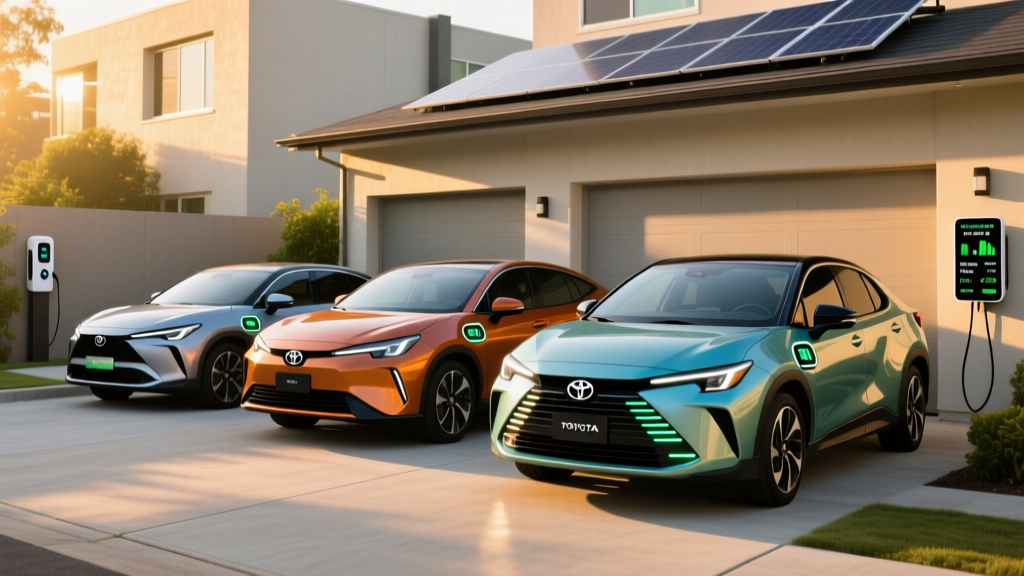
Toyota's electrification strategy has drawn criticism for leaning heavily on hybrids, but the brand does offer a battery-electric option for US buyers: the bZ4X. Introduced for the 2023 model year and refreshed since, it remains Toyota's sole dedicated BEV in the American market as of early 2026. A second model, the bZ4X-based Toyota bZ Compact SUV concept, has been previewed but remains unreleased — treat any specs as preliminary.
For buyers searching for Toyota electric vehicle deals, the question isn't just about sticker price. It's about whether a bZ4X — or any Toyota EV — actually saves you money over five years when you factor in charging, insurance, depreciation, and the patchwork of federal and state incentives. This guide runs the numbers.
2026 Toyota bZ4X Quick Specs (FWD XLE Trim)
| Attribute | Value |
|---|---|
| EPA Range | 252 miles (FWD); 228 mi (AWD) |
| Real-World Range (highway/cold) | ~210–225 mi highway; ~180–195 mi in freezing temps |
| Battery Capacity | 71.4 kWh usable (NMC chemistry) |
| Peak DC Fast Charge | 150 kW (FWD); 150 kW (AWD) |
| 10–80% DC Charge Time | ~30 minutes (FWD) |
| Level 2 Charge Rate | ~6.6 kW (onboard charger) |
| Horsepower | 201 hp (FWD); 214 hp (AWD) |
| 0–60 mph | ~7.1 sec (FWD); ~6.5 sec (AWD) |
| MPGe (combined) | 131 MPGe (FWD); 114 MPGe (AWD) |
| Starting MSRP (XLE FWD) | ~$37,070 (before incentives) |
| Battery Warranty | 8 years / 100,000 miles |
Sources: fueleconomy.gov, Toyota bZ4X specs.
5-Year Total Cost of Ownership: The Real Numbers
The sticker price is just the entry fee. Here's what owning a 2026 Toyota bZ4X XLE FWD actually costs over five years, assuming 15,000 miles driven annually (75,000 miles total). We compare it against a similarly priced gas SUV — the Toyota RAV4 LE AWD (MSRP ~$30,000, 30 MPG combined) — because most cross-shopping buyers are deciding between these two.
5-Year Total Cost of Ownership: bZ4X vs. RAV4
| Category | bZ4X XLE FWD | RAV4 LE AWD |
|---|---|---|
| Purchase Price (MSRP) | $37,070 | $30,000 |
| Federal Tax Credit (§30D) | –$7,500 (if eligible) | $0 |
| Net Purchase (after credit) | $29,570 | $30,000 |
| Charging / Fuel (75k mi) | $3,375* | $8,750** |
| Insurance (5 years) | $9,500 | $7,500 |
| Maintenance (5 years) | $1,200 | $3,500 |
| Estimated Depreciation | $14,800 | $12,000 |
| Total 5-Year Cost | $58,445 | $61,750 |
*Assumes 80% home charging at $0.15/kWh + 20% DC fast charging at $0.40/kWh; bZ4X efficiency ~3.0 mi/kWh. **Assumes $3.50/gal at 30 MPG.
Key takeaway: With the full $7,500 federal credit, the bZ4X comes out roughly $3,300 ahead over five years. Without the credit, the RAV4 wins on pure economics. Your mileage — literally and financially — will vary based on your electricity rate, driving habits, and state incentives.
Federal Tax Credit: Do You Qualify for $7,500?
The IRS §30D Clean Vehicle Credit can knock up to $7,500 off your tax bill (or, as of 2024+, be transferred to the dealer at point of sale for an instant price reduction). But eligibility hinges on several requirements that change periodically. Here's the 2026 checklist:
§30D Federal Tax Credit Requirements (2026)
- MSRP Cap: Vehicle MSRP must not exceed $55,000 for SUVs/pickups/vans, or $25,000 for sedans. The bZ4X qualifies (MSRP ~$37,070–$43,070 depending on trim).
- Buyer Income Cap: Modified adjusted gross income (MAGI) must not exceed $300,000 (joint filers), $225,000 (head of household), or $150,000 (single). Check your prior-year or current-year MAGI — whichever is lower.
- Battery Component Sourcing: To receive the full $7,500, the vehicle must meet both critical-mineral and battery-component sourcing thresholds set by the Treasury Department. Half-credit ($3,750) applies if only one threshold is met. Verify the bZ4X's current sourcing status on fueleconomy.gov, as battery supply chains shift.
- Point-of-Sale Transfer: You can elect to transfer the credit to the dealer at purchase, reducing your out-of-pocket cost immediately. The dealer must be registered with the IRS Energy Credits portal.
- New Vehicle Only: The vehicle must be new, purchased for personal use (not resale), and predominantly used in the United States.
- One Credit Per VIN: Each vehicle VIN can only generate one §30D credit. If you buy used, see the separate §25E used-EV credit (up to $4,000 or 30% of sale price, capped at $25,000 MSRP).
Critical caveat: Battery sourcing requirements have tightened annually. A vehicle that qualified in 2024 may not qualify in 2026, and vice versa, as automakers shift supply chains. Always confirm eligibility on the IRS official page or fueleconomy.gov before purchasing. Consult a tax professional if your situation is complex.
Charging vs. Gas: The Per-Mile Math
This is where EVs typically shine — but the savings depend heavily on how and where you charge.
Cost Per Mile: bZ4X vs. RAV4
| Scenario | bZ4X (BEV) | RAV4 (30 MPG gas) |
|---|---|---|
| Home charging ($0.15/kWh) vs. gas ($3.50/gal) | $0.050/mi | $0.117/mi |
| Mixed (80% home, 20% DCFC at $0.40/kWh) | $0.055/mi | $0.117/mi |
| 100% DC fast charging ($0.40/kWh) | $0.133/mi | $0.117/mi |
The bZ4X averages about 3.0 miles per kWh (roughly 131 MPGe combined per the EPA). At a typical residential electricity rate of $0.15/kWh, that's roughly 5 cents per mile — less than half the cost of gas in the RAV4.
However, if you rely entirely on public DC fast chargers at $0.40/kWh (common on Electrify America and EVgo networks without a subscription), the bZ4X actually costs more per mile than the RAV4. This is why home charging access is the single biggest financial variable in EV ownership. If you can't charge at home or at work, the fuel savings evaporate.
Annual fuel savings with home charging: ~$1,000–$1,200/year vs. the RAV4 at 15,000 miles/year. Over five years, that's $5,000–$6,000 back in your pocket.
Maintenance Savings: Where EVs Quietly Win
BEVs have dramatically fewer moving parts than internal-combustion vehicles. No oil changes, no spark plugs, no transmission fluid, no exhaust system. Regenerative braking also significantly reduces brake pad wear — many EV owners report original brake pads lasting 80,000+ miles.
Typical 5-Year Maintenance: bZ4X vs. RAV4
| Service Item | bZ4X (BEV) | RAV4 (Gas) |
|---|---|---|
| Oil changes (every 5k–10k mi) | None — $0 | ~$500 (7–10 changes) |
| Brake pads | ~$0 (regen preserves pads) | ~$400–$600 (1–2 replacements) |
| Transmission fluid | None | ~$200 |
| Air filters (engine) | None | ~$150 |
| Cabin air filter | ~$150 | ~$150 |
| Tire rotation & replacement | ~$900 (EVs wear tires faster due to weight/torque) | ~$700 |
| Coolant flush | ~$150 | ~$150 |
| Total (5 yr / 75k mi) | ~$1,200 | ~$3,500 |
Net maintenance savings: ~$2,300 over five years. The main offset is tires — the bZ4X's heavier curb weight (~4,300 lbs) and instant torque wear tires roughly 20% faster than a comparable gas SUV. Budget for a tire replacement around 35,000–40,000 miles.
Insurance Reality: The Cost Nobody Talks About
EV insurance premiums are typically 15–25% higher than equivalent gas vehicles. For the bZ4X, expect annual premiums around $1,800–$2,000 depending on your state, driving record, and coverage level, versus $1,400–$1,600 for a RAV4.
Why the premium gap?
- Higher repair costs: Battery packs are expensive to replace if damaged. Even minor collisions can trigger battery safety inspections that total the repair estimate.
- Specialized labor: High-voltage system repairs require certified EV technicians, who are scarcer and cost more.
- Parts pricing: EV-specific components (power electronics, battery modules) carry higher replacement costs than commodity ICE parts.
- Vehicle MSRP: The bZ4X starts ~$7,000 higher than the RAV4 LE, which directly influences comprehensive and collision premiums.
Over five years, that's roughly $2,000 more in insurance costs for the bZ4X. Shop quotes from multiple carriers — some insurers (like Progressive and State Farm) have started offering EV-specific discounts that narrow the gap.
Depreciation: How Well Does the bZ4X Hold Value?
EV depreciation has been volatile. Early adopters of vehicles like the original Nissan Leaf saw 60–70% value loss over five years, driven by rapid battery tech improvements and range obsolescence. The market has matured, but EVs still generally depreciate faster than Toyota's legendary gas vehicles.
Estimated 5-year depreciation:
- bZ4X: ~40% residual value at 5 years / 75,000 miles → ~$14,800 in depreciation from a $37,070 MSRP.
- RAV4: ~60% residual value at 5 years → ~$12,000 in depreciation from a $30,000 MSRP.
The bZ4X's depreciation is impacted by several factors:
- Battery health uncertainty: Used buyers discount EVs for potential battery replacement risk, even though the 8-year/100,000-mile warranty provides coverage.
- Rapid market evolution: Newer EVs with 300+ mile ranges and faster charging make the bZ4X's 252-mile range feel dated sooner.
- Tax credit pass-through: If you received the $7,500 credit, your effective purchase price was $29,570 — which means your actual dollar depreciation is lower than the MSRP-based calculation.
- Toyota brand premium: Toyota's reputation for reliability partially cushions resale, but the bZ4X hasn't yet built the long-term track record of a RAV4 or Camry.
Bottom line: depreciation is the bZ4X's biggest financial headwind. If you plan to keep the vehicle 8+ years, this matters less. If you trade every 3–4 years, the steeper depreciation curve will hurt.
State, Local, and Utility Incentives: Stacking the Savings
Beyond the Federal Credit
Federal incentives are only part of the picture. Depending on where you live, additional savings may include:
- State rebates: California's CVRP (up to $7,000 for income-qualified buyers), Colorado's $5,000 state credit, Massachusetts MOR-EV ($3,500), and others. These change frequently — check your state's energy office or DSIRE database.
- Utility rebates: Many electric utilities offer $500–$1,500 rebates for purchasing an EV and/or installing a Level 2 home charger. Examples: PG&E ($800 EV rebate), ConEdison ($1,000), Xcel Energy ($550).
- HOV lane access: States like California, Colorado, and Virginia offer single-occupant HOV lane stickers for EVs — a time savings worth real money to commuters.
- Reduced registration fees: Some states waive or reduce annual EV registration fees; others actually charge more to offset lost gas tax revenue. Check your state DMV.
Note: Incentive amounts and eligibility vary significantly by jurisdiction and change frequently. Always verify current programs through official state and utility sources before purchasing.
For a California buyer stacking the $7,500 federal credit, a $7,000 state rebate (if income-qualified), and a $1,000 utility rebate, the effective bZ4X purchase price could drop to ~$21,570 — dramatically altering the ownership math. But these stacking scenarios are highly location-dependent.
Verdict: Are Toyota EV Deals Worth It in 2026?
Buy the bZ4X If:
- You qualify for the full $7,500 federal tax credit (and ideally state incentives too)
- You can charge at home on a Level 2 charger (the economics collapse without this)
- You want Toyota's reliability reputation and an 8-year battery warranty
- Your daily commute is under 150 miles round-trip (the 252-mile EPA range is adequate, not exceptional)
- You plan to keep the vehicle 5+ years
Consider the RAV4 Hybrid Instead If:
- You don't qualify for the federal credit (income too high, or battery sourcing changes)
- You can't install a home charger (apartment living, no garage)
- You frequently drive 300+ miles between stops
- You trade vehicles every 3–4 years (depreciation will sting)
- Your electricity rate exceeds $0.25/kWh and you lack access to cheap DC fast charging
The bZ4X is a competent, if unremarkable, electric crossover. It doesn't lead the segment in range, charging speed, or tech — competitors like the Hyundai Ioniq 5 and Tesla Model Y outperform it on paper. But for buyers who want a Toyota badge, can stack incentives, and charge at home, the five-year math can work in the bZ4X's favor.
Frequently Asked Questions
How much does it really cost to own a Toyota bZ4X over 5 years?
With the $7,500 federal tax credit and home charging, expect roughly $58,000–$60,000 in total 5-year costs (purchase, fuel, insurance, maintenance, depreciation). Without the credit, that rises to $65,000–$67,000. Compare this against ~$62,000 for a RAV4 LE over the same period.
Do I qualify for the $7,500 federal EV tax credit on the bZ4X?
You may qualify if your income is under $150,000 (single) or $300,000 (joint), the vehicle MSRP is under $55,000 (it is), and the bZ4X meets current-year battery sourcing requirements. Check fueleconomy.gov and IRS.gov for real-time eligibility, as sourcing rules shift. A tax professional can help if your situation is complex.
How much do I save on fuel and maintenance with the bZ4X?
With home charging at $0.15/kWh, you'll save roughly $1,000–$1,200 per year on fuel versus a 30 MPG gas SUV. Maintenance savings run about $2,300 over five years (no oil changes, less brake wear). Combined, that's roughly $7,000–$8,000 in operational savings over five years — but only if you charge primarily at home.
Are EVs more expensive to insure than gas cars?
Yes, typically 15–25% more. For the bZ4X, expect $1,800–$2,000/year versus $1,400–$1,600 for a RAV4. Higher repair costs, specialized labor, and a higher MSRP drive the premium. Shop multiple insurers and ask about EV-specific discounts.
How well does the Toyota bZ4X hold its resale value?
Estimated 5-year residual value is around 40%, meaning roughly $14,800 in depreciation from MSRP. That's worse than the RAV4 (~60% residual) but typical for mainstream EVs. Keeping the vehicle longer (8+ years) amortizes this cost. Toyota's brand reputation helps, but the bZ4X lacks the decades-long track record of Toyota's gas models.
Does the bZ4X qualify for HOV lane access?
In most states with HOV incentive programs (California, Colorado, Virginia, etc.), yes — the bZ4X qualifies as a zero-emission vehicle. Availability of stickers/access varies by state and may have waitlists or income requirements. Check your state DMV.
What happens if the bZ4X battery needs replacement?
Toyota covers the battery for 8 years / 100,000 miles against defects and excessive capacity loss (typically below 70% state of health). Out-of-warranty replacement costs are estimated at $8,000–$14,000 depending on labor. However, NMC battery packs in modern EVs rarely require full replacement — individual module repairs are more common and less expensive.