The Fisker Karma: A Pioneering PHEV With a Complicated Legacy
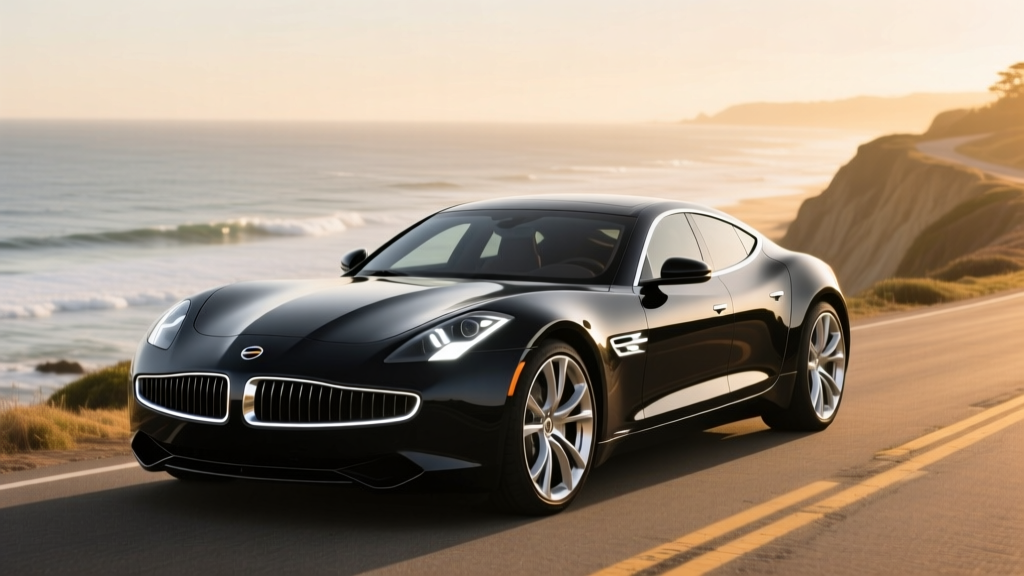
When Henrik Fisker's eponymous brand launched the Karma sedan for the 2012 model year, it was one of the most visually arresting plug-in hybrids ever built — a low-slung, four-door grand tourer with exotic proportions and a range-extended electric powertrain. For buyers researching Fisker Karma horsepower and capabilities today, the story requires careful unpacking: the original Karma was produced for only a single model year before Fisker Automotive's bankruptcy, and its successor, the Karma Revero (later Karma GS-6), carried the design forward under different ownership.
This review covers the original 2012 Fisker Karma's powertrain specifications, real-world efficiency, charging behavior, and ownership practicality — then contextualizes what the Karma means for electrified-car shoppers in 2026 who may encounter one on the used market or wonder how it stacks up against modern PHEVs and BEVs.
Powertrain: Series PHEV (range-extended EV) | Combined HP: 403 | 0-60 mph: 5.8 sec
EPA Electric Range: 32 miles | EPA Gas Range: 230 miles (combined) | Battery: 20.1 kWh (usable ~18 kWh), LFP
Fisker Karma Horsepower and Powertrain Deep Dive
The Karma's powertrain architecture was unusual even by today's standards. It used a series hybrid layout — meaning the gasoline engine never directly drove the wheels. Instead, two electric motors mounted on the rear axle provided all propulsion, while a 2.0-liter turbocharged four-cylinder engine (sourced from GM's Ecotec family) acted solely as a generator to recharge the battery when it depleted.
| Specification | Value |
|---|---|
| Combined System Horsepower | 403 HP |
| Combined Torque | 959 lb-ft (at rear wheels) |
| Electric Motors | Twin rear-axle motors (RWD only) |
| Gasoline Engine (Generator) | 2.0L turbo I4, 260 HP (generator only) |
| 0-60 mph | 5.8 seconds (Sport mode, full charge) |
| Top Speed | 125 mph (electronically limited) |
| Drivetrain | Rear-wheel drive |
| Driving Modes | Stealth (EV-only), Sport (generator-assisted), Sustain (hold charge) |
In Stealth mode, the Karma operated as a pure electric vehicle, drawing exclusively from its lithium-ion battery pack for up to 32 EPA-rated miles. In Sport mode, the gas generator engaged to supply additional current to the electric motors, unlocking the full 403 horsepower and the remarkable 959 lb-ft of torque figure. That torque number sounds extraordinary, but context matters: it's measured at the rear wheels after gear reduction, not at the motor output shaft — a measurement convention that inflates the number compared to how conventional powertrains are rated.
In real-world driving, the Karma felt quick but not supercar-fast. The 5.8-second 0-60 time was respectable for a 5,300-pound luxury sedan, but the vehicle's substantial weight was always apparent through corners and during hard braking. The instant electric torque delivery made it feel faster than the numbers suggested around town, but highway passing power tapered noticeably once the battery state of charge dropped below 50%.
Real-World Range and Efficiency: What to Actually Expect
The EPA rated the 2012 Fisker Karma at 32 miles of all-electric range and 52 MPGe in combined driving when operating as a PHEV. Once the battery depleted, the gasoline generator kicked in and delivered approximately 20 MPG combined — a figure that surprised many reviewers given the vehicle's luxury-sedan positioning.
EPA Electric Range: 32 miles
Expect in practice: 24–28 miles on a warm day with mixed driving; 18–22 miles in cold weather (below 40°F) or sustained highway speeds above 70 mph
EPA Gas-Only Range: ~230 miles (combined) | Real-world gas-only: ~180–200 miles
Total combined range: ~250 miles real-world (vs. EPA's ~260)
The Karma's battery pack used A123 Systems lithium iron phosphate (LFP) cells — a chemistry choice that was forward-thinking for 2012. LFP chemistry offers superior thermal stability and longer cycle life compared to the NMC (nickel manganese cobalt) cells used in most competitors at the time. However, LFP's lower energy density meant the 20.1 kWh pack (with approximately 18 kWh usable) was physically large and heavy relative to its capacity.
| Metric | EPA Rating | Real-World Expectation |
|---|---|---|
| Electric Range | 32 miles | 24–28 mi (warm), 18–22 mi (cold) |
| MPGe (EV mode) | 52 MPGe | 42–48 MPGe highway-heavy |
| Gas-Only MPG | 20 MPG combined | 17–19 MPG highway |
| Energy Consumption | 65 kWh/100 mi (EV mode) | 70–80 kWh/100 mi real-world |
| Fuel Tank | 9.5 gallons | 9.5 gallons (premium required) |
For context, fueleconomy.gov lists the Karma's combined fuel economy at 20 MPG in charge-sustaining mode — roughly equivalent to a mid-2000s V6 sedan, not a modern hybrid. The Karma's 5,300-pound curb weight and the energy losses inherent in the series-hybrid conversion (gas engine → generator → electric motor → wheels) explain the underwhelming gas-only efficiency.
Charging Speed: Level 2 and DC Fast Charging Limitations
This is where the Karma's age shows most clearly. The vehicle was designed in an era before DC fast charging infrastructure existed in any meaningful capacity, and it reflects that reality.
| Charging Level | Power | Time (0–Full) | Notes |
|---|---|---|---|
| Level 1 (120V) | ~1.4 kW | ~14 hours | Standard household outlet; impractical for daily use |
| Level 2 (240V) | 3.3 kW | ~6 hours | J1772 connector; overnight home charging |
| DC Fast Charging | Not supported | N/A | No DCFC capability — CCS/CHAdeMO not available |
The 3.3 kW Level 2 onboard charger was modest even in 2012. Modern PHEVs like the Toyota RAV4 Prime accept 6.6 kW, and many BEVs accept 11.5 kW or more on Level 2. The practical implication: you need a dedicated 240V Level 2 home charger to make the Karma viable as a daily commuter. At 3.3 kW, a full charge takes approximately six hours — feasible for overnight charging but limiting if you need a midday top-up.
The absence of DC fast charging is the most significant limitation for road-trip use. You cannot pull up to an Electrify America or Tesla Supercharger station and add range in 20 minutes. On longer trips, the Karma operates exclusively as a series hybrid once the battery depletes, relying on its 9.5-gallon fuel tank and ~20 MPG efficiency.
Interior Space, Cargo, and Daily Practicality
The Karma's dramatic exterior design — penned by Henrik Fisker, who also shaped the Aston Martin DB9 and BMW Z8 — came with real compromises in interior packaging. The car rides on a 124.4-inch wheelbase (longer than a Mercedes S-Class), yet interior volume is surprisingly tight.
| Dimension | Measurement | Context |
|---|---|---|
| Front Headroom | 37.4 in | Adequate for most adults |
| Front Legroom | 42.5 in | Generous |
| Rear Headroom | 35.7 in | Tight for taller passengers |
| Rear Legroom | 33.5 in | Cramped — best for children or short trips |
| Cargo Volume (Trunk) | 6.9 cu ft | Very small — battery pack intrudes heavily |
| Seating Capacity | 4 passengers | Rear center console divides the back seat |
The 6.9 cubic-foot trunk is the Karma's most glaring practicality failure. For reference, a Toyota Camry offers roughly 15 cubic feet. The Karma's battery pack sits in a tunnel running through the center of the car (visible as the raised spine along the roofline and through the cabin), which bisects the rear seat into two individual buckets and eliminates any pass-through cargo flexibility. You can fit a couple of carry-on bags or a week's groceries — nothing more.
The interior materials were high-quality for the era: standard leather, real wood trim, and a distinctive "eco" ethos with reclaimed wood and recycled materials available on certain trims. The infotainment system, however, was widely criticized at launch for sluggish response times, a confusing menu structure, and an unusual haptic-feedback touchscreen that replaced most physical buttons.
Pricing, Tax Credits, and Used Market Value in 2026
The 2012 Fisker Karma launched with a base MSRP of $96,850 (EcoStandard trim) and $109,850 (EcoChic trim with upgraded interior materials). A federal §30D tax credit of $7,500 was available to original purchasers, bringing the effective price to roughly $89,000–$102,000 depending on trim.
The original Karma does NOT qualify for the current §30D new-vehicle credit (production ended in 2012). However, under the used clean vehicle credit (§25E), a used Karma purchased from a dealer for $25,000 or less may qualify for a credit of 30% of the sale price, up to $4,000 — subject to buyer income caps ($75,000 single / $150,000 joint) and dealer reporting requirements. Consult a tax professional for eligibility.
On the 2026 used market, Fisker Karmas typically trade between $25,000 and $45,000 depending on mileage, condition, and — critically — battery health. Examples with confirmed battery replacements or refurbishments command premiums. Given the car's rarity (approximately 2,450 units were built before production ceased), collector interest provides some price support, but parts availability and service expertise remain genuine concerns.
Warranty, Battery Longevity, and Ownership Risks
The original Fisker Karma warranty included:
- Basic Vehicle: 3 years / 36,000 miles
- Powertrain: 5 years / 60,000 miles
- Battery Pack: 5 years / 60,000 miles (with capacity retention guarantee of ~70%)
All original factory warranties have long since expired. This creates a significant ownership risk: the A123 Systems battery pack, while LFP-based and theoretically more durable than NMC alternatives, is now 13+ years old. Replacement battery packs are available through specialty suppliers and Karma Revero/Revero GT service networks, but costs typically range from $8,000 to $15,000 including labor — a substantial sum relative to the car's current market value.
A123 Systems itself went through bankruptcy and restructuring in 2012–2013, further complicating the parts supply chain. Independent Fisker specialists exist (notably in California and Florida), but they are few, and turnaround times for major service can stretch into months.
The Karma was also subject to several recalls, including a high-profile battery fire recall in 2012 (related to a coolant leak in the battery compartment) and a separate recall for a faulty cooling fan. Any prospective buyer should verify that all recall work was completed and documented.
How the Karma Compares to Modern PHEVs and EVs
The most honest assessment of the Fisker Karma is that it was a concept car that made it to production — beautiful, innovative, but compromised in ways that modern electrified vehicles have largely solved. Here's how its key specs compare to vehicles a 2026 buyer might actually consider:
| Spec | 2012 Fisker Karma | 2026 BMW 550e xDrive | 2026 Porsche Taycan (Base) |
|---|---|---|---|
| Type | Series PHEV | Parallel PHEV | BEV |
| Horsepower | 403 HP | 483 HP | 402 HP |
| EV Range | 32 mi (EPA) | ~40 mi (EPA) | 283 mi (EPA) |
| Battery | 20.1 kWh (LFP) | ~22 kWh (NMC) | 82.3 kWh (NMC) |
| DC Fast Charge | None | ~50 kW | 270 kW peak |
| 0-60 mph | 5.8 sec | 4.1 sec | 4.5 sec |
| Cargo | 6.9 cu ft | 18.4 cu ft | 14.3 cu ft (rear) + 3.0 cu ft (frunk) |
| Base Price (New) | $96,850 (2012) | ~$72,000 | ~$92,000 |
The comparison makes clear that the Karma's 403 horsepower was genuinely impressive for its era, but modern PHEVs and BEVs deliver comparable or greater power with vastly superior efficiency, charging capability, interior space, and warranty coverage.
- Stunning design — still one of the best-looking sedans ever built
- 403 HP and instant electric torque deliver engaging acceleration
- LFP battery chemistry offers superior longevity vs. NMC
- Collector/enthusiast interest provides price floor
- Series-hybrid architecture means smooth, EV-like driving feel
- No DC fast charging — road trips rely entirely on gasoline
- Only 32 miles EPA electric range (24–28 real-world)
- 20 MPG gas-only efficiency is poor for a PHEV
- 6.9 cu ft trunk is impractically small
- Rear seats fit only two passengers, with tight legroom
- Expired warranties + $8K–$15K battery replacement risk
- Limited service network and parts availability
- Infotainment system is dated and unresponsive
Who Should (and Shouldn't) Consider the Karma Today
The Fisker Karma in 2026 is best understood as a collector car with electric sensibilities, not a practical daily driver. It suits:
- Design enthusiasts who value the Karma's Aston Martin–rivaling aesthetics and want a conversation piece
- Collector-car buyers looking for a unique, low-production electrified vehicle with potential appreciation
- Short-commute owners with home Level 2 charging who drive under 25 miles daily and rarely road-trip
It does not suit:
- Families — the cramped rear seats and tiny trunk make it impractical for school runs, groceries, or travel
- Road-trippers — no DC fast charging and 20 MPG on gas make long journeys expensive and slow
- Budget-conscious buyers — maintenance, potential battery replacement, and premium fuel costs add up
- Tech-focused buyers — the infotainment and driver-assist features are a generation behind modern offerings
Frequently Asked Questions
How much horsepower does the Fisker Karma have?
The 2012 Fisker Karma produces 403 combined horsepower and 959 lb-ft of torque (measured at the rear wheels) from its twin rear-axle electric motors. This output is available in Sport mode, where the gasoline generator supplements battery power. In Stealth (EV-only) mode, output is reduced to approximately 260 HP to preserve range.
What is the real-world electric range of the Fisker Karma?
The EPA rated the Karma at 32 miles of electric range. In real-world conditions, expect 24–28 miles in moderate temperatures with mixed city/highway driving. In cold weather (below 40°F) or sustained highway driving above 70 mph, range drops to 18–22 miles. The LFP battery chemistry handles temperature swings better than NMC, but the small 18 kWh usable capacity limits the ceiling.
Can the Fisker Karma use DC fast chargers?
No. The Karma only supports Level 1 (120V, ~1.4 kW) and Level 2 (240V, 3.3 kW) AC charging via a J1772 connector. There is no DC fast charging capability. A full Level 2 charge takes approximately 6 hours. On road trips, the gasoline generator provides all range once the battery depletes.
Does the Fisker Karma qualify for any federal tax credit in 2026?
The Karma does not qualify for the §30D new-vehicle credit (it has not been in production since 2012). Under the §25E used clean vehicle credit, a Karma purchased from a dealer for $25,000 or less may qualify for up to $4,000 (30% of sale price), subject to buyer income caps and dealer reporting. Verify eligibility with a tax professional and consult IRS guidelines on used clean vehicle credits.
Is the Fisker Karma worth buying over a modern PHEV?
For daily transportation, no. Modern PHEVs like the BMW 550e, Toyota RAV4 Prime, or Jeep Wrangler 4xe offer more electric range, better gas-only efficiency, DC fast charging (on some models), modern safety tech, active warranties, and far more practical interior space. The Karma is worth considering only as a collector vehicle or design statement — not as primary transportation.
What happened to Fisker Automotive?
Fisker Automotive filed for bankruptcy in November 2013 after a series of setbacks including the A123 Systems battery supplier bankruptcy, multiple recalls, and Hurricane Sandy flooding that destroyed approximately 300 Karmas at a New Jersey port. The company's assets were purchased by China's Wanxiang Group, which later licensed the design to Karma Automotive — a separate entity that produced the Karma Revero and GS-6 successors. Note: this is also distinct from Fisker Inc. (Henrik Fisker's later venture), which filed for bankruptcy in 2024 after producing the Fisker Ocean SUV.
How much does a battery replacement cost?
A replacement or refurbished battery pack for the Fisker Karma typically costs $8,000–$15,000 including labor, depending on the supplier and whether new or reconditioned LFP cells are used. Given the car's $25,000–$45,000 market value, battery replacement represents a significant percentage of the vehicle's worth. Always request battery health documentation (state of health / capacity test) before purchasing.