Quick Answer: Should You Buy a Toyota EV in 2025?
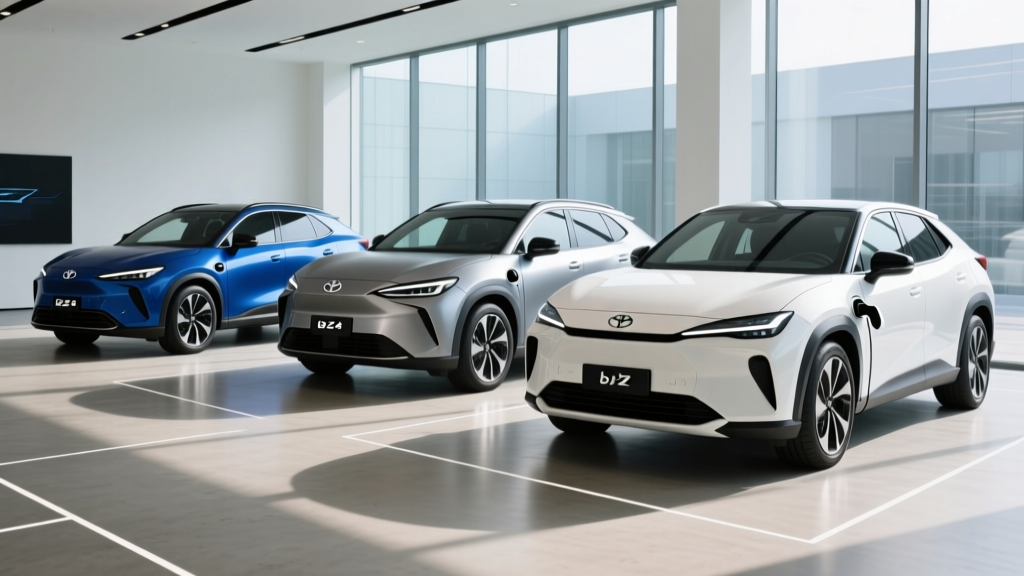
Toyota's primary electric offering for the 2025 model year is the bZ4X crossover, priced from $37,070 with an EPA-estimated range of up to 252 miles (FWD) and DC fast charging that peaks around 150 kW. It qualifies for a partial $3,750 federal tax credit under current IRS §30D rules, depending on your income and the vehicle's battery-sourcing compliance. For buyers who want Toyota reliability with zero tailpipe emissions and have reliable home charging, the bZ4X is a competent mid-tier EV. However, Toyota's own hybrid lineup — particularly the RAV4 Hybrid and RAV4 Prime PHEV — delivers stronger real-world value for drivers without home charging access or those covering longer highway routes in cold climates.
Toyota's 2025 EV Lineup: What's Actually Available
Toyota has been more cautious in its electrification strategy than competitors like Hyundai, Ford, or Tesla. For 2025, the lineup centers on a single battery-electric vehicle:
| Spec | FWD | AWD |
|---|---|---|
| EPA Range | 252 mi | 228 mi |
| Battery (usable) | 71.4 kWh (NMC) | 72.8 kWh (NMC) |
| Horsepower | 201 hp | 214 hp |
| 0–60 mph | 7.1 sec | 5.8 sec |
| Peak DC Fast Charge | ~150 kW | ~150 kW |
| 10–80% DC Charge | ~33 min | ~33 min |
| Level 2 (240V) Rate | ~7.2 kW | ~7.2 kW |
| Efficiency (MPGe) | 131 city / 107 hwy / 119 combined | 114 city / 94 hwy / 104 combined |
| Base MSRP | $37,070 (XLE) | $40,070 (XLE AWD) |
| Battery/Powertrain Warranty | 8 yr / 100,000 mi | |
The AWD version, co-developed with Subaru (sold as the Solterra), uses a slightly different battery pack and dual-motor setup. Both versions use NMC (nickel manganese cobalt) lithium-ion chemistry, which offers higher energy density than LFP but benefits less from daily 100% charging — Toyota recommends an 80% daily charge limit for longevity.
Real-World Range: What the EPA Number Doesn't Tell You
The EPA's 252-mile estimate for the FWD bZ4X reflects a mix of city and moderate-speed driving. In highway-dominant driving at 70–75 mph, expect closer to 210–225 miles. In cold weather (below 32°F), the bZ4X's heat pump helps, but range loss of 15–25% is typical — meaning roughly 180–200 miles of usable range on a full charge. If your daily commute plus errands regularly exceed 150 miles round-trip in winter, this becomes a meaningful constraint.
How the bZ4X Compares to Toyota's Hybrids and Gas Models
Toyota's hybrid dominance makes this comparison essential. Most bZ4X shoppers are cross-shopping against the RAV4 Hybrid, RAV4 Prime (PHEV), or the gas-only RAV4. Here's how the numbers stack up:
| Metric | bZ4X FWD (EV) | RAV4 Hybrid AWD | RAV4 Prime PHEV |
|---|---|---|---|
| Base MSRP | $37,070 | $33,975 | $44,485 |
| Fed. Tax Credit (est.) | $3,750* | $0 | $3,750* |
| Effective Price After Credit | ~$33,320 | $33,975 | ~$40,735 |
| EPA Range / Electric Range | 252 mi (all-electric) | N/A (hybrid) | 42 mi electric + hybrid |
| Fuel/Energy Cost per Mile | ~$0.04 (home L2) | ~$0.11 (gas) | ~$0.04 electric / ~$0.11 gas |
| MPG / MPGe Combined | 119 MPGe | 39 MPG | 94 MPGe / 38 MPG (hybrid mode) |
| Annual Fuel/Energy (15k mi) | ~$600 | ~$1,650 | ~$650–$1,200 |
| Maintenance Cost (5 yr est.) | ~$1,500 | ~$3,200 | ~$2,800 |
| Home Charging Needed? | Strongly recommended | No | Recommended for EV benefit |
*Tax credit eligibility depends on income caps ($150K single / $300K joint), MSRP caps ($55K for SUVs), and battery critical-mineral sourcing. Verify on IRS.gov §30D before purchasing.
The data reveals a clear pattern: the bZ4X wins on per-mile operating cost and maintenance savings, but the RAV4 Hybrid offers a comparable effective purchase price with zero charging dependency. The RAV4 Prime PHEV delivers the best of both worlds — 42 miles of electric-only driving covers most daily commutes — but at a $7,000+ premium over the bZ4X after credits.
Real Costs of bZ4X Ownership: 5-Year Breakdown
Purchase price is only the beginning. Here's what five years of bZ4X ownership actually costs compared to the RAV4 Hybrid, assuming 15,000 miles per year, national-average electricity at $0.16/kWh, and gas at $3.50/gallon:
| Category | bZ4X FWD | RAV4 Hybrid AWD |
|---|---|---|
| Purchase Price (after credit) | $33,320 | $33,975 |
| Energy/Fuel (5 yr) | $3,000 | $8,250 |
| Maintenance (5 yr) | $1,500 | $3,200 |
| Insurance (5 yr avg) | $9,500 | $7,800 |
| Depreciation (est. 5 yr) | $14,200 | $12,500 |
| Home Charger Install (L2) | $800–$2,000 | $0 |
| Total 5-Year Cost | $62,320–$63,520 | $65,725 |
Key observations from this breakdown:
- Energy savings are real but modest: ~$5,250 over five years at current gas and electricity prices.
- Insurance costs more: EV insurance premiums run 15–25% higher on average due to higher repair costs for battery-adjacent damage and specialized technician requirements.
- Depreciation is steeper: The bZ4X has suffered faster depreciation than Toyota hybrids, partly due to early-model recalls and the competitive EV market. Expect ~43% value retention after 5 years vs. ~63% for the RAV4 Hybrid.
- Home charger is a real cost: A Level 2 (240V) home installation typically runs $800–$2,000 if your electrical panel has capacity. If you need a panel upgrade from 100A to 200A, add $1,500–$3,000.
Net result: the bZ4X is slightly cheaper over five years, but the margin is thin — and it flips entirely if you lack home charging and must rely on public DC fast charging at $0.35–$0.50/kWh.
Charging Reality: Home, Public, and What You Need to Know
Home Charging (Level 2)
The bZ4X accepts up to 7.2 kW on Level 2 (240V). A full 0–100% charge takes roughly 10–11 hours, which works well for overnight replenishment. You'll need a NEMA 14-50 outlet or a hardwired Level 2 station (ChargePoint Home Flex, Emporia Vue, or Tesla Universal Wall Connector with J1772 adapter all work). Budget $500–$800 for the charger hardware and $300–$1,200 for electrician labor, depending on run length and panel proximity.
DC Fast Charging (Public)
The bZ4X peaks at approximately 150 kW on DC fast chargers, but like all EVs, it doesn't sustain that rate. The charge curve tapers significantly above 60% SoC, and the 10–80% time of ~33 minutes is slower than competitors like the Hyundai Ioniq 5 (18 min at 240 kW) or the Tesla Model Y (15 min at 250 kW on V3 Superchargers). The bZ4X uses a CCS1 connector, giving it access to Electrify America, EVgo, and ChargePoint DC networks — and increasingly to Tesla Superchargers via adapter or built-in NACS port on newer builds.
Common Misconceptions About Toyota EVs
| Myth | Fact |
|---|---|
| "The bZ4X has the same battery recall problems as 2023 models." | The 2023 wheel-detachment recall was resolved. 2025 models ship with updated hub bolt specs and revised battery management software. Always verify recall status via NHTSA.gov. |
| "Toyota doesn't support fast charging well." | The bZ4X's 150 kW peak is adequate but not class-leading. It charges slower than Hyundai/Kia's 800V platform but faster than many older EVs. Preconditioning (available via the Toyota app) warms the battery for faster DC charging in cold weather. |
| "The battery will need replacing in 5 years." | NMC batteries in modern thermal-managed EVs typically degrade 10–15% over 8 years/100,000 miles. Toyota's warranty guarantees the battery retains at least 70% capacity for 8 years/100,000 miles. Full replacement, if ever needed, currently costs $12,000–$18,000. |
| "I'll get the full $7,500 tax credit." | As of 2025, the bZ4X qualifies for $3,750 (the critical-minerals half of the credit). The battery-component half is affected by foreign-entity-of-concern (FEOC) sourcing restrictions. Check the latest eligibility at fueleconomy.gov. |
| "All Toyotas are hybrids, so why bother with a full EV?" | Fair question. If you drive under 42 miles daily and can charge at home, the RAV4 Prime PHEV covers most trips on electricity while keeping a gas backup. The bZ4X makes sense for drivers who want zero gas dependency and lower per-mile energy costs. |
First-Time EV Buyer: What Toyota Ownership Actually Requires
If the bZ4X is your first EV, here are the practical adjustments to anticipate:
- Home charging is almost mandatory for satisfaction. Public-only charging is feasible but adds 2–4 hours per week of active charging time and roughly doubles your per-mile energy cost. Confirm you can install a 240V outlet before purchasing.
- Plan road trips around chargers, not gas stations. The bZ4X's 228-mile AWD range means stops every ~180 miles on the highway (accounting for an 80% DC charge target and a comfort buffer). Use the PlugShare or A Better Routeplanner apps to map DC stations along your route.
- Winter changes everything. If you live where temperatures regularly drop below freezing, budget 20% range loss. The bZ4X's heat pump mitigates cabin-heating energy draw, but battery chemistry itself slows in cold, reducing both range and charge speed.
- Regenerative braking takes adaptation. The bZ4X offers adjustable regen but doesn't quite achieve true one-pedal driving in all conditions. Expect a week of adjustment.
- Insurance quotes vary widely. Get quotes before buying. Some insurers (Geico, Progressive) have EV-specific rates; others load EVs into higher risk pools. Shopping around saves $200–$500/year.
Decision Framework: Is the Toyota bZ4X Right for You?
Choose the bZ4X If:
- You have reliable Level 2 home charging (or can install it)
- Your daily driving is under 120 miles round-trip
- You want zero gas dependency and lower per-mile energy cost
- You value Toyota's dealer network and 8-year battery warranty
- You qualify for the $3,750 federal credit based on income and sourcing
Choose the RAV4 Hybrid Instead If:
- You lack home charging access and can't install it
- You regularly drive 300+ miles on road trips in areas with sparse DC chargers
- You live in extreme cold (below 0°F regularly) where EV range loss is severe
- You want higher resale value and lower insurance costs
- You want AWD without the range penalty of the bZ4X AWD
Choose the RAV4 Prime PHEV If:
- You can charge at home and your commute is under 42 miles
- You want electric daily driving with gas flexibility for road trips
- You're willing to pay a $7,000+ premium for the dual-powertrain flexibility
Frequently Asked Questions
Does the 2025 Toyota bZ4X qualify for the full $7,500 federal tax credit?
No. Under current IRS §30D rules, the bZ4X qualifies for $3,750 — the critical-minerals portion of the credit. The battery-component portion is restricted by FEOC (foreign entity of concern) sourcing rules that took effect in 2024. Eligibility also requires buyer AGI under $150,000 (single) or $300,000 (joint), and the vehicle MSRP must be under $80,000 (SUV threshold). The credit can be transferred to the dealer at point of sale for an immediate price reduction. Always verify current eligibility at IRS.gov.
How long does it take to charge the bZ4X at home?
On a 7.2 kW Level 2 (240V) home charger, a full 0–100% charge takes approximately 10–11 hours. In practice, most owners charge from 20–80% daily, which takes about 6 hours — easily accomplished overnight. On a standard 120V outlet (Level 1), expect roughly 3–4 miles of range per hour of charging, which is only practical as a trickle-charge supplement.
Is the bZ4X reliable compared to other Toyota models?
The 2023 bZ4X had a notable recall for wheel hub bolts that could loosen, which was fully addressed before 2024 production. The 2025 model benefits from two years of software and hardware refinements. As an EV, it has fewer moving parts than a gas RAV4 (no transmission, no oil changes, no exhaust system), which generally means lower long-term maintenance. Toyota's 8-year/100,000-mile battery and powertrain warranty matches the industry standard.
What happens if I need a battery replacement out of warranty?
Current NMC battery replacement costs for the bZ4X are estimated at $12,000–$18,000 (parts and labor). However, industry data from similar-age EVs shows average degradation of only 10–15% at 8 years, meaning most batteries never need full replacement. Individual cell module repairs are sometimes possible at lower cost. Battery technology costs continue to decline, and by the time a 2025 bZ4X reaches end-of-warranty in 2033, replacement costs are expected to be substantially lower.
Can I tow with the bZ4X?
The 2025 bZ4X is rated for up to 2,200 lbs of towing capacity (AWD models). This is adequate for a small utility trailer or a pair of dirt bikes but insufficient for most campers or boats. The RAV4 Hybrid tows up to 1,750 lbs, while the gas RAV4 Adventure trim tows 3,500 lbs — so if towing is a priority, gas remains the stronger option.
Are more Toyota EVs coming?
Toyota has announced a next-generation EV platform with improved battery chemistry (including potential solid-state cells) targeted for 2026–2028 production. A three-row electric SUV and a redesigned bZ series are in development, but specific specs and pricing remain preliminary. If you can wait 12–24 months, Toyota's EV lineup is expected to expand significantly. If you need a vehicle now, the bZ4X and Toyota's hybrid/PHEV range represent the current options.