The Real Cost of a Cheap Used Tesla in 2026
If you've been browsing online listings for a cheap used Tesla, you've probably noticed prices have dropped significantly since the 2022–2023 peak. A 2019 Model 3 Standard Range Plus can now be found for under $18,000, and 2021 Model Y Long Range examples hover around $24,000–$28,000 depending on mileage and condition. But "cheap" in the used EV world means something different than it does with gas cars: battery health, charging capability, and software feature access all play outsized roles in whether you're getting a bargain or a money pit.
This guide covers the most common cheap used Tesla models you'll encounter in 2026 — the Model 3 (2018–2023) and Model Y (2020–2023) — with exact specs, real-world range data, and the ownership costs that determine true value.
Model 3 vs Model Y: Quick Spec Comparison
| Spec | Model 3 SR+ (2019–2021) | Model 3 Long Range (2019–2023) | Model Y Long Range (2021–2023) |
|---|---|---|---|
| EPA Range | 240–272 mi | 310–358 mi | 303–330 mi |
| Battery Capacity (usable) | ~50 kWh (LFP or NMC) | ~75–82 kWh (NMC) | ~75–82 kWh (NMC) |
| Max DC Fast Charge | 145–170 kW | 200–250 kW | 210–250 kW |
| 10–80% DC Charge Time | ~28–35 min | ~25–30 min | ~25–30 min |
| Level 2 Home Charge Rate | 7.6 kW (~30 mi/hr) | 11.5 kW (~44 mi/hr) | 11.5 kW (~44 mi/hr) |
| 0–60 mph | 5.3 sec | 4.2 sec | 4.8 sec |
| Horsepower | 283 hp | 346 hp | 384 hp |
| Drivetrain | RWD | Dual-Motor AWD | Dual-Motor AWD |
| EPA Efficiency | 142 MPGe / 24 kWh/100mi | 134 MPGe / 25 kWh/100mi | 122 MPGe / 28 kWh/100mi |
| Cargo Volume | 23 cu ft (trunk+frunk) | 23 cu ft (trunk+frunk) | 76 cu ft (rear seats folded) |
| Battery Warranty (original) | 8 yr / 100,000 mi | 8 yr / 120,000 mi | 8 yr / 120,000 mi |
Sources: EPA fueleconomy.gov, Tesla owner's manuals. Specs vary by exact model year and firmware updates.
Real-World Range: What the EPA Sticker Doesn't Tell You
EPA Sticker vs Reality
Model 3 SR+ (2019): EPA 240 mi — Expect ~190–210 mi on highway trips at 70+ mph; ~150–170 mi in sub-30°F winter conditions.
Model 3 Long Range (2021): EPA 353 mi — Expect ~280–310 mi highway; ~230–260 mi in cold weather.
Model Y Long Range (2022): EPA 330 mi — Expect ~260–290 mi highway; ~210–240 mi in cold weather.
The EPA range figure assumes a mix of city and highway driving at moderate temperatures. In practice, Tesla's efficiency advantage is real — the Model 3 remains one of the most efficient EVs ever sold — but physics still applies. Highway speeds above 70 mph increase aerodynamic drag substantially, and cold temperatures reduce battery chemical efficiency while drawing energy for cabin heating.
Models equipped with a heat pump (standard on 2021+ Model 3 and all Model Y) lose less range in cold weather than earlier resistance-heated cars. If you live in a cold climate, prioritize a 2021 or newer Model 3 for the heat pump alone.
Charging Speed: Home and DC Fast Charging
Charging speed is where cheap used Tesla buyers need to pay attention, because not all Model 3 and Model Y variants charge at the same rate.
| Charging Level | Model 3 SR+ | Model 3 LR / Model Y LR |
|---|---|---|
| Level 1 (120V, 12A) | ~1.4 kW / ~5 mi/hr | ~1.4 kW / ~5 mi/hr |
| Level 2 (240V, 32A) | 7.6 kW / ~30 mi/hr | 11.5 kW / ~44 mi/hr |
| Level 2 (240V, 48A max) | 7.6 kW (onboard limit) | 11.5 kW / ~44 mi/hr |
| DC Fast Charge (peak) | 145–170 kW | 200–250 kW |
| DC 10–80% Time | ~28–35 min | ~25–30 min |
The Standard Range Plus has a smaller battery and a lower onboard charger limit (7.6 kW vs 11.5 kW), meaning home charging takes longer. On DC fast chargers, the SR+ peaks lower and the charge curve tapers earlier — you'll spend more time at Superchargers on road trips.
Charge curve reality: Peak kW is not sustained. A Model 3 Long Range hitting 250 kW at 10% SoC will taper to ~100 kW by 60% and ~40 kW by 80%. The 10–80% time is the number that matters for trip planning, not the peak figure.
Tesla's Supercharger network remains the most reliable DC fast-charging ecosystem in the US, and used Teslas retain full Supercharger access. This is a significant advantage over used EVs from brands still dependent on third-party networks with inconsistent uptime.
Battery Health and Chemistry: What to Check Before Buying
Battery degradation is the single biggest variable when buying a cheap used Tesla. Here's what you need to know:
Chemistry matters: Some 2021+ Model 3 Standard Range vehicles sold in the US use LFP (lithium iron phosphate) batteries, while earlier SR+ models and all Long Range variants use NMC (nickel manganese cobalt). LFP batteries tolerate regular 100% charging better and generally degrade more slowly, but they are heavier and slightly less energy-dense. NMC batteries should be charged to 80% daily for longevity, reserving 100% for trips.
Degradation data: Based on aggregated fleet data, most Model 3 and Model Y batteries lose approximately 5–8% capacity in the first 50,000 miles, then the degradation curve flattens significantly. A 2019 Model 3 with 60,000 miles might show 90–94% State of Health (SoH). You can check this in the car's service menu or via third-party apps that query the BMS (Battery Management System).
Warranty remaining: Tesla's battery warranty is 8 years / 100,000 miles for Standard Range and 8 years / 120,000 miles for Long Range, with a capacity retention threshold of 70%. A 2019 Model 3 SR+ with 80,000 miles is near the end of its warranty window — factor this into your purchase price negotiation.
Pricing, Tax Credits, and True Cost
| Model | Typical Used Price | §30D Used EV Credit | Effective Price |
|---|---|---|---|
| 2019 Model 3 SR+ (50k mi) | $16,000–$19,000 | Up to $4,000 (30% of sale price) | $12,000–$15,000 |
| 2020 Model 3 LR AWD (40k mi) | $20,000–$24,000 | Up to $4,000 | $16,000–$20,000 |
| 2021 Model Y LR (35k mi) | $24,000–$28,000 | Up to $4,000 | $20,000–$24,000 |
| 2022 Model 3 LR (25k mi) | $26,000–$30,000 | Up to $4,000 | $22,000–$26,000 |
The IRS §30D used clean vehicle credit offers 30% of the sale price up to $4,000 for qualifying used EVs. Key eligibility requirements:
- Price cap: Sale price must be $25,000 or less
- Income cap: Buyer AGI cannot exceed $75,000 (single), $112,500 (head of household), or $150,000 (joint)
- Vehicle age: Must be at least 2 model years old
- Dealer requirement: Must be purchased from a licensed dealer (private-party sales do not qualify)
- One-time use: The specific VIN can only receive the used credit once every 3 years
This means a 2021 Model Y at $28,000 does not qualify (over the $25,000 cap), but a 2019 Model 3 at $18,000 from a dealer could net you the full $4,000 credit, bringing your net cost to $14,000. Always verify eligibility with a tax professional before assuming the credit applies.
What to Inspect on a Cheap Used Tesla
Used Teslas don't need oil changes, but they have their own wear items and failure points:
- Battery SoH: Request a screenshot of the battery health from the service menu. Below 88% on a low-mileage car may indicate frequent DC fast charging or consistent 100% storage.
- Drive unit whine: Some early Model 3 drive units develop a high-pitched whine. Listen carefully during a test drive at various speeds.
- Suspension: 2018–2020 Model 3 front control arms and bushings are known wear items. Clunking over bumps is a sign of needed replacement (~$800–$1,200).
- 12V battery: Earlier Teslas use a lead-acid 12V battery that typically lasts 3–4 years. Replacement is ~$200–$300. (2022+ models switched to a lithium 12V.)
- Tire wear: EVs are heavy and torquey. Check tire tread depth and note that Tesla-specific tires with foam lining cost more to replace ($250–$350 per corner).
- Autopilot hardware: Cars built after April 2019 have Hardware 3 (HW3). HW3 supports current FSD (Supervised) features. Pre-HW3 cars (HW2.5) have limited driver-assist capability and may not receive future updates.
- FSD transfer: Full Self-Driving (Supervised) licenses sometimes transfer with used Tesla purchases, but this is not guaranteed. Verify in the Tesla app before buying.
Pros and Cons of Buying a Cheap Used Tesla
Pros
- Supercharger network access — the most reliable DC fast-charging ecosystem in the US
- Class-leading efficiency — Model 3 uses 24–25 kWh/100mi, beating most competitors
- Over-the-air updates continue improving older vehicles
- Strong performance even in base trims (5.3s 0–60 for SR+)
- Minimal routine maintenance — no oil, filters, or spark plugs
- Up to $4,000 federal used EV tax credit on qualifying purchases
Cons
- Out-of-warranty battery replacement costs $12,000–$16,000
- Insurance premiums run 15–30% higher than comparable gas sedans
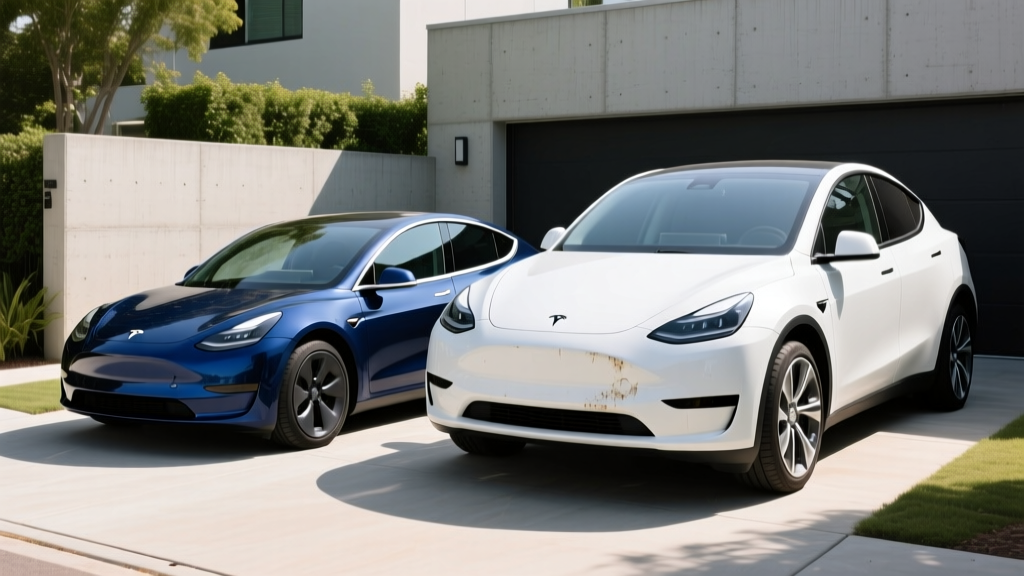
- Build quality on 2018–2020 cars is inconsistent (panel gaps, paint)
- No physical instrument cluster — everything routes through the center screen
- Regenerative braking is aggressive and not adjustable on older firmware
- Collision repair costs are high; not all body shops service Teslas
Who Should Buy a Cheap Used Tesla?
Best for: Daily commuters with home charging access who want low per-mile energy costs and Supercharger access for occasional road trips. The Model 3 SR+ is ideal for single drivers or couples without large cargo needs. The Model Y Long Range suits small families needing crossover space.
Think twice if: You lack home or workplace charging and would rely entirely on public infrastructure. You drive more than 25,000 miles annually (high mileage accelerates battery degradation and erodes warranty coverage). You live in an area with extreme cold and no garage — cold-soaking an EV overnight without preconditioning capability is painful.
vs. competitors: A used Chevrolet Bolt EV (2020–2023) offers 259 miles EPA for $12,000–$16,000 but charges slowly (50 kW DC max) and lacks Supercharger access. A used Hyundai Kona Electric (2021–2023) provides 258 miles EPA and 75 kW DC charging but also has no Supercharger network. The Tesla charging ecosystem remains the decisive advantage for road-trip-capable used EVs.
Frequently Asked Questions
What is the cheapest used Tesla worth buying in 2026?
A 2019 Model 3 Standard Range Plus with under 60,000 miles and verified battery SoH above 90% represents the best value, typically $16,000–$19,000 before the $4,000 used EV tax credit. Avoid 2018 Model 3 cars — they had more early-production build quality issues and smaller batteries.
Does a used Tesla qualify for any federal tax credit?
Yes, through the IRS §30D used clean vehicle credit. You can receive 30% of the sale price up to $4,000 if the car sells for $25,000 or less, you buy from a licensed dealer, and your income falls under the caps ($75k single / $150k joint). The vehicle must be at least 2 model years old. See IRS guidelines for full details.
How long will a used Tesla battery last?
Tesla's NMC and LFP batteries are designed to retain above 70% capacity for the warranty period (8 years / 100,000–120,000 miles). Fleet data suggests most batteries reach 200,000+ miles before dropping below 80% SoH with normal use. Avoid cars that show rapid degradation curves or that were consistently stored at 100% charge.
Is Autopilot included on a used Tesla?
Basic Autopilot (lane centering and adaptive cruise control) is included on all Model 3 and Model Y vehicles. Enhanced Autopilot and Full Self-Driving (Supervised) are paid add-ons that may or may not transfer with the car. FSD (Supervised) is an SAE Level 2 system — it requires active driver supervision and is not autonomous driving.
How much does it cost to charge a used Tesla at home?
At the US average electricity rate of ~$0.16/kWh, fully charging a Model 3 Long Range (75 kWh usable) costs about $12. That translates to roughly $0.04–$0.05 per mile, compared to $0.12–$0.15 per mile for a gas sedan at $3.50/gallon and 28 MPG. Home charging on a Level 2 (240V) circuit adds ~30–44 miles per hour depending on the model.