Quick answer: Toyota's primary electric vehicle available in the U.S. is the bZ4X, a compact electric SUV with an EPA-estimated range of up to 252 miles (FWD trim), a 71.4 kWh usable battery (NMC chemistry), and DC fast charging that peaks around 150 kW (10–80% in roughly 30 minutes). Pricing starts near $37,000 MSRP before incentives. However, Toyota's stronger electrified play remains its hybrid lineup (RAV4 Hybrid, Camry Hybrid), which delivers 40+ MPG without charging infrastructure. If you have reliable home Level 2 charging and drive under 200 miles daily, the bZ4X is a competent EV. If you road-trip frequently or lack home charging, a Toyota hybrid or plug-in hybrid (like the RAV4 Prime) is the more practical electrified choice in 2026.
Toyota's Electric Vehicle Strategy: Context for Buyers
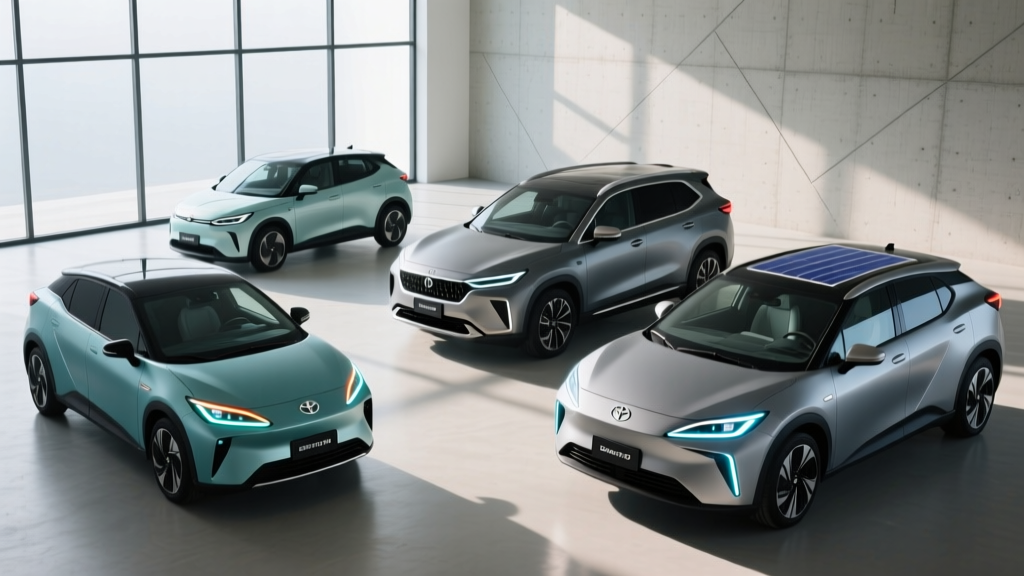
Toyota has historically been cautious about full battery-electric vehicles, betting heavily on hybrids and hydrogen fuel cells. That strategy is shifting, but slowly. The bZ4X ("Beyond Zero") launched as Toyota's first mass-market global BEV and remains the cornerstone of its electric vehicle lineup for U.S. buyers in 2026. Toyota has announced additional bZ models and next-generation EVs on dedicated platforms, but as of early 2026, the bZ4X is what you can actually buy and drive off the lot.
This measured approach means Toyota EV buyers get a vehicle that is thoroughly tested and conservatively engineered — but not class-leading in range or charging speed. Competitors like the Hyundai Ioniq 5 (303 miles EPA, 10–80% in ~18 min) and Tesla Model Y (320+ miles EPA) outpace the bZ4X on paper. Toyota's value proposition is brand reliability, dealer network support, and a familiar ownership experience rather than cutting-edge EV performance.
bZ4X Specs: Range, Battery, Charging, and Performance
Here's the spec sheet that matters for real purchase decisions. All figures reflect the latest available model-year data; always confirm with your dealer for the specific build month.
| Specification | bZ4X FWD | bZ4X AWD |
|---|---|---|
| EPA Range | 252 miles | 228 miles |
| Real-World Range (highway/cold) | ~200–220 mi | ~180–200 mi |
| Battery Capacity (usable) | 71.4 kWh (NMC lithium-ion) | |
| Peak DC Fast Charge Rate | ~150 kW | |
| 10–80% DC Fast Charge Time | ~30 minutes | |
| Level 2 AC Charge Rate | 6.6 kW (onboard charger) | |
| Level 2 Full Charge Time | ~11 hours | |
| Horsepower | 201 hp | 214 hp |
| 0–60 mph | ~7.1 sec | ~6.5 sec |
| Efficiency (MPGe combined) | 119 MPGe | 104 MPGe |
| Connector | CCS1 (J1772 AC / CCS DC) | |
| Starting MSRP | ~$37,000 (before incentives) | |
| Battery/Powertrain Warranty | 8 years / 100,000 miles | |
Real-World Range Reality: The EPA sticker says 252 miles for the FWD bZ4X, but plan for ~200–220 miles on highway trips at 70+ mph and significantly less in cold weather (below freezing can reduce range 20–30%). The AWD trim drops to 228 EPA miles, with real-world highway/cold expectations closer to 180–200 miles. For daily commuting under 100 miles round-trip, this is plenty. For 300+ mile road trips, you'll need at least one DC fast-charge stop — and the bZ4X's ~150 kW peak charge rate (which tapers significantly above 80% SoC) means that stop will be longer than in a Hyundai Ioniq 5 or Kia EV6.
Charging the bZ4X: Home, Public, and What It Costs
The bZ4X uses the CCS1 connector standard, which is compatible with Electrify America, EVgo, ChargePoint DC stations, and most non-Tesla public fast-charging networks. It does not natively support NACS (Tesla's connector), though adapters and network access agreements are evolving — check Toyota's latest connectivity updates for Supercharger compatibility via adapter.
| Charging Level | Power (kW) | Miles Added per Hour | Use Case |
|---|---|---|---|
| Level 1 (120V household) | ~1.2 kW | ~3–4 mi/hr | Overnight trickle; emergency only |
| Level 2 (240V home/public) | 6.6 kW | ~22–25 mi/hr | Daily home charging; full charge overnight |
| DC Fast Charge | Up to 150 kW (peak) | ~130+ mi in 15 min (peak) | Road trips; tapers above 80% |
Home charging cost: At the U.S. average residential electricity rate of ~$0.16/kWh, fully charging the 71.4 kWh battery from empty costs roughly $11.42. That translates to about $0.045 per mile — compared to ~$0.12–0.15 per mile for a gas SUV getting 28 MPG at $3.50/gallon.
Public DC fast charging cost: Rates vary widely ($0.30–$0.60/kWh at Electrify America or EVgo), putting road-trip fueling closer to $0.09–0.18 per mile — still competitive with gas but no longer a dramatic savings. Frequent DC fast charging also accelerates battery degradation over time compared to Level 2 home charging.
Home Level 2 installation: Expect $500–$1,500 for a quality Level 2 charger (e.g., ChargePoint Home Flex, Emporia Vue) plus $500–$2,000 for electrician installation depending on panel capacity and run length. If your home has a 200-amp panel with spare capacity, you're on the low end. Older homes with 100-amp panels may need a $2,000–$4,000 panel upgrade. Always get a quote from a licensed electrician before committing.
bZ4X vs. Toyota Hybrids: Which Electrified Vehicle Fits You?
Toyota's hybrid lineup is arguably the strongest in the industry. Before choosing the bZ4X, compare it directly against Toyota's own hybrid and plug-in hybrid alternatives.
| Metric | bZ4X (BEV) | RAV4 Hybrid (HEV) | RAV4 Prime (PHEV) |
|---|---|---|---|
| Starting MSRP | ~$37,000 | ~$33,000 | ~$44,000 |
| EPA Range / Efficiency | 252 mi / 119 MPGe | 41 MPG combined | 42 mi electric + 38 MPG gas |
| Fueling/Charging Needed? | Must charge (home or public) | Gas station only | Optional charging; runs on gas if uncharged |
| Fuel Cost per Mile | $0.045 (home) / $0.12 (DC) | ~$0.085 (gas) | $0.04 (electric) / $0.09 (gas) |
| Maintenance | Minimal (no oil, fewer moving parts) | Standard (oil, filters) | Standard + battery system |
| Federal Tax Credit (§30D) | Up to $7,500 (if eligible) | None | Up to $7,500 (if eligible) |
| Cold-Weather Impact | 20–30% range loss | Minimal MPG impact | Reduced electric range; gas backup |
| Road-Trip Convenience | Requires charge stops (30+ min) | 5-min gas stop, 450+ mi range | Gas backup, no range anxiety |
The data shows a clear trade-off: the bZ4X offers the lowest per-mile fuel cost and minimal maintenance, but demands charging access and patience on road trips. The RAV4 Prime PHEV offers 42 miles of electric-only driving for daily commutes (covering most people's needs) with a gas engine for road trips — making it the most versatile electrified option for buyers without reliable home charging or those who frequently drive long distances.
Real Costs of Ownership: 5-Year Breakdown
Let's model a realistic 5-year ownership scenario for the bZ4X vs. the RAV4 Hybrid, assuming 15,000 miles/year, home charging for the EV, and national average fuel/electricity rates.
| Cost Category | bZ4X (BEV) | RAV4 Hybrid (HEV) |
|---|---|---|
| Purchase Price (base MSRP) | $37,000 | $33,000 |
| Federal Tax Credit (est.) | –$7,500* | $0 |
| Net Purchase (before state/local) | $29,500 | $33,000 |
| Home Charger + Install | $1,500 | $0 |
| Fuel/Energy (5 yrs, 75k mi) | $3,400 | $6,400 |
| Maintenance (5 yrs) | $1,200 | $3,500 |
| Insurance (5 yrs, est. avg) | $9,500 | $7,800 |
| Total 5-Year Cost (est.) | $45,100 | $50,700 |
*Federal §30D tax credit eligibility depends on buyer income caps, vehicle MSRP caps, battery component sourcing, and critical mineral requirements per current IRS rules. The bZ4X's credit eligibility has varied by model year and sourcing changes — always verify current status on fueleconomy.gov and consult a tax professional.
The EV wins on energy and maintenance costs, saving roughly $5,300 over five years. But insurance premiums for EVs tend to run 15–25% higher due to repair complexity and battery replacement costs, partially offsetting those savings. If you qualify for the full federal tax credit, the bZ4X's total cost of ownership becomes competitive or lower. Without the credit, the math narrows significantly.
Tax Credit Eligibility: What You Need to Know
The federal §30D Clean Vehicle Credit offers up to $7,500 for qualifying new EVs, but eligibility is not automatic. Key requirements for 2026:
- Buyer income caps: Modified AGI must not exceed $150,000 (single), $225,000 (head of household), or $300,000 (joint).
- MSRP cap: SUVs, vans, and trucks must have an MSRP at or below $80,000; sedans at or below $55,000.
- Battery sourcing: A percentage of battery components must be manufactured or assembled in North America, and critical minerals must be sourced from the U.S. or free-trade-agreement countries. These percentages increase annually.
- Point-of-sale transfer: Eligible buyers can transfer the credit to the dealer at purchase, reducing the sale price directly rather than waiting for a tax refund.
- Foreign entity of concern (FEOC): Vehicles with battery components or critical minerals from certain restricted foreign entities are disqualified.
Because sourcing rules tighten each year and Toyota's supply chain has evolved, the bZ4X's credit status may differ by model year and build date. Always check the latest on IRS.gov before purchasing.
Common Misconceptions About Toyota EVs
| Myth | Fact |
|---|---|
| "The bZ4X has 252 miles of range, so I can drive 252 miles." | EPA range is a lab estimate. Highway driving at 70+ mph, cold weather, and elevation changes reduce real-world range to ~200–220 miles (FWD). Plan trips conservatively. |
| "EV batteries need replacing after a few years." | Toyota warranties the bZ4X battery for 8 years/100,000 miles with a capacity retention threshold. Industry data from sources like Recurrent shows most EV batteries lose 5–15% capacity over 8–10 years, not catastrophic failure. |
| "Charging an EV takes forever." | Home Level 2 charging happens while you sleep — no active time cost. Road-trip DC fast charging adds ~30 minutes for a 10–80% charge on the bZ4X. That's longer than some competitors but manageable with planning. |
| "Toyota doesn't make good EVs." | The bZ4X is competent but conservative. It prioritizes reliability and familiar ergonomics over maximum range or fastest charging. It's not a Tesla competitor on specs, but it's a solid daily driver for the right buyer. |
| "I can charge at any public station." | The bZ4X uses CCS1. Tesla Superchargers (NACS) require an adapter and network compatibility — confirm access before relying on it. Electrify America and EVgo CCS stations work natively. |
Decision Framework: Should You Buy a Toyota EV, Hybrid, or PHEV?
Choose the Toyota bZ4X (BEV) if:
- You have reliable home Level 2 charging (garage or driveway with 240V access)
- Your daily driving is under 200 miles round-trip
- You qualify for the federal tax credit (check income and sourcing rules)
- You want the lowest per-mile fuel cost and minimal maintenance
- You're willing to plan road-trip charging stops
Choose the Toyota RAV4 Prime (PHEV) if:
- You want electric daily commuting (42 mi EV range) with gas-engine road-trip freedom
- You don't have reliable home charging but can plug in occasionally
- You live in a cold climate where EV range loss is a concern
- You want maximum versatility without range anxiety
Choose the Toyota RAV4 Hybrid (HEV) if:
- You have no charging access at home or work
- You want a simple, proven electrified vehicle with no behavioral changes
- Your budget is tighter and you don't qualify for EV tax credits
- You road-trip frequently and don't want to plan charging stops
Frequently Asked Questions
Does Toyota have other electric vehicles coming?
Toyota has announced a next-generation EV platform with improved batteries and plans for multiple bZ models globally. However, specific U.S. availability dates and specs for vehicles beyond the bZ4X remain preliminary as of early 2026. Toyota has also invested in solid-state battery research, which could dramatically improve range and charging speed in future models, but production timelines are uncertain.
How does the bZ4X compare to the Subaru Solterra?
The Subaru Solterra is built on the same e-TNGA platform co-developed with Toyota and shares the 71.4 kWh battery and similar specs. Subaru tunes the Solterra with standard AWD and slightly different suspension tuning. Range and charging figures are very close. Choose based on dealer preference, styling, and which brand's service network is more convenient to you.
Is the bZ4X eligible for the $7,500 federal tax credit?
Eligibility depends on the model year, battery sourcing compliance with §30D requirements, your income, and MSRP. The bZ4X's MSRP is well under the $80,000 SUV cap, but battery component and critical mineral sourcing rules change annually. Verify current eligibility on fueleconomy.gov and with your dealer at purchase. The credit can be transferred at point of sale if eligible.
What happens if the bZ4X battery degrades?
Toyota's battery warranty covers 8 years/100,000 miles with a capacity retention threshold (typically 70% of original capacity). NMC chemistry in the bZ4X degrades gradually; industry data suggests 10–15% loss over 8 years is typical with mixed Level 2 and occasional DC fast charging. Out-of-warranty battery replacement costs are significant ($10,000–$20,000+), but most owners will trade or sell the vehicle before that becomes relevant.
Can I use Tesla Superchargers with the bZ4X?
The bZ4X has a native CCS1 port. Tesla has opened some Supercharger stations to non-Tesla vehicles, and NACS-to-CCS adapters exist, but compatibility, station availability, and adapter reliability vary. Do not assume universal Supercharger access — check Tesla's non-Tesla Supercharger map and Toyota's official guidance before relying on this for road trips.