Quick Verdict: The Mach-E GT Performance Upgrade, Explained
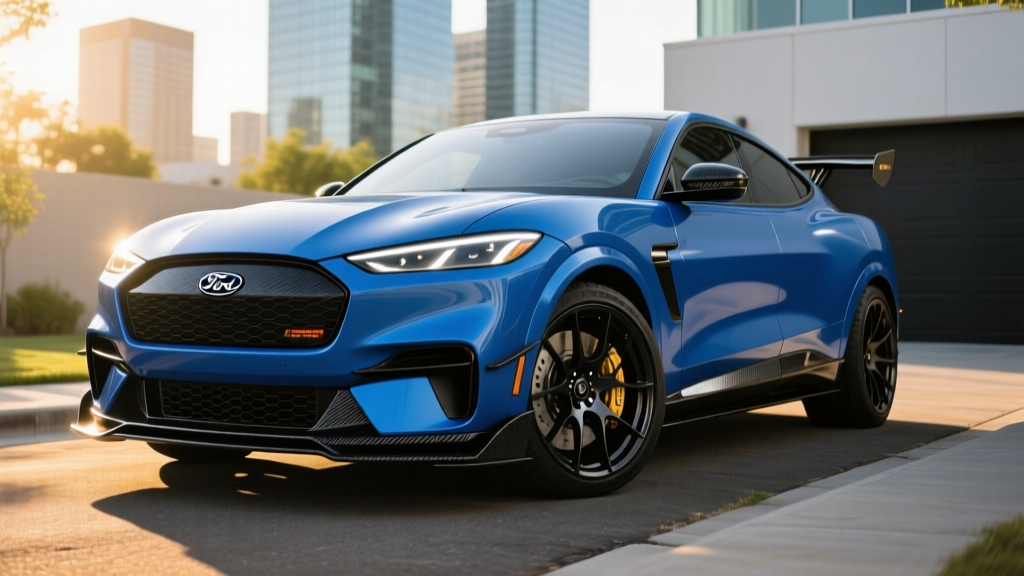
The Ford Mustang Mach-E GT has always been the performance flagship of Ford's electric crossover lineup, but the Ford Mustang Mach-E GT Performance Upgrade takes it a meaningful step further. For the 2026 model year, this package adds a revised rear motor, stiffer adaptive dampers, and a unique torque-bias calibration that shaves the 0-60 mph sprint to a claimed 3.3 seconds. It's a serious sportback competitor to the Tesla Model Y Performance and Hyundai Ioniq 5 N, aimed squarely at buyers who want daily-driver comfort with legitimate sports-car acceleration.
But performance comes with trade-offs. The GT Performance Upgrade sacrifices roughly 20 miles of EPA range versus the standard GT and carries a premium price tag that pushes it near the $60,000 mark before incentives. Below, we break down every spec that matters — range, charging, real-world efficiency, tax credit eligibility, and whether this is the right EV for your garage.
Spec Sheet: 2026 Mustang Mach-E GT Performance Upgrade
| Specification | Detail |
|---|---|
| EPA Range | 290 miles |
| Real-World Range (highway/cold) | ~230–260 miles |
| Battery (usable / gross) | 91 kWh usable / ~98 kWh gross (NMC) |
| Drivetrain | Dual-motor AWD |
| Horsepower / Torque | 480 hp / 634 lb-ft |
| 0–60 mph | 3.3 seconds |
| MPGe (combined) | 84 MPGe |
| Efficiency | 40 kWh/100 mi |
| Max DC Fast Charge | 150 kW peak |
| 10–80% DC Charge Time | ~45 minutes |
| Level 2 Home Charging | 10.5 kW (~30 mi/hr) |
| Cargo (rear seats up / folded) | 29.7 / 59.7 cu ft |
| Front Trunk (frunk) | 4.7 cu ft (drainable) |
| Base MSRP (GT + Perf. Upgrade) | $59,895 |
| Battery Warranty | 8 years / 100,000 miles |
| Federal Tax Credit (§30D) | Up to $7,500 (eligibility varies) |
Range & Efficiency: What the EPA Number Doesn't Tell You
Real-World Expectation: Plan for approximately 250–260 miles on mixed highway driving at 70 mph. In sustained cold weather (below 32°F), expect 210–230 miles. City driving with heavy regenerative braking can push closer to the 290-mile sticker, and occasionally slightly above in mild conditions.
The Mach-E GT Performance Upgrade uses Ford's extended-range 91 kWh usable battery pack, built with NMC (nickel manganese cobalt) chemistry. This chemistry prioritizes energy density and high-power delivery over the cycle-life longevity of LFP (lithium iron phosphate) cells — a deliberate choice for a performance-oriented vehicle. Ford manages thermal conditions with an active liquid cooling and heating system, which helps mitigate degradation but doesn't eliminate cold-weather range loss.
At 84 MPGe combined (40 kWh per 100 miles), the GT Performance Upgrade is noticeably less efficient than the Select or Premium RWD trims (which achieve up to 101 MPGe). That's the cost of dual motors, 480 horsepower, and a performance-oriented torque map. For context, a Tesla Model Y Performance achieves roughly 111 MPGe combined, and the Hyundai Ioniq 5 N sits around 79 MPGe — so the Mach-E GT sits in the middle of its performance-EV cohort.
Charging Speed: DC Fast Charging and Home Level 2
The Mach-E GT Performance Upgrade peaks at 150 kW on a DC fast charger. That's respectable but not class-leading — competitors like the Ioniq 5 N (up to 238 kW) and Model Y (up to 250 kW on V3 Superchargers) charge considerably faster on compatible infrastructure.
| Charging Level | Power | Speed / Notes |
|---|---|---|
| Level 1 (120V household) | ~1.4 kW | ~3–4 miles per hour |
| Level 2 (240V home/public) | 10.5 kW | ~30 miles per hour; full charge in ~9 hrs |
| DC Fast Charge | 150 kW peak | 10–80% in ~45 min; tapers significantly above 80% |
Here's where the charging curve matters. The Mach-E holds near-peak rate (140–150 kW) from roughly 10% to about 50% state of charge, then steps down to ~90 kW through 70%, and further to ~50 kW above 80%. If you're road-tripping and charging from 10–80%, budget 45 minutes. If you need a full 10–95% fill, expect closer to 70 minutes. This is a real consideration for frequent long-distance drivers.
For home charging, the onboard 10.5 kW charger is a strong point. On a properly installed 48-amp Level 2 circuit (hardwired, 60-amp breaker), you'll add roughly 30 miles of range per hour — enough to fully replenish overnight. Ford includes the Mobile Power Cord with both 120V and 240V adapters, though a dedicated wall connector (like the Ford Connected Charge Station or a third-party unit such as ChargePoint or Emporia) is recommended for daily use. Home installation typically runs $500–$2,000 depending on your panel capacity and wiring distance, per Ford's charging resources.
Performance: What the Upgrade Actually Adds
The GT Performance Upgrade builds on the standard GT's already potent dual-motor AWD setup. Key additions for 2026 include:
- Revised rear motor: Higher output contributes to the 480 hp / 634 lb-ft total (up from 468 hp on the base GT)
- Adaptive MagneRide dampers: Continuously variable suspension tuning with Sport and Track modes
- Unique torque vectoring calibration: More aggressive rear-bias under hard acceleration
- Upgraded Brembo front brakes: Larger rotors for repeated high-speed stops
- 20-inch wheels with summer performance tires (all-season available as a no-cost option, with slight range impact)
The result is a 3.3-second 0-60 mph time, which puts it in elite company. The Tesla Model Y Performance does it in roughly 3.5 seconds; the Hyundai Ioniq 5 N in 3.4 seconds. Straight-line performance is genuinely thrilling, and the adaptive suspension makes the car surprisingly compliant in daily driving when set to Comfort mode.
One honest caveat: the Mach-E's curb weight (approximately 4,900 lbs) is noticeable in tight canyon roads. The low center of gravity helps, and the MagneRide dampers manage body roll well, but this is a heavy crossover — not a sports car. If you're cross-shopping a Porsche Taycan or BMW i4 M50 on handling dynamics alone, the Mach-E GT won't match them. It's a fast, capable cruiser, not a track weapon.
Interior, Cargo, and Technology
Ford equips the GT Performance Upgrade with a 15.5-inch vertical touchscreen running SYNC 4A, wireless Apple CarPlay and Android Auto, a 10.2-inch digital instrument cluster, and a panoramic fixed glass roof. The ActiveX synthetic leather sport seats are heated and ventilated up front, with a heated steering wheel standard.
Cargo dimensions:
- Behind rear seats: 29.7 cu ft
- Rear seats folded: 59.7 cu ft
- Front trunk (frunk): 4.7 cu ft, with a drain plug — useful for tailgating or storing wet gear
- Rear legroom: 38.1 inches
- Front headroom: 40.4 inches
Cargo space is competitive with the Model Y but trails the Hyundai Ioniq 5's boxy hatchback design. The frunk is smaller than the Mach-E Select's (which offers 8.1 cu ft) because the GT's additional front motor and cooling hardware consume space.
Driver assistance: Ford's BlueCruise (SAE Level 2) is available on the GT, enabling hands-free highway driving on over 130,000 miles of pre-mapped divided highways in the U.S. This is not self-driving — the system uses a driver-facing camera to monitor eye attention and will disengage if you look away. It works well on long interstate stretches but requires you to remain alert and ready to take over at any time. A 90-day trial is included; after that, a subscription (approximately $75/month or $800/year) is required for continued hands-free use. Standard Ford Co-Pilot360 2.0 features (adaptive cruise, lane centering, automatic emergency braking, blind-spot assist) work without a subscription.
Pricing, Tax Credits, and Ownership Cost
The 2026 Mustang Mach-E GT with the Performance Upgrade starts at $59,895 (including destination). Adding options like the BlueCruise subscription prep, premium paint colors, or the panoramic roof package can push as-tested prices to $62,000–$64,000.
| Trim / Configuration | MSRP |
|---|---|
| Mach-E Select (RWD) | $42,995 |
| Mach-E Premium (AWD) | $48,995 |
| Mach-E GT (AWD) | $55,895 |
| Mach-E GT + Performance Upgrade (AWD) | $59,895 |
Federal Tax Credit Eligibility (§30D)
The Mustang Mach-E GT Performance Upgrade may qualify for the full $7,500 federal tax credit under IRS §30D, but eligibility depends on several factors that change periodically:
- MSRP cap: The vehicle must be under $80,000 for SUVs/crossovers — the Mach-E GT clears this easily at $59,895.
- Buyer income cap: Modified adjusted gross income must not exceed $300,000 (joint filers), $225,000 (head of household), or $150,000 (single).
- Battery sourcing: A portion of the credit ($3,750) requires critical minerals sourced from the U.S. or free-trade-agreement partners; the other $3,750 requires battery components manufactured or assembled in North America. These thresholds tighten annually. As of early 2026, Ford has confirmed that the Mach-E's battery pack (assembled in the U.S.) meets the component requirement, but critical-mineral sourcing should be verified with your dealer at purchase, as supply chains shift.
- Point-of-sale transfer: You can elect to transfer the credit to the dealer at purchase, reducing your out-of-pocket cost by up to $7,500 upfront rather than waiting to claim it on your tax return.
Always confirm current eligibility on IRS.gov and consult a tax professional before relying on the credit in your purchase decision.
Who Should Buy the Mach-E GT Performance Upgrade?
- You want sub-3.5-second 0-60 acceleration in a practical crossover
- You prefer a traditional dealership purchase and service experience
- BlueCruise hands-free highway driving appeals to your commute
- You value MagneRide adaptive suspension for dual comfort/sport capability
- You want a drainable frunk and competitive cargo space
- Maximum range is your priority (consider the Mach-E Premium RWD at ~320 mi EPA)
- You road-trip frequently and need the fastest DC charging (Ioniq 5 N or Model Y charge faster)
- You want track-focused handling over straight-line speed (Porsche Taycan, BMW i4 M50)
- You need three-row seating or towing capability above 2,000 lbs
The GT Performance Upgrade is best suited for the enthusiast-commuter: someone with a home Level 2 charger, a mostly urban or suburban daily drive, and the occasional weekend canyon run. It's also a strong choice for former Mustang coupe owners transitioning to electric who want the badge heritage and sporty dynamics in a more practical package.
Pros and Cons
- 3.3-second 0-60 mph — among the fastest crossovers at this price
- MagneRide adaptive suspension balances comfort and sportiness
- Strong 10.5 kW Level 2 home charging speed
- BlueCruise hands-free highway driving available
- Drainable frunk, solid cargo volume
- Qualifies for up to $7,500 federal tax credit (verify sourcing)
- 150 kW peak DC charging is slower than key competitors
- 45-minute 10–80% charge time limits road-trip convenience
- 290-mile EPA range drops to ~220 in cold highway driving
- Heavy curb weight noticeable on tight roads
- BlueCruise requires paid subscription after trial
- Smaller frunk than lower Mach-E trims
Warranty and Battery Longevity
Ford covers the Mach-E's high-voltage battery and electric powertrain components for 8 years or 100,000 miles, whichever comes first. The warranty guarantees the battery will retain at least 70% of its original capacity during that period. The basic vehicle warranty is 3 years / 36,000 miles.
NMC batteries like the one in the Mach-E typically experience 1–2% capacity loss per year under normal use, based on industry data and owner reports from 2021–2024 model-year Mach-Es. Ford's active thermal management system helps mitigate accelerated degradation. For maximum battery longevity, Ford recommends keeping state of charge between 20% and 80% for daily driving and limiting DC fast charging to road trips rather than daily use. Following these practices, most owners should expect 85–90% capacity retention at the 100,000-mile mark.
Frequently Asked Questions
What is the real-world range of the Mach-E GT Performance Upgrade?
The EPA rates it at 290 miles. In real-world mixed highway driving at 70 mph, expect 250–260 miles. In cold weather (below freezing) on highway trips, plan for 210–230 miles. City driving with regenerative braking can match or slightly exceed the EPA estimate in mild temperatures.
How fast does it charge at home and on the road?
At home on a 240V Level 2 charger, the Mach-E GT charges at 10.5 kW, adding about 30 miles of range per hour — a full overnight charge from empty takes roughly 9 hours. On DC fast chargers, it peaks at 150 kW and charges from 10–80% in approximately 45 minutes. Above 80%, charging slows significantly to protect the battery.
Does the Mach-E GT Performance Upgrade qualify for the $7,500 federal tax credit?
It may. The MSRP ($59,895) is well under the $80,000 SUV cap, and most buyers under the income thresholds ($150K single / $300K joint) will qualify. However, the full $7,500 depends on battery critical-mineral and component sourcing rules that tighten each year. Verify with your dealer and check IRS.gov before purchasing.
Is the Mach-E GT Performance Upgrade worth it over the standard GT?
If you value the 3.3-second 0-60 time, MagneRide adaptive suspension, and upgraded Brembo brakes, the ~$4,000 premium over the standard GT is justified. If you primarily want quick acceleration without track-day aspirations, the standard GT (3.5-second 0-60) is nearly as fast and saves you money. For pure daily comfort and maximum range, the Premium AWD is the smarter buy.
How does it compare to the Tesla Model Y Performance?
The Model Y Performance offers faster DC charging (250 kW vs. 150 kW), slightly better efficiency (111 MPGe vs. 84 MPGe), and access to the Supercharger network. The Mach-E GT Performance Upgrade counters with MagneRide suspension quality, BlueCruise, a more traditional dealership experience, and a slightly quicker 0-60 time. Both are strong choices — the decision often comes down to charging ecosystem preference and whether you value Tesla's software integration or Ford's ride comfort and dealer support.
Can I tow with the Mach-E GT Performance Upgrade?
Yes, but it's limited. The Mach-E GT is rated for up to 2,000 lbs when equipped with the optional tow hitch. That's enough for a small utility trailer or a pair of dirt bikes, but not a camper or boat. If towing is a priority, look at the Ford F-150 Lightning or Rivian R1S instead.