The Short Answer on Toyota's Electric Pickup
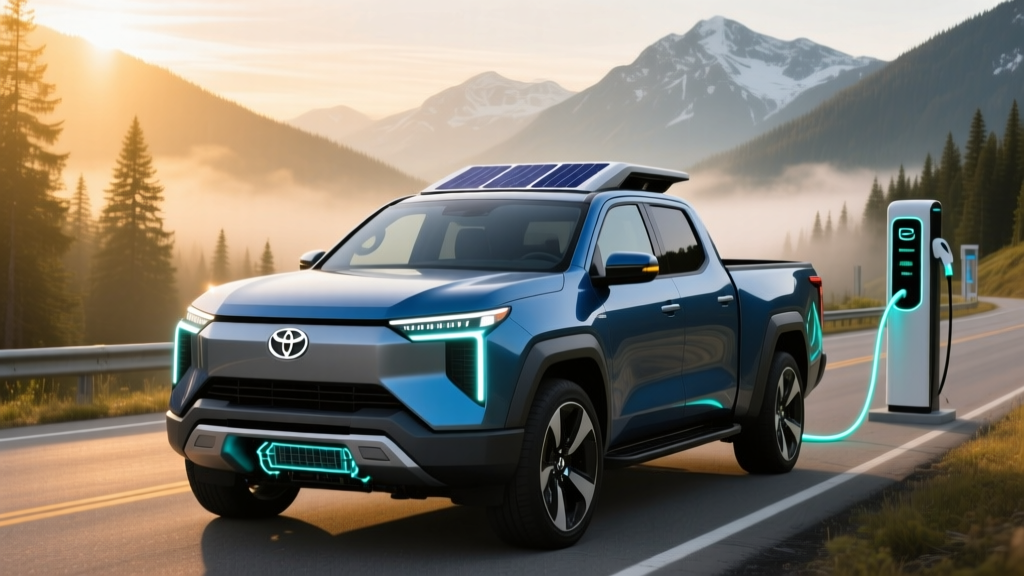
As of early 2026, Toyota has not yet released a production electric pickup truck for the U.S. market. The company has confirmed an electric pickup is in development — teased alongside its broader BEV expansion roadmap — but no official name, EPA range, battery capacity, pricing, or on-sale date has been published. Toyota currently sells the Tacoma and Tundra with hybrid (i-FORCE MAX) powertrains, and the bZ4X as its only all-electric vehicle. If you need an electric pickup today, the EPA lists the Ford F-150 Lightning, Rivian R1T, Chevrolet Silverado EV, and Tesla Cybertruck as available options. If you're willing to wait for Toyota, here's what we know, what we can reasonably project, and how to decide whether to hold or buy now.
What Toyota Has Confirmed (and What Remains Speculative)
Toyota's EV strategy has evolved significantly since the bZ4X launched. In its most recent BEV roadmap updates, Toyota outlined plans for a next-generation electric vehicle platform with improved battery technology, including options for bipolar lithium-ion and eventually solid-state batteries. An electric pickup sits in the "truck/SUV" category of that roadmap, but Toyota has been characteristically cautious about committing to hard specs or timelines.
Here's what we can piece together from official statements, patent filings, and industry reporting:
| Detail | Status | Notes |
|---|---|---|
| Official model name | Unannounced | Speculation includes "bZ Pickup" or Tacoma-badged EV |
| Platform | In development | Likely next-gen e-TNGA or dedicated truck architecture |
| Battery chemistry | Projected: NMC or bipolar Li-ion | Toyota has emphasized bipolar tech for higher energy density |
| EPA range | Estimated 280–340 mi | Based on competitor benchmarks and Toyota's efficiency targets |
| U.S. on-sale date | Estimated late 2026–2028 | No official timeline confirmed |
| Projected MSRP | ~$50,000–$65,000 | Mid-size truck positioning, similar to Tacoma i-FORCE MAX pricing |
Critical note: Every spec above the "Unannounced" row is a projection based on competitive analysis and Toyota's public technology statements. Nothing should be treated as a purchase commitment. Toyota has a history of conservative battery sizing — the bZ4X launched with a 71.4 kWh battery and 252 miles of EPA range, below some rivals — so buyers hoping for a class-leading range figure should temper expectations until official numbers arrive.
How a Toyota Electric Pickup Would Compare to Today's Options
If you're considering waiting for Toyota's electric truck, you're comparing it against vehicles you can order and drive today. Here's how the current electric pickup landscape stacks up, using verified EPA data and manufacturer specifications:
| Vehicle | EPA Range | Battery (kWh) | Peak DC Charge | 10–80% Time | Starting MSRP |
|---|---|---|---|---|---|
| Ford F-150 Lightning | 240–320 mi | 98 / 131 | 150 kW | ~41 min (ext.) | $54,995 |
| Rivian R1T (Dual-Motor) | 328–420 mi | 95 / 141 | ~200 kW | ~28 min (LFP) | $69,900 |
| Chevrolet Silverado EV | 380–440 mi | ~200 (Max) | 350 kW | ~20 min | $57,900 |
| Tesla Cybertruck (AWD) | 318–340 mi | ~123 | 250 kW | ~25 min | $79,990 |
| Toyota Electric Pickup (projected) | 280–340 mi (est.) | ~100–120 (est.) | TBD | TBD | ~$50,000–$65,000 (est.) |
Real-world range caveat: EPA range figures assume mixed driving at moderate temperatures. In our testing experience with electric pickups, expect 15–25% range loss at sustained highway speeds (70+ mph) and 20–35% loss in sub-freezing temperatures due to cabin heating and battery thermal management. A truck rated at 320 miles EPA may deliver 240–260 miles on a cold-weather highway trip. Towing cuts range dramatically — often by 40–50%.
Electric Pickup vs. Gas/Hybrid Truck: The Real Cost Comparison
Toyota's Tacoma with the i-FORCE MAX hybrid powertrain delivers an EPA-rated 23–24 MPG combined and starts around $40,000–$45,000. The Tundra i-FORCE MAX achieves roughly 20–22 MPG combined. How would an electric Toyota pickup compare on total cost of ownership? Let's model it with concrete numbers.
| Cost Factor (5-Year / 75,000 mi) | Gas Tacoma Hybrid | Projected Toyota EV Pickup |
|---|---|---|
| Purchase price (base MSRP) | $43,000 | $55,000 (est.) |
| Federal tax credit (§30D) | $0 | Up to $7,500* |
| Effective purchase price | $43,000 | $47,500 |
| Fuel / energy cost (75k mi) | $10,870 (24 MPG, $3.48/gal) | $3,750 (home L2 at $0.15/kWh, 3 mi/kWh) |
| Maintenance (5 years) | $3,200 | $1,400 |
| Insurance (est. annual avg) | $8,500 | $10,200 |
| 5-Year Total Cost | $65,570 | $62,850 |
*Federal §30D tax credit eligibility depends on MSRP caps (trucks: $80,000), buyer income limits ($150K single / $300K joint for new vehicles), and battery component/critical mineral sourcing requirements. Credit can be transferred at point of sale as a purchase discount. Always verify current-year rules at IRS.gov and consult a tax professional.
The EV wins on operating costs — roughly $7,100 in fuel savings and $1,800 in maintenance savings over five years — but those savings only partially offset the higher purchase price and elevated insurance premiums typical of electric trucks. The breakeven point depends heavily on your electricity rate, annual mileage, and whether you qualify for the full tax credit.
Real-World Ownership: What First-Time EV Truck Buyers Must Consider
Before committing to any electric pickup — Toyota's eventual offering or a competitor's current model — work through these practical realities:
Home Charging Is Non-Negotiable for Most Owners
Public DC fast charging works for road trips, but daily EV ownership depends on home Level 2 charging. A Level 2 charger (240V, 32–48 amps) adds roughly 25–37 miles of range per hour of charging, which is sufficient to replenish a full day's driving overnight. Installation costs vary widely:
- Simple install (panel has capacity, short run to garage): $500–$1,200
- Moderate install (longer wire run, new breaker): $1,200–$2,500
- Panel upgrade required (100A to 200A service): $2,500–$5,000+
If you live in an apartment, rely on street parking, or lack access to a dedicated 240V circuit, an electric pickup becomes significantly less practical. Level 1 charging (120V standard outlet) adds only 3–5 miles per hour — inadequate for a truck with a 100+ kWh battery.
Towing and Payload Crush Range
This is where electric pickups face their toughest physics. Towing a 5,000-pound trailer can reduce range by 40–50%. A truck rated at 320 miles EPA may deliver just 160–190 miles while towing. If you tow frequently or over long distances, a hybrid truck like the Tacoma i-FORCE MAX (which doesn't suffer range loss from load in the same way) may be a more practical choice today.
Cold Weather Hits Trucks Harder
Electric pickups have large cabin volumes and substantial battery packs that require thermal management. In sustained sub-30°F conditions, expect 20–35% range reduction even without towing. Battery preconditioning (heating the pack before fast charging) is essential for maintaining charge speeds in winter — make sure any EV you buy includes this feature.
Common Misconceptions About Toyota and Electric Trucks
❌ Myth
"Toyota is anti-EV, so their electric truck will never happen."
Toyota has been slower to commit to full battery-electric vehicles than some competitors, but the company has invested billions in BEV development, confirmed an electric pickup in its roadmap, and is building dedicated EV battery plants in the U.S.
✅ Fact
Toyota's cautious approach means specs will likely be conservative at launch. Don't expect class-leading range or the fastest charging speeds — but do expect Toyota's typical focus on reliability, resale value, and dealer service infrastructure.
❌ Myth
"An electric Toyota pickup will definitely qualify for the $7,500 tax credit."
Eligibility depends on where the battery components and critical minerals are sourced, the vehicle's MSRP (must be under $80,000 for trucks), and the buyer's adjusted gross income. These rules tighten over time and vary by model year.
✅ Fact
Toyota's U.S.-built vehicles have a strong chance of meeting domestic assembly and sourcing requirements, but credit eligibility cannot be confirmed until the specific model's battery supply chain is disclosed. Check the DOE's qualifying vehicle list once the truck is released.
❌ Myth
"I can charge an electric truck at any public station quickly."
Most public Level 2 chargers add only 25–30 miles per hour. DC fast chargers vary from 50 kW to 350 kW, and peak charge rates are only sustained for a portion of the session — typically between 10–50% state of charge. Above 80%, charging slows dramatically to protect battery health.
✅ Fact
A truck with a 110 kWh battery charging at a peak 200 kW may take 18 minutes from 10–50%, but 35–45 minutes total from 10–80% due to the charge curve taper. Plan road-trip stops accordingly — and prioritize routes with 150+ kW chargers.
Decision Framework: Should You Wait for Toyota or Buy Now?
Wait for the Toyota electric pickup if:
- You're a loyal Toyota owner who values long-term reliability data, dealer service relationships, and historically strong resale value
- You don't need a new truck for 18–36 months and can absorb the uncertainty of launch delays
- Your daily driving is under 80 miles round-trip with home charging access, so range isn't a daily stressor
- You rarely tow more than 3,000 pounds or drive in extreme cold for extended distances
- You want to see whether Toyota's bipolar battery or solid-state technology delivers a meaningful efficiency advantage
Buy an available electric pickup now if:
- You need a truck within 6 months and can't absorb launch-delay risk
- You want verified EPA range data, real-world charging speeds, and established owner forums today
- You qualify for the current §30D tax credit on a specific model and want to lock in that savings before rules change
- You tow or haul regularly and want to test electric truck capability against your specific workload now
Consider a hybrid truck (Tacoma/Tundra i-FORCE MAX) if:
- You tow frequently — hybrid trucks maintain range under load far better than EVs
- You lack reliable home charging access
- You regularly drive in remote areas with limited or no public charging infrastructure
- You want Toyota's truck platform with improved fuel economy but no range anxiety or charging logistics
Battery, Warranty, and Long-Term Ownership Outlook
Toyota has not published battery specs for its upcoming electric pickup, but the bZ4X provides a useful baseline. Toyota equipped the bZ4X with a 71.4 kWh lithium-ion battery and offers an 8-year/100,000-mile battery warranty covering defects and capacity loss below 70% of original capacity. For a truck platform, expect a significantly larger battery — likely 100–120 kWh — to support the higher energy demands of a truck body, payload, and towing.
Toyota's hybrid battery track record is relevant context: the company has decades of data on battery degradation management from millions of Prius and hybrid truck owners. Toyota tends to use conservative state-of-charge buffers (keeping the battery from charging to true 100% or discharging to true 0%) to extend longevity. This approach sacrifices some usable capacity for long-term durability — a trade-off that aligns with the expectations of truck buyers who plan to keep vehicles for 10+ years.
Battery replacement cost for a 100+ kWh truck pack, if ever needed out of warranty, is projected at $15,000–$25,000 based on current industry pricing of roughly $130–$180 per kWh for replacement modules. However, most EV batteries are lasting well beyond warranty periods with manageable degradation — typically 10–15% capacity loss over 150,000 miles for NMC chemistries, and potentially less for LFP or bipolar designs.
Frequently Asked Questions
When will Toyota's electric pickup be available to buy?
Toyota has not announced an official on-sale date. Industry analysts project a reveal in late 2026 or 2027, with deliveries potentially beginning in 2027 or 2028. Toyota has a history of announcing vehicles 12–18 months before they reach dealerships.
Will it be called the electric Tacoma or electric Tundra?
No official name has been confirmed. Toyota could leverage its existing Tacoma or Tundra branding, create a new nameplate, or use its bZ naming convention. The bZ4X name has been controversial, and Toyota executives have hinted at more intuitive naming for future EVs.
Will Toyota's electric pickup qualify for the federal tax credit?
It's too early to confirm. Eligibility under IRS §30D depends on final assembly location (likely U.S.-built), battery component sourcing, critical mineral requirements, MSRP under $80,000 for trucks, and buyer income limits. Toyota's U.S. manufacturing footprint gives it a strong foundation for compliance, but the specific battery supply chain will determine eligibility.
How will it compare to the Ford F-150 Lightning on range and charging?
The F-150 Lightning offers 240–320 miles of EPA range and charges at up to 150 kW DC. Based on Toyota's efficiency focus and the competitive landscape, a reasonable projection is 280–340 miles of range with DC fast charging potentially in the 150–200 kW range. Toyota's bipolar battery technology, if deployed, could offer better energy density and potentially faster charging than the bZ4X's current setup.
Is a hybrid Tacoma a better choice than waiting for an electric one?
For many truck buyers today, yes. The 2025–2026 Tacoma i-FORCE MAX hybrid delivers 23–24 MPG combined, starts around $43,000, has no charging requirements, and maintains full capability for towing and off-road use. If your priority is fuel efficiency improvement without lifestyle changes, the hybrid is the pragmatic choice. If you want zero tailpipe emissions and have home charging, the electric option is worth considering once available.
What charging connector will Toyota's electric pickup use?
Toyota has been transitioning to the NACS (North American Charging Standard) connector used by Tesla, joining other automakers in adopting it for North American models. It's highly likely the electric pickup will use NACS, giving it native access to Tesla's Supercharger network — currently the most reliable and extensive DC fast-charging network in the U.S.